
郎酒红花郎

Search documents
“含酒量”大缩水!马年总台春晚仅4家白酒赞助品牌亮相 酒企正转战短剧短视频新阵地?
Mei Ri Jing Ji Xin Wen· 2026-02-25 09:42
Core Insights - The number of liquor brands sponsoring the CCTV Spring Festival Gala has decreased significantly, from 9 in 2024 and 7 in 2025 to only 4 in 2026, indicating a shift in marketing strategies among liquor companies [1][2][6] - Major liquor brands that remain as sponsors are long-term partners of the gala, focusing on differentiated positioning and interactive collaborations [2][6] - The reduction in sponsorship is attributed to a more rational and diversified approach to marketing, with brands opting for softer product placements rather than traditional sponsorships [5][6][15] Industry Trends - The liquor industry is experiencing a cyclical adjustment, yet the Spring Festival remains a crucial sales period, prompting companies to explore various marketing channels beyond traditional sponsorships [1][6] - Brands are increasingly investing in short videos, micro-dramas, and variety shows as new marketing battlegrounds, reflecting a shift towards more engaging and consumer-centric strategies [9][12][14] - The trend indicates a move from broad exposure strategies to precision marketing, focusing on direct consumer engagement and sales conversion [15][16] Marketing Strategies - Major liquor brands are utilizing innovative marketing techniques, such as integrating products into popular media formats like micro-dramas and short videos, to reach younger audiences [9][12][14] - The collaboration with platforms like Douyin (TikTok) and various streaming services has become a common practice, allowing brands to leverage storytelling to enhance consumer connection [12][14] - The industry's focus is shifting towards creating immersive experiences and interactive content, moving away from mere logo placements to deeper brand integration within entertainment [5][15]

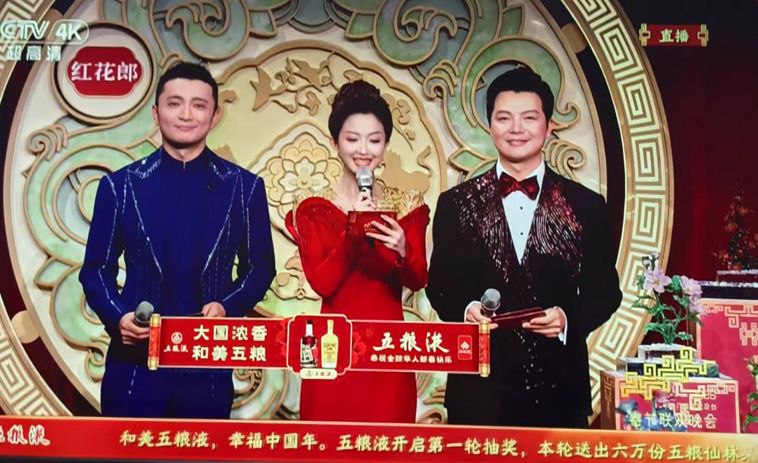
春晚白酒品牌三十年浮沉:从'标王'争霸到'四强'鼎立,行业营销迈入高质量新阶段
Jing Ji Guan Cha Bao· 2026-02-17 06:48
Group 1 - The article discusses the evolution of the Chinese liquor industry as reflected through the partnerships with the Spring Festival Gala, highlighting three distinct phases: rapid expansion, recovery, and consolidation [1][2] - From the 1990s to 2012, liquor brands aggressively competed for prime advertising spots, with notable brands like Langjiu and Moutai establishing strong presences [1] - The period from 2016 to 2019 saw a resurgence of liquor brands returning to the Gala through special partnerships, with Guqingongjiu becoming a representative brand during this phase [1] Group 2 - Since 2020, the industry has entered a phase of solidified leadership, with top brands like Yanghe and Wuliangye forming a stable partnership structure, reducing the number of participating brands significantly [2] - The 2026 Spring Festival Gala will feature a reduced lineup of four leading brands, marking a new low in brand participation over the past six years, indicating a shift towards high-quality development rather than industry decline [2] - The evolution from competitive bidding to a focus on a few leading brands reflects a broader transformation in the liquor industry towards brand-driven strategies and rational marketing approaches [2]




春晚合作公司名单来了
财联社· 2026-02-16 05:35
Group 1 - The 2026 Spring Festival Gala has announced over 20 partners across various sectors, including smart mobility, artificial intelligence, and liquor [1] - Key partners in the smart ecosystem include companies like ZhiMi Group, MOVA, and Huawei's Mate 80 series, which is designated as the live broadcast phone partner [2] - In the smart mobility sector, partners include Lynk & Co 900 and JAC Motors, which collaborates with Huawei on the flagship vehicle [2] Group 2 - The artificial intelligence and robotics sector features partners such as Volcano Engine, Yushu Technology, and Galaxy General, highlighting a strong technological presence at the gala [3] - Notably, there are 8 listed companies among the partners, including Wuliangye, Yanghe, and Great Wall Motors, indicating significant corporate involvement [3]

春晚,白酒春节营销的巅峰之战|观酒周报
2 1 Shi Ji Jing Ji Bao Dao· 2026-02-09 06:50
Group 1 - The upcoming Spring Festival is a crucial marketing period for the liquor industry, with a long holiday expected to boost consumption opportunities [1] - The CCTV Spring Festival Gala has announced four major liquor sponsors: Wuliangye, Yanghe, Gujinggong, and Langjiu, with each having a significant presence in the event [1][2] - There are expectations of additional liquor brands participating in the Spring Festival Gala, despite a perceived reduction in sponsorship compared to previous years [1] Group 2 - In recent years, the Spring Festival Gala has typically featured a core group of four liquor sponsors, with additional brands appearing in various capacities [2][3] - The number of liquor brands participating in the Spring Festival Gala has varied, with a peak of nine brands in 2024, indicating a trend of increasing brand involvement [4] - Some liquor companies are shifting their focus to local television programs to strengthen brand presence in their key markets, while still maintaining participation in major events like the CCTV Spring Festival Gala [5] Group 3 - Various liquor brands are exploring partnerships with social media platforms to enhance engagement and marketing reach during the Spring Festival [8] - Companies like Xijiu are entering into direct sales partnerships with platforms like Meituan to facilitate quicker delivery and boost sales [9] Group 4 - New product launches are occurring, such as the introduction of a low-alcohol liquor by Shui Jing Fang, which has seen significant pre-sale success [10] - The UMEET blueberry sparkling wine from Moutai has achieved impressive sales figures on its launch day, indicating strong market interest [11] - Luzhou Laojiao aims to enhance its market position and is targeting a top-three industry ranking, reflecting competitive ambitions within the sector [12] Group 5 - Chongqing Beer reported growth in revenue, profit, and sales volume for 2025, indicating a recovery and positive trend in the beer market [14]
骂白酒是智商税?茅台300亿分红,老酒60倍涨幅,真相打谁的脸?
Sou Hu Cai Jing· 2025-12-09 09:18
Core Viewpoint - The Chinese liquor industry in 2025 is experiencing a significant divide, with distributors struggling to sell inventory while leading companies like Moutai are thriving and distributing substantial dividends, indicating a resilience that is not reflected in short-term sales figures [1][3]. Industry Overview - The liquor industry has faced continuous bad news in 2025, with production among large-scale liquor manufacturers dropping by 11.5% from January to October, and the A-share liquor sector reporting its worst quarterly results in a decade [3]. - The implementation of strict alcohol regulations has severely impacted business dining and wedding markets, leading to a notable decline in demand for liquor among younger consumers [3][4]. Distributor Challenges - Distributors are under immense pressure, with some forced to increase their purchase volumes or risk losing their agency, leading to significant financial strain as they struggle to sell excess inventory [7]. - A distributor in Zhengzhou reported holding inventory worth 3 million, with slow turnover leading to mounting interest costs, highlighting the financial burden on distributors [4]. Head Company Resilience - Leading liquor companies have effectively locked in profits early in the year by requiring distributors to pay upfront for inventory, allowing them to maintain financial stability despite market fluctuations [4][7]. - Moutai reported a cash reserve of 159.5 billion and announced a dividend of 30 billion, showcasing its strong financial position independent of short-term sales [4]. Market Dynamics - The market is characterized by a "survival of the fittest" dynamic, where top companies capture 86% of industry profits, while smaller firms struggle with inventory issues or face closure [12]. - The total social inventory in the industry reached 12 million kiloliters, indicating significant pressure on the market, yet leading companies continue to maintain profitability [12]. Investment Considerations - Defensive assets in the liquor sector are characterized by high margins, stable cash flow, and substantial dividends, rather than short-term growth potential [14]. - Investors should be prepared for a longer holding period to realize the value of these defensive assets, as the current inventory represents future wealth for leading companies [16][18]. Conclusion - The liquor industry's current challenges should not be mistaken for the failure of leading companies, which possess the ability to increase the value of aged liquor and benefit from a more concentrated market [20]. - The resilience of top companies during this downturn highlights the importance of evaluating long-term value rather than short-term market noise [20].
消费策略&组合配置:Q3业绩前瞻与全年展望
2025-10-13 01:00
Summary of Conference Call Records Industry or Company Involved - Consumer Sector - Clean Energy Sector - AI Application Sector - Alcoholic Beverage Sector - Home Appliance Sector - Food and Beverage Sector - Livestock Farming Sector Key Points and Arguments Consumer Sector - Market sentiment is cautious, but the decline in risk assets and VIX index is not extreme, indicating improved market response to negotiations and tariff adjustments [1][3] - Internal structural changes in the consumer sector are evident, with external demand affected by U.S. Federal Reserve policies and trade tensions, while internal demand benefits from policy expectations and price recovery [1][3] - Q4 2025 is expected to present opportunities for internal demand consumption driven by style and policy, with significant performance expected during the Double Eleven shopping festival [1][5] Clean Energy Sector - The clean energy sector, particularly companies like Stone Technology, is performing well and expanding into overseas markets, aiming to become platform companies [2][21] AI Application Sector - Companies like Yiwan Yichuang and Jihong Co. are leveraging AI to enhance efficiency and are expected to see significant growth, especially in non-U.S. markets [1][9] Alcoholic Beverage Sector - The white wine market saw a decline in sales during the recent holiday period, but banquet sales remained strong, indicating a shift in consumer price sensitivity [1][10][11] - The overall performance of the white wine sector is stable, with expectations for gradual recovery in sales as the market adjusts to pricing changes [1][14] Home Appliance Sector - The home appliance industry is showing steady performance, with notable growth in the clean energy segment, particularly for companies like Stone Technology and Ecovacs [2][21] - Recommendations include focusing on companies with stable growth potential such as Stone Technology, Ecovacs, Midea, and Haier [22] Food and Beverage Sector - The consumer goods sector is experiencing mixed performance, with strong results from snack and soft drink leaders, while dining establishments face challenges [15] - Companies like Angel Yeast and Haitian Flavoring are expected to outperform due to strong competitive barriers and product optimization [15] Livestock Farming Sector - The pig farming sector is facing losses due to declining prices, with average prices around 14 RMB/kg and significant profit reductions expected [25] - Future price recovery is anticipated as production capacity is reduced, benefiting from policy stability regarding breeding sows [26] Other Important but Possibly Overlooked Content - The consumer sector is expected to attract capital inflows, particularly in low-valuation, policy-aligned internal demand consumption areas such as food and beverage, agriculture, and retail [4] - The performance of the consumer sector is expected to be driven by companies with high certainty in earnings, particularly in the restaurant service sector [7] - The cost of operating restaurants is decreasing, leading to improved profitability and an expected increase in store openings by 20-30% [8] - The AI application sector is becoming increasingly important, with companies focusing on AI-driven efficiency improvements and market expansion [6][9]