金属钕

Search documents
稀土和稀有金属大会将至 涨价概念持续催动 这些股频获机构调研
Zhong Jin Zai Xian· 2026-02-27 13:34
Group 1 - The China Minmetals Import and Export Chamber announced a conference on March 25, 2026, to discuss export policies and market conditions for rare earth and rare metals, with participation from the Ministry of Commerce and the General Administration of Customs [1] - Recent supply and demand dynamics have led to a continuous increase in the prices of rare earth and minor metals, with specific price increases noted for various products as of February 24, including prices for praseodymium oxide and neodymium metal rising by 4.16 million CNY/ton and 8 million CNY/ton respectively [1] - A total of 9 stocks in the minor metals sector have been subject to over 100 institutional research visits in the past year, with notable mentions including Xiamen Tungsten, Zhongjin Lingnan, and others, indicating strong institutional interest [1] Group 2 - The small metals (Shenwan secondary) index currently has a price-to-earnings (P/E) ratio of 77.5, placing it in the 71.9% percentile over the past decade, while the price-to-book (P/B) ratio stands at 6.3, in the 93.5% percentile [2] - The rare earth permanent magnet concept index has a P/E ratio of 66.6, in the 71.5% percentile, and a P/B ratio of 4.2, in the 91.9% percentile, indicating high valuation levels compared to historical data [2]
供给趋紧下稀土“涨价潮”持续,板块走强推动稀土ETF(516780)成交放量
Mei Ri Jing Ji Xin Wen· 2026-02-27 07:03
Group 1 - The core viewpoint of the articles highlights the recent surge in rare earth prices driven by supply constraints and downstream inventory replenishment, leading to a strong performance in the rare earth sector and increased trading volume in the rare earth ETF (516780) [1] - As of February 26, 2026, the average prices for praseodymium and neodymium oxide, praseodymium and neodymium metal, and neodymium metal were 886,100 CNY/ton, 1,081,000 CNY/ton, and 1,136,300 CNY/ton respectively, reflecting increases of 45,700 CNY/ton, 76,000 CNY/ton, and 96,300 CNY/ton compared to pre-holiday levels [1] - The continuous rise in rare earth prices is linked to the supply-side reforms and the upcoming supply-side documents for 2024-2025, indicating ongoing industry adjustments [1] Group 2 - The rare earth ETF (516780) is designed to closely track the CSI Rare Earth Industry Index, which includes companies involved in rare earth mining, processing, trading, and applications, with top constituents being Northern Rare Earth, Goldwind Technology, Xiamen Tungsten, China Aluminum, and Gree Environmental [2] - As of June 30, 2025, the number of holders of the rare earth ETF (516780) reached 32,100, making it the only rare earth-themed ETF with over 20,000 holders in the market during that period [2] - The fund manager of the rare earth ETF, Huatai-PB Fund, is among the first ETF managers in China, focusing on providing transparent, convenient, and low-cost index products for investors [2]




刚刚,直线拉升,掀“涨停潮”!
Zhong Guo Ji Jin Bao· 2026-02-27 05:03
Market Overview - The A-share market experienced a collective pullback on February 27, with the Shanghai Composite Index closing at 4139.53 points, down 0.17% [2][3] - The semiconductor, communication equipment, electronic components, soft drinks, and building materials sectors saw the largest declines, while the non-ferrous metals sector showed strong gains, particularly tungsten concept stocks [2][3] Sector Performance - The non-ferrous metals sector surged, with rare metals leading the charge and tungsten concept stocks experiencing significant increases [5][6] - The Hang Seng Technology Index rose over 1%, driven by strong performances in the cloud computing sector and tech stocks like SenseTime and Bilibili [4][5] Notable Stocks - Several stocks in the non-ferrous metals sector hit the daily limit, including Dongfang Zirconium, Xianglu Tungsten, and Zhong Rare Metals, all recording gains of 10% [6][7] - Capital Online saw a rise of over 15%, while other companies in the computing power leasing sector also performed well, with Qingyun Technology-U and Xinjun Network both increasing by over 10% [10][11] Price Movements - The domestic light rare earth market saw price increases, with praseodymium and neodymium metal prices rising to 1.08 million CNY/ton and 1.125 million CNY/ton, respectively [9] - The computing power leasing sector continued to rise, reflecting strong demand and growth potential in the AI model API market, where Chinese models surpassed U.S. models in usage [10][11] Industry Insights - Analysts suggest that the increase in domestic AI model usage and monetization expectations may accelerate growth in the data calling volume and model performance, benefiting the domestic computing power industry chain [11] - The software development sector is also experiencing upward momentum, with new AI programming solutions being launched by major cloud service providers [11]






三大指数低开,半导体芯片、玻纤、光通信等板块指数跌幅居前;港股高开丨开盘播报
Mei Ri Jing Ji Xin Wen· 2026-02-27 01:46
Group 1 - The Shanghai Composite Index opened down 0.43%, the Shenzhen Component Index down 0.89%, the ChiNext Index down 1.23%, and the Sci-Tech Innovation Board Index down 1.06% on February 27 [1] - The rare earth and minor metals sectors continued to show strength, with prices for various rare earth products increasing significantly due to supply and demand dynamics [2] - The average prices for rare earth products on February 24 were reported as follows: Praseodymium Neodymium Oxide at 882,000 CNY/ton, Praseodymium Neodymium Metal at 1,036,700 CNY/ton, Neodymium Metal at 1,120,000 CNY/ton, Dysprosium Oxide at 1,622,900 CNY/ton, and Terbium Oxide at 6,438,000 CNY/ton, reflecting increases of 41,600 CNY/ton, 31,700 CNY/ton, 80,000 CNY/ton, 170,000 CNY/ton, and 118,000 CNY/ton respectively compared to pre-holiday levels [2] Group 2 - The semiconductor chip, fiberglass, and optical communication sectors experienced notable declines, with stocks such as Shengmei Shanghai, Saiwei Electronics, and Kaide Quartz seeing drops [2] - The Hong Kong stock market opened higher, with the Hang Seng Index rising by 0.25% to 26,447.05 and the Hang Seng Technology Index increasing by 0.15% to 5,117.24 [3] - The total trading volume in the Hong Kong main board was reported at 2.743 billion CNY, with a net inflow of southbound funds amounting to 18.1564 million CNY [3]
节后稀土价格普涨!有色金属ETF天弘(159157)连续8日“吸金”10.75亿元,标的指数今年涨幅超25%
Xin Lang Cai Jing· 2026-02-26 01:37
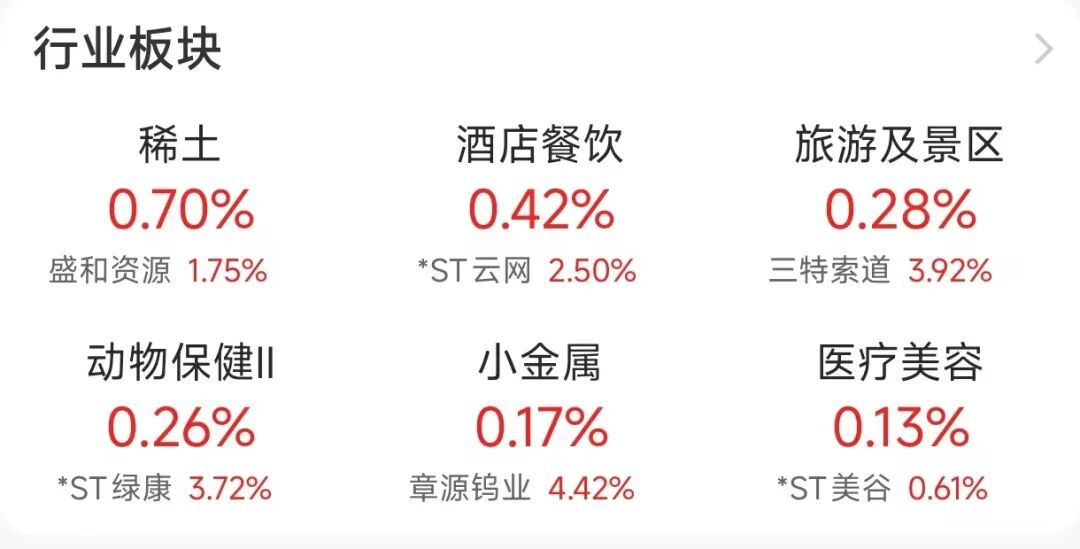
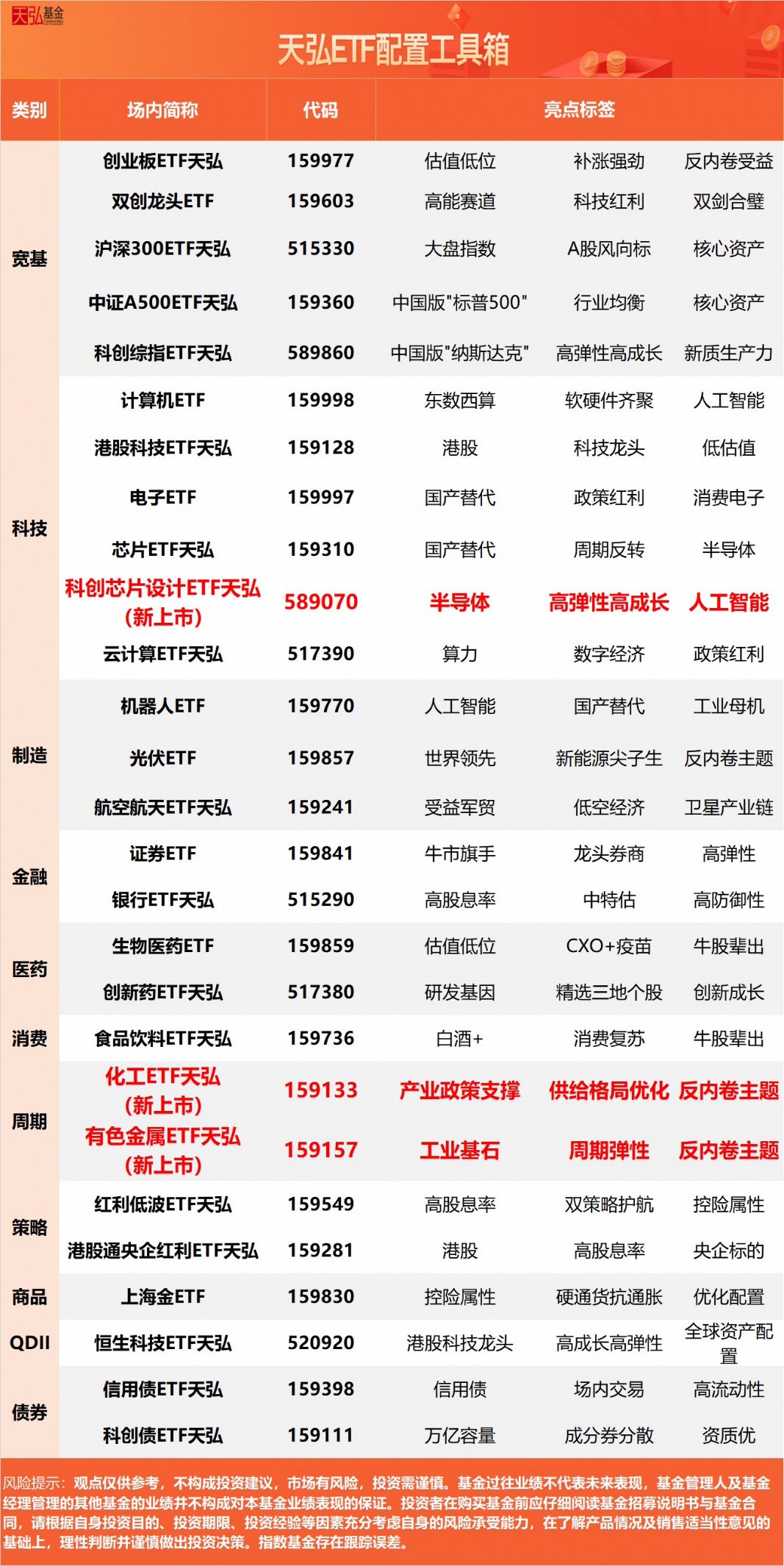
Core Viewpoint - The non-ferrous metal ETF Tianhong (159157) has shown strong market activity with a turnover of 14.43% and a transaction volume of 323 million yuan, reflecting a robust performance in the sector [1] Group 1: ETF Performance - As of February 25, the non-ferrous metal ETF Tianhong (159157) reached a new high with a total size of 2.265 billion yuan and 2.180 billion shares outstanding [2] - The ETF has experienced continuous net inflows over the past eight days, totaling 1.075 billion yuan, with a peak single-day inflow of 269 million yuan [2] Group 2: Product Highlights - Investors interested in the non-ferrous metal sector can consider the Tianhong non-ferrous metal ETF (159157), which closely tracks the industrial non-ferrous index (H11059.CSI) and selects 30 large-cap companies involved in copper, aluminum, rare earths, lead-zinc, and tungsten-molybdenum [3] - The combined weight of the copper and aluminum sectors exceeds 50%, emphasizing the core focus of the industrial non-ferrous index [3] Group 3: Market Trends - On February 25, the rare earth sector saw significant gains, with Northern Rare Earth hitting the daily limit. Prices for various rare earth products have increased post-holiday, with notable price rises for praseodymium-neodymium oxide and other metals [4]
稀缺性加持,小金属资产重启“狂飙”模式
Di Yi Cai Jing· 2026-02-25 13:00
Group 1: Market Trends - The non-ferrous and rare metals sectors experienced significant gains, with stocks like Hanrui Cobalt, Yunnan Zhenye, and Northern Rare Earth reaching their daily price limits [1] - The small metals and rare earth sectors surged, with Northern Rare Earth attracting over 2.9 billion yuan in capital inflow, and stocks like Hanrui Cobalt and Yunnan Zhenye hitting their daily limits [3] - Basic metals also showed strength, with aluminum and copper stocks in Hong Kong rising significantly, driven by concerns over electricity shortages [5] Group 2: Pricing and Demand Dynamics - The U.S. government plans to use AI models for pricing key minerals, including germanium, gallium, antimony, and tungsten, which may shift the global supply-demand landscape [2] - The prices of rare earth products have increased post-holiday, with significant price rises noted for various rare earth oxides and metals [3] - The demand for rare earth materials is being driven by the explosive growth in AI-related hardware, with sales of AI glasses increasing by 70%-80% during the holiday period [3] Group 3: Future Outlook - Analysts predict that the global AI server market will drive demand for rare earth permanent magnets and high-end tin materials, indicating a shift in the role of small metals in production [4] - Concerns over electricity shortages are expected to support a sustained shortage in the global aluminum market, with forecasts suggesting a 15% increase in aluminum prices by 2026 [5] - Citigroup maintains a bullish outlook on copper prices, expecting them to rise to $14,000 per ton in the next three months, driven by strong buying in both physical and financial markets [6]





策略点评:周期股领涨市场
Tebon Securities· 2026-02-25 11:00
Market Overview - The A-share market continues to show a strong upward trend, with the three major indices collectively rising. The cyclical sectors, including real estate services, non-ferrous metals, and steel, lead the market, while the technology growth sector shows mixed performance [3][6] - As of the market close, the Shanghai Composite Index rose by 0.72% to 4147.23 points, the Shenzhen Component Index increased by 1.29% to 14475.87 points, and the ChiNext Index climbed by 1.41% to 3354.82 points. The total market turnover reached approximately 2.48 trillion, indicating a good profit effect with 3742 stocks rising and 1609 falling [2][3] Sector Performance - The cyclical stocks have shown significant strength, with steel, non-ferrous metals, real estate, building materials, and basic chemicals rising by 4.26%, 3.53%, 2.51%, 2.41%, and 2.37% respectively. The recent policy adjustments in Shanghai's real estate sector have further boosted these sectors [6][8] - The rare earth sector also experienced a surge, with prices for various rare earth products increasing significantly post-holiday. For instance, the average price of praseodymium and neodymium oxide rose by 4.16 million yuan/ton, while neodymium metal increased by 8 million yuan/ton [6][8] Investment Themes - The report identifies several key investment themes, including AI applications, commercial aerospace, nuclear fusion, quantum technology, brain-machine interfaces, robotics, consumer sectors, brokerage firms, precious metals, and non-ferrous metals. Each theme has specific core logic and follow-up points for future monitoring [9][10] - The AI application sector is highlighted for its potential growth driven by product application acceleration and technological upgrades. The commercial aerospace sector is supported by the establishment of a commercial aerospace office, while nuclear fusion and quantum technology are gaining traction due to industrialization and policy support [9][10] Market Sentiment and Future Outlook - The report suggests a shift in market sentiment from "concept-driven" to "price-driven" profit enhancement, indicating a balanced allocation between technology and consumer sectors. The upcoming "Two Sessions" may further influence the cyclical sectors, particularly in real estate policy implementation and commodity prices [8][11] - The bond market is experiencing adjustments, with the long-end bonds leading the decline. The report notes that the LPR rates remain unchanged, and the market is expected to maintain a stable liquidity environment in the short term [8][11]
收评:深成指、创指双双涨超1% 涨价题材股集体爆发
Xin Lang Cai Jing· 2026-02-25 07:40
Core Viewpoint - The article discusses the upward trend in the stock market driven by cyclical price increases and the spread of AI, suggesting a potential for market fluctuations to rise ahead of the Two Sessions [1]. Market Performance - The three major stock indices collectively rose, with the Shanghai Composite Index closing at 4147.23 points, up 0.72%, the Shenzhen Component at 14475.87 points, up 1.29%, and the ChiNext Index at 3354.82 points, up 1.41% [3][13]. - Over 3700 stocks increased in value, indicating a predominance of gains in the market [3][13]. Sector Highlights - **Rare Earth Permanent Magnet Sector**: Stocks such as Baotou Steel and China Aluminum International saw significant gains, with prices for various rare earth products increasing post-holiday. For instance, the average price of praseodymium and neodymium oxide rose by 4.16 million yuan/ton [5][14]. - **Real Estate Sector**: Companies like I Love My Home and Hualian Holdings experienced stock price surges, supported by promotional activities from nearly 50 real estate firms in Guangzhou, offering over 140 properties with discounts [6][15]. Consumer Trends - **Restaurant Industry**: Goldman Sachs forecasts a 4.2% year-on-year growth in mainland China's restaurant sales, up from 3.2% last year. The report notes a stabilization in consumer demand and price increases due to rising operational and raw material costs [9][18]. - **Takeout Orders**: The increase in takeout orders is expected to impact profitability negatively, but ongoing high levels of subsidies and product variety expansion are anticipated to support same-store sales growth [9][18]. Institutional Insights - Zhongyuan Securities indicates that the inflow of funds into the market is expected to provide a solid foundation for upward market movements, with a likely scenario of wide fluctuations and structural differentiation in indices [10][19]. - Dongguan Securities highlights a general rise in global assets during the Spring Festival, with AI and resource products becoming market focal points, suggesting a high probability of index increases post-holiday [10][19].





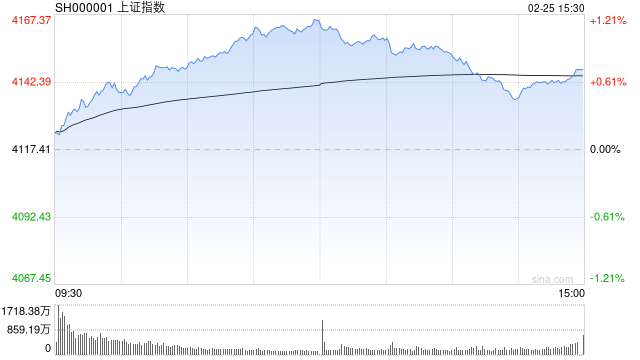
A股收评:沪指涨0.72%、创业板指涨1.41%,涨价题材股集体爆发,全市场超3700股走高,连续两日超百股涨停
Jin Rong Jie· 2026-02-25 07:11
Core Viewpoint - The A-share market experienced a strong upward trend, with significant gains across major indices, driven by resource stocks and specific sectors like semiconductors and rare earths [1][2][3]. Market Performance - The Shanghai Composite Index rose by 29.82 points, or 0.72%, closing at 4147.23 points; the Shenzhen Component increased by 184.3 points, or 1.29%, to 14475.87 points; the CSI 300 Index gained 28.34 points, or 0.6%, ending at 4735.89 points; the ChiNext Index climbed 46.55 points, or 1.41%, to 3354.82 points; and the STAR 50 Index rose by 7.91 points, or 0.54%, to 1473.28 points [1]. Sector Highlights - Resource stocks, particularly in rare earths and precious metals, saw significant gains, with companies like Shenghe Resources hitting the daily limit up and achieving historical highs [2]. - The price of praseodymium and neodymium oxide increased to an average of 882,000 yuan/ton, up by 41,600 yuan/ton compared to before the holiday [2]. - The semiconductor sector showed strength, with stocks like Yiyuan Silicon and Fuchuang Precision rising over 10% [3]. Weakness in Certain Sectors - The film and media sector faced continuous declines, with companies like Hengdian Film experiencing consecutive limit downs [4]. - AI application stocks weakened, with some individual stocks in storage chips and optical modules undergoing corrections [4]. Institutional Insights - Dongguan Securities noted a high probability of market gains post-holiday, with historical data indicating a significant increase in A-share prices after the Spring Festival [5]. - China Galaxy Securities highlighted that the market will be driven by policy catalysts around the Two Sessions, with a focus on "hotspot rotation and style switching" [5]. - Zhongyuan Securities observed that the volatility in funds before the Spring Festival is nearing its end, with a rebound in equity fund issuance and significant inflows into overseas mutual funds [5]. Short-term Market Outlook - Caixin Securities suggested that there is still room for improvement in short-term risk appetite, with the market likely to remain volatile [6]. - Huatai Securities emphasized the mid-term value of sectors like robotics and intelligent driving, driven by recent high-profile events [6].



稀土永磁概念再度拉升 盛和资源等多股涨停
Jin Rong Jie· 2026-02-25 05:31
Core Viewpoint - The rare earth permanent magnet sector has seen a significant surge, with multiple companies reaching their historical highs, driven by rising prices of rare earth products [1] Group 1: Market Performance - Shenghe Resources has hit the daily limit and continues to set historical highs, while other companies like Northern Rare Earth, China Rare Earth Holdings, and Baotou Steel have also reached their daily limits [1] - The prices of various rare earth products have increased post-holiday, with notable rises in prices for praseodymium-neodymium oxide, metallic praseodymium-neodymium, metallic neodymium, dysprosium oxide, and terbium oxide [1] Group 2: Price Changes - As of February 24, the average prices for rare earth products are as follows: - Praseodymium-neodymium oxide: 882,000 CNY/ton, up by 41,600 CNY/ton - Metallic praseodymium-neodymium: 1,036,700 CNY/ton, up by 31,700 CNY/ton - Metallic neodymium: 1,120,000 CNY/ton, up by 80,000 CNY/ton - Dysprosium oxide: 1,622,900 CNY/ton, up by 170,000 CNY/ton - Terbium oxide: 6,438,000 CNY/ton, up by 118,000 CNY/ton [1]