
铜箔基板

Search documents
利好突袭 涨停潮来了
Zhong Guo Ji Jin Bao· 2026-02-26 05:04
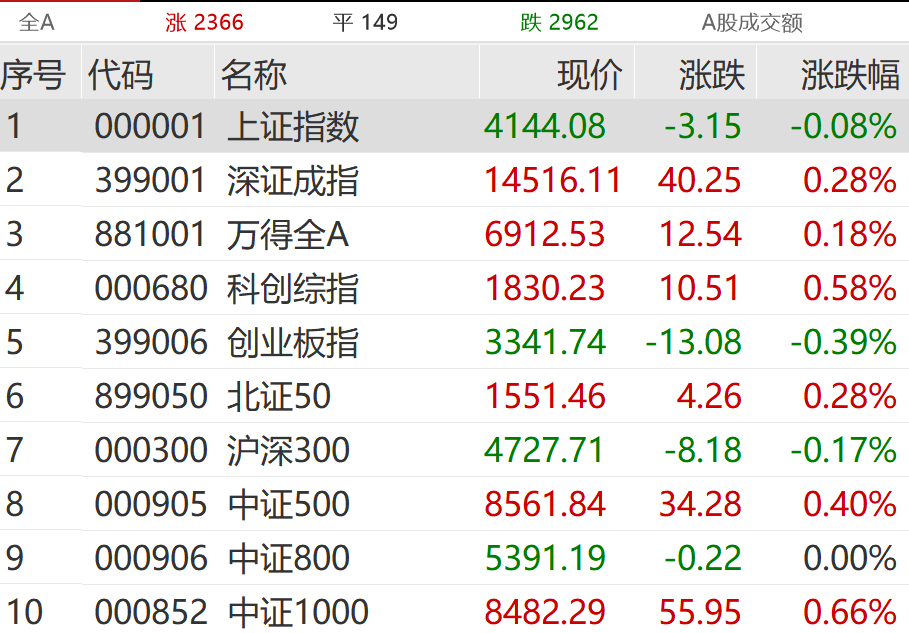
Market Overview - A-shares experienced mixed fluctuations, with the Shanghai Composite Index down 0.08% to 4144.08, while the Shenzhen Component rose 0.28% to 14516.11 [2][3] - The total market turnover reached 1.65 trillion yuan, showing an increase compared to the previous day, with 2366 stocks rising and 2962 stocks falling [2] Sector Performance - The computing hardware sector saw significant gains, with stocks related to circuit boards, optical communication, and computing leasing becoming active [3][6] - Conversely, the lithium battery sector experienced a downturn, with major stocks like CATL and others dropping over 5% [10][12] Notable Stocks - Several stocks in the computing hardware sector hit their daily limit, including Guanghe Technology, Dazhu Laser, and Zhongtian Technology, with increases of around 10% [6][7] - ShenNan Circuit reached a price of 290.14 yuan per share, with a total market value approaching 200 billion yuan [8] Lithium Battery Sector - The lithium battery sector faced a decline, with stocks such as Penghui Energy and Yahua Group falling by over 9% and 8% respectively [10][11] - A report indicated that Zimbabwe's mining department has imposed a ban on lithium ore exports, which could lead to a short-term supply shortage and potentially drive lithium prices up [12] Hong Kong Market - The Hong Kong market saw a decline, but stocks under Li Ka-shing's "Cheung Kong Group" rose against the trend, with Cheung Kong Infrastructure and Power Assets increasing by over 5% [14][16] - The sale of the UK Power Networks business by the "Cheung Kong Group" generated over 110 billion HKD, which will be used for future investments and acquisitions [16]




A股开盘:沪指微涨0.09%、创业板指跌0.24%,锂矿概念股爆发,磷化工板块延续强势
Jin Rong Jie· 2026-02-26 01:36
Market Overview - The A-share market showed mixed performance with the Shanghai Composite Index up 0.09% at 4151.07 points, and the Shenzhen Component Index up 0.14% at 14495.86 points, while the ChiNext Index fell 0.24% to 3346.74 points [1] - The lithium mining sector opened significantly higher, with Jin Yuan Co. hitting the daily limit, and other companies like Jiangte Electric and Yongshan Lithium also showing strong gains [1] - The market saw a total turnover of 2.2 trillion yuan, with over 4000 stocks rising, including 109 stocks hitting the daily limit [1] Company Dynamics - Gree Electric's largest shareholder plans to reduce its stake by up to 111.70 million shares, representing 2% of the total share capital, to repay bank loans, which may impact the stock price [2] - Hanlan Co. reported a revenue of 10.467 billion yuan for 2025, a 13.04% increase, but net profit fell by 9.59% to 592 million yuan, indicating mixed performance [2] - Chuanjinno is facing potential operational impacts due to high raw material costs and market rumors regarding U.S. national security priorities affecting its business [2] Corporate Changes - Huayong New Materials and Falan Technology are both facing stock suspension due to potential changes in control as their major shareholders plan to transfer shares [3] - Muyuan Foods is changing its name to Muyuan Food Group, which does not affect its stock code or abbreviation [3] - ST Xinhuajin is under investigation by the China Securities Regulatory Commission for information disclosure violations, which may pressure its stock price [3] Resource and Investment Developments - Xiyes Co. has the largest primary indium production base globally, with 4821 tons of indium resources, which could positively impact its performance if market prices rise [4] - Shandong Haohua plans to invest 4.837 billion yuan in a project aimed at upgrading its traditional chemical industry for sustainable development [4] Industry Trends - The electronic fabric market is experiencing price increases due to rising demand from AI applications, with prices for electronic-grade glass fiber cloth rising by 33% [6] - The shipping sector is seeing a surge in VLCC rental prices for transporting oil to China, which has tripled since the beginning of the year, indicating potential investment opportunities [7] - The copper foil market is facing a price increase of over 30% due to rising costs of key raw materials, which may impact related industries [7] Strategic Insights - Huatai Securities notes that the U.S. listing of phosphorus as a strategic resource could have long-term implications for the market, especially if demand increases [9] - Guotai Junan Securities highlights significant divergence in U.S. stock performance, suggesting a potential return to growth in technology sectors as market anxieties ease [9] - CICC suggests that recent housing policy adjustments in Shanghai may stabilize local real estate prices, presenting investment opportunities in the sector [9]

未知机构:2月24日复盘笔记化工油气贵金属矿产资源光通信智能电网等-20260225
未知机构· 2026-02-25 03:50
Summary of Key Points from Conference Call Records Industry Overview - The records cover various industries including chemicals, oil and gas, precious metals, mineral resources, optical communication, and smart grids [1][1]. Key Insights and Arguments - **Railway Passenger Traffic**: During the Spring Festival holiday, the national railway transported a total of 121 million passengers, averaging 13.41 million per day, which represents an 11.5% increase compared to the same period last year [1][1]. - **Consumer Goods Sales**: The "old for new" consumption policy has benefited 30.53 million people this year, driving sales revenue to 204.54 billion yuan [1][1]. - **Stock Market Performance**: The Shanghai Composite Index rose by 0.87%, the Shenzhen Component Index increased by 1.36%, and the ChiNext Index went up by 0.99%, while the Sci-Tech 50 Index fell by 0.34% [1][1]. - **Trading Volume**: The total trading volume in the Shanghai and Shenzhen markets reached 2.2 trillion yuan, an increase of 219.4 billion yuan compared to the previous trading day [1][1]. Specific Industry Developments - **Phosphate and Glyphosate**: The U.S. has classified phosphorus and glyphosate as key strategic materials, leading to a global restructuring of the phosphate supply chain and causing international phosphate fertilizer prices to exceed $700 per ton [2][3]. - **Urea Prices in India**: The bidding price for urea in India has reached a new high, with East Coast CFR at $512 per ton and West Coast CFR at $508 per ton, an increase of approximately $85 per ton compared to January [3][3]. - **Oil Prices**: WTI crude oil futures rose by 1.9%, while Brent crude oil futures increased by 1.86% [3][3]. - **Gold Prices**: Spot gold prices reached $5,200 per ounce, marking a nearly 2% increase [3][3]. - **Optical Fiber Prices**: The demand for AIDC has led to a new cycle of rising prices for optical fibers, with the average price of G.652.D single-mode optical fiber in China exceeding 35 yuan per core kilometer, the highest in nearly seven years [3][3][5]. Supply Chain and Pricing Trends - **Transformer Supply Gaps**: The North American market faces a 30% supply gap for power transformers and a 6% gap for distribution transformers, with import dependency rates at 80% and 50% respectively [5][5]. - **Glass Fiber Price Increases**: Due to rising costs and supply tightness, glass fiber manufacturers are expected to initiate a second round of price increases, with planned monthly adjustments of 10% to 15% [5][5]. - **MLCC Price Increases**: Murata plans to raise prices for MLCCs used in AI servers by 20% [6][6]. - **PCB Material Price Increases**: Resonac announced a price increase of over 30% for PCB materials due to tight supply and soaring prices [7][7]. Semiconductor Market Insights - **Inventory Levels**: SK Hynix reported that its DRAM and NAND inventory has dropped to approximately four weeks, with expectations for continued decline throughout the year [8][8]. - **AI Storage Chip Pricing**: Samsung is negotiating prices for its latest AI storage chip HBM4, which is expected to be 20% to 30% higher than the previous generation, with an estimated price of around $700 [8][8]. Energy Sector Developments - **Natural Gas Power Generation**: The U.S. has over 29 GW of natural gas power generation capacity under construction, more than doubling within a year [9][9]. Coal and Shipping Market Updates - **Coal Prices**: As of February 23, the benchmark price for thermal coal was 720.50 yuan per ton, up 1.84% from the beginning of the month [10][10]. - **Baltic Dry Index**: The Baltic Dry Index reached 2,112 points, the highest since February 2, 2026 [10][10]. Conclusion - The records highlight significant trends and developments across multiple industries, indicating potential investment opportunities and risks associated with supply chain dynamics, pricing pressures, and market performance.
未知机构:玻璃布供应持续吃紧业者计划启动第二轮涨价-20260224
未知机构· 2026-02-24 04:15
Summary of Conference Call Records Industry Overview - The glass fabric supply is experiencing a continuous tightening, leading to plans for a second round of price increases. Suppliers and industry insiders predict that due to rising costs and supply constraints, monthly price adjustments are expected. If this trend continues, prices could potentially double by the end of 2026, impacting the electronics and PCB industry chain significantly [1][1][1]. Key Points and Arguments - **Price Increase Dynamics**: Since October 2025, there have been four rounds of price increases for ordinary electronic fabric, with the adjustment cycle shifting from quarterly to monthly. This new round of price hikes is not starting from a low base, as the cumulative annual increase in glass fiber has already exceeded significant levels [1][1][1]. - **Reasons for Price Increases**: - Increased PCB layer counts for AI servers leading to a sharp rise in the amount of electronic fabric used, resulting in supply shortages [2][2][2]. - High demand for low dielectric constant (low-Dk) and low thermal expansion coefficient (low-CTE) electronic fabrics, which are also in short supply [2][2][2]. - Dependence on imported core equipment, complex drawing processes, and lengthy customer certification cycles (2-3 years) contribute to supply constraints [2][2][2]. - **Cost Factors**: Rising costs of resin and energy, combined with increased transportation and environmental compliance costs, are further driving price increases [3][3][3]. - **Market Analysis**: Huatai Securities reports that the new round of price increases is substantial and the cycle is shortening, indicating a spread of the tight supply situation from high-end to ordinary products. The supply of ordinary electronic fabric is significantly constrained, with expectations for a new price increase cycle starting in 2026. High-end electronic fabrics, particularly second-generation low dielectric and low thermal expansion products, will still face supply gaps in 2026, likely leading to further price increases [4][4][4]. Additional Important Insights - Electronic-grade glass fiber fabric (electronic fabric) is a crucial raw material for manufacturing core copper foil substrates for electronic products. Since the second half of 2025, high-end electronic fabric has been in short supply, with prices continuously rising [4][4][4]. - Citigroup analysts predict that the price increase for electronic fabric could reach significant levels in 2026, potentially affecting end products such as smartphones and laptops [4][4][4]. - Several companies in mainland China have recently made progress in the high-end electronic fabric sector. For instance, International Composites has developed low dielectric glass fiber for 5G applications, which has been certified by customers and is now in mass production. Zhongcai Technology's products include low dielectric first and second-generation fiber fabrics, all of which have completed domestic and international customer certifications and are in mass supply [4][4][4]. - Glass fabric accounts for approximately 30% of the cost of copper foil substrates, and the price increase has already led to rising costs in copper foil substrates, which are being transmitted through the PCB industry chain [5][5][5]. - Nitto Denko, a major supplier of T-shaped glass fabric, holds over 90% of the global supply of low thermal expansion electronic fabric, but new production capacity is not expected to come online until 2027, which will enhance performance by approximately 20% [5][5][5]. - Some manufacturers are shifting production capacity from traditional E-glass to the more in-demand low dielectric glass fabric, exacerbating the supply gap for ordinary electronic fabric [5][5][5].
未知机构:大陆玻纤布业再掀涨价潮月度调整10至15到年底价格可能翻倍-20260224
未知机构· 2026-02-24 04:05
Summary of the Conference Call on the Glass Fiber Fabric Industry Industry Overview - The conference call discusses the glass fiber fabric industry in mainland China, focusing on the price increase trends and supply constraints affecting the market for electronic products and PCB (Printed Circuit Board) manufacturing [1][2]. Key Points and Arguments - **Price Increase Trends**: Manufacturers plan to initiate a second round of price increases for glass fiber fabric, with monthly adjustments expected to be between 10% and 15%. If this trend continues, prices could potentially double by the end of 2026 [1][2]. - **Historical Context**: Since 2025, the cumulative annual price increase for glass fiber has exceeded 50%. The current price hike is seen as an escalation following significant prior increases [1][2]. - **Supply Constraints**: The supply of glass fiber fabric is tight, driven by increased demand for AI server PCBs, which require more electronic fabric per unit. This has led to a structural shortage of high-end products, particularly low-Dk (low dielectric constant) and low-CTE (low coefficient of thermal expansion) electronic fabrics [3][6]. - **Production Limitations**: Capacity expansion is hindered by reliance on imported core equipment, complex drawing processes, and lengthy customer certification cycles (2-3 years) [3][4]. - **Cost Pressures**: Rising costs of raw materials, energy, transportation, and compliance with environmental regulations are contributing to the overall cost pressures in the industry [4]. Additional Important Insights - **Market Dynamics**: The tightening supply of ordinary electronic fabric is expected to lead to a new price increase cycle starting in 2026. There remains a supply gap for high-end electronic fabrics, particularly the second-generation low dielectric and low thermal expansion products, which are likely to see continued price increases [5][6]. - **Impact on End Products**: Analysts predict that the price increases in electronic fabrics could lead to a 25% or higher increase in prices for end products such as smartphones and laptops in 2026 [6]. - **Technological Advancements**: Several companies in mainland China have made progress in the high-end electronic fabric sector, with products like low dielectric glass fiber for 5G applications already in mass production and customer certification [7]. - **Value Contribution**: Glass fiber fabric accounts for approximately 30% of the cost of copper foil substrates, and the price increases are expected to drive up the prices of copper foil substrates, which will subsequently affect the PCB supply chain [7]. Conclusion The glass fiber fabric industry is experiencing significant price increases driven by supply constraints and rising demand, particularly from the AI sector. The ongoing cost pressures and production limitations are likely to continue influencing market dynamics, with potential ripple effects on the broader electronics market.
芯片关键材料,大幅涨价
半导体行业观察· 2026-02-23 01:45
Group 1 - The core viewpoint of the articles indicates that due to rising costs and supply constraints, manufacturers of glass fiber in mainland China are expected to initiate a new round of price increases, with monthly adjustments projected between 10% to 15%, potentially doubling prices by the end of 2026 [2][3] - Since 2025, the cumulative annual increase in glass fiber prices has exceeded 50%, and the new price hike is an additional escalation on top of previous increases [2] - The supply of ordinary electronic cloth is significantly constrained, which is expected to lead to a new price increase cycle starting in 2026, while high-end electronic cloth products still face supply gaps [2][3] Group 2 - Citigroup analysts predict that the price of electronic cloth could rise by 25% or more in 2026, which may impact end products such as smartphones and laptops [3] - Several companies in mainland China have made progress in the high-end electronic cloth sector, with products developed for 5G applications already being used in high-end smartphones [3] - The value of glass fiber cloth accounts for approximately 30% of the cost of copper foil substrates, and the supply tightness has already led to price increases in copper foil substrates, affecting the PCB industry chain [3] Group 3 - Nitto Boseki, a major supplier controlling over 90% of the global low thermal expansion electronic cloth market, plans to launch an upgraded version of its glass fiber cloth by 2028 to meet the growing demand from AI semiconductor applications [4] - The new product aims to reduce the thermal expansion coefficient from 2.8 ppm to 2.0 ppm, which is crucial for the performance of AI chips [4] - Nitto Boseki is also investing 15 billion yen (approximately 96 million USD) to triple the production capacity of its glass fiber yarn in Taiwan, with new facilities expected to be operational by 2027 [5] Group 4 - Other manufacturers, such as Unitika and Asahi Kasei, are also producing high-performance glass cloth, with Asahi Kasei developing quartz cloth for faster data transmission [6] - Asahi Kasei plans to start mass production of quartz cloth as early as this year, aiming to double sales in the sector from 2024 to 2030 [6] - Shin-Etsu Chemical is exploring quartz cloth applications and plans to produce high-demand products on a large scale [6]
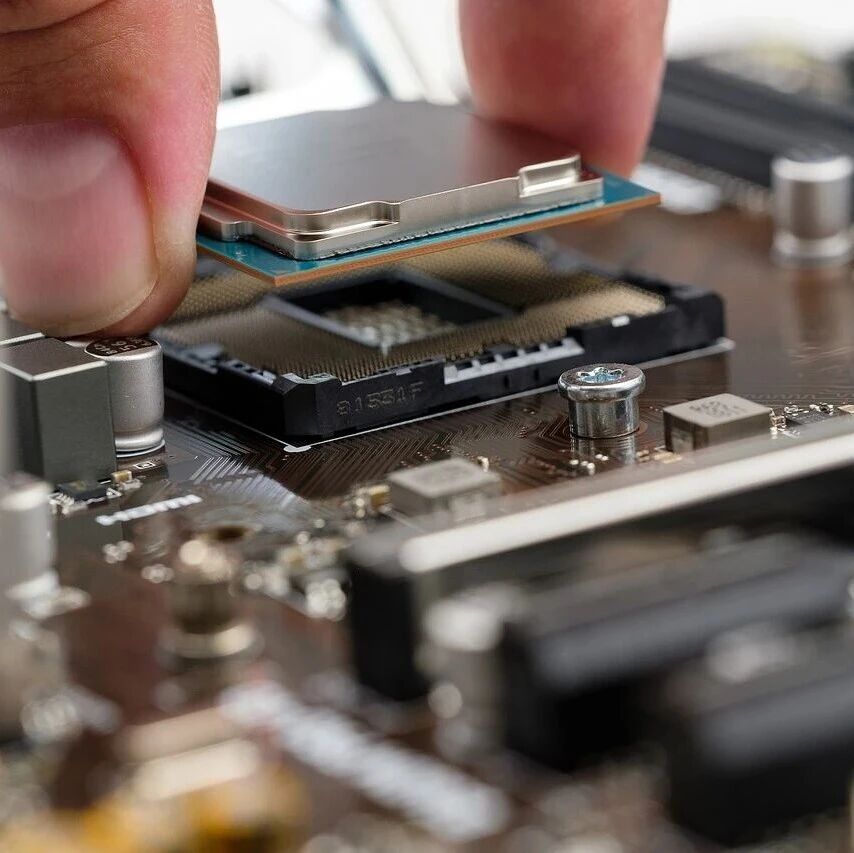
A股PCB概念震荡回升,铜冠铜箔涨超10%创新高
Ge Long Hui A P P· 2026-02-13 05:24
Group 1 - The core viewpoint of the article highlights a significant increase in the stock prices of PCB-related companies following a price hike announcement by Resonac, a Japanese semiconductor materials manufacturer [1] - Copper Crown Copper Foil saw its stock price rise over 10%, reaching a historical high, while other companies such as Huibai New Materials, Jiangnan New Materials, Qiangda Circuit, Tianjin Printech, and Huazheng New Materials also experienced gains [1] - Resonac announced a price increase of over 30% for copper foil substrates (CCL) and adhesive films used in printed circuit boards (PCBs), effective from March 1 [1]
玻璃纤维行业回暖!多家上市公司发布业绩预告,最高预增3377%到3969%
Hua Xia Shi Bao· 2026-01-30 13:05
Core Viewpoint - The glass fiber industry is experiencing a significant recovery in performance, with several companies reporting substantial profit increases for 2025, driven by rising demand in related sectors, particularly influenced by AI growth [2][3]. Performance Growth - Honghe Technology expects a net profit of 192.7 million to 225.5 million yuan for 2025, representing a year-on-year increase of 745% to 889%. The company's non-recurring net profit is projected to rise by 3377% to 3969% [3]. - Filihua anticipates a net profit of 41.2 million to 47.2 million yuan for 2025, reflecting a growth of 31.12% to 50.22% year-on-year [3]. - China National Materials Technology forecasts a net profit of 155 million to 195 million yuan for 2025, an increase of 73.79% to 118.64% compared to the previous year [5]. Product Price Increases - The glass fiber industry is witnessing price increases due to optimized product structures and rising demand, particularly in wind power and electronic applications [5]. - International Composite, a leading company in the industry, expects to turn a profit in 2025, with a projected net profit of 26 million to 35 million yuan, driven by improved product pricing and sales growth [5]. Market Dynamics - The supply of electronic cloth is tight, with prices rising significantly due to increased demand and limited new capacity. The price of high-grade low thermal expansion coefficient glass fiber electronic cloth has surged by 250% to 300% since early 2024 [6]. - Factors contributing to the price increase include limited supply growth, rising demand from AI applications, and a shift in production focus towards specialized and thinner fabrics, which has created a supply-demand gap [7].

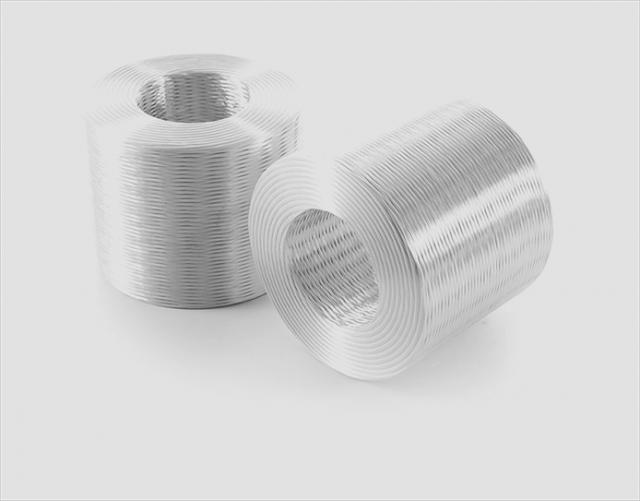
1月22日主题复盘 | 航天板块大幅反弹,油服、PCB表现不俗
Xuan Gu Bao· 2026-01-22 09:11
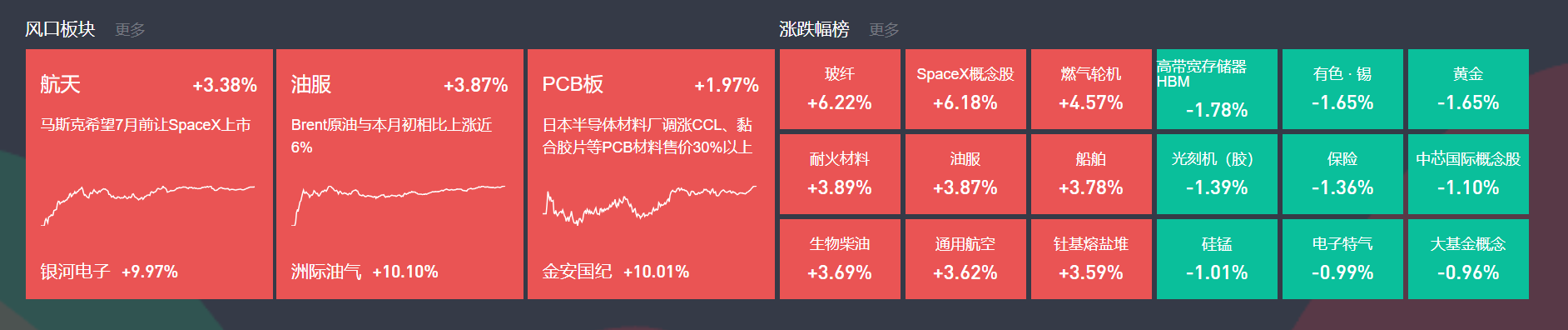
Market Overview - The market experienced a rebound with all three major indices rising, driven by strong performances in the commercial aerospace sector, oil and gas stocks, and PCB (Printed Circuit Board) sector [1] - Over 3,500 stocks in the Shanghai and Shenzhen markets saw gains, with a total trading volume of 2.72 trillion [1] Aerospace Sector - The aerospace sector saw significant gains, with multiple stocks such as Galaxy Electronics, Giant Lifting, and China First Heavy Industries hitting the daily limit [4][5] - Elon Musk is actively pushing for SpaceX's IPO, aiming for completion by July this year [4][5] - Analysts predict that SpaceX could dominate 99% of the global orbital payload capacity by 2026, reshaping the space economy [6] Oil Services Sector - The oil services sector surged, with stocks like Intercontinental Oil and Renji Holdings reaching their daily limits [7][8] - The International Energy Agency (IEA) raised its forecast for global oil demand growth in 2026 to 930,000 barrels per day, up from a previous estimate of 860,000 barrels per day [7] - The oil services industry is expected to benefit from increased capital expenditure, projected to reach $66.3 billion and $68.3 billion in 2025 and 2026, respectively, with growth rates of 10% and 3.2% [8] PCB Sector - The PCB sector experienced a strong rally, with stocks like Jin'an International and Honghe Technology hitting their daily limits [9][10] - Jin'an Guoji announced a projected net profit of 280 million to 360 million for 2025, representing a year-on-year increase of 655.53% to 871.40% [9] - Due to supply constraints and rising prices of raw materials, Japanese semiconductor material manufacturers are increasing prices of PCB materials by over 30% starting March 1 [9] Robotics Sector - The robotics sector showed active performance, with several stocks experiencing gains [11] Semiconductor Sector - The semiconductor sector faced declines, with stocks like Blue Arrow Electronics dropping nearly 10% [1][11]


智通港股解盘 | 黄金持续大涨警惕热度太高 CPU产能告罄再度刺激半导体
Zhi Tong Cai Jing· 2026-01-21 12:05
Market Overview - The U.S. stock market experienced a significant decline, which is considered a normal correction, with expectations for potential positive signals from Trump's speech at the World Economic Forum in Davos [1] - On January 21, the U.S. plans to cut approximately 200 positions from NATO and its affiliated organizations, aligning with a strategy to redirect resources towards the Western Hemisphere [1] - The U.S. Treasury Secretary expressed satisfaction with China's commitment to purchasing U.S. soybeans and supplying rare earths, indicating a stable supply chain [1] Gold Market - On January 20, international gold prices surged to a new historical high, with spot prices and COMEX futures both exceeding $4,700 per ounce, driven by increased demand for safe-haven assets [2] - Zijin Mining International saw its stock rise over 4% amid speculation of being included in the Hang Seng Index adjustments scheduled for February 2026 [2] Individual Stocks - Chifeng Jilong Gold experienced a stock increase of over 9%, reflecting high market enthusiasm for gold investments, with analysts predicting gold prices could surpass $5,000 this year [3] - Xixiangfeng's stock surged over 15% due to its acquisition of a radar chip and algorithm company, enhancing its capabilities in the smart driving sector [3] - China Tobacco Hong Kong's stock rose over 10% after signing exclusive distribution agreements for global cigars, expected to boost profits [3] Semiconductor Sector - The semiconductor sector remains hot, with Intel and AMD's server CPU capacities sold out for 2026, leading to planned price increases of 10-15% [4] - Hua Hong Semiconductor's utilization rates for its 8-inch wafer fabs remain high, with its 12-inch fab expected to reach full capacity by Q3 2026 [4] Energy Storage Market - The global residential energy storage system shipment is projected to reach approximately 35 GWh by 2025, marking a nearly 50% year-on-year increase, with Germany, the U.S., Australia, and Japan dominating the market [7] - Major beneficiaries of this growth include Ganfeng Lithium, Tianqi Lithium, CATL, and Zhongxin Innovation [7] Company Performance - SANY Heavy Industry reported a revenue of 66.104 billion yuan for the first three quarters of 2025, a year-on-year increase of 13.27%, with net profit rising by 46.58% [8] - The company aims to enhance its global sales network and product R&D through its recent Hong Kong listing, raising approximately 13.3 billion HKD [8] - SANY's overseas revenue is expected to grow at a compound annual growth rate of 15.2% from 2022 to 2024, with a record high of 26.5 billion yuan in the first half of 2025 [9]