玻璃纤维布

Search documents
2025年12月建筑材料行业运行情况简报
Xin Lang Cai Jing· 2026-02-28 02:45
Core Viewpoint - The construction materials industry showed stable economic performance in December 2025, with production levels remaining steady and economic indicators improving, indicating a recovery in the external trade market [1]. Group 1: Production and Price Trends - In December, the non-metallic mineral products industry achieved a year-on-year value-added growth of 0.2%, a 2 percentage point increase from the previous month [1]. - Among 31 monitored construction materials, 10 products saw year-on-year production growth, while 21 experienced declines; notable growth was seen in fiberglass reinforced plastics, fiberglass cloth, fluorite, and sanitary ceramics, with growth rates exceeding 7% [1]. - The overall price of construction materials decreased by 0.2% month-on-month in December, with specific products like mineral fibers and building stones seeing price increases of over 1% [2]. Group 2: Economic Performance Indicators - For the year 2025, the construction materials industry's revenue decreased by 11.7% year-on-year, while total profits fell by 8.0%, with the decline rates narrowing by 0.5 and 40.6 percentage points respectively [3]. - Certain sub-industries, including mineral fibers and reinforced plastics, reported revenue growth, while others like fiber cement products and flat glass faced losses [3]. Group 3: Investment Trends - Fixed asset investment in the non-metallic mineral extraction industry dropped by 9.6% year-on-year, with a more significant decline of 10.2% in the non-metallic mineral products sector, reflecting a decrease of 22.9 and 11.8 percentage points compared to the previous year [3]. Group 4: Trade Market Recovery - In December, the export value of construction materials was $3.21 billion, a 6.7% year-on-year decline, but the total for the year was $33.47 billion, down 6.1%, with the decline rates narrowing [4]. - Exports to countries like India, Singapore, and the UAE showed significant growth, particularly in sanitary ceramics, marble products, and various glass products [4]. - The import value of construction materials in December was $1.39 billion, down 20.6% year-on-year, with the total for the year at $15.96 billion, a 26.4% decline, also showing a narrowing trend [4].


未知机构:大陆玻纤布业再掀涨价潮月度调整10至15到年底价格可能翻倍-20260224
未知机构· 2026-02-24 04:05
Summary of the Conference Call on the Glass Fiber Fabric Industry Industry Overview - The conference call discusses the glass fiber fabric industry in mainland China, focusing on the price increase trends and supply constraints affecting the market for electronic products and PCB (Printed Circuit Board) manufacturing [1][2]. Key Points and Arguments - **Price Increase Trends**: Manufacturers plan to initiate a second round of price increases for glass fiber fabric, with monthly adjustments expected to be between 10% and 15%. If this trend continues, prices could potentially double by the end of 2026 [1][2]. - **Historical Context**: Since 2025, the cumulative annual price increase for glass fiber has exceeded 50%. The current price hike is seen as an escalation following significant prior increases [1][2]. - **Supply Constraints**: The supply of glass fiber fabric is tight, driven by increased demand for AI server PCBs, which require more electronic fabric per unit. This has led to a structural shortage of high-end products, particularly low-Dk (low dielectric constant) and low-CTE (low coefficient of thermal expansion) electronic fabrics [3][6]. - **Production Limitations**: Capacity expansion is hindered by reliance on imported core equipment, complex drawing processes, and lengthy customer certification cycles (2-3 years) [3][4]. - **Cost Pressures**: Rising costs of raw materials, energy, transportation, and compliance with environmental regulations are contributing to the overall cost pressures in the industry [4]. Additional Important Insights - **Market Dynamics**: The tightening supply of ordinary electronic fabric is expected to lead to a new price increase cycle starting in 2026. There remains a supply gap for high-end electronic fabrics, particularly the second-generation low dielectric and low thermal expansion products, which are likely to see continued price increases [5][6]. - **Impact on End Products**: Analysts predict that the price increases in electronic fabrics could lead to a 25% or higher increase in prices for end products such as smartphones and laptops in 2026 [6]. - **Technological Advancements**: Several companies in mainland China have made progress in the high-end electronic fabric sector, with products like low dielectric glass fiber for 5G applications already in mass production and customer certification [7]. - **Value Contribution**: Glass fiber fabric accounts for approximately 30% of the cost of copper foil substrates, and the price increases are expected to drive up the prices of copper foil substrates, which will subsequently affect the PCB supply chain [7]. Conclusion The glass fiber fabric industry is experiencing significant price increases driven by supply constraints and rising demand, particularly from the AI sector. The ongoing cost pressures and production limitations are likely to continue influencing market dynamics, with potential ripple effects on the broader electronics market.
未知机构:东北计算机20260223SK海力士董事长承诺提高人工智能内存芯片产量-20260224
未知机构· 2026-02-24 02:55
Summary of Key Points from Conference Call Records Industry and Company Involved - **SK Hynix**: The company is focused on increasing the production of artificial intelligence memory chips [1] Core Insights and Arguments - **Commitment to AI Memory Chips**: The chairman of SK Hynix has made a commitment to enhance the production capacity of memory chips specifically designed for artificial intelligence applications [1] - **Apple's Next Breakthrough**: Tim Cook, CEO of Apple, hinted that the company's next significant advancement will be in visual artificial intelligence [2][3] - **Copper Market Forecast**: Morgan Stanley predicts a global copper shortage of 130,000 tons by 2026, with copper prices potentially reaching $13,500. This is attributed to tightening supply and surging demand driven by AI computational needs [4] Other Important but Potentially Overlooked Content - **Growth of AI Payment Solutions**: Alipay's "AI Payment" and the Ant Financial app have both surpassed 100 million users, indicating a significant adoption of AI-driven financial solutions [5] - **Price Increases in Glass Fiber Industry**: The glass fiber industry is experiencing a price surge, with monthly adjustments ranging from 10% to 15%, and prices are expected to potentially double by the end of the year [5]

芯片关键材料,大幅涨价
半导体行业观察· 2026-02-23 01:45
Group 1 - The core viewpoint of the articles indicates that due to rising costs and supply constraints, manufacturers of glass fiber in mainland China are expected to initiate a new round of price increases, with monthly adjustments projected between 10% to 15%, potentially doubling prices by the end of 2026 [2][3] - Since 2025, the cumulative annual increase in glass fiber prices has exceeded 50%, and the new price hike is an additional escalation on top of previous increases [2] - The supply of ordinary electronic cloth is significantly constrained, which is expected to lead to a new price increase cycle starting in 2026, while high-end electronic cloth products still face supply gaps [2][3] Group 2 - Citigroup analysts predict that the price of electronic cloth could rise by 25% or more in 2026, which may impact end products such as smartphones and laptops [3] - Several companies in mainland China have made progress in the high-end electronic cloth sector, with products developed for 5G applications already being used in high-end smartphones [3] - The value of glass fiber cloth accounts for approximately 30% of the cost of copper foil substrates, and the supply tightness has already led to price increases in copper foil substrates, affecting the PCB industry chain [3] Group 3 - Nitto Boseki, a major supplier controlling over 90% of the global low thermal expansion electronic cloth market, plans to launch an upgraded version of its glass fiber cloth by 2028 to meet the growing demand from AI semiconductor applications [4] - The new product aims to reduce the thermal expansion coefficient from 2.8 ppm to 2.0 ppm, which is crucial for the performance of AI chips [4] - Nitto Boseki is also investing 15 billion yen (approximately 96 million USD) to triple the production capacity of its glass fiber yarn in Taiwan, with new facilities expected to be operational by 2027 [5] Group 4 - Other manufacturers, such as Unitika and Asahi Kasei, are also producing high-performance glass cloth, with Asahi Kasei developing quartz cloth for faster data transmission [6] - Asahi Kasei plans to start mass production of quartz cloth as early as this year, aiming to double sales in the sector from 2024 to 2030 [6] - Shin-Etsu Chemical is exploring quartz cloth applications and plans to produce high-demand products on a large scale [6]
建滔积层板(01888):首次覆盖报告:全球覆铜板王者归来,铜价上行赋能盈利+AI 高端材料开启成长新周期
EBSCN· 2026-02-11 14:53
Investment Rating - The report gives a "Buy" rating for the company, indicating a positive outlook for its stock performance [3][6]. Core Insights - The company, Kingboard Laminates (1888.HK), is a leading manufacturer of copper-clad laminates with a vertically integrated supply chain, maintaining a global market share of 14.4% in 2024, the highest in the industry [2][3]. - The demand for copper-clad laminates is expected to grow due to the robust expansion of the PCB industry, driven by applications in AI servers, consumer electronics, automotive electronics, and communication devices [1][41]. - The company is well-positioned to benefit from rising copper prices and a tight supply environment, which are expected to enhance both pricing and profitability [2][3]. Company Overview - Kingboard Laminates was established in 1988 and has evolved into a major player in the copper-clad laminate market, with over 60 factories globally and a strong presence in South China and East China [1][16]. - The company specializes in various types of copper-clad laminates, including FR-4 epoxy glass fiber laminates, which are crucial for mainstream markets such as computers and communications [2][25]. Market Position - The copper-clad laminate market is characterized by high concentration, with the top four manufacturers holding approximately 50% of the market share, indicating significant barriers to entry and strong pricing power for established players [2][70]. - The report highlights that the company has a strong bargaining power due to its diversified customer base, with the top five customers accounting for less than 30% of total sales [2][3]. Financial Projections - The company is projected to achieve net profits of HKD 2.17 billion, HKD 3.95 billion, and HKD 4.84 billion for the years 2025, 2026, and 2027, respectively, reflecting growth rates of 64%, 82%, and 22% [3][5]. - The report indicates that the company's stock is currently undervalued compared to its peers, with projected P/E ratios of 27x, 15x, and 12x for the years 2025 to 2027 [3][5]. Industry Analysis - The PCB industry is expected to see a compound annual growth rate (CAGR) of 5.2% from 2024 to 2029, with the total market value projected to reach USD 94.66 billion by 2029 [1][44]. - The demand for high-frequency and high-speed copper-clad laminates is increasing, particularly in the AI server sector, which requires advanced materials to support higher data transmission rates [2][67].
龙虎榜 | 中山东路狂抛博纳影业,量化抢筹超1亿接盘!两大游资联手爆买国际复材
Ge Long Hui A P P· 2026-02-11 10:03
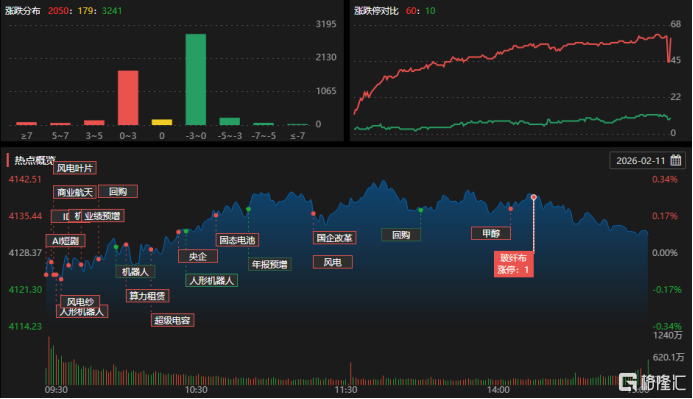
Market Overview - The trading volume of the Shanghai and Shenzhen stock markets fell below 2 trillion yuan, decreasing by 121.3 billion yuan compared to the previous trading day [1] - Sectors such as glass fiber, small metals, phosphorus chemicals, and fertilizers saw gains, while cultural media, AI corpus, tourism concepts, and cultivated diamonds experienced declines [1] Stock Performance - Notable gainers included: - Zhi Chuan Co., Ltd. (+10.01%, 14.83 yuan, 19.44% turnover) due to TMP price increase and lithium battery developments [2] - ST Zhongdi (+4.96%, 9.52 yuan, 0.13% turnover) driven by semiconductor interest and real estate [2] - ST Xuefa (+4.99%, 5.05 yuan, 0.12% turnover) linked to recovery in cultural tourism [2] - Jinfu Technology (+10.00%, 23.54 yuan, 32.82% turnover) due to acquisitions and performance expectations [2] - Jihua Group (+9.96%, 8.72 yuan, 22.98% turnover) related to control changes and dye price increases [2] Trading Dynamics - The top three net purchases on the daily leaderboard were International Composite Materials (425 million yuan), Green Beauty (411 million yuan), and Ju Jie Microfiber (157 million yuan) [5] - The top three net sales were Chinese Online (501 million yuan), China Film (286 million yuan), and Yue Media (229 million yuan) [6] Sector Insights - International Composite Materials is benefiting from rising glass fiber prices and increased demand for AI chips, with a projected price increase of 25% or more [8] - Green Beauty anticipates significant growth in nickel resource shipments and overall net profit increase of 40-70% [12] - China Film is facing a pullback after a strong performance, with a 16.71% increase over the past five trading days [15] Institutional Activity - Institutions showed significant net buying in stocks like Jie Cheng Co. (+4.73%, 8.85 yuan) and Green Beauty (+9.95%, 9.50 yuan) [7] - Conversely, institutions net sold stocks such as Xie Xin Integration and Giant Power Tools, indicating a shift in investment sentiment [8]


瞭望·治国理政纪事|加快建成中部地区崛起的重要战略支点
Xin Hua She· 2026-02-07 02:19
Core Viewpoint - Hubei is positioned as a crucial strategic support point for the rise of the central region, emphasizing its unique geographical advantages, abundant resources, and solid development foundation, as highlighted by President Xi Jinping during his visit in November 2024 [4][5][6]. Economic Growth - By 2025, Hubei's economic output is expected to stabilize at 6 trillion yuan, with a year-on-year growth of 5.5%, surpassing the national growth rate by 0.5% [5][31]. - The province has maintained a leading growth rate nationally and within the central region, playing a key role as a major economic province [5][31]. Technological Innovation - Hubei is focusing on critical technologies and future industries, aiming to establish itself as a "World Optics Valley" with significant achievements in technology, including the first urban optical remote sensing satellite and the first atomic quantum computer in China [5][10]. - The province's comprehensive technology innovation index and regional innovation capability index rank seventh nationally, with improvements noted from the previous year [10]. Manufacturing Industry - The "51020" advanced manufacturing industry cluster in Hubei is strengthening, with five pillar industries reaching a scale of one trillion yuan, and six advantageous industries approaching 500 billion yuan [17]. - Hubei's manufacturing sector is characterized by a robust industrial base, with a focus on upgrading traditional industries and fostering new and future industries [14][17]. Agricultural Development - Hubei is enhancing its supply capacity for essential agricultural products, with a projected grain output of 55.824 billion jin in 2025, maintaining a stable production level for 13 consecutive years [2][31]. - The comprehensive output value of the province's ten key agricultural industry chains is expected to reach 1.19 trillion yuan [2]. Transportation Infrastructure - Hubei has developed a comprehensive transportation network, achieving high-speed rail connectivity across cities, with significant increases in port cargo throughput and international air cargo volume [2][23]. - The province's strategic location allows it to serve as a key hub for domestic and international trade, enhancing its role in the national economy [22][24]. Environmental Sustainability - Hubei is committed to ecological protection and green transformation, with initiatives to upgrade its chemical industry and improve environmental quality [19][20]. - The province has implemented measures to ensure industrial development aligns with ecological safety, contributing to national ecological security [20]. Open Economy - Hubei is enhancing its role in domestic and international markets, with a focus on building an open economy that leverages its transportation advantages [22][25]. - The province's foreign trade is projected to reach 834.01 billion yuan in 2025, with a year-on-year growth of 18.2%, leading in both trade volume and service exports in the central region [27].

全球芯片巨头,争一块“布”
半导体芯闻· 2026-01-14 09:42
Core Viewpoint - The article discusses the critical shortage of high-end glass fiber, particularly from Nittobo, which is impacting the production of printed circuit boards (PCBs) essential for electronic devices, including iPhones and AI chips. This shortage is expected to create significant bottlenecks in the electronics manufacturing and AI industries by 2026 [2][4][6]. Group 1: Supply Chain Challenges - Apple is competing with major companies like Nvidia, Google, and Amazon for the limited supply of high-end glass fiber, which is crucial for chip substrates and PCBs [2][4]. - The demand for high-performance PCBs has surged due to the growth of artificial intelligence, leading to supply shortages that affect not only Apple but also Qualcomm [2][4]. - Apple has taken proactive measures, including sending employees to Japan to secure more materials and even seeking assistance from the Japanese government to increase supply from Nittobo [4][6]. Group 2: Industry Impact - The shortage of glass fiber is described as one of the biggest bottlenecks facing the electronics and AI industries in 2026, according to industry insiders [4][6]. - Companies like Qualcomm and AMD are also feeling the pressure, with Qualcomm exploring alternative suppliers to mitigate the supply constraints [6][7]. - The specific type of glass in demand is low thermal expansion coefficient (CTE) glass, known for its stability and high-speed data transmission capabilities, which are critical for AI computing and advanced processors [7].


韩国芯片设备公司,遭专利猎杀
半导体行业观察· 2026-01-14 01:38
Core Viewpoint - Lam Research has become a significant concern for South Korean materials, parts, and equipment (MP&E) companies due to its aggressive patent infringement lawsuits against them, despite most cases being dismissed by South Korean courts [1][2]. Group 1: Patent Infringement Lawsuits - Since the outbreak of the Japan-South Korea semiconductor materials trade dispute in 2020, Lam Research has filed 12 patent infringement lawsuits against South Korean companies, with 9 occurring after the establishment of its R&D center in Yongin, Gyeonggi Province in 2022 [1]. - The number of patents registered by Lam Research in South Korea surged from 68 in 2020 to 344 by 2025, raising concerns in the South Korean semiconductor equipment industry about the implications of such extensive patent registrations [1]. - Lam Research's lawsuits are seen as a tactic to delay the technological advancements of South Korean competitors, as the company can afford to file lawsuits without the immediate need for winning them [2]. Group 2: Legal Outcomes and Industry Impact - In a notable case, Lam Research lost a patent infringement lawsuit against CMTX, which led to CMTX successfully invalidating Lam's patent. The court ruled that Lam's patent lacked creativity, highlighting the challenges faced by Lam in its legal pursuits [3]. - Lam Research also faced defeat in a lawsuit against MP&E company PSK, where two of its claimed patents were declared invalid. In the past year alone, six of Lam's patents were invalidated [3]. Group 3: Calls for Government Action - There is a growing demand for government intervention to protect domestic technologies, as the ongoing patent lawsuits have adversely affected many companies, particularly small and medium-sized enterprises [4]. - The South Korean Intellectual Property Office provides legal consulting services to companies embroiled in patent disputes, but critics argue that the number of companies not receiving assistance is increasing due to the widespread nature of Lam Research's lawsuits [4]. - Lawmakers emphasize the need to minimize damages to local enterprises and prevent unnecessary litigation, especially during a period of significant growth in the semiconductor industry [5].

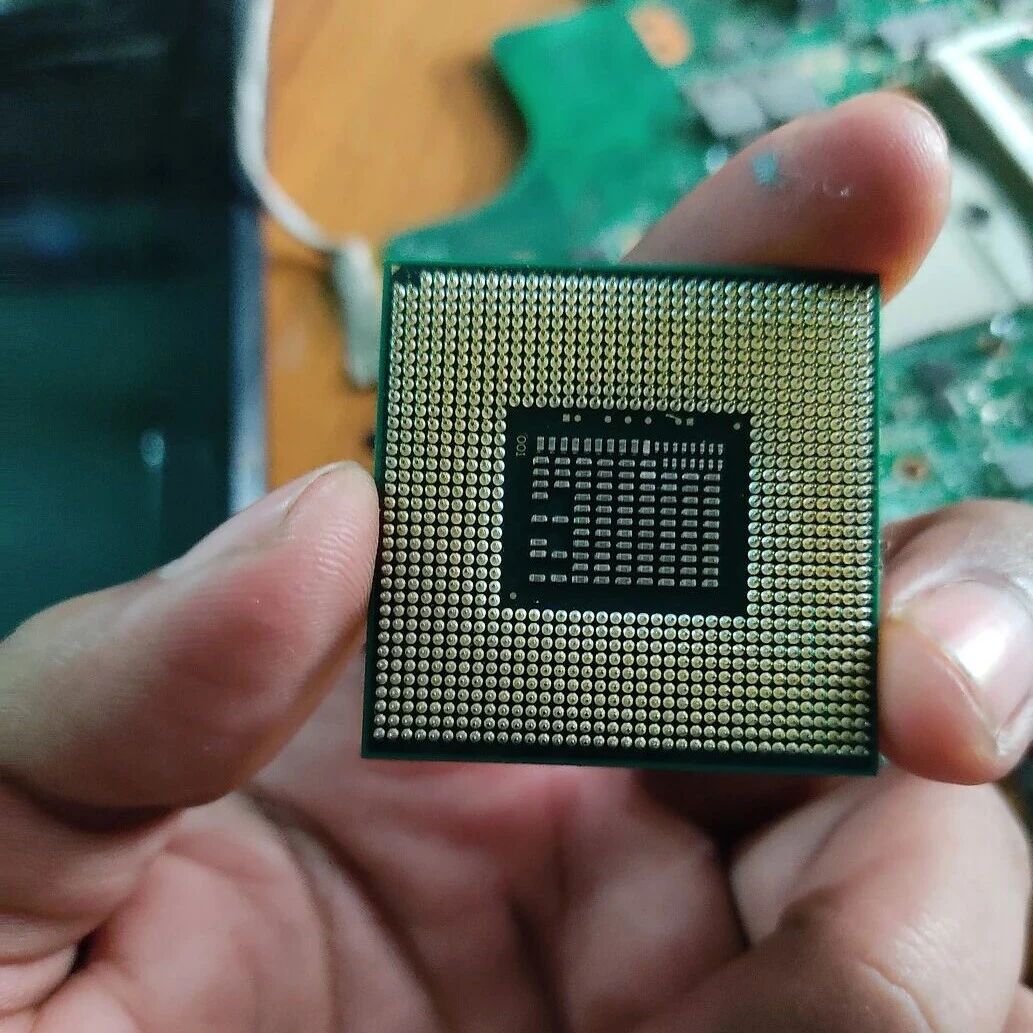
一块布,卡住了芯片脖子
半导体行业观察· 2026-01-14 01:38
Core Viewpoint - The shortage of high-end glass fiber, essential for chip substrates and printed circuit boards (PCBs), is creating significant supply challenges for companies like Apple, Nvidia, and Qualcomm, particularly as demand surges due to advancements in artificial intelligence [1][3]. Group 1: Supply Chain Challenges - Apple is competing with AI companies for high-end glass fiber from Nittobo, a Japanese manufacturer, which is the primary supplier of this material [1]. - The demand for high-performance PCBs, driven by AI developments, has led to a supply shortage affecting both Apple and Qualcomm [1][3]. - Apple has taken proactive measures, including sending employees to Japan to secure more materials for Bluetooth substrates and seeking assistance from the Japanese government [3]. Group 2: Industry Impact - The glass fiber supply constraints are expected to be one of the biggest bottlenecks for the electronics manufacturing and AI industries by 2026 [3][5]. - Companies like AMD and Nvidia have also attempted to secure supplies from Nittobo, but increasing production capacity remains limited [5]. - Qualcomm has sought alternative suppliers, such as Unitika, but their production capacity is significantly lower than that of Nittobo [5]. Group 3: Material Specifications - The specific type of glass being sought is known as low thermal expansion coefficient (CTE) glass, or T-glass, valued for its dimensional stability and high-speed data transmission capabilities, crucial for AI computing and high-end processors [6].