
青海拉面

Search documents
200余名拉面人齐聚西宁共商拉面产业发展大计
Xin Lang Cai Jing· 2026-02-09 18:13
Group 1 - The Qinghai noodle industry is undergoing a transformation from traditional dining to a modern industry, supported by a standard system [2] - The "Revitalization of the Noodle Industry" theme emphasizes open cooperation and industry win-win strategies, with a focus on using local ingredients like Qinghai yak beef [1] - A three-dimensional upgrade plan was proposed, including traditional craftsmanship, modern operations, and brand development to enhance product quality and operational efficiency [1] Group 2 - Four group standards for Qinghai noodles are set to be released in 2025, addressing long-standing issues such as inconsistent quality standards and brand image [2] - The Qinghai Noodle Industry Association has selected representative units to be awarded the provincial standardization pilot unit title for 2026, aiming to lead the industry towards standardization and high quality [2]
青海:五年累计117万脱贫劳动力实现务工增收
Zhong Guo Xin Wen Wang· 2026-02-02 13:45
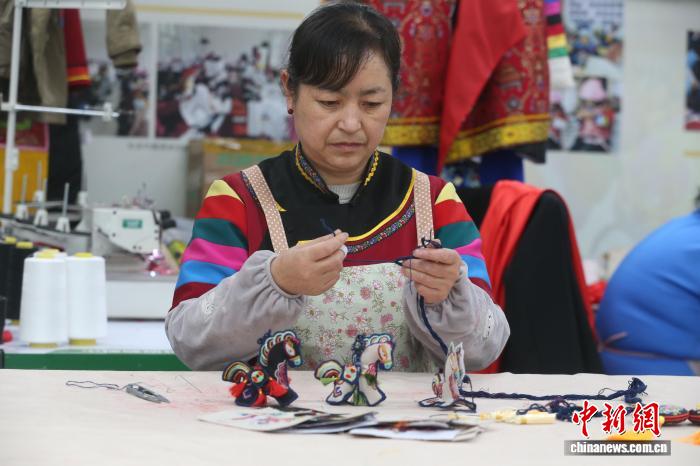
Core Insights - Over the past five years, Qinghai Province has successfully facilitated the employment of 1.17 million poverty-alleviated laborers, contributing to income generation through various employment support and skill enhancement initiatives [1][4] Employment Initiatives - Qinghai's human resources and social security department has conducted over 500,000 subsidized vocational training sessions, leading to the transfer of 5.5 million rural laborers for employment [1][3] - The province has developed unique labor service brands such as "Highland Snow Mountain Guide" and "Green Labeling Specialist," with the "Tuzu Panshow Embroiderers" brand being promoted nationally [3] Economic Impact - The "Qinghai Noodle" brand has established over 30,000 outlets across China and in 35 countries, creating job opportunities for over 200,000 individuals [3] - In Guoluo Prefecture, local labor service brands have generated employment for 42,000 people, showcasing the effectiveness of targeted labor initiatives [3] Future Plans - In 2026, Qinghai's human resources department plans to cultivate new labor service brands, such as "Highland Cool Vegetable Worker," to further enhance employment opportunities [4]

进入两会时间 多地晒出经济发展“路线图”
Zhong Guo Zheng Quan Bao· 2026-01-28 21:09
Core Viewpoint - Various regions in China have set their GDP growth targets for 2026 around 5%, focusing on expanding domestic demand, enhancing technological innovation, and building a modern industrial system [1][2]. Group 1: Economic Growth Targets - Regions such as Hainan and Xinjiang have set GDP growth targets of approximately 6% and 5.5% to 6%, respectively, while Guangdong, Shandong, Zhejiang, and Henan have targets ranging from 4.5% to 5.5% [2]. - Major cities like Beijing, Tianjin, and Chongqing have also set their GDP growth targets at around 5% [2]. Group 2: Expanding Domestic Demand - Expanding domestic demand is a key focus for 2026, with emphasis on upgrading consumption, exploring new consumption models, and unlocking service consumption potential [2]. - Beijing plans to enhance support for service consumption in education, health, and elderly care, while Zhejiang aims to develop new consumption formats and expand service consumption in tourism, dining, and wellness [2][3]. Group 3: Emerging Industries - Regions are accelerating industrial transformation and aiming to establish emerging pillar industries, with Chongqing focusing on smart connected vehicles and Tianjin on fields like artificial intelligence and biomedicine [4]. - The integration of technology innovation with industrial development is highlighted as a core task for emerging industries [4]. Group 4: Artificial Intelligence Development - Local governments are increasingly mentioning artificial intelligence in their reports, with specific revenue growth targets and application scenarios outlined [4][5]. - Zhejiang aims for over 20% revenue growth in its AI core industry, while Guangdong plans to enhance AI applications across various sectors [4][5]. Group 5: Financial Innovation Support - Regions are introducing financial innovation measures to support the development of technology enterprises, with a focus on attracting patient capital into the tech sector [6]. - Zhejiang plans to establish a market-oriented operation mechanism for social security innovation funds, while Chongqing aims to increase government equity investments in tech funds [6]. Group 6: Regulatory and Service Enhancements - There is a call for local governments to focus on core technology, R&D investment, and industry prospects, while also enhancing regulatory and service frameworks [7]. - The emphasis is on guiding enterprises towards core technology breakthroughs and promoting market-oriented mergers and acquisitions for technological integration [7].
184名“雪山向导”带动两千人就业
Xin Lang Cai Jing· 2026-01-18 18:29
Group 1 - The core viewpoint is that Qinghai Province is successfully developing specialized labor brands, exemplified by the "Snow Mountain Guide" brand, which has created significant employment opportunities and economic growth in the region [1][2] - By 2025, the "Snow Mountain Guide" initiative has trained 184 specialized guides and has become a provincial labor brand, directly benefiting over 2,000 individuals in related industries such as accommodation, catering, and local product sales [1] - The initiative has led to the establishment of over 60 business entities around the Gangshika Snow Peak scenic area, promoting a model of employment and income generation that connects multiple sectors [1] Group 2 - The development of labor brands in Qinghai is part of a broader strategy by the provincial human resources department to enhance employment quality and scale, with a focus on integrating employment with industry [2] - The province has cultivated 49 labor brands with regional and industrial characteristics, achieving an average annual employment boost of over 400,000 individuals, which accounts for more than 40% of the total labor transfer in the province [2] - This initiative supports high-quality employment and contributes to rural revitalization efforts, aligning with the goal of achieving "one county, one product" [2]
一碗面里的青海
Xin Lang Cai Jing· 2026-01-06 18:31
Core Viewpoint - The narrative highlights the evolution of a family-run noodle shop in Qinghai, symbolizing the region's transformation over the past 70 years, reflecting resilience, innovation, and cultural heritage [1][2][3] Group 1: Historical Context - The noodle shop has been in operation for nearly 70 years, starting from humble beginnings with a bag of barley flour during a famine [1] - The founder's journey began in 1949, with the shop evolving from a mud-brick house to a modern establishment, paralleling the development of Qinghai [1][2] - The shop has witnessed significant changes in the region, including the construction of the Qinghai-Tibet Railway and highways, which have transformed the local economy and infrastructure [1][2] Group 2: Cultural Significance - The noodle dish serves as a symbol of emotional connection and cultural identity, representing the struggles and achievements of the local community [2] - The shop's history is documented through photographs that illustrate the transformation of the region from barren land to a thriving oasis [2] - The act of making noodles is portrayed as a form of cultural transmission, where each generation contributes to the legacy while adapting to modern changes [2] Group 3: Community and Innovation - The current generation is learning to blend traditional recipes with modern innovations, reflecting the ongoing evolution of the noodle shop [2] - The shop attracts a diverse clientele, including engineers and ecologists, indicating its role in the broader narrative of Qinghai's development, particularly in clean energy [1][2] - The narrative emphasizes the importance of maintaining roots while embracing change, showcasing the balance between tradition and modernity [2]
就业稳,高原最温暖的民生底色
Xin Lang Cai Jing· 2026-01-02 19:32
Core Viewpoint - Qinghai Province has prioritized employment as a key aspect of economic and social development, implementing various strategies to enhance job opportunities and stabilize the labor market [6][7][11]. Employment Statistics - The province has created 324,000 new urban jobs and facilitated 5.472 million instances of labor transfer from rural areas during the "14th Five-Year Plan" period [6]. - The employment support policies have resulted in the disbursement of 4.4 billion yuan in employment subsidies and a reduction of 3.035 billion yuan in unemployment insurance fees [7]. Policy Measures - Qinghai has introduced a comprehensive set of policies, including the "decrease, return, supplement, and improve" strategy, to stabilize market entities and, consequently, employment [7]. - The province has established 745 public employment service institutions and created 35 gig markets to enhance employment services [7]. Labor Brand Development - Qinghai has developed 43 provincial labor brands, such as "Qinghai Noodle" and "Qing Embroidery," which have significantly contributed to job creation, with over 480,000 rural laborers benefiting annually [9][10]. - The "Qinghai Noodle" brand alone supports over 200,000 jobs through its 37,000 outlets nationwide [10]. Focus on Key Groups - The province has successfully facilitated employment for 65,000 recent graduates, maintaining a job placement rate of over 90% [12]. - Targeted support has been provided to 196,700 unemployed individuals and 61,500 people facing employment difficulties [13]. Transition to Skill-Based Employment - Qinghai is shifting from a reliance on physical labor to a focus on skill-based employment, enhancing the quality of job opportunities available [13]. - The province aims to create a high-quality employment framework centered on industry leadership, brand promotion, and skill support [13].

世界上最早的面条实物长这样
Xin Lang Cai Jing· 2026-01-02 07:10
Core Viewpoint - The article highlights the historical significance and cultural heritage of noodles in China, tracing back over 4,000 years to archaeological findings in the Lajia site of Minhe County, Qinghai, which is considered the earliest physical evidence of noodles [1] Group 1: Historical Significance - The earliest noodles were discovered in a pottery bowl at the Lajia site, made from millet, confirming their existence over 4,000 years ago [1] - The evolution of noodle dishes, such as Lanzhou beef noodles and Qinghai pulled noodles, showcases the rich culinary tradition that has persisted through centuries [1] Group 2: Cultural Impact - Noodles have become an integral part of Chinese food culture, symbolizing the continuity of culinary practices across generations [1] - The article emphasizes the diverse regional variations of noodles, reflecting the local ingredients and cooking methods that contribute to their unique flavors and textures [1]
“十四五”青海转移就业农牧区劳动力547万人次
Xin Lang Cai Jing· 2026-01-01 19:47
Core Insights - During the "14th Five-Year Plan" period, Qinghai has focused on creating the "Qinghai e-employment" brand to enhance labor service brands, expand employment scale, and improve employment quality, resulting in 324,000 new urban jobs and 5.472 million rural labor transfers [1][2] Group 1: Employment Growth - Qinghai's labor brand development has shown significant results, with "Qinghai Noodle" supporting nearly 200,000 jobs through 37,700 stores across over 330 cities, generating an annual wage income of 8 billion yuan [1] - "Qing Embroidery" has enabled 44,000 embroiderers to achieve an average monthly income of over 4,000 yuan, with products being used as foreign gifts [1] - A total of 43 provincial and municipal labor brands have been cultivated, leading to an average of over 480,000 rural labor transfers annually [1] Group 2: Policy and Financial Support - Qinghai has implemented multiple employment support policies, allocating a total of 4.4 billion yuan in employment subsidies over the past five years [2] - The province has distributed 771 million yuan in stable job retention funds and provided one-time unemployment insurance expansion subsidies of 44.31 million yuan to 2,926 insured enterprises [2] - A unified electronic labor contract information system has been established, and a credit rating evaluation method for labor dispatch units has been introduced to promote healthy development in the labor dispatch industry [1]
“智慧大脑”赋能化隆拉面
Xin Lang Cai Jing· 2025-12-24 19:52
Core Viewpoint - The article highlights the transformation of the Qinghai noodle industry in Huadong City, driven by digital technology and data analytics, which enhances operational efficiency and supports local farmers' income growth [3][9]. Group 1: Digital Transformation - The establishment of a data platform has turned previously empty data into actionable insights, allowing real-time monitoring of noodle sales across the country [3][5]. - The introduction of a centralized procurement platform aims to connect noodle vendors with quality suppliers, offering competitive prices for essential ingredients [6][9]. - The integration of a digital human live-streaming base and data annotation base supports the promotion and operational efficiency of the noodle industry [8][9]. Group 2: Economic Impact - The sales of "Hangjiao No. 4" chili peppers have reached 2,000 pounds, directly benefiting local farmers and ensuring quality ingredients for noodle production [6][9]. - The initiative has created over 300 job opportunities through data annotation training and culinary skill certifications, broadening employment avenues for local youth [8][9]. - The establishment of 130 brand noodle demonstration stores and over 200 "three-in-one" demonstration stores has significantly enhanced the brand image and market recognition of "Qinghai Noodles" [9].

43个省级劳务品牌年均带动就业超48万人次
Xin Lang Cai Jing· 2025-12-22 19:20
Core Viewpoint - During the "14th Five-Year Plan" period, Qinghai Province emphasizes stable employment as a priority, aiming to expand employment scale and improve employment quality, thereby providing strong support for economic and social stability [1] Employment Situation - The province has created 324,000 new urban jobs, achieving 108% of the planned target - 5.472 million rural laborers have been transferred for employment, reaching 109.4% of the planned target - The urban survey unemployment rate has consistently remained around 5.5% [1] Employment Support Measures - A total of 4.4 billion yuan has been allocated for employment subsidies - Unemployment insurance fees were reduced by 3.035 billion yuan - 771 million yuan was distributed as wage retention funds, and 44.31 million yuan was provided as one-time expansion subsidies to 2,926 enterprises [1] Key Groups and Labor Brand Development - Employment for key groups, such as college graduates, remains stable, with 65,000 graduates finding employment or starting businesses, maintaining a support rate above 90% - The development of labor brands has significantly impacted employment, with 43 provincial labor brands cultivated, leading to an average of over 480,000 rural laborers being transferred for employment annually [1] Skills Training and Public Employment Services - Over 500,000 individuals have participated in subsidized vocational skills training - Public employment service activities, including "Employment Assistance Month" and "Spring Breeze Action," have organized 2,692 online and offline job fairs - 793 million yuan in entrepreneurial guarantee loans and 9.612 million yuan in entrepreneurial subsidies have been issued [2] Social Security System Development - The number of participants in pension insurance, unemployment insurance, and work injury insurance reached 4.6142 million, 708,200, and 1.2186 million respectively, showing significant growth compared to the end of the "13th Five-Year Plan" - Pension benefits have been steadily increased, with basic pensions for enterprise retirees adjusted for five consecutive years and rural residents' basic pensions raised for four consecutive years [2] Talent Development and Recruitment - The total number of professional and high-skilled talents has reached 191,100 and 110,000 respectively - Over 20,000 various talents have been introduced, including 53 experts receiving special government allowances and 66 outstanding experts from Qinghai Province - 12 new postdoctoral research stations have been established, with a total of 164 postdoctoral candidates trained [2] Labor Relations and Wage Standards - The province has established a unified electronic labor contract information system and implemented a credit rating system for labor dispatch units - The signing rate of labor contracts among express delivery companies has reached 92.3% - The minimum wage has been adjusted twice, with the monthly minimum wage reaching 2,080 yuan and the hourly minimum wage reaching 20 yuan [3] Wage Recovery Actions - Actions to combat wage arrears have been intensified, with 151 cases of suspected refusal to pay wages transferred for criminal prosecution - 110 major wage arrears cases have been publicly announced, and 56 employers and their legal representatives have been listed for credit punishment - A total of 12.14 million workers have had their wages recovered, amounting to 1.438 billion yuan, with a 100% case closure rate for labor protection supervision complaints [3]