
鹏华化工ETF

Search documents
跨境和行业ETF逆势“吸金”
Shang Hai Zheng Quan Bao· 2026-02-23 18:37
Group 1 - The capital flow in the A-share market has shown a divergent trend since the beginning of 2026, with broad-based ETFs experiencing significant outflows while industry and cross-border ETFs have attracted substantial inflows [1][2] - As of February 13, 2026, the net inflow for cross-border ETFs reached 63 billion yuan, while industry ETFs such as chemical, non-ferrous metals, and satellite sectors have seen strong capital inflows [1][2] - The total net outflow from equity ETFs in the A-share market amounted to 846.46 billion yuan by February 13, 2026, with major outflows concentrated in large-scale broad-based ETFs [1][2] Group 2 - Fund managers remain optimistic about the technology sector, viewing it as a core investment theme for 2026, particularly in the context of artificial intelligence (AI) advancements [3][4] - The AI sector is perceived as a significant driver of productivity and is considered a key variable in the new industrial revolution, with expectations for continued growth and innovation in China [3][4] - Despite recent market adjustments, the long-term upward trend of the A-share market is expected to persist, with a focus on AI as a primary investment narrative [3][4]
上市公司业绩传递暖意 资金借ETF布局三大景气主线
Shang Hai Zheng Quan Bao· 2026-02-09 18:21
Group 1 - The A-share ETF market is experiencing a shift in capital flow, with traditional broad-based ETFs seeing outflows while sector-specific ETFs in high-growth industries like chemicals, telecommunications, and non-ferrous metals are attracting significant inflows [2][3] - As of February 6, 2026, seven industry ETFs have seen net inflows exceeding 10 billion yuan, with notable inflows into the Guotai Communication ETF (239.54 billion yuan), Penghua Chemical ETF (155.34 billion yuan), and Southern Non-ferrous Metals ETF (127.58 billion yuan) [3] - The overall net profit growth rate for A-shares in 2025 is projected to be 17.94% and 37.26% based on different calculation methods, indicating a recovery trend in corporate earnings [4] Group 2 - The current capital flow reflects investor interest in sectors aligned with industrial trends, particularly AI, price increase chains, and overseas expansion, which are expected to drive market performance [5] - Three key growth areas have been identified: AI demand in electronics and communications, price increases in non-ferrous metals and chemicals, and overseas expansion in pharmaceuticals and renewable energy [4][6] - The free cash flow analysis of A-share companies (excluding financial stocks) indicates an improving fundamental trend, with expectations for a turning point in corporate earnings growth in 2026 driven by AI technology and supportive policies [7] Group 3 - Investment opportunities in A-shares are expected to be abundant, driven by technological innovation, industrial upgrades, and green transformation, with a focus on sectors that are experiencing gradual earnings improvement and policy support [8] - The semiconductor industry in China is projected to continue its growth trajectory, with self-sufficiency rates expected to rise from 16% in 2020 to approximately 26% by 2025, driven by domestic demand and technological advancements [8] - High-end manufacturing sectors, including military, nuclear power, wind energy, and energy storage, are anticipated to produce globally competitive leading enterprises [10]

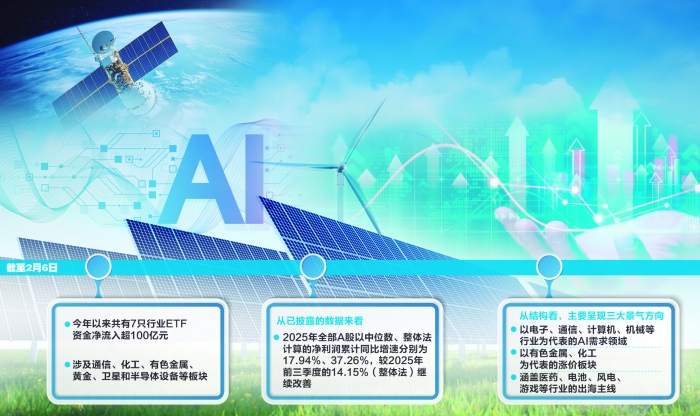
资金流向逆转 新发ETF纷纷上市
Shang Hai Zheng Quan Bao· 2026-02-08 17:31
Group 1 - The reversal of significant net outflows from stock ETFs occurred, with a net inflow of 6.965 billion yuan on February 3, marking the first net inflow since January 14 [1] - From February 3 to 6, multiple broad-based ETFs saw substantial net inflows, including 2.549 billion yuan into the Huaxia Science and Technology Innovation 50 ETF and 1.763 billion yuan into the Huaxia CSI A500 ETF [1] - Conversely, resource-themed ETFs experienced notable outflows, with the Huaxia Nonferrous Metals ETF seeing a net outflow of 4.364 billion yuan [1] Group 2 - A total of 10 new ETFs were launched from February 2 to 6, with an additional 6 ETFs set to list between February 9 and 11, contributing to market liquidity [2] - Significant investments in newly launched ETFs were made by entities such as China Shipbuilding Group, which purchased 100 million yuan worth of shares in the Fortune CSI Selected Shipbuilding Industry ETF [2] - The ETF market is expected to continue expanding, with numerous new products being reported by fund companies, including the Hang Seng A-share Power Grid Equipment ETF [2]
1月14只ETF扩容逾百亿 释放什么信号?
2 1 Shi Ji Jing Ji Bao Dao· 2026-02-03 13:07
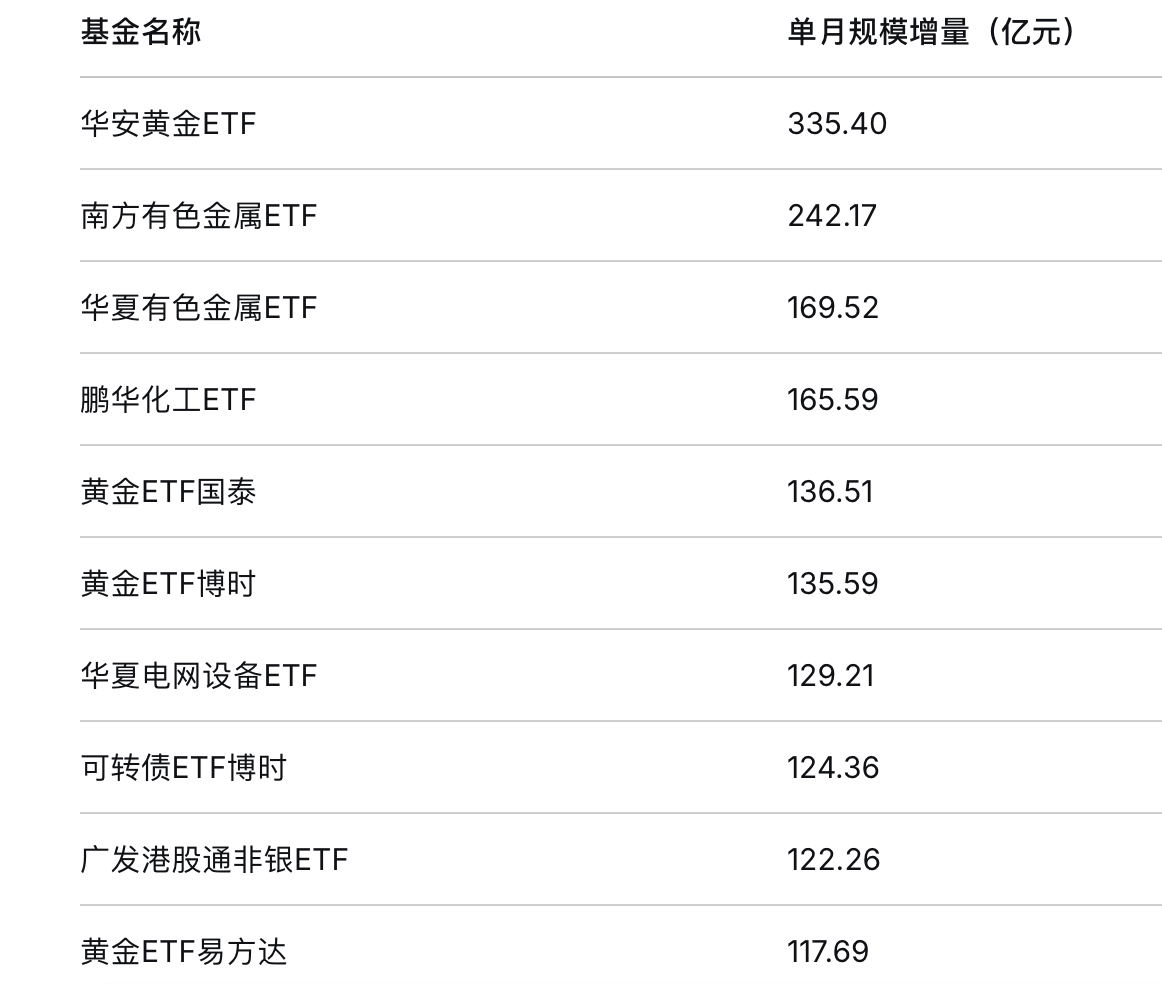
Core Insights - In early 2026, ETF fund flows showed significant divergence, with core broad-based ETFs experiencing large net outflows, while industry-themed ETFs gained popularity and saw substantial inflows [1][9] - The preference for industry-themed ETFs highlights a consensus among investors regarding the support from industrial policies and the positive fundamentals in specific sectors [1][6] ETF Performance - As of January 31, 2026, 14 ETFs had their scales increase by over 10 billion yuan, including 7 stock ETFs, 4 commodity ETFs, 2 cross-border ETFs, and 1 bond ETF [3] - Notable increases in scale included the Huaan Gold ETF (335.4 billion yuan), Southern Nonferrous Metals ETF (242.17 billion yuan), and Huaxia Nonferrous Metals ETF (169.52 billion yuan) [4][7] - The stock ETFs that saw significant scale growth were primarily industry-focused, indicating a market signal for bullish sentiment in related sectors [5][6] Market Trends - The overall ETF fund flow in January 2026 reflected a structural shift, with significant net outflows from core broad-based ETFs and inflows into industry-specific ETFs and gold [9][10] - The A-share market experienced a transition from exuberance to cooling, with the Shanghai Composite Index surpassing 4100 points before entering a consolidation phase [9][11] Investment Strategies - Institutions suggest that the market in February will likely experience volatility, with a focus on "growth and cyclical" dual strategies while being cautious of overheating sectors [11][12] - Recommended investment strategies include focusing on global manufacturing recovery, traditional industry improvements, and technology growth, particularly in AI applications and robotics [12][13]
新发ETF,背后“买主”浮出水面
Sou Hu Cai Jing· 2026-02-03 13:06
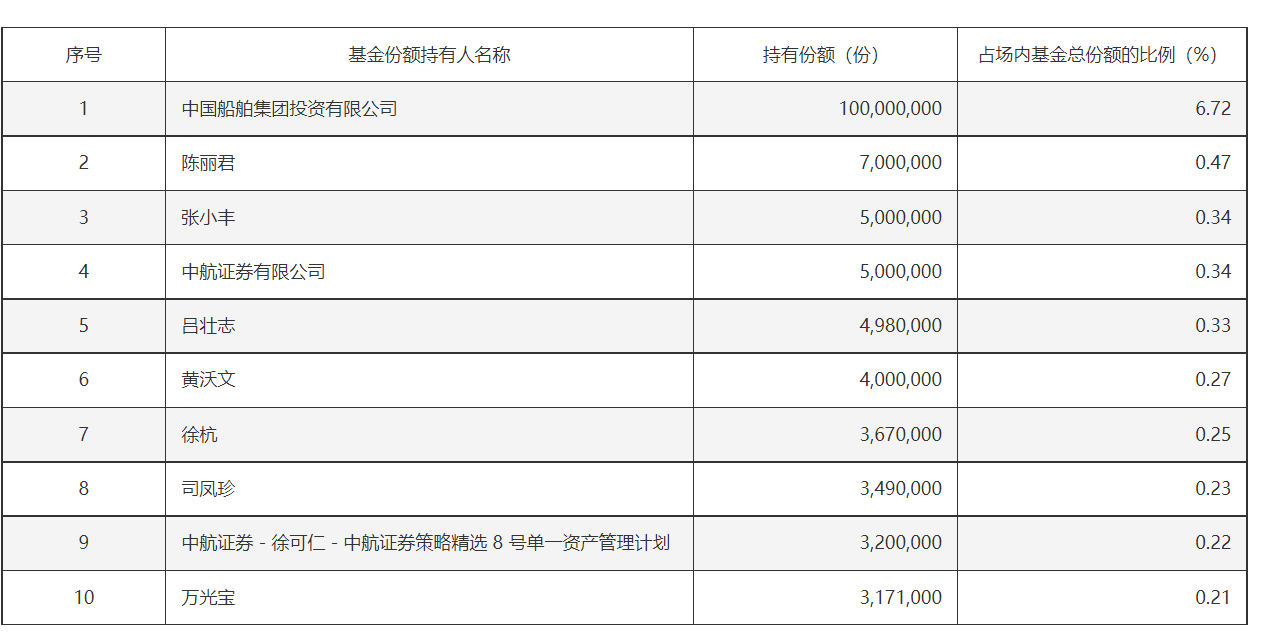
Group 1 - The core point of the article highlights the recent surge in newly launched ETFs, with significant investments from institutional players like China Shipbuilding Group Investment Co., which purchased 100 million yuan in the Fortune China Securities Intelligent Shipbuilding Industry ETF [2][3] - The Fortune China Securities Intelligent Shipbuilding Industry ETF is the first ETF focused on shipbuilding, comprising 40 representative listed companies in the shipbuilding industry, reflecting the overall performance of the sector [4][5] - As of February 2, 2023, the top ten holdings of the ETF include major companies such as China Power, China Shipbuilding, and China Ship Defense, indicating a strong focus on the industrial sector [5][7] Group 2 - Recent data shows a significant outflow from broad-based ETFs, with a net outflow of 16.349 billion yuan on February 2, 2023, particularly affecting the Southern CSI 500 ETF and Huatai-PB CSI 300 ETF [10] - In contrast, certain thematic industry ETFs have attracted substantial inflows, with the Guotai Communication ETF seeing a net inflow of 1.399 billion yuan on the same date [10] - From January 14 to February 2, 2023, stock-type ETFs experienced a cumulative net outflow exceeding 830 billion yuan, while some thematic ETFs attracted over 10 billion yuan each [10][11] Group 3 - The number of ETFs with assets exceeding 100 billion yuan has significantly decreased, with only three ETFs surpassing this threshold as of February 2, 2023 [11] - The market outlook suggests that sectors such as AI, solid-state batteries, robotics, and innovative pharmaceuticals are expected to present investment opportunities, with AI being a key focus area for 2026 [12]
股票ETF成交活跃 行业主题产品“吸金”显著
2 1 Shi Ji Jing Ji Bao Dao· 2026-01-27 13:18
Core Viewpoint - The A-share market is experiencing a cooling trend, leading to a significant shift in ETF investments from broad-based ETFs to sector-specific ETFs, with substantial net outflows from major broad-based ETFs and inflows into thematic ETFs [1][2][3] Summary by Sections ETF Market Dynamics - As of January 23, 2026, the total net outflow from the CSI 300 ETF and the CSI 1000 ETF reached 336.9 billion and 78 billion respectively since the beginning of the year, while thematic ETFs, particularly in resources and technology, attracted a total of 158.5 billion in net inflows [1][4] - The week of January 12-16 saw a net outflow of 141.6 billion from stock ETFs, which increased to 333.1 billion in the following week, marking a historically significant outflow [1][2] Performance of Broad-based vs. Thematic ETFs - From January 19-23, the CSI 300 ETF experienced a net outflow of 237.3 billion, while the CSI 1000 ETF and the SSE 50 ETF saw outflows of 71.7 billion and 36.1 billion respectively [2] - The net outflows for the CSI 300 ETF, CSI 1000 ETF, and SSE 50 ETF from January 5-23 were approximately 336.9 billion, 78 billion, and 56.2 billion respectively [2] Institutional Investor Behavior - Institutional investors hold a significant portion of ETFs, with over 1.5 trillion in ETF holdings reported as of the end of Q4 2025, primarily in the CSI 300 ETF [3] - Despite the outflows, the CSI 300 ETF remains a major holding for institutional investors, with an estimated 1 trillion still held in ETFs by these investors [3] Sector-specific ETF Inflows - Thematic ETFs, particularly in sectors like non-ferrous metals and chemicals, have seen strong inflows, with 50 ETFs collectively attracting 158.5 billion from January 5-23 [4][5] - Notably, three ETFs exceeded 10 billion in net inflows, including the Southern Non-ferrous Metals ETF (12.6 billion), Huaxia Power Grid Equipment ETF (11.9 billion), and Penghua Chemical ETF (10.3 billion) [5] Market Outlook - Analysts suggest that the shift in ETF investments indicates a structural rebalancing rather than a complete exit from the market, which may lead to deeper market trends and structural opportunities [7][8] - The current market dynamics suggest a transition from valuation recovery to a phase driven by fundamentals, with a focus on sectors with clear industry trends and performance support [8]
8个交易日股票型ETF净流出近5000亿元 市场成交额或是背后的核心考量因素
Shang Hai Zheng Quan Bao· 2026-01-25 18:54
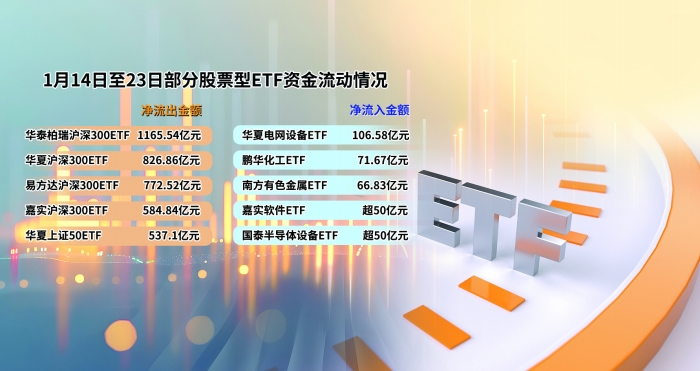
Core Viewpoint - The stock-type ETFs have experienced significant net outflows, totaling nearly 500 billion yuan over the past eight trading days, primarily driven by large-scale redemptions from broad-based ETFs [1][2][3]. Group 1: ETF Performance and Flows - Stock-type ETFs have seen a daily trading volume exceeding 240 billion yuan since January 14, with notable peaks above 300 billion yuan on January 16 and January 23 [2]. - The total net outflow from stock-type ETFs from January 14 to January 23 reached 496.68 billion yuan, with major outflows from broad-based ETFs such as Huatai-PB CSI 300 ETF (116.55 billion yuan), Huaxia CSI 300 ETF (82.69 billion yuan), and E Fund CSI 300 ETF (77.25 billion yuan) [2][4]. - Several large ETFs have seen their shares drop below the holdings of Central Huijin by the end of 2025, indicating a significant reduction in their market presence [3][4]. Group 2: Sector-Specific ETF Trends - In contrast to broad-based ETFs, sector-specific ETFs have attracted inflows, with notable net inflows into Huaxia Electric Grid Equipment ETF (10.66 billion yuan) and Penghua Chemical ETF (7.17 billion yuan) [4]. - Some sector-specific ETFs have reached all-time high share counts, such as the Southern Nonferrous Metals ETF, which has a share count of 16.598 billion, and the Fuguo Chemical 50 ETF with 5.506 billion shares [4]. Group 3: Market Outlook and Investment Sentiment - Analysts suggest that the outflows from broad-based ETFs do not signify the end of the market rally, as a return to stable trading volumes could lead to a more sustainable market environment [5]. - There is a growing interest in structural opportunities within the market, with fund managers expressing optimism about equity returns compared to other asset classes, despite potential volatility [6]. - The issuance of new ETFs focused on industry themes continues, indicating ongoing investor interest in targeted sectors such as metals and solar energy [6].
净流出,超400亿元!
Zhong Guo Ji Jin Bao· 2026-01-20 06:22
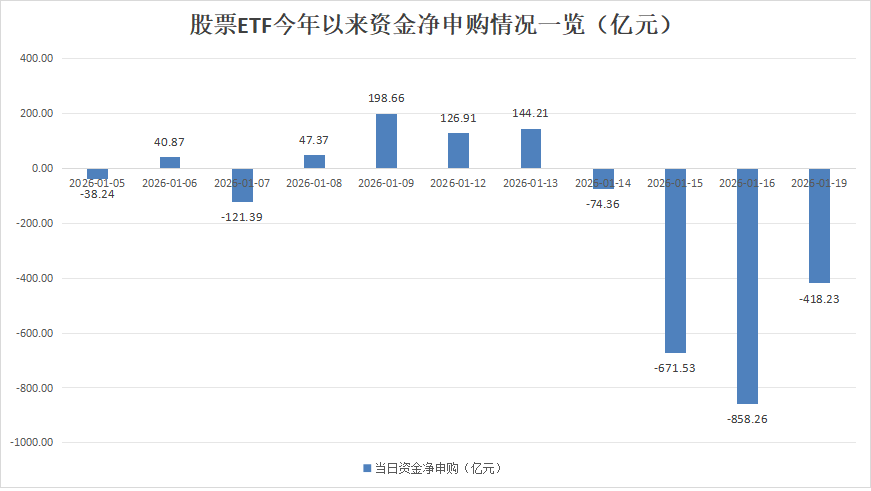
Core Viewpoint - The stock ETF market experienced significant net outflows, exceeding 400 billion yuan on January 19, marking the third consecutive day of substantial outflows, totaling over 1.9 trillion yuan in the past three trading days [1][2]. Group 1: Market Performance - The A-share market continued its volatile trend, with the Shanghai Composite Index rising by 0.29% to 4114.00 points, while the CSI 300 Index increased by 0.05% [2]. - Trading volume in the Shanghai and Shenzhen markets decreased to 2.73 trillion yuan, with weaker performance from large-cap stocks and stronger performance from growth-style sectors [2]. Group 2: ETF Fund Flows - The total scale of all stock ETFs (including cross-border ETFs) reached 4.61 trillion yuan, with a net outflow of 418.23 billion yuan on January 19 [2]. - Industry and commodity ETFs saw net inflows of 155.04 billion yuan and 22.44 billion yuan, respectively, while broad-based ETFs experienced net outflows of 586.07 billion yuan, leading to a decrease in their scale by 694.95 billion yuan [4]. Group 3: Specific ETF Performance - The top net inflows were observed in industry ETFs, with the Huaxia Electric Grid Equipment ETF leading at over 25 billion yuan, followed by the Penghua Chemical ETF with over 11 billion yuan [6]. - Four major CSI 300 ETFs collectively saw net outflows exceeding 300 billion yuan, with the Southern CSI 1000 ETF experiencing over 50 billion yuan in outflows [5][6]. Group 4: Market Sentiment and Outlook - Analysts noted that the recent net outflows from broad-based ETFs have contributed to a cooling effect on the previously hot market, aiding in the stable operation of the A-share market [7]. - The market is expected to maintain a volatile pattern in the short term, with potential support from funds adjusting their positions, while long-term sentiment remains optimistic [7].
资本热话 | ETF市场开年狂飙:万亿巨头诞生,科技赛道受捧
Sou Hu Cai Jing· 2026-01-15 09:36
Core Insights - The ETF industry is experiencing a significant expansion, with A-share market trading reaching historical highs and ETF total scale increasing to 6.24 trillion yuan as of January 13, marking a surge of 221.7 billion yuan in just half a month [2][4] - The emergence of the first trillion-yuan ETF manager, Huaxia Fund, signifies a milestone in the industry, with the second-largest player, E Fund, trailing by less than 100 billion yuan [6][7] - The competition among leading institutions has evolved beyond mere market share to include product standardization, investor returns, and ecosystem development [2][9] Market Performance - A-share market remains robust, with daily trading volumes consistently exceeding 3 trillion yuan, reaching nearly 4 trillion yuan on January 14 [4] - The ETF market is a key channel for capital inflow, with stock ETFs being the primary drivers of growth, adding over 220 billion yuan since the beginning of the year [4][5] - Technology-related sectors, including satellite and media, are attracting significant investment, with specific ETFs receiving over 80 billion yuan in net inflows [4][5] Fund Management Trends - The top three ETF managers control over 40% of the total market, with Huaxia Fund leading at over 1 trillion yuan, followed by E Fund and Huatai-PB [6][7] - The rapid growth of these leading firms is attributed to both net subscriptions and net asset value increases, with Huaxia Fund growing by 360.8 billion yuan and E Fund by 326.3 billion yuan in the past year [8] - Smaller ETF managers face challenges, with many having assets below 10 billion yuan, highlighting a trend of resource concentration among top firms [8] Competitive Landscape - The competition in the ETF market is shifting towards diversified strategies, including product naming standardization and enhanced dividend policies [9][10] - Recent announcements of significant dividend distributions by major funds indicate a trend towards improving product attractiveness [9] - The industry is witnessing a wave of rebranding efforts, with several funds standardizing their product names to enhance clarity and marketability [9] Future Outlook - The ETF market is expected to continue its rapid growth, driven by increasing penetration of public funds in asset allocation and a growing acceptance of index investing among investors [10] - Future competition will likely focus on the comprehensive capabilities of fund managers, emphasizing the importance of research, operations, and service integration [10]

资金涌入有色板块,“金属风暴”席卷全球商品市场
Di Yi Cai Jing· 2026-01-15 02:26
Group 1: Market Overview - The global metal futures market has started 2026 strongly, with significant inflows into the non-ferrous metal sector driven by supply concerns and capital market dynamics [1] - Prices of copper and nickel have surged due to supply disruptions, with analysts indicating that the sustainability of this price increase will depend on global economic recovery and supply-demand rebalancing [1][2] Group 2: Nickel Market Dynamics - Nickel prices have reached a new high, primarily due to production cuts in Indonesia, the world's largest nickel supplier, which plans to reduce its output target from 379 million tons to 250 million tons, a decrease of 34% [2] - Despite the anticipated demand of 3.82 million tons and production of 4.09 million tons in 2026, the market is currently experiencing a supply surplus, with high inventory levels exerting long-term pressure on prices [2][3] Group 3: Copper Market Dynamics - Copper prices have also reached record highs, with a cumulative increase of over 5% since the beginning of 2026, driven by structural supply shortages and accelerating demand from sectors like electrification and data centers [4] - Events such as strikes at Canadian copper mines and delays in production at other sites have heightened concerns over copper supply [4][5] Group 4: Investment Trends - Significant capital has flowed into the non-ferrous metal sector, with various ETFs seeing substantial net inflows, indicating strong investor interest [7][8] - The domestic market has seen a historical breakthrough in the non-ferrous metal sector, with a 94.73% increase in the sector's A-share market in 2025, and many stocks doubling in value [7] Group 5: Future Outlook - Analysts suggest that macroeconomic factors, including lower-than-expected U.S. inflation data and geopolitical uncertainties, will continue to support the valuation of the non-ferrous metal sector [8] - The Chinese government's encouragement of mergers and restructuring in key industries like aluminum and copper smelting is expected to enhance industry concentration and pricing power, providing a long-term boost to the sector [8]