MINI

Search documents
原宝马中国负责人高翔出任MINI美洲区副总裁
Xin Lang Cai Jing· 2026-02-25 09:42
Group 1 - The core point of the article is the appointment of Sean Green as the Vice President of MINI Americas, effective May 1, 2026, following the departure of Mike Peyton [1][3] - Sebastian Mackensen, President and CEO of BMW North America, emphasized the importance of the Americas region for BMW Group globally and highlighted Sean Green's extensive experience and leadership as beneficial for the MINI brand [3] - Sean Green has a long history with BMW, having joined in 1988 and held various positions in aftersales, product marketing, and sales, including roles in China where he served as Vice President of MINI China and later as CEO of BMW Greater China [3] Group 2 - The appointment comes at a critical time for the MINI brand, which is facing uncertainty as it shifts towards electrification amid weak demand for electric vehicles in the Americas market [4] - The decision on whether to continue with the electrification strategy or reinvest in internal combustion engine products to regain sales will significantly impact the brand's identity and business trajectory in the coming years, presenting a major challenge for Sean Green [4]

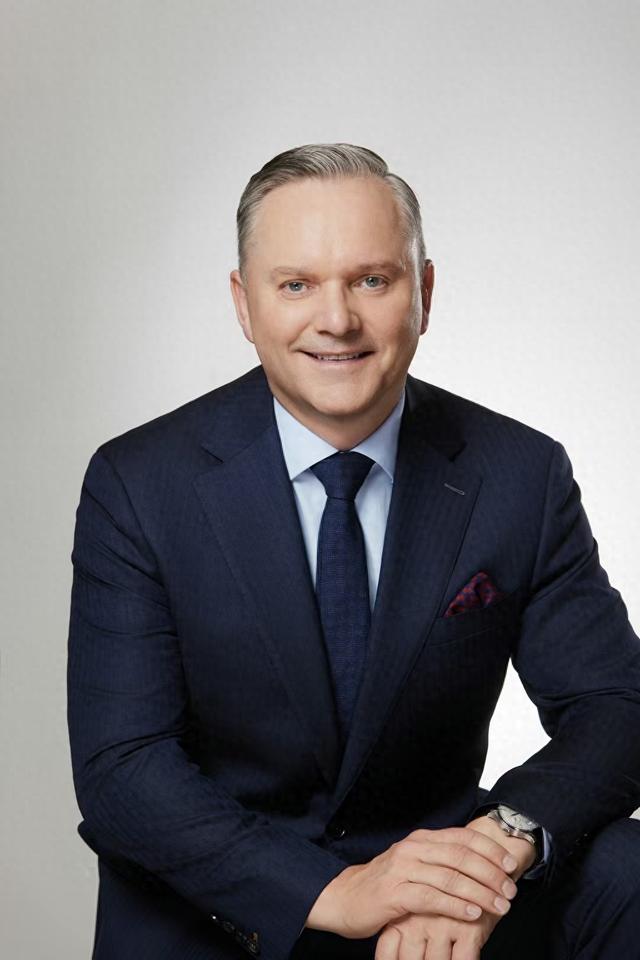
宝马宣布高翔将任MINI美洲区副总裁
Zhong Guo Qi Che Bao Wang· 2026-02-24 08:23
2月23日,宝马集团美国公司宣布,任命高翔(Sean Green)为MINI美洲区副总裁,该任命自2026 年5月1日正式生效。 ...

赢下全球的宝马,不想只输在中国
3 6 Ke· 2026-02-12 01:40
Group 1 - BMW Group announced a significant leadership change, appointing Christian Ach as the new President and CEO for Greater China, effective April 1, 2026, replacing Sean Green, who served for over twelve years [1][2] - BMW's global delivery volume showed a slight increase of 0.5% in 2025, with European market sales rising by 7.3%, while sales in China fell to 625,500 units, a decline of 12.5% year-on-year, marking two consecutive years of double-digit declines [1][3] - The luxury car market in China is undergoing a structural crisis, with the 300,000 to 350,000 RMB segment shrinking by 19.2% in 2025, leading to a significant loss of customers to local electric vehicle brands [3][5] Group 2 - BMW's X3 model experienced a dramatic sales drop of 30%, from over 110,000 units in 2024 to 76,900 units in 2025, due to design controversies and aggressive discounting strategies [3][5] - The German luxury car manufacturers, including BMW, Mercedes-Benz, and Audi, are facing a collective downturn, with Mercedes-Benz sales in China dropping by 19% to 575,000 units and Audi's sales down by 5% to 617,500 units [5][6] - BMW's strategy has been inconsistent, struggling to balance traditional driving pleasure with the new demands for smart technology and user experience in the Chinese market [6][8] Group 3 - The leadership change at BMW is seen as a decisive move to regain control and address the chaotic situation in the Chinese market, with a focus on efficiency and execution [8][12] - Christian Ach's mission includes leveraging his successful experience in the German market to boost electric vehicle sales in China, where the market dynamics are more complex [12][16] - In 2026, BMW plans to launch nearly 20 new models in China, including the iX3, which is crucial for establishing a high-end electric brand image [17][19] Group 4 - Ach faces several challenges, including aligning pricing with perceived value for the new iX3, adapting successful strategies from Germany to the dynamic Chinese market, and effectively communicating BMW's unique competitive advantages in the era of electrification and smart technology [22][23]
宝马中国换帅,两年销量少了20万辆
21世纪经济报道· 2026-02-01 09:09
Core Viewpoint - BMW Group is undergoing a significant leadership change in its Greater China region, with Christian Ach set to take over as President and CEO from Sean Green, who has served for over a decade. This transition comes as BMW aims to revitalize its sales and brand presence in the competitive Chinese electric vehicle market [1][4]. Group 1: Leadership Transition - Christian Ach, a long-time BMW veteran, will assume his new role on April 1, 2026, bringing extensive experience from various markets, including Germany and Northern Europe, where he successfully increased electric vehicle sales [1][4]. - Sean Green's tenure saw BMW become the largest single market for the brand globally since 2013, but he acknowledged the changing market dynamics that challenge traditional brand pricing strategies [4][5]. Group 2: Market Challenges - BMW's sales in China have been declining, with a drop from 825,000 units in 2023 to 714,500 units in 2024, and further down to 625,500 units in 2025, marking a loss of approximately 200,000 units in just two years [5]. - The imported vehicle segment has been particularly hard hit, with sales plummeting by 62% from 171,000 units to 64,000 units in 2025 [5]. Group 3: Strategic Initiatives - In response to market pressures, BMW has initiated a price reduction across 31 models to remain competitive and plans to launch around 20 new products in 2026, including a long-wheelbase version of the BMW iX3 tailored for the Chinese market [5][6]. - The new iX3 model is designed to meet local consumer preferences, featuring a longer wheelbase and a localized operating system, indicating BMW's commitment to adapting to the Chinese market [6]. Group 4: Financial Performance - BMW Group's pre-tax profit for the first three quarters of 2025 was €8.056 billion, a decline of 9.1% year-on-year, leading to a downward revision of the annual profit forecast [9][10]. - The profit decline is attributed to increased tariffs in the U.S. and financial support to dealers in China, which has eroded profit margins [10]. Group 5: Global Context - Despite the challenges in China, BMW remains the leader in global sales among the German luxury trio (BBA), with a slight increase in global sales to 2.4637 million units in 2025, while competitors Mercedes and Audi experienced declines [11]. - The contrast between slight sales growth and declining profits highlights BMW's struggle with the "price for volume" strategy, emphasizing the need for effective leadership to navigate these challenges [11].

宝马集团2025年全球销量达246.37万辆 同比微增0.5%
Feng Huang Wang· 2026-01-09 11:34
Core Viewpoint - BMW Group announced a projected global vehicle delivery of 2,463,715 units in 2025, representing a 0.5% year-on-year increase, with electric vehicle deliveries reaching 642,087 units, up 8.3% [1] Group 1: Global Performance - The total global vehicle deliveries for BMW Group in 2025 are expected to be 2,463,715 units, marking a 0.5% increase compared to the previous year [1] - Electric vehicle deliveries are projected to be 642,087 units, which is an 8.3% increase year-on-year [1] - Pure electric vehicle deliveries are expected to reach 442,072 units, showing slight growth [1] Group 2: China Market - In the Chinese market, BMW Group anticipates delivering over 625,000 BMW and MINI brand vehicles in 2025 [1] - The BMW M family is expected to achieve annual sales exceeding 10,000 units, reflecting a 27.9% year-on-year growth [1] - MINI brand sales are projected to grow by over 25% year-on-year [1] - The 3 Series and 5 Series are expected to maintain their competitive positions in their respective market segments [1] Group 3: Future Product Launches - In 2026, BMW Group plans to introduce approximately 20 new products under the BMW, MINI, and BMW motorcycle brands for Chinese consumers [1] - The domestically produced long-wheelbase version of the new generation BMW iX3 is set to make its global debut in the first half of the year and will be launched in the second half [1]

雷诺借中国供应链,在欧洲阻击中国车
晚点LatePost· 2025-12-09 10:42
Core Insights - Renault is leveraging Chinese supply chain efficiency to revive its Twingo model, which will be sold in Europe as an electric vehicle, despite having exited the Chinese market for passenger cars since 2020 [4][6][7] - The new electric Twingo has a starting price of under €20,000, comparable to BYD's Seagull in Europe, showcasing Renault's strategy to compete against Chinese EVs in the European market [4][6] - Renault's approach involves utilizing a significant portion (46%) of components sourced from Chinese suppliers, which has allowed for reduced development costs and faster production timelines [11][12] Group 1: Renault's Market Strategy - Renault has historically struggled in the Chinese market, with its joint ventures failing to gain significant traction, leading to a strategic withdrawal from the passenger vehicle segment [6][7] - The company has shifted focus to utilizing its Chinese supply chain to enhance competitiveness in Europe, indicating a strategic pivot towards leveraging cost advantages from China [8][12] - The decision to revive the Twingo model is based on its historical significance and brand recognition among European consumers, aiming to lower psychological barriers for new buyers [8][11] Group 2: Supply Chain and Development Efficiency - The development of the new Twingo was expedited by a collaborative effort between Renault's teams in France and China, achieving a prototype in just nine weeks and preparing for production in under 24 months [11][12] - Renault's procurement strategy emphasizes using mature modules and existing solutions from Chinese suppliers, resulting in significant cost savings (50% reduction in development costs and 40% in tooling costs) [11][12] - The collaboration with Chinese suppliers is seen as a model for other foreign automakers, allowing them to benefit from China's advanced manufacturing capabilities without the burdens of joint venture complexities [12][13] Group 3: Future Plans and Market Positioning - Renault plans to replicate the successful model of utilizing Chinese supply chains for other vehicle lines, including models from its Dacia brand and future Nissan vehicles [13] - The strategy reflects a broader trend among foreign automakers to tap into China's manufacturing prowess to enhance their global competitiveness, particularly in the EV sector [12][16] - The rise of Chinese suppliers in the global market is expected to elevate their profit margins and brand recognition, as they meet the stringent requirements of international automakers [14][15]

宝马集团前三季度电动化车型销量增长15%,全年交付目标正增长
Zhong Guo Jing Ji Wang· 2025-11-06 03:32
Core Insights - BMW's growth is driven by electric vehicles and high-performance M series, which are becoming the two main growth lines for the company [1][3] Sales Performance - In the first nine months, BMW's battery electric vehicle (BEV) sales increased by 10.0%, accounting for 18.0% of total sales, indicating a deepening electric transformation [3] - Overall sales growth for electric vehicles, including plug-in hybrids, reached 15.0%, with their share rising to 26.2%, showcasing the success of the "open technology" strategy [3] - High-performance M series sales grew by 7.9%, while MINI brand sales surged by 23.7% in the same period [3] Financial Performance - BMW achieved significant improvement in free cash flow for its automotive business through strict cost management, while maintaining product momentum [4] - The company announced a new stock buyback plan of up to €2 billion, reflecting its strong financial position and confidence in future cash flows [4] Future Outlook - BMW is optimistic about the market response to the new generation BMW iX3, with orders exceeding expectations [4] - The company plans to launch the first models based on the new generation platform starting in 2026, with a total of 40 new and updated models expected by the end of 2027 [4] - BMW reaffirmed its adjusted full-year expectations, maintaining an EBIT margin of 5%-6% for the automotive segment and anticipating slight growth in total deliveries for the year [4]
宝马汽车集团下调全年利润预期 在华销量疲软成主因
Xi Niu Cai Jing· 2025-10-13 14:02
Group 1 - BMW Group is lowering its profit expectations for 2025 due to weak sales in the Chinese market, rising tariff costs, and increased financial support for Chinese dealers [2] - The expected pre-tax profit for 2025 is projected to be slightly below the 10.97 billion euros (approximately 90.98 billion yuan) forecasted for 2024, which was previously expected to remain stable compared to the previous year [2] - The EBIT margin for BMW's automotive business has been revised down from 5%-7% to 5%-6%, and the return on capital employed has been adjusted from 9%-13% to 8%-10% [2] Group 2 - In the Chinese market, BMW's sales for October have decreased by 0.4% year-on-year, and the year-to-date sales have dropped by 11.2% [3] - The company anticipates further declines in sales in the Chinese market for the fourth quarter of this year [2] Group 3 - BMW is focusing on its new generation of electric vehicles to boost sales, having invested over 10 billion euros (approximately 82.93 billion yuan) in the Neue Klasse series [4] - However, the sales performance of key electric models like the i3 and iX3 has been disappointing, with sales figures of 16,586 and 8,599 units respectively in the first eight months [4] - Quality issues and after-sales service deficiencies have further exacerbated the brand's challenges, with models like the 5 Series, 3 Series, and X3 facing significant complaints [4]
7月10日电,宝马集团第二季度全球销量同比增长0.4%,至621,271辆。宝马和MINI二季度欧洲销量同比增长10.1%,至255,910辆。
news flash· 2025-07-10 09:05
Group 1 - The core viewpoint of the article highlights that BMW Group's global sales in the second quarter increased by 0.4% year-on-year, reaching 621,271 vehicles [1] - BMW and MINI's sales in Europe for the second quarter saw a significant year-on-year growth of 10.1%, totaling 255,910 vehicles [1]
车圈为什么没有产生LABUBU?
阿尔法工场研究院· 2025-06-17 12:19
Core Viewpoint - The article emphasizes the importance of emotional value in products, particularly in the automotive industry, highlighting how LABUBU's success reflects a shift from "Made in China" to "Created by China" and the need for brands to connect with consumers emotionally rather than relying solely on technical specifications [1][37]. Group 1: Emotional Value and Branding - LABUBU's appeal lies in its unique design that combines "cute" and "edgy" elements, evoking both affection and excitement, which is crucial for emotional engagement [4][37]. - Successful brands like MINI and smart have established strong emotional narratives that resonate with consumers, while many domestic brands lack this depth and uniqueness [11][12]. - The article critiques the tendency of some brands to create products without a solid cultural foundation, leading to a lack of distinctiveness and emotional connection with consumers [11][13]. Group 2: Market Strategies and Consumer Engagement - Companies like Bubble Mart have successfully utilized consumer feedback to drive product development and marketing strategies, ensuring that their offerings align with user preferences [18][19]. - The automotive industry has examples of brands that have effectively engaged with consumers, such as Geely and Wuling, which have created products that resonate well with their target audience [22]. - The article warns against a self-centered approach to product development, where companies ignore consumer feedback and instead impose their vision, which can lead to commercial failure [25][27]. Group 3: Cultural and Emotional Depth - The success of LABUBU illustrates that true emotional value is rooted in cultural identity and shared values, rather than superficial trends [37][39]. - The article argues that products that can transform from mere commodities to cultural assets will ultimately succeed in a competitive market [39][41]. - It calls for the automotive industry to develop brands that embody emotional value and cultural significance, moving beyond price competition to create meaningful connections with consumers [41][42].