
PA6切片

Search documents
10年来首亏!尼龙龙头,出售/收购两大公司,加速转“正”
DT新材料· 2026-02-28 16:06
Core Viewpoint - The company, Shenma Co., is restructuring its investments to enhance its financial health and focus on the nylon new materials industry, potentially preparing for a listing in Hong Kong [2][10]. Group 1: Acquisition and Financial Performance - Shenma Co. plans to acquire a 45.13% stake in Henan Shenma Puli Materials Co., Ltd. for approximately 237.41 million yuan, aiming to improve its performance [2]. - The acquisition is expected to enhance the company's earnings, with Puli Materials projected to generate profits of 29.97 million yuan in 2023, 12.54 million yuan in 2024, and 30.41 million yuan in 2025 [2]. - The company is also divesting its 49% stake in Henan Shouheng New Materials Co., Ltd. due to its ongoing losses, which are expected to reach 128.34 million yuan in 2025 [5][8]. Group 2: Market Conditions and Product Development - Puli Materials produces high-performance nylon 6 chips with an annual capacity of 300,000 tons, benefiting from rising prices in the chemical market, particularly for caprolactam [3]. - The company is expanding its product line, having developed various differentiated nylon 6 chips and copolymer products [3]. - Shenma Co. is also establishing a new company in Ningxia to focus on high-value nylon 66 products, which are expected to be a key area for future growth [11][12]. Group 3: Financial Projections and Strategic Moves - Shenma Co. anticipates a net loss of approximately 149 million yuan for the year 2025, marking its first loss in a decade [8]. - The company is expected to improve its financial statements by the end of 2026 due to the strategic acquisition and divestment actions [9]. - Shenma Co. is extending the timelines for its nylon chemical projects, indicating a need for further optimization and upgrades [12].



聚合顺:PA6切片作为基础原材料,目前无相关核电认证
Zheng Quan Ri Bao Wang· 2026-02-26 11:41
Group 1 - The company 聚合顺 (605166) stated that its PA6 chips, which are used as a basic raw material, currently do not have any relevant nuclear power certifications [1]

工业级碳酸锂、电池级碳酸锂等涨幅居前,建议关注进口替代、纯内需、高股息等方向 | 投研报告
Sou Hu Cai Jing· 2026-02-25 01:15
Group 1 - The core viewpoint of the report highlights significant price increases in industrial-grade and battery-grade lithium carbonate, while other products like liquid chlorine and nitric acid experienced substantial declines [2][4] - Key products with notable price increases this week include industrial-grade lithium carbonate (up 7.58%), battery-grade lithium carbonate (up 7.46%), PVC (up 6.06%), and ammonium chloride (up 5.71%) [2][4] - Conversely, products with significant price declines include liquid chlorine (down 46.95%), nitric acid (down 8.00%), and natural gas (down 5.99%) [2][4] Group 2 - The chemical industry is currently in a weak overall performance phase, with mixed results across different sub-sectors due to past capacity expansions and weak demand [4] - The report suggests focusing on investment opportunities in glyphosate, fertilizers, and sectors benefiting from domestic demand and high dividend yields [4] - Specific recommendations include investing in glyphosate companies like Jiangshan Co., Xingfa Group, and Yangnong Chemical, as well as domestic leaders in lubricant additives and coal-to-olefins [4]
工业级碳酸锂、电池级碳酸锂等涨幅居前,建议关注进口替代、纯内需、高股息等方向
Zhong Guo Neng Yuan Wang· 2026-02-25 01:13
Group 1 - The core viewpoint of the report highlights significant price increases in industrial-grade and battery-grade lithium carbonate, while other products like liquid chlorine and nitric acid experienced substantial declines [2][4] - The report indicates that industrial-grade lithium carbonate rose by 7.58%, and battery-grade lithium carbonate increased by 7.46%, with PVC and ammonium chloride also showing notable gains [2][4] - Conversely, products such as liquefied gas and liquid chlorine saw significant price drops, with liquid chlorine decreasing by 46.95% [2][4] Group 2 - The chemical industry is currently facing a weak overall performance, with mixed results across different sub-sectors due to past capacity expansions and weak demand [4] - The report suggests focusing on investment opportunities in glyphosate, fertilizers, and sectors benefiting from domestic demand and high dividend yields [4] - Specific recommendations include companies like Jiangshan Co., Xingfa Group, and Yangnong Chemical in the glyphosate sector, and China National Chemical Fertilizer as a key recommendation in the fertilizer industry [4]
行业相对表现:工业级碳酸锂、电池级碳酸锂等涨幅居前,建议关注进口替代、纯内需、高股息等方向
Huaxin Securities· 2026-02-24 12:53
Investment Rating - The report maintains a "Buy" rating for several companies in the chemical industry, including Xin Yang Feng, Sen Qi Lin, Rui Feng New Material, Sinopec, Ju Hua Co., Yang Nong Chemical, China National Offshore Oil Corporation, Tong Kun Co., and Dao Tong Technology [11]. Core Insights - The report highlights significant price increases for industrial-grade lithium carbonate (up 7.58%) and battery-grade lithium carbonate (up 7.46%), while liquid chlorine and nitric acid experienced substantial declines [4][18]. - The report suggests focusing on investment opportunities in areas such as import substitution, domestic demand, and high-dividend stocks, particularly in light of fluctuating international oil prices [6][18]. - The chemical industry is currently facing a mixed performance, with some sectors showing resilience while others struggle due to overcapacity and weak demand [21]. Summary by Sections Chemical Industry Investment Recommendations - The report emphasizes the importance of monitoring price trends in key chemical products, noting both significant increases and decreases in various sectors [4][18]. - It recommends focusing on sectors like glyphosate, fertilizers, and companies with strong domestic demand and import substitution potential [21]. Price Trends - Key products that saw price increases include industrial-grade lithium carbonate, battery-grade lithium carbonate, PVC, and ammonium chloride, while products like liquid chlorine and nitric acid saw significant price drops [4][5][18]. - The report indicates that the overall chemical industry remains weak, with performance varying across sub-sectors due to past capacity expansions and weak demand [21]. Market Outlook - The report predicts that international oil prices will stabilize around $65 per barrel, influenced by geopolitical uncertainties and expectations of price declines [6][18]. - It highlights the potential for certain sectors, such as the lubricants and chemical fertilizers, to benefit from domestic demand and import substitution strategies [21].
己内酰胺:供应偏紧撑价格,高位盘整待破局
Zhong Guo Neng Yuan Wang· 2025-12-16 10:35
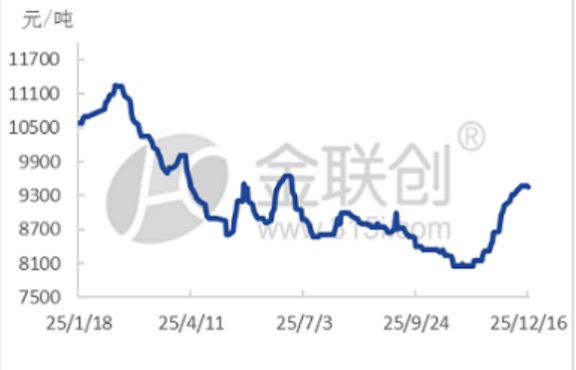
Core Viewpoint - The domestic caprolactam market is experiencing a strong fluctuation due to tight supply and cautious purchasing behavior from downstream enterprises [1][4]. Supply Side - Production cuts and maintenance are frequent, leading to low operating levels in the industry. Several caprolactam plants have reduced their operational loads or are undergoing maintenance, resulting in a significant decrease in overall production capacity [3]. - Specific operational statuses include: - Balin Hengyi's caprolactam plant operating at 60-70% capacity - Hunan Petrochemical's 600,000 tons/year plant at 70% capacity - Nanjing Fubon Tech's 200,000 tons CPL plant is currently offline for maintenance with no confirmed restart date [3]. - The overall operating rate in the industry has dropped to around 70%, leading to a supply shortage that supports price increases [5]. Demand Side - Downstream PA6 polymer enterprises are adopting a cautious purchasing attitude due to high caprolactam prices. They are only purchasing based on immediate production needs, which limits the market demand and slows down price increases [4][6]. - The cautious procurement behavior is a response to the high raw material costs, preventing large-scale stockpiling and thus alleviating some pressure on prices [4]. Market Outlook - The tight supply situation is expected to continue supporting caprolactam prices, with overall production and operating levels unlikely to see significant adjustments in the near term [5]. - Despite the supportive supply conditions, downstream PA6 market faces challenges in passing on high costs, which may pressure profit margins and lead some polymer enterprises to reduce production loads [6]. - The market is anticipated to maintain a high-level consolidation phase, with prices unlikely to drop significantly but also lacking strong upward momentum due to demand constraints [6].
中仑新材:公司生产的PA6切片以自用为主
Zheng Quan Ri Bao Wang· 2025-12-12 13:10
Core Viewpoint - Zhonglun New Materials (301565) primarily produces PA6 chips for internal use, mainly for its wholly-owned subsidiaries and plans to sell some products based on market demand [1] Group 1: Product Applications - The PA6 chips are used in the production of BOPA film materials, with applications extending to textile fibers for clothing, industrial yarns for tire cords, fishing nets, and safety belts [1] - Engineering-grade PA6 is widely utilized in electronics, machinery, rail transportation, and aerospace sectors [1] Group 2: Supply Chain Advantages - The company has established a significant integrated supply chain for PA6-BOPA film materials, which enhances cost competitiveness by eliminating intermediaries and reducing transportation and packaging costs [1] - Customizable production of PA6 chips allows for quality control from the source, improving product yield and enabling quick response to orders [1] - The integrated R&D platform fosters collaborative innovation, allowing for rapid iteration of high-performance products and capturing market opportunities [1] Group 3: Sustainability and Quality - Proximity in production ensures stable product quality and reduces carbon emissions, aligning with green production trends and further strengthening industry competitiveness [1]
中仑新材(301565) - 301565中仑新材投资者关系管理信息20251212
2025-12-12 07:40
Production Capacity and Progress - The first BOPP production line was officially launched in November 2025, with a second line expected to be operational in the second half of 2026. The first line has achieved stable mass production of various thicknesses of BOPP capacitor film products, with thin films entering mass delivery after customer validation [1] - The BOPP production line focuses on thin and ultra-thin film products, with an estimated annual capacity of approximately 2,400 tons per line, depending on product thickness. A total of nine production lines are planned, with two in the first phase and subsequent lines to be added based on market demand [1] Product Applications and Differentiation - The BOPP film is positioned as ultra-thin electrical-grade film, including capacitor film and electrode film, used in the production of thin-film capacitors and battery electrode collectors. It features strong self-healing, high insulation resistance, low dielectric loss, high dielectric strength, and long service life [2] - In contrast, ordinary BOPP packaging materials are typically around 20 microns thick, focusing on basic packaging protection and appearance, with core characteristics including moderate mechanical strength and good transparency [2] Solid-State Battery Developments - The subsidiary, Xiamen Changsu, has pioneered solid-state battery-specific BOPA film, currently in the market promotion phase. The company is also involved in drafting and implementing standards for aluminum-plastic films used in solid-state batteries [3] - As the solid-state battery industry accelerates, the company plans to closely monitor market penetration rates and promote the production and sales of solid-state battery-specific films [3] Existing and Future Capacity for BOPA and PA6 - The current annual production capacity for PA6 (Nylon 6) chips is 145,000 tons, with 210,000 tons of additional capacity under construction, expected to be operational by 2027 [4][5] - The company currently operates 14 BOPA production lines with a total capacity of 145,000 tons, with plans for additional lines in both domestic and international locations, aiming for a total capacity of 275,000 tons upon completion of all projects [5] Utilization of PA6 Chips - The PA6 chips are primarily used internally for the production of BOPA films, with some sales based on market demand. Besides BOPA films, PA6 chips have various applications in textiles, industrial fibers, and engineering plastics [5] - The integrated supply chain for PA6 and BOPA films enhances cost competitiveness, quality control, and innovation capabilities, aligning with green production trends [5]
己内酰胺市场近况与展望
2025-12-11 02:16
Summary of the Conference Call on Caprolactam Market Industry Overview - The caprolactam market has experienced price increases due to production restrictions, with prices rising from 8,050 RMB/ton to 9,450 RMB/ton since November 5, 2025, an increase of 1,400 RMB/ton [1][4] - The industry is currently in a phase of negotiation, as upstream price increases have led to weak downstream demand [1][4] - The caprolactam industry chain exhibits a "large head, small tail" structure, where upstream production capacity significantly exceeds downstream capacity, leading to supply mismatches [1][5] Production Capacity and Operating Rates - Domestic caprolactam production capacity is at 8.05 million tons, with actual operating rates between 70% and 72% [1][2] - The industry has responded to government policies by implementing a 20% production cut, resulting in a market operating rate of approximately 82% [2] - Despite nominal operating rates, domestic facilities can operate at 120% overload capacity, leading to substantial actual production [2][6] Price Dynamics - The price increase is primarily driven by demand from the downstream PE6 industry, which accounts for 98% to 99% of integrated circuit demand [4] - However, downstream products such as slices, automotive modified plastics, and yarn have not seen significant price increases, indicating a potential market imbalance [4] Profitability and Cost Structure - Profitability in the caprolactam industry varies based on the length of the supply chain and raw material costs, with sulfur prices rising significantly, impacting overall costs [9] - Large-scale facilities (over 300,000 tons) have achieved breakeven or profitability, while smaller facilities (100,000 to 150,000 tons) continue to operate at a loss [9][10] - The production of by-products, such as sulfuric acid, contributes positively to the overall profitability of larger facilities [10] Downstream Demand and Inventory - Downstream demand is significantly affected by external factors such as US-China trade tensions and fluctuations in nylon 6 prices, leading to cautious procurement behavior among downstream users [11] - Inventory levels for PA6 slices have increased, particularly in semi-gloss and matte slices, while upstream caprolactam producers have minimal inventory [12] Future Outlook - Limited new production capacity is expected in the next two years, primarily from a manufacturer in Guangxi, with some small non-listed companies likely exiting the market [3][13][14] - The overall industry growth rate is anticipated to slow down, with several small-scale facilities potentially being phased out due to high costs and inefficiencies [13][14] - The caprolactam industry is projected to maintain a positive outlook, with downstream polymer demand slightly exceeding upstream production in 2025 [3][15]
大炼化周报:己内酰胺减产挺价,锦纶纤维价差收窄-20251129
Xinda Securities· 2025-11-29 14:38
Investment Rating - The report does not explicitly state an investment rating for the petrochemical industry. Core Insights - The report highlights the impact of production cuts in caprolactam on pricing stability, while the price spread for nylon fibers has narrowed [2]. - Domestic key refining project price spread increased to 2425.48 CNY/ton, a week-on-week rise of 29.04 CNY/ton (+1.21%), while international key refining project price spread decreased to 1277.36 CNY/ton, a decline of 151.77 CNY/ton (-10.62%) [3]. - Brent crude oil weekly average price was reported at 63.18 USD/barrel, reflecting a decrease of 1.05% [2]. Refining Sector Summary - The report discusses the geopolitical situation regarding the Russia-Ukraine peace plan, which has led to fluctuations in international oil prices. Brent and WTI crude prices were reported at 63.20 and 58.55 USD/barrel respectively, with slight increases from the previous week [14]. - Domestic refined oil prices showed minor fluctuations, with diesel, gasoline, and aviation kerosene averaging 6787.00, 7603.14, and 5905.76 CNY/ton respectively [14]. Chemical Sector Summary - The chemical products market experienced a general decline in prices due to weak demand, with notable decreases in polyethylene price spreads [2]. - The report indicates that the nylon fiber price spread has narrowed significantly due to rising costs in the caprolactam market, despite being in a traditional demand off-season [2]. Polyester & Nylon Sector Summary - Polyester cost remained stable, while nylon costs increased significantly, leading to a notable narrowing of the price spread for nylon fibers [2]. - The report mentions that the polyester upstream prices for PX and MEG have slightly decreased, while PTA prices have shown a slight increase [2]. Key Refining Companies Performance - The report provides stock performance data for six major refining companies, with notable weekly changes including Rongsheng Petrochemical (-0.92%) and Xin Fengming (+7.08%) [2].