
SSD主控芯片

Search documents
高研发投入持续丰富产品线 联芸科技2025年营收净利双增
Zheng Quan Ri Bao Wang· 2026-02-03 12:29
Core Viewpoint - Lianyun Technology (Hangzhou) Co., Ltd. reported a significant increase in revenue and profit for the year 2025, driven by the recovery of the storage industry and the rapid development of the AI sector, leading to increased demand for storage products [1][2]. Group 1: Financial Performance - In 2025, the company achieved total operating revenue of 1.331 billion yuan, a year-on-year increase of 13.42% [1] - The net profit attributable to shareholders reached 142 million yuan, up 20.36% year-on-year [1] - The net profit excluding non-recurring items was 101 million yuan, showing a substantial increase of 130.29% year-on-year [1] Group 2: Industry Outlook - The storage industry is expected to maintain high prosperity in 2026, with high-value products like HBM and enterprise-grade solid-state drives (SSDs) performing particularly well [1] - Industry experts believe that this high prosperity will continue at least until 2027 [1] Group 3: Product Development and R&D - Lianyun Technology is a platform-based chip design company providing data storage controller chips and AIoT signal processing and transmission chips [1] - The company has completed a comprehensive layout in the SSD controller chip field, including SATA, PCIE3.0, PCIE4.0, and PCIE5.0, launching over 10 SSD controller chips that have achieved mass production [2] - In 2025, the company's R&D expenses were approximately 506 million yuan, up from 425 million yuan in the previous year, with R&D investment consistently accounting for 36% to 38% of operating revenue, indicating a strong commitment to innovation [2]

一周概念股:多家半导体公司官宣涨价 70家公司预计盈利313亿元
Ju Chao Zi Xun· 2026-01-31 13:34
Industry Overview - The semiconductor industry is experiencing significant changes in both performance and market dynamics, with A-share semiconductor companies showing structural growth in their 2025 semi-annual earnings forecasts [2] - Rising supply chain costs have led multiple chip design companies to announce price increases, reflecting the current cost pressures and adjustment trends within the industry [2][9] Earnings Forecasts - Among 115 A-share semiconductor companies that disclosed earnings forecasts, 113 provided specific predictions, with 70 companies expecting a total net profit of approximately 31.39 billion yuan, while 43 companies anticipate a cumulative loss of about 11.75 billion yuan [3] - Key companies with notable earnings include: - Cambricon: Revenue forecast between 5 billion and 7 billion yuan [4] - Shanghai Semei: Revenue forecast between 6.68 billion and 6.88 billion yuan [4] - Lattice Semiconductor: Expected net profit of 2.15 billion to 2.35 billion yuan, with a year-on-year growth of 52.29% to 66.46% [4] Price Increases - Multiple chip design companies have announced price hikes due to rising raw material costs, tight wafer capacity, and increased packaging and testing costs, with price increases generally ranging from 10% to 80% [9][10] - Notable companies announcing price increases include: - Biyimi: Price adjustments on various products due to upstream material price increases [9] - Guokewi: Price adjustments on solid-state storage chips and SSD controllers, with increases of 20% to 80% [9] Smartphone Market Recovery - The global smartphone market is showing signs of mild recovery, with Omdia reporting a 2% increase in global smartphone shipments to 1.25 billion units in 2025, the highest since 2021 [11] - Apple continues to lead the market for the third consecutive year, with a 7% increase in iPhone shipments to 240.6 million units, while Samsung has rebounded with a 7% growth [14][16] - Vivo has reached fourth place for the first time, driven by strong performance in the Indian market and stable domestic sales [16]


国科微涨价!最高80%!
国芯网· 2026-01-27 04:47
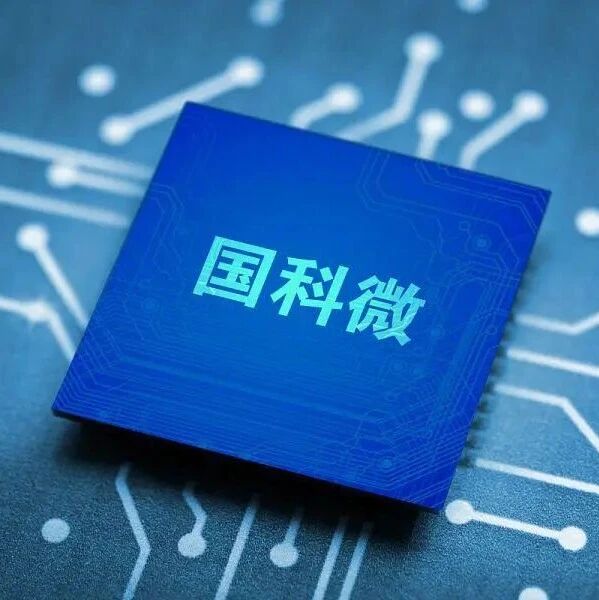
Core Viewpoint - The article highlights a significant price increase in the semiconductor industry, particularly in the storage segment, driven by structural changes and rising costs, with companies like Guokewei leading the charge with price hikes of 20% to 80% on various products [2][4]. Group 1: Price Adjustments - Guokewei announced a price increase for its solid-state storage chips, SSD controllers, and related storage modules, with increases ranging from 20% to 80%, effective February 1 [2]. - The highest price increases are seen in enterprise SSDs and high-end DDR products, with some products experiencing an 80% increase [2]. Group 2: Industry Context - The price adjustments are attributed to a structural transformation in the global storage industry, where major players like Samsung, SK Hynix, and Micron have shifted over 40% of their advanced DRAM capacity to HBM (High Bandwidth Memory) for AI servers, leading to a significant reduction in supply for consumer and enterprise standard storage chips [4]. - The industry is facing a supply shortage that is expected to last until the end of 2026, with procurement costs for key components like memory, SSDs, and HDDs increasing by 40% to 200% [4]. Group 3: Market Impact - The price surge in the storage market has been widespread, with numerous leading companies, including TI, ADI, and Micron, issuing price increase notices across various sectors, with some rare items seeing price hikes exceeding 100% [5]. - Counterpoint Research indicates that storage market prices have surpassed historical highs from 2018, with expectations of an additional 40% to 50% increase in Q1 2026 and a further 20% increase in Q2 [5]. - The end-user market is already experiencing noticeable effects, with prices for Samsung's 16G DDR5 memory modules soaring from 380 yuan in September 2025 to 1399 yuan in January 2026, marking a 268% increase [5].
华为周跃峰:中国存储产业内外承压,但依然有望全球争先
第一财经· 2025-12-03 07:16
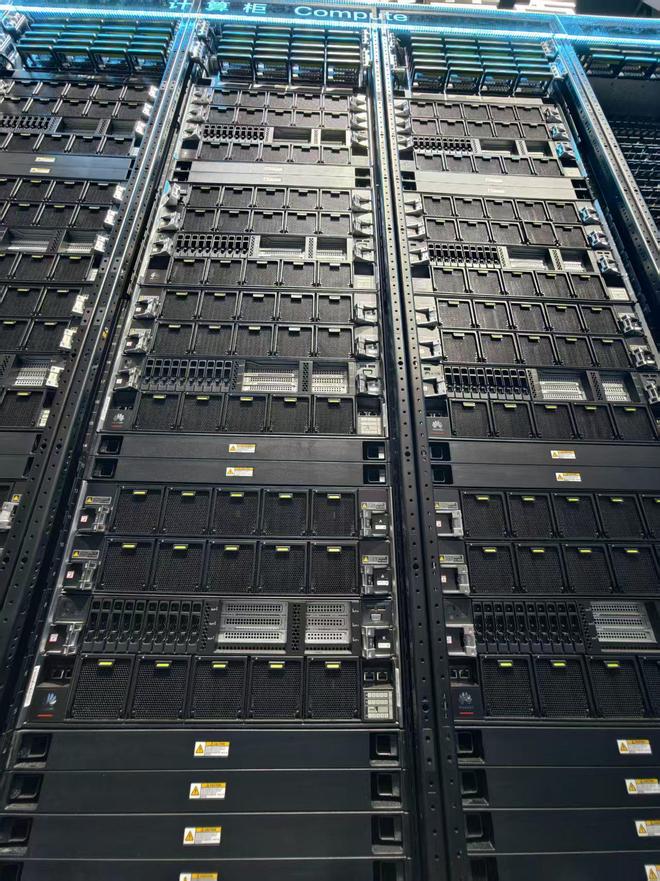
Core Viewpoint - The article discusses the current state and future prospects of the Chinese storage industry, emphasizing the challenges posed by international competition and internal price wars, while also highlighting the opportunities presented by the rise of AI and data storage needs [3][4][6]. Industry Challenges - The global storage market has reached a scale of nearly $100 billion, but many domestic storage manufacturers in China are still caught in price wars, while international giants have their HBM production capacity booked until 2027 [3][6]. - The mechanical hard disk (HDD) market in China consumes nearly 60 billion yuan annually, but the lack of core technology and insufficient production capacity puts the industry in a passive position amid global supply fluctuations [3][8]. Opportunities in the Storage Industry - Despite challenges, there is optimism about the future of the Chinese storage industry, with significant advancements in domestic technology and production capabilities [4][6]. - The annual data generation in China has increased dramatically, and the country has achieved a high level of domestic production in storage components and systems [4][6]. AI's Impact on Storage - The rise of AI is driving demand for storage solutions, with major global players like Samsung, SK Hynix, and Micron shifting their production towards HBM-related chips, leading to a tightening supply of standard storage products [6][8]. - The development of AI is reshaping the storage industry, necessitating a shift from traditional IT systems to data-centric architectures that can handle massive data processing and transmission [9][10]. Future Directions - Huawei plans to launch an AI data platform that integrates AI capabilities into storage solutions, indicating a shift towards intelligent data platforms rather than mere data storage [10][12]. - The traditional data tiering system is being simplified in the AI era, with all data potentially needing to be accessed at any time, which requires new storage media that can handle large volumes economically [11][12]. Call for Innovation - There is a strong call for domestic storage companies to move beyond low-level price competition and focus on technological innovation to enhance their competitiveness in the global market [12]. - The storage market is projected to grow significantly as digitalization transitions to intelligence, highlighting the importance of accelerating technological advancements in the storage industry [12].

华为周跃峰:中国存储产业内外承压,但依然有望全球争先
Di Yi Cai Jing Zi Xun· 2025-12-03 06:15
Core Insights - The AI large model has significantly boosted the high bandwidth memory (HBM) market, making the storage industry a focal point with a global market size reaching hundreds of billions of dollars [1][2] - Despite the challenges posed by international giants and internal price wars, there is optimism for the future of China's storage industry, which has achieved substantial domestic production capabilities [1][2] Industry Challenges - The domestic storage industry is facing a dual challenge: technological barriers from international competitors and intense price competition within China [1][2] - The lack of core technology in mechanical hard drives (HDD) positions the Chinese industry in a passive role within the global supply chain, despite a high annual consumption rate of nearly 60 billion yuan [4][5] Opportunities in AI - The rise of AI is creating two main opportunities: increased investment in global AI data infrastructure and the strategic importance of data preservation, driven by the establishment of the National Data Bureau [4][6] - The storage industry is undergoing a transformation, with a shift from processor-centric to data-centric IT architectures, necessitating high bandwidth storage solutions [6][7] Technological Advancements - Huawei is set to launch an AI data platform that integrates AI functionalities into storage, indicating a shift from traditional storage roles to intelligent data platforms [6][7] - The traditional data storage hierarchy is being simplified, with all data potentially needing to be accessed at any time, thus requiring storage solutions that offer both high capacity and cost-effectiveness [6][7] Industry Development - The Chinese storage industry has made significant strides, with advancements in key technologies and a complete industrial chain, allowing for competitive positioning in various critical sectors [2][5] - There is a call for domestic storage companies to move beyond price competition and focus on technological innovation to enhance their global competitiveness [5][7]
倪光南:中国数据存储产业已拥有关键核心技术和足够产业规模
Guan Cha Zhe Wang· 2025-11-20 02:59
Core Insights - The development of AI presents significant opportunities for the data storage industry, shifting IT architecture from a compute-centric to a storage and data-centric model [3][4] - China's data storage industry has achieved key core technologies and sufficient industrial scale, with Yangtze Memory Technologies' 232-layer 3D NAND flash chips already in mass production [4][5] - The industry has reached international leading levels in technology, with domestic storage solutions being widely applied in critical sectors such as finance, government, telecommunications, and healthcare [5] Industry Challenges - The data storage industry faces challenges such as a low data retention rate of only 2.8%, insufficient data aggregation for AI scenarios, and a lack of high-quality datasets [5] - The proportion of all-flash storage in China is only 29.2%, compared to 55.4% in the United States, indicating a gap in technology adoption [5] - There is a lack of independent categories in AI storage, inadequate ecosystem development, and a shortage of talent in data storage [5] Recommendations for Future Development - The data storage committee should focus on industry promotion, technological breakthroughs, standard guidance, industrial collaboration, and ecosystem building to enhance the core competitiveness of China's data storage industry [2][5]

供需缺口已达200%,存储大厂预测明年将持续缺货
Xuan Gu Bao· 2025-11-03 23:31
Group 1 - The storage supply-demand gap has reached 200%, driven by AI inference demand for high bandwidth memory (HBM), NAND Flash, and HDD, with expectations of continued shortages into 2026 and uncertain conditions for 2027 [1] - Wisdom Technology is the largest supplier of NAND Flash controller chips globally and a market leader in SSD controller chips, holding the most controller chip solutions and related technology patents [1] - Controller chips are considered the "brain" of storage devices, with core functions including data scheduling, error correction mechanisms, and interface protocol control, significantly impacting product performance and market competition [1] Group 2 - Samsung Electronics has suspended DDR5 DRAM contract pricing, prompting other manufacturers like SK Hynix and Micron to follow suit, leading to supply chain disruptions with price increases observed in the market [2] - Recent reports indicate that the price of DDR series memory modules has doubled in the past two weeks, with significant price fluctuations occurring within a single day [2] - Companies like Tianshan Electronics and Lianyun Technology are actively involved in the development of storage products, with Tianshan holding a 45% stake in Lianxin, which focuses on ASIC chips and enterprise storage products [2]

天风MorningCall·0924 | 固收-国债买卖与降息/银行-国债买卖/医药-创新药产业/农业-牛专题
Xin Lang Cai Jing· 2025-09-24 10:46
Group 1: Government Bond Trading and Monetary Policy - The expectation for government bond trading is heating up, while the reality is cooling down, with liquidity management remaining a key focus [1] - If interest rate cuts occur, the extent of the cuts will significantly impact the bond market, with a likely continuation of a 10 basis point reduction seen in the first half of the year [1] - The central bank's potential reintroduction of government bond trading tools is expected to enhance banks' asset-liability management stability [5] Group 2: Innovation in Pharmaceutical Industry - The Chinese innovative drug industry is transitioning towards global commercialization, with a strong pipeline of quality projects driving industry growth [8] - Early drug development in China is significantly faster than the global average, saving 30%-50% of time from target validation to product commercialization [8] - Future innovation will further unlock commercial value, with academic and industrial collaborations playing a crucial role in successful drug development [8] Group 3: Dairy and Meat Industry Trends - The dairy sector is experiencing a strong supply contraction, with demand expected to rise due to seasonal consumption and supportive policies [11] - The meat industry is at a super cycle turning point, with reduced import volumes anticipated due to narrowing price differentials [11] - The interconnection between dairy and meat sectors is expected to enhance profitability for livestock companies [11] Group 4: Company Performance and Projections - A company reported a 44.50% year-on-year increase in revenue for the first half of 2025, driven by demand in the smart connected vehicle and edge AI hardware sectors [14] - Another company achieved a 13.55% year-on-year revenue growth in 2024, with a significant market share in the global SSD controller market [16] - A third company reported a 11.02% year-on-year revenue increase in the first half of 2025, with ongoing acquisitions to expand its product offerings [22]

天风证券晨会集萃-20250924
Tianfeng Securities· 2025-09-24 00:13
Group 1: Fixed Income and Monetary Policy - The report discusses the anticipation surrounding the resumption of government bond trading, highlighting a shift from "buying long" to "buying short" under supportive monetary policy, with a focus on liquidity management [2][4][27] - It is expected that if interest rate cuts occur, the impact on the bond market will depend on the magnitude of the cuts, with a likely continuation of a 10 basis point reduction seen in the first half of the year [2][28][29] - The report emphasizes that regardless of whether bond trading resumes, liquidity concerns are manageable due to the central bank's diverse monetary policy tools [27][28][29] Group 2: Pharmaceutical Industry - The Chinese innovative drug industry is transitioning towards global commercialization, with a strong pipeline of quality projects expected to drive growth [6][9] - The report notes that the early drug development process in China is significantly faster than the global average, saving 30%-50% of time [9] - Future prospects for the industry are optimistic, with increased innovation expected to unlock greater commercial value [9] Group 3: Agricultural Sector - The dairy sector is experiencing a strong supply contraction, with expectations that the phase of destocking is nearing its end [10] - The meat cattle sector is entering a super cycle, with domestic supply tightening due to reduced imports and a long replenishment cycle [10] - The report suggests that the interconnection between dairy and meat cattle sectors will enhance profitability for related enterprises [10] Group 4: Technology Sector - The report highlights the rapid growth of Meige Intelligent, driven by demand in the smart connected vehicle and edge AI hardware markets, with a 44.50% increase in revenue year-on-year [32] - The company is expanding its applications in various sectors, including drones, AR glasses, and robotics, showcasing its strong capabilities in edge AI [34][35] - Despite a decline in overall gross margin, the company anticipates improvements in profitability in the latter half of the year [33][36] Group 5: Investment Recommendations - The report recommends focusing on sectors such as innovative pharmaceuticals, new energy, and new consumption, which are expected to benefit from seasonal demand and improving economic conditions [11] - Specific companies to watch include China Shengmu, Guangming Meat, and Fucheng Co., which are positioned well within the agricultural sector [10]


AI驱动存储升级,eSSD有望加速渗透 | 投研报告
Zhong Guo Neng Yuan Wang· 2025-09-22 02:53
Core Insights - The demand for efficient processing of massive data in the AI era is increasingly urgent, making the construction of AI data lakes essential for enterprises [2] - The prices of enterprise-level storage are continuously rising due to AI-driven demand [4] Group 1: AI and Data Storage Trends - The AI-driven transformation is turning "cold data" into "warm data," with predictions that by 2035, warm data will account for over 70% of data, leading to a shift from a three-tier data structure to a two-tier structure [2] - The performance requirements for storage hardware will increase due to the rise of "warm data," making HDDs less suitable compared to SSDs [2] Group 2: Supply and Demand Dynamics - There is a significant shortage in the supply of Nearline HDDs, with a current shortfall estimated at 150-180EB, potentially reaching 200EB [3] - The delivery cycle for Nearline HDDs has extended from weeks to over 52 weeks, exacerbating the storage gap for cloud service providers (CSPs) [3] Group 3: Price Movements and Investment Opportunities - SSD prices are expected to rise, with a projected seasonal increase of 5-10% for eSSD contracts due to CSP demand [4] - As of September 16, the price for a 512GB PCIe 4.0 SSD was $35.5, reflecting a weekly increase of 6.93% [4] - The prices for DDR4 RDIMM memory modules also saw significant monthly increases, with 32GB and 64GB modules priced at $140 and $240, respectively, marking growths of 16.67% and 4.35% [4] - Investment opportunities are identified in enterprise-level storage modules, including eSSD and RDIMM manufacturers [4][5]