Vera Rubin芯片

Search documents
美光盈利远超预期,但股价大跌
半导体芯闻· 2026-03-19 10:19
Core Viewpoint - Micron Technology's latest quarterly revenue nearly tripled, significantly exceeding analyst expectations, yet its stock price fell over 4% in after-hours trading [1] Group 1: Financial Performance - The company's non-GAAP earnings per share reached $12.20, surpassing Wall Street's expectation of $9.31 [1] - Revenue grew by 194% to $23.86 billion, exceeding the market's forecast of $20.7 billion [1] - Net profit for the quarter was $13.78 billion, compared to $1.58 billion in the same period last year [1] Group 2: Market Demand and Supply - The surge in demand for memory chips, particularly for AI workloads driven by NVIDIA's GPUs, has significantly boosted Micron's performance [1][2] - Micron is one of only three memory chip manufacturers globally, with the other two being Samsung and SK Hynix [2] - The company anticipates continued benefits from strong market demand, projecting earnings per share of $19.15 and revenue of $33.5 billion for the current quarter, well above previous forecasts [2] Group 3: Product and Technology Focus - Micron has shifted much of its production capacity towards high-bandwidth memory (HBM) products, which are primarily used in AI servers [3] - The gross margin increased from 37% in the same quarter last year to 74% this quarter, reflecting a 56% quarter-over-quarter growth [3] - Micron's cloud storage revenue surged by 160% to $7.75 billion, while its mobile and client segment revenue grew from $2.24 billion to $7.71 billion [3] Group 4: Strategic Contracts and Future Outlook - Traditionally viewed as a commodity, memory chip manufacturers like Micron are now signing longer-term contracts to secure supply amid shortages [4] - The CEO emphasized that as AI evolves, computing architectures will increasingly rely on memory, positioning Micron as a key beneficiary in the AI sector [4] Group 5: Capital Expenditure and Expansion Plans - Micron began mass production of its latest HBM4 memory products and plans to increase production of the next-generation HBM4e by 2027 [5] - The company expects significant growth in capital expenditures, with over $10 billion allocated for new manufacturing facilities to meet AI demand [5] - New manufacturing plants are under construction in Idaho and New York, with the New York facility projected to cost $100 billion and begin operations around 2028 [5]


疯狂的存储芯片,史无前例
半导体行业观察· 2026-03-19 01:32
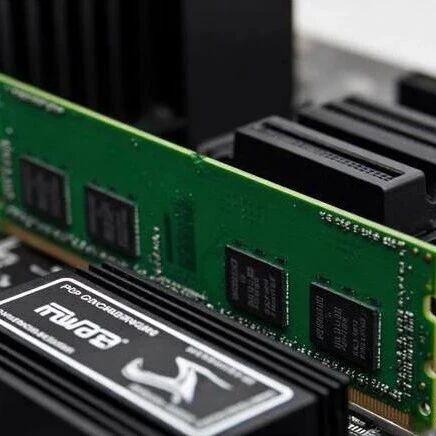
Core Viewpoint - The article discusses the unprecedented growth in the memory chip industry driven by AI demand, highlighting the significant revenue increases for major companies like Samsung and Micron Technology, while also addressing potential supply shortages and market dynamics [2][3][11]. Group 1: Samsung's Position and Strategy - Samsung's co-CEO, Chey Tae-won, indicated that the investment growth in AI data centers is leading the memory industry into an "unprecedented super cycle" [2]. - The demand for AI is rapidly increasing, driving customer needs for high-bandwidth memory (HBM), solid-state drives (SSD), and other server chips, resulting in explosive order growth [2]. - Samsung is negotiating to shift memory supply contracts from seasonal or annual agreements to multi-year contracts to enhance predictability and stability in supply [2]. Group 2: Micron Technology's Performance - Micron Technology reported record revenue of $23.86 billion for Q2 of fiscal year 2026, a 2.96 times increase year-over-year, significantly exceeding market expectations [3][4]. - The company's operating income reached $16.135 billion, an 810% increase from the previous year, with an operating margin rising from 22.0% to 67.6% [3]. - Micron expects next quarter revenue to be around $33.5 billion, with adjusted earnings per share projected at $19.15, surpassing market forecasts [4]. Group 3: Industry Challenges and Future Outlook - SK Hynix's CEO warned that the global memory chip shortage could persist for several years, with structural supply constraints likely extending into the next decade [6]. - The shortage is attributed to limited wafer production capacity, which may take four to five years to address [6]. - The article notes that the competition for HBM is intensifying, driven by AI needs, which may exacerbate shortages in traditional DRAM memory chips used in smartphones and PCs [7]. Group 4: Market Dynamics and Investment Trends - The memory market is experiencing a significant transformation, with the value projected to rise from $48 billion in 2005 to over $210 billion by 2025, driven by AI [11]. - Major players like Samsung, SK Hynix, and Micron are investing over $20 billion annually in expansion efforts to capture AI-driven demand [11]. - Taiwanese manufacturers are seizing opportunities in traditional products as the giants focus on high-priced HBM, with companies like ADATA and Phison innovating to meet market needs [12]. Group 5: Competitive Landscape and Future Risks - The article highlights a shift towards rational competition in the memory industry, moving away from destructive price wars [13]. - Analysts caution that traditional memory markets remain cyclical, and any return of large-scale production could lead to rapid price corrections [13]. - The sustainability of high investments in AI infrastructure translating into actual revenue remains a critical concern for the industry [13].

预计5月上市!英伟达将推中国版Groq AI芯片
Xin Lang Cai Jing· 2026-03-18 03:28
Core Viewpoint - Nvidia is preparing to launch a new AI chip based on Groq technology specifically for the Chinese market, marking a strategic shift in its product offerings to address geopolitical challenges [1][3][4] Group 1: Product Strategy - The new chip for China will not be a downgraded version, differing from previous approaches where products were specifically designed with reduced capabilities for the Chinese market [1][4] - This new chip is designed to be compatible with other systems and is expected to be officially launched in May this year [4] - Nvidia plans to utilize Groq's chip for the "inference" phase of AI, which involves real-time responses such as answering questions and executing tasks [1][4] Group 2: Competitive Landscape - Despite Nvidia's dominance in the AI training market, it faces increasing competition in the inference market, with several Chinese AI giants developing their own inference chips [3][6] - Groq's chip features an SRAM memory architecture with a memory bandwidth of up to 150TB/s, which is seven times that of the Rubin GPU, optimized for low-latency token generation [6]

消息称英伟达准备为中国市场推Groq AI芯片 性能不降级
Feng Huang Wang· 2026-03-18 00:04
Core Viewpoint - Nvidia is preparing to launch a version of the Groq AI chip that can be sold in the Chinese market, following its acquisition of Groq for $17 billion last year [1] Group 1: Product Development - The new chip for the Chinese market is not a downgraded version nor specifically designed for China, and it is expected to be compatible with other systems, with a launch anticipated in May [1] - Nvidia plans to use Groq's chip for the "inference" phase, allowing AI systems to answer questions, write code, or perform tasks [1] Group 2: Market Competition - Despite Nvidia's dominance in the AI training market, it faces intense competition in the inference market, with several major Chinese companies, including Baidu, beginning to produce their own inference chips [1] Group 3: Product Integration - At the recent GTC developer conference, Nvidia showcased a new product line that combines the upcoming Vera Rubin chip with the Groq chip [1]
重磅,英伟达将推中国版Groq芯片
半导体行业观察· 2026-03-17 23:39
Core Viewpoint - Nvidia is preparing to launch a Groq AI chip for the Chinese market, following its acquisition of Groq for $17 billion last year, and has restarted production of its H200 chip after obtaining necessary export licenses and orders from Chinese customers [1] Group 1: Nvidia's Strategy and Product Development - Nvidia plans to utilize Groq's chips for AI inference, which involves answering questions and executing tasks, and aims to combine the upcoming Vera Rubin chip with Groq chips [1] - The company is integrating LPU and LPX into its Rubin platform to optimize decoding, indicating a shift in focus from the Rubin CPX project [4] - Nvidia's acquisition of Groq was driven by the need for low-latency inference capabilities, as the demand for AI supercomputers grows [3][12] Group 2: Competitive Landscape - Despite Nvidia's dominance in AI training, it faces intense competition in the inference market from Chinese AI giants like Baidu, which have developed their own inference chips [1] - The Groq chips are not downgraded versions but are designed to be compatible with other systems, with expectations for their market launch in May [1] Group 3: Technical Specifications and Performance - The performance comparison indicates that the R200 GPU can achieve a theoretical peak performance 42 times that of the LP30 chip under certain conditions, highlighting the complexity and cost associated with GPU technology [7] - The integration of Groq's LP30 into Nvidia's systems is expected to enhance performance for high-end customers, as more LP30 chips are added for inference tasks [10] - The performance metrics suggest that Nvidia's systems will provide significant improvements in AI processing capabilities, with a potential 13.3 times increase in performance with fewer GPUs [14][15]

事关存储芯片,SK集团董事长最新发声
财联社· 2026-03-17 04:10
Core Viewpoint - The global memory chip shortage is expected to persist until 2030 due to systemic production bottlenecks in the semiconductor industry [1][5]. Group 1: Chip Shortage and Price Trends - The shortage of various memory chips, including DRAM, NAND, and HBM, is anticipated to lead to sustained price increases over an extended period [2]. - The current shortage rate for AI storage chips has exceeded 30%, indicating significant demand pressures [3]. - The increasing demand for AI is contributing to the ongoing semiconductor shortage, which is likely to continue for several years [4]. Group 2: Company Insights and Market Reactions - SK Hynix, one of the largest memory chip manufacturers globally, is a key supplier of HBM chips to NVIDIA [6]. - The chairman of SK Group, Choi Tae-won, mentioned that the company requires at least four to five years to increase wafer production capacity to meet the high demand for HBM chips driven by the AI sector [7]. - SK Hynix is considering measures to stabilize DRAM chip prices and is exploring the possibility of issuing American Depositary Receipts (ADRs) to broaden its global investor base, which could help reassess the company's value [8]. Group 3: Market Performance - Following the NVIDIA GTC conference, South Korean semiconductor stocks experienced strong performance, with Samsung Electronics' stock rising over 4% and SK Hynix's stock increasing by more than 2.5%, reaching the 1 million KRW mark for the first time in 11 trading days [9].

英伟达七款全新的Vera Rubin芯片现已进入全面量产阶段。
Xin Lang Cai Jing· 2026-03-16 19:33
Group 1 - Nvidia has launched seven new Vera Rubin chips, which have now entered full-scale production [1]
利空突袭!AI巨头,传出大消息!
券商中国· 2026-03-12 09:16
Group 1: Anthropic's Challenges - Anthropic, a major competitor to OpenAI, is facing significant challenges due to a dispute with the Pentagon over AI safety, which could lead to losses of billions of dollars if the U.S. government restricts its AI tools [1][2] - The company reported that over 100 enterprise clients have expressed concerns about continuing their partnerships due to the government's actions, with specific contracts being renegotiated or reduced in value [3] - Anthropic is seeking legal assurances that its AI technology will not be used for mass surveillance or autonomous weapons, and it has garnered support from AI scientists at OpenAI and Google [4] Group 2: OpenAI's Strategic Moves - OpenAI plans to integrate its AI video generator Sora into ChatGPT as part of a broader strategy to increase user engagement, despite potential increases in operational costs [5][6] - The integration aims to boost weekly active users, which currently stands at approximately 920 million, still short of the 1 billion target set for last year [6] - OpenAI anticipates that its inference costs for running AI models will exceed $225 billion by 2030, necessitating sufficient computational capacity to handle increased usage from new features [7] Group 3: Nvidia's Investments - Nvidia announced a $2 billion investment in AI cloud service company Nebius, marking its continued expansion in the AI sector [2][9] - The company is also collaborating with Thinking Machines, providing over 1 gigawatt of computational power and making a significant investment to support the development of personalized AI [8][9] - Nvidia's recent partnerships include agreements with Coherent and Lumentum for optical technology development, as well as a large-scale collaboration with Meta [9]

英伟达(NVDA.US)再投AI初创Thinking Machines Lab 并供应Vera Rubin芯片
Zhi Tong Cai Jing· 2026-03-10 13:41
Core Insights - Nvidia (NVDA.US) has announced a new investment in AI startup Thinking Machines Lab, founded by former OpenAI executive Mira Murati, and will supply chips for training and running AI models [1][2] - The partnership includes a multi-year agreement where Thinking Machines Lab will utilize Nvidia's upcoming Vera Rubin AI acceleration chip, expected to provide at least 1 gigawatt of computing power, equivalent to the electricity consumption of approximately 750,000 households [1] - Nvidia's previous investment in Thinking Machines Lab occurred last year, but specific terms of the current investment have not been disclosed, described only as a "significant investment" [1] Investment Context - Nvidia, as the world's most valuable company, is actively pursuing multiple investment deals to drive AI implementation across various industries, contributing to what it terms a "new industrial revolution" [2] - Concerns have been raised regarding Nvidia's investment model, which involves taking equity stakes in its own customers [2] - Last November, Thinking Machines Lab sought new funding with a valuation target of $50 billion, which would represent a fourfold increase from its July valuation of $12 billion, following a $2 billion funding round [2] Company Background - Mira Murati, the founder of Thinking Machines Lab, previously served as the Chief Technology Officer at OpenAI and has recruited dozens of employees from OpenAI to her new venture [2] - Thinking Machines Lab launched its first product, Tinker, in October last year, aimed at helping users optimize large language models, which are foundational technologies for chatbots like ChatGPT [2] - Recently, Thinking Machines Lab has faced talent retention challenges, with several employees, including its CTO, returning to OpenAI [2]
消息称英伟达Vera Rubin芯片仅采用三星和SK海力士HBM4技术;丹麦维斯塔斯将在日本建造风力涡轮机,预计投资数百亿日元丨智能制造日报
创业邦· 2026-03-09 07:33
Group 1 - Vestas, a Danish company, plans to build wind turbines in Japan with an investment of several hundred billion yen, aiming to capture growing demand and expand its business in Asia by establishing a factory before the fiscal year 2029 [2] - Nvidia's upcoming AI accelerator, Vera Rubin, will exclusively use HBM4 technology from Samsung and SK Hynix, excluding Micron from the supply chain [2] - The Semiconductor Industry Association (SIA) reported that global semiconductor sales reached $82.54 billion in January, marking a year-on-year increase of 46.1% and a month-on-month growth of 3.7% [2] - S&S TECH, a leading company in the semiconductor blank mask sector, has signed an agreement to establish a research and production base for flat panel display blank masks in Suzhou, with a planned investment of $150 million and projected sales of $900 million over the next five years [2]