Di Yi Cai Jing

Search documents
医疗设备“低价中标+耗材回血” 时代终结
Di Yi Cai Jing· 2026-02-03 11:40
Core Viewpoint - The new regulations aim to address the issue of "abnormally low bids" in government procurement, particularly in the medical equipment sector, by establishing a more transparent and competitive market order focused on quality and price [1][8]. Group 1: Key Issues in Abnormally Low Bids - The core reasons for the persistence of abnormally low bids include a business model driven by profit bundling, procurement and evaluation mechanism loopholes, and weak regulatory and performance systems [2]. - The binding of equipment and consumables leads to a cycle where companies use low initial bids to capture hospital channels, later profiting from consumables and maintenance services [2]. - The evaluation process often prioritizes price over total lifecycle costs, neglecting long-term expenses related to consumables and maintenance, which creates opportunities for low-price collusion [2]. Group 2: Key Measures to Avoid Quality Decline - A comprehensive prevention system must be established across five key areas: source demand control, evaluation optimization, contract and performance constraints, acceptance supervision, and intelligent empowerment [3][4][5]. - Source demand control should involve thorough market research to accurately determine lifecycle costs, ensuring procurement budgets reflect actual needs [3]. - The evaluation mechanism should prioritize technical and service quality over price, requiring suppliers to justify low bids with detailed cost breakdowns [3]. Group 3: Impact of New Regulations on the Industry - The new regulations will significantly impact procurement entities (hospitals), suppliers, and regulatory bodies, accelerating industry reshuffling and concentrating market share among quality enterprises [6][7]. - Hospitals will benefit from reduced lifecycle costs and increased focus on comprehensive value assessments, but will need to invest more in market research and adjust internal evaluation criteria [6]. - Leading companies with core technology and compliance capabilities will thrive, while smaller firms may struggle to adapt, leading to a market shift towards quality competition and breaking traditional profit models [6][7]. Group 4: Regulatory Enhancements - The new regulations provide clear guidelines for managing abnormally low bids, enhancing transparency and efficiency in government procurement [7]. - Regulatory bodies will need to establish collaborative oversight mechanisms to ensure accountability across all parties involved in the procurement process [7]. - The market will increasingly favor companies with robust compliance and service capabilities, as the separation of equipment and consumables procurement disrupts previous profit bundling practices [7][8].
月末票据利率不升反降,信贷“开门红”成色不足?
Di Yi Cai Jing· 2026-02-03 11:33
Core Viewpoint - The market has a conservative expectation for January's credit growth, influenced by factors such as the smoothing of credit issuance before the end of 2025 and the performance of the bill market [1] Group 1: Credit Market Expectations - January is traditionally a significant month for credit issuance, but expectations for this year are subdued, with some analysts predicting new loans to be around 5 trillion yuan, lower than the previous year's levels [1][7] - The bill market, which combines both funding and credit attributes, is seen as a leading indicator for bank credit issuance, and the recent decline in bill rates has raised concerns about the strength of credit demand [2][3] Group 2: Bill Market Trends - In January, the six-month bill discount rate initially rose to 1.29% but then fell to a low of 1.07%, indicating a 22 basis point fluctuation, which is atypical for this time of year [2] - The three-month bill discount rate fluctuated between 1.30% and 1.50%, with a notable decline towards the end of the month, suggesting weaker credit demand than expected [2][3] Group 3: Historical Context and Predictions - Historically, January is a peak month for credit issuance, with new loans from 2019 to 2025 averaging between 3.23 trillion yuan and 5.13 trillion yuan, but this year is expected to be flat compared to last year [6] - Some institutions predict that January's new loans will be between 5.2 trillion and 5.5 trillion yuan, with a significant portion expected to be issued from mid-January onwards [6][7]
北交所百余份“成绩单”出炉:盈利面超六成,6家净利过亿
Di Yi Cai Jing· 2026-02-03 11:26
北证50成份股继续发挥业绩"压舱石"作用。 超四成公司交出"成绩单",北交所2025年的业绩全貌正逐渐清晰。 Wind统计显示,截至1月底,3家北交所公司发布2025年业绩快报,另有123家披露了当期业绩预告,合 计占到北交所公司总数的四成以上。上述公司里,去年实现盈利的有77家,盈利面超过六成。 有6家北交所公司预计2025年净利润过亿元。其中,去年年底上市的蘅东光(920045.BJ)业绩领先,去 年预计实现净利润2.7亿元至3.1亿元,增幅在八成以上。广信科技(920037.BJ)、吉林碳谷 (920077.BJ)等去年也增收增利,净利润超亿元。 北证50成份股继续发挥业绩"压舱石"作用,去年净利润排在前列的公司中,多家为该指数成份股,涉及 林泰新材(920106.BJ)、富士达(920640.BJ)等。值得一提的是,逾10家北交所公司有望在去年扭亏 为盈。 13家公司去年扭亏 截至1月底,3家已披露业绩快报的北交所公司是基康技术(920879.BJ)、联迪信息(920790.BJ)和华 信永道(920592.BJ)。其中,基康技术去年增收增利,当期营收4.08亿元、归母净利润8231.15万元, 同比 ...
中国联通:国企结构调整基金完成减持1.0764%股份
Di Yi Cai Jing· 2026-02-03 11:05
中国联通公告,股东中国国有企业结构调整基金股份有限公司减持计划已完成,2025年11月3日至2026 年2月3日通过集中竞价减持3.13亿股、大宗交易减持2389.87万股,合计减持3.37亿股,占总股本 1.0764%,减持价格区间4.8~5.53元/股,成交金额17.82亿元,当前持股15.63亿股,占总股本5.00%。 ...

精测电子:股东陈凯拟减持不超1.79%股份
Di Yi Cai Jing· 2026-02-03 10:59
精测电子公告,持股5%以上股东陈凯先生持有2252.98万股,占总股本8.05%;因自身资金需要,拟自 公告15个交易日后的3个月内(2026年3月6日至2026年6月5日)通过集中竞价或大宗交易减持不超500万 股,占1.79%,其中集中竞价减持不超1%,大宗交易减持不超2%。 ...

武汉打造全国数智经济一线城市
Di Yi Cai Jing· 2026-02-03 10:53
Core Insights - Wuhan is focusing on building a super-large city intelligent system rather than competing in the general large model race in AI technology [6] - The city aims to achieve an AI industry scale exceeding 200 billion yuan by 2026, with a target of producing over 15,000 PetaFLOPS of computing power and facilitating a cumulative data transaction volume of 3 billion yuan [1][5] Group 1: Smart Economy Development - Wuhan's "Smart Economy Development Action Plan (2026-2028)" was released, emphasizing the transformation of urban competition through AI technology [1] - The plan includes the establishment of over 1,500 AI-related companies and the cultivation of 1,000 large-scale data enterprises within three years [1] Group 2: Technological Innovation - The city will implement over 30 R&D projects focusing on foundational technologies like AI chips to achieve self-controllable key technologies [2] - Wuhan is setting up 29 high-energy innovation platforms and 11 industrial innovation laboratories, with six focusing on the smart economy [2] Group 3: Industry Integration Actions - Four major actions will be taken to deepen the integration of scientific innovation and industry: breakthrough in smart "root technologies," AI empowerment in science, cross-industry integration of smart technologies, and optimization of the innovation and entrepreneurship ecosystem [3] Group 4: Core Industries of Smart Economy - By 2025, Wuhan's core smart economy industries are expected to reach a scale of 1.1 trillion yuan, with 3,678 enterprises in the sector [4] - The electronic information manufacturing and software industries will account for over 80% of this growth, with significant advancements in AI applications across various sectors [4] Group 5: Computing Power and Data Infrastructure - Wuhan plans to establish a diverse computing power supply system, aiming for 7,500 PetaFLOPS of computing power by 2026 [5] - The city will explore the creation of a public service platform for AI and data, focusing on various application scenarios in urban governance [5] Group 6: Talent and Collaboration - Recommendations include fostering interdisciplinary talent in AI and industry, leveraging the city's strong research capabilities [7] - Collaboration with neighboring cities like Yichang is suggested to build a regional AI infrastructure and data base [7]
“中国一直都很重要”:上海为外资备好春节“菜单”
Di Yi Cai Jing· 2026-02-03 10:47
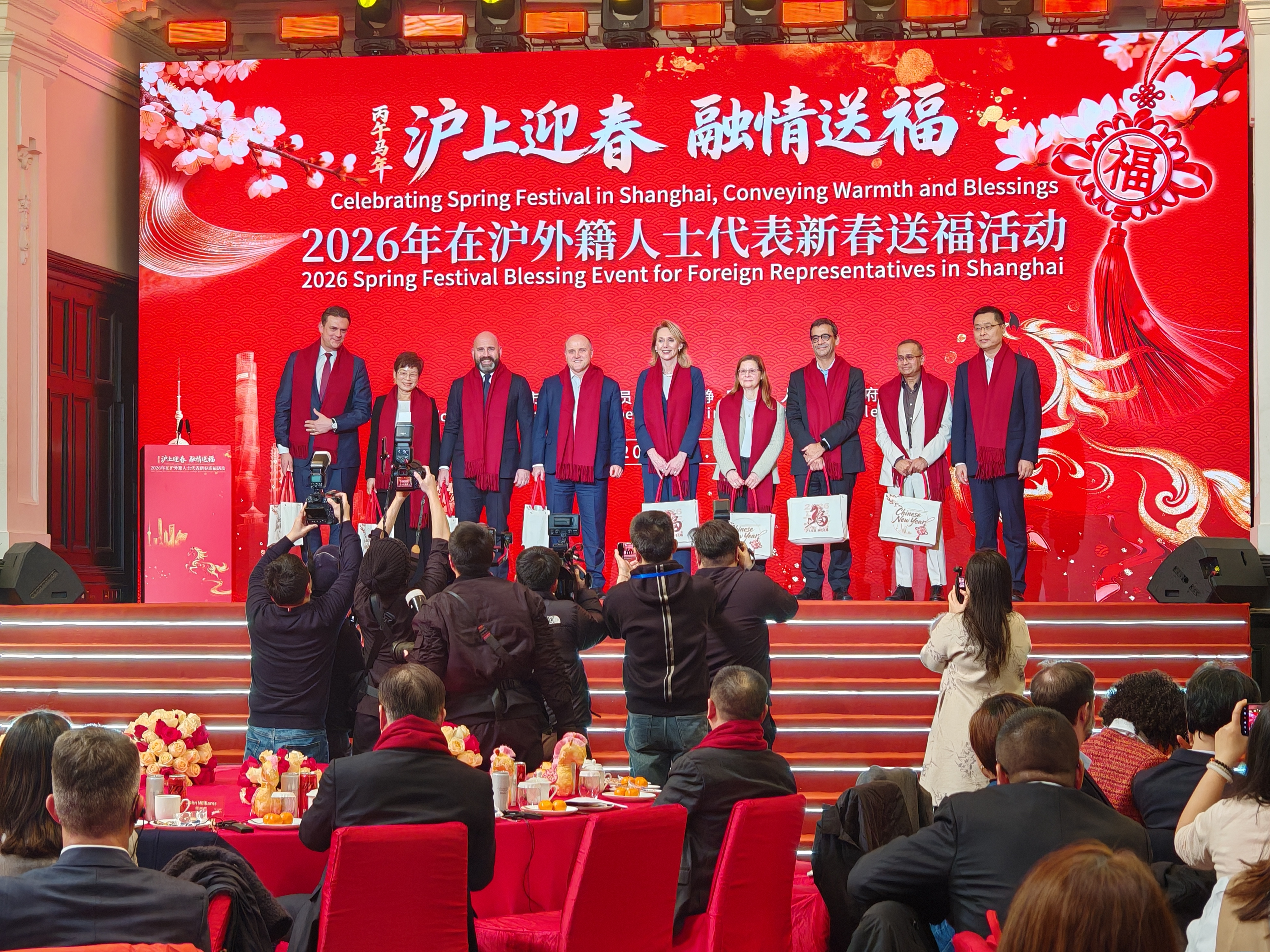
Core Insights - Shanghai has established an average of over 5,700 new foreign-funded enterprises annually, with nearly 80,000 foreign enterprises currently operating across various industries [6][8] - The investment environment in Shanghai is being enhanced with new policies and initiatives aimed at attracting foreign investment, particularly in sectors like telecommunications and biotechnology [6][7] Group 1: Foreign Investment Trends - The presence of foreign enterprises in Shanghai is significant, with a notable contribution to local tax revenue, particularly from foreign-funded companies in the Jing'an District [7] - Companies like Logitech view China as a critical part of their manufacturing and innovation strategy, emphasizing local R&D and market-specific innovations [8] - Polish companies are showing interest in investing in China, particularly in new energy sectors, supported by visa-free policies that facilitate business travel [4][9] Group 2: Government Initiatives - Shanghai's government is actively promoting the city as a premier destination for experiencing the Chinese New Year, with a series of themed events planned for the upcoming celebrations [5][6] - The Shanghai Municipal Commission of Commerce is preparing a "menu" of activities and services to enhance the investment experience for foreign businesses, including culinary offerings and policy support [6] - The city aims to deepen investment cooperation in key sectors and enhance intellectual property protection to attract more foreign investment [6][7]


黄金与美元“脱钩”加剧!地缘风险溢价正重塑定价逻辑
Di Yi Cai Jing· 2026-02-03 10:42
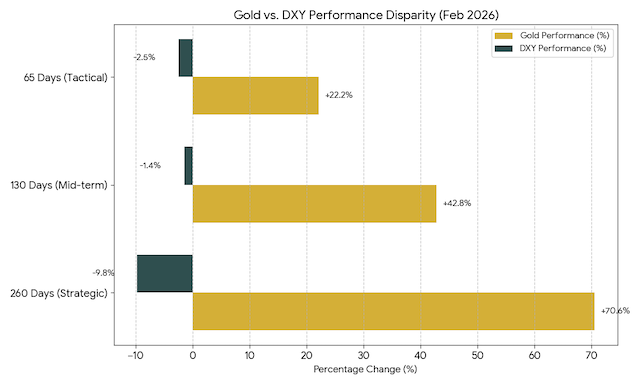
Core Insights - The core variable omitted in current pricing models is the geopolitical risk premium [1][4] - The traditional inverse relationship between gold and the US dollar is breaking down, with gold's price movements becoming increasingly non-linear [1][3] - Recent data shows that gold's price increase has significantly outpaced the decline of the US dollar, indicating a potential failure of traditional modeling methods [3][4] Group 1: Pricing Model Failures - The sensitivity of gold prices to the US dollar index and real interest rates has significantly decreased [3][4] - In a complete trading year, the US dollar index fell by 9.76%, while gold prices surged over 70% [3] - The divergence in price movements between gold and the dollar has reached extreme levels, suggesting a potential reversal is expected [1][3] Group 2: Market Predictions - Major banks have raised their price forecasts for gold, with estimates reaching as high as $6,000 per ounce [4][5] - UBS highlights gold's strong performance as a valuable diversification tool in investment portfolios, despite a 90% increase over the past 13 months [4][5] - Citi warns that while geopolitical and economic risks support gold investments, about half of these risks may diminish later this year [5]
精锻科技:拟在德国设立全资子公司
Di Yi Cai Jing· 2026-02-03 10:41
精锻科技公告,公司拟在德国设立全资子公司,将进一步推进公司国际化战略布局,搭建欧洲区域技术 与市场综合支撑平台,深化与欧洲客户的长期稳定合作关系,提升对客户需求的快速响应能力;同时助 力公司拓展欧洲市场新客户资源,增强公司产品在欧洲市场的核心竞争力,为公司后续在欧洲及非洲区 域的业务拓展与投资布局奠定坚实基础。 ...

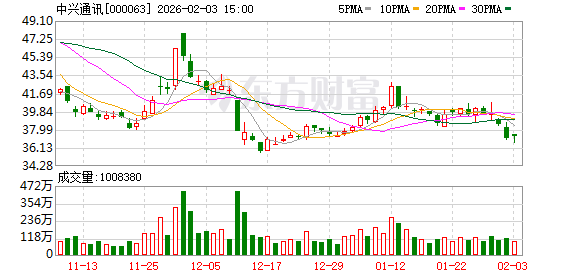
中兴通讯:尚未启动10亿元股份回购计划
Di Yi Cai Jing· 2026-02-03 10:39
(文章来源:第一财经) 中兴通讯晚间公告,公司于2025年12月12日董事会会议通过了A股股份回购方案,计划使用自有资金以 集中竞价交易方式回购A股股份,资金总额不低于10亿元且不超过12亿元,回购价格不超过63.09元/ 股,期限为12个月。截至2026年1月31日,公司尚未实施股份回购。后续将根据市场情况在回购期限内 推进回购计划,并履行相关信息披露义务。 ...