
Ke Ji Ri Bao

Search documents
进一步推进老龄和养老服务科技创新
Ke Ji Ri Bao· 2026-01-30 07:36
Core Viewpoint - The Ministry of Civil Affairs has issued the "Guiding Opinions on Further Promoting Technological Innovation in Civil Affairs," which aims to leverage new technological and industrial transformation opportunities to innovate civil affairs work and enhance the technological innovation system in the sector [1] Group 1: Overall Requirements and Measures - The "Opinions" is the first comprehensive policy document on civil affairs technological innovation issued for the 14th Five-Year Plan, proposing 14 specific measures across five areas: overall requirements, strengthening key core technology breakthroughs, promoting the transformation and application of technological achievements, enhancing technological support capabilities, and strengthening organizational guarantees [1] Group 2: Technological Integration and Innovation - The document emphasizes the need to widely apply cutting-edge technologies such as humanoid robots, brain-computer interfaces, and artificial intelligence in areas like disability prevention, elderly care, rehabilitation, mental comfort, safety monitoring, and the construction of age-friendly environments [2] - It highlights the importance of deeply integrating technological products with typical service scenarios in home, community, and institutional settings to create comprehensive care solutions for the elderly [2] Group 3: Industry Development and Standards - The "Opinions" supports the establishment of regional clusters for the elderly and elderly care service industries, focusing on intelligent elderly care service robots and smart elderly products [2] - It proposes measures for building national-level technological innovation platforms and international cooperation platforms in the elderly and elderly care service sectors, as well as establishing a technical standards system [3] - The Ministry encourages collaboration among universities, research institutions, leading technology enterprises, and elderly care service organizations to drive technological innovation in the sector [3]
【科技日报】花垣生物群揭秘显生宙第一次生物大灭绝事件
Ke Ji Ri Bao· 2026-01-30 06:08
2021年,团队收到湖南省博物馆采集到的化石标本线索,意识到湘西土家族苗族自治州花垣县境内 存在重要的寒武纪软躯体化石群,随即开展了持续5年的野外化石发掘工作,将发现的化石命名为"花垣 生物群"。他们采集超过5万件化石标本,分类鉴定出153个动物物种,其中59%为新物种。许多化石清 晰地保存了消化、神经、呼吸系统等软躯体生物学结构,同时也展现了一个具有复杂食物网和生物碳循 环机制的深水动物群落。 (原载于《科技日报》 2026-01-30 02版) 29日,中国科学院南京地质古生物研究所朱茂炎团队和国内相关科研单位联合,在《自然》发表的 一项研究成果表明,5.13亿年前,显生宙爆发了第一次生物大灭绝事件。在中国湖南发现的"花垣生物 群"成为生命演化的"接力棒",给全球生态系统带来巨大改变。 研究团队基于大数据对比分析发现,花垣生物群中有体长可达2米的顶级掠食者奇虾,挥舞着巨大 的前肢,刺穿猎物的身体;樽海鞘等浮游动物滤食漂浮在海洋中的有机质颗粒,共同组成了一个复杂的 食物网。一些物种甚至还会"跨洋旅行",花垣生物群中的马尔虫、头盔虫等物种也出现在加拿大布尔吉 斯页岩生物群,这表示它们可能是在幼虫时期借助洋流, ...
【科技日报】我科学家成功调控量子系统预热化持续时间
Ke Ji Ri Bao· 2026-01-30 06:07
范桁表示,这项研究不仅首次在量子模拟器上实现了对超越周期驱动的预热化过程的主动调控,也 为未来设计更优的量子纠错方案、延长量子比特的相干时间提供了新思路。它验证了量子模拟器在解决 特定复杂问题上的独特优势,推动了量子计算与经典计算在竞争中相互促进。 (原载于《科技日报》 2026-01-30 01版) 科幻电影《流浪地球2》中,能洞悉一切复杂演化的超级智能体"MOSS"令人惊叹。如今,真实量 子世界初现实现这一能力的曙光。记者29日从中国科学院物理研究所获悉,来自该所等单位的科研人 员,在一块包含78个量子比特的超导芯片"庄子2.0"上,发现并主动调控了量子系统走向混乱前的关 键"缓冲期"——预热化,为未来实现更稳定、更可控的量子计算与模拟奠定了基础。相关研究成果在线 发表于《自然》杂志。 量子系统的热化,是指系统在演化中逐渐达到一种平衡态,能量与信息会自然扩散并趋于均匀,就 像一滴墨水滴入清水,墨迹缓缓散开,直至整杯水颜色一致,而最初的信息也在这个过程中消散。这对 需要长时间保持信息不丢失的量子计算而言,是一大障碍。量子系统的预热化是热化过程中的一个中间 阶段,系统虽然受到外场驱动,但不会立即进入完全混乱状 ...
是什么让郭帆导演又破防了?网友:祖国科技专治拖延症
Ke Ji Ri Bao· 2026-01-30 05:34
1月29日,中国科学院超导芯片落地,让《流浪地球2》的超级智能体"MOSS"照进现实,郭帆感慨直 呼"妈妈的步伐慢点,等等我"!中国科技正硬核提速:东风列阵惊艳世界,人造太阳攻克亿度千秒难 关,亚轨道激光3D打印首成,北脑一号进入临床验证。中国科技步履不停,捷报频传,专治拖延症 的,永远是蒸蒸日上的中国! (文章来源:科技日报) ...
带领学徒“在头发丝上跳芭蕾”——专访国家级技能大师工作室领办人闫文利
Ke Ji Ri Bao· 2026-01-30 03:49
【百家话职教】 ◎科技日报记者 张景阳 通讯员 朱小萌 "我们应通过媒体、展览、公开课等方式,讲好航天工程、深海装备背后的制造故事,让公众认识到没 有技能人才,再好的设计也只是纸上谈兵。" 清晨,内蒙古第一机械集团桥箱公司的车间里还带着隔夜的凉意,特级技师闫文利已经换上深蓝色工 装,站在了他最熟悉的数控机床前。他要带领团队完成车桥主减速器壳体的最后一轮精度调试,这批零 件将用于国家重点装备项目。 闫文利盯着屏幕上的加工路径,突然抬手示意徒弟暂停:"进给量调慢0.02毫米,主轴转速再降50 转。"徒弟愣了一下,刚想追问,却见闫文利俯身贴近正在运转的刀具,"你听,声音有点发颤,这是切 削力要超标的信号。"果然,调整参数后,机床的轰鸣声变得平稳,屏幕上的误差值稳定在了1微米以内 ——这个比头发丝直径还小的精度,正是闫文利从业23年来,刻进骨子里的标准。 作为全国技术能手、国务院政府特殊津贴专家、国家级技能大师工作室领办人,闫文利始终以"微米 级"的执着,在军工制造领域书写新时代工匠的创新答卷。 近日,科技日报记者对闫文利进行专访,探寻他从职校毕业生到国家级技能大师工作室领办人的成长路 径,并了解他如何通过技能创新, ...

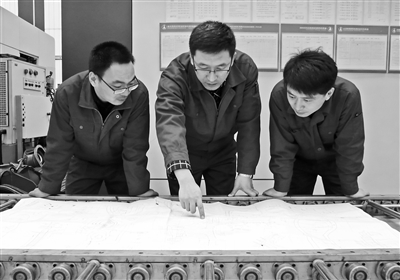
布下宇宙信号“监听系统” 暗物质探测新增更精准“量子神器”
Ke Ji Ri Bao· 2026-01-30 02:00
Core Insights - The research team from the University of Science and Technology of China has developed the world's first quantum sensing network based on atomic nuclear spins, significantly enhancing the sensitivity for dark matter detection, as published in the journal Nature [1][2] Group 1: Quantum Sensing Technology - The quantum sensors are equipped with two key innovations: storing fleeting signals in a nuclear spin coherence state for nearly a minute, which greatly extends the detection window, and a self-developed quantum amplification technology that enhances weak signals by 100 times [1] - The team has successfully deployed five ultra-sensitive quantum sensors in Hefei and Hangzhou, creating a distributed detection network synchronized by satellite time [2] Group 2: Dark Matter Detection - The research has provided the most stringent limits on dark matter models across a wide range of axion masses, with some precision limits exceeding astronomical observations by 40 times [2] - This breakthrough adds a more precise "quantum tool" to humanity's toolkit for searching dark matter, with potential future enhancements in sensitivity by four orders of magnitude through global networking and space deployment [2]
120吉比特每秒!我国超高速星地激光通信实现业务化突破
Ke Ji Ri Bao· 2026-01-30 01:36
Core Insights - China has successfully conducted a business application experiment for space-ground laser communication, achieving a stable high-speed transmission rate of 120 Gbps, setting a new record in the field [1][3] - This advancement marks a new phase in the business application of space-ground laser communication, laying a critical technological foundation to meet future demands for massive space-based data transmission [1] Group 1: Experiment Details - The experiment was conducted at the Xinjiang Tak County laser ground station, utilizing the AIRSAT-02 satellite developed by China Aerospace Science and Technology Corporation [3] - The laser link established a rapid capture and connection within seconds, with a success rate exceeding 93%, and the longest continuous stable communication lasting 108 seconds [3] - The research team achieved this enhancement without modifying the satellite hardware, instead employing "on-orbit software reconfiguration" to double the original transmission capacity from 60 Gbps to 120 Gbps [3][5] Group 2: Technical Challenges and Solutions - Space-ground laser communication utilizes laser as a medium for high-speed information transfer, offering advantages such as large bandwidth, strong anti-interference capability, and good confidentiality [3] - The team overcame three core technical challenges: optimizing real-time correction algorithms to stabilize light beam disturbances caused by atmospheric turbulence, applying advanced compensation techniques to reduce data error rates, and improving adaptive transmission strategies to maximize channel capacity [5] - The successful operation of space-ground laser communication demonstrates its capability to support future massive space data transmission, with potential to become a key hub connecting space-based information networks and ground fiber networks [5]

在长城站,听南极科考的“国际合唱”
Ke Ji Ri Bao· 2026-01-30 01:28
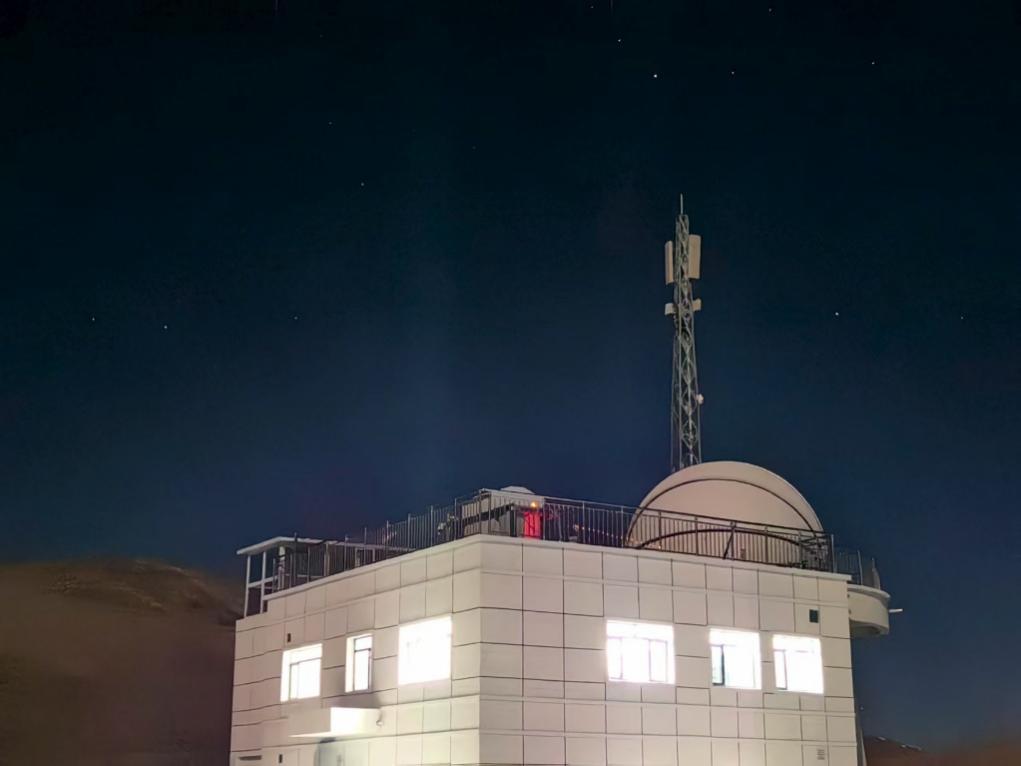
"9年前,在我的首次南极考察经历中结识了当时正在野外考察的长城站队员戴宇飞。今年,当我以 项目负责人的身份重返长城站时,惊喜地发现他在此担任站长。"在中国南极长城站,来自葡萄牙法鲁 阿尔加夫大学海洋与环境研究中心的博士后研究员卡门·索菲亚·维埃拉·德·索萨向科技日报记者讲述了她 与长城站结下的不解之缘。 从读博士到"带"博士 这是一次美好的故地重游,充满了珍贵的回忆和全新的合作契机。索萨将在长城站进行为期60天的 科学考察,重点研究极端寒冷环境中生物对金属污染的生态毒理学适应性。 打造开放合作的极地舞台 "长城站是活跃的国际科学合作枢纽。共享实验室、联合野外活动及定期会议,为合作创造了天然 契机。"里贝罗说,"这里不仅有先进的科研条件,更有热情友好的中国同事,让我们感受到了国际合作 的力量。"索萨也表示,长城站的开放与包容,让她一次次选择回到这里,继续自己的南极研究,希望 今后能进一步加强与中国科研机构的合作。 在南极这片纯净而脆弱的大陆上,科学研究从来不是一个国家的"独角戏",而是全人类共同参与 的"大合唱"。随着中国极地考察能力不断提升,长城站的国际合作氛围也愈发浓厚。中国第42次南极考 察长城站站长戴宇 ...
暗物质探测新增更精准“量子神器”
Ke Ji Ri Bao· 2026-01-30 01:17
Core Viewpoint - The research team from the University of Science and Technology of China has developed the world's first quantum sensing network based on atomic nuclear spins, significantly enhancing the sensitivity for dark matter detection and providing a new pathway to unravel this cosmic mystery [1][2]. Group 1: Quantum Sensing Technology - The team has innovatively equipped quantum sensors with two key enhancements: storing fleeting signals in a nuclear spin coherence state for nearly a minute, which greatly extends the detection window [1] - They also developed a quantum amplification technology that increases weak signals by 100 times, making it easier to detect subtle interactions [1]. Group 2: Dark Matter Detection - The research team deployed five ultra-sensitive quantum sensors in Hefei and Hangzhou, synchronizing them via satellite to create a distributed detection network [2] - After two months of observation, the team established the most stringent limits on dark matter models across a wide range of axion masses, achieving precision 40 times greater than results obtained from supernova observations [2]. Group 3: Future Implications - This breakthrough adds a more precise "quantum tool" to humanity's toolkit for searching dark matter, with potential future enhancements in sensitivity by four orders of magnitude through global networking and space deployment [2].
卫星通信系统“无视”宇宙辐射
Ke Ji Ri Bao· 2026-01-30 01:17
"传统半导体器件想要在太空中正常使用,要么'加人',要么'穿衣服'。"复旦大学集成电路与微纳 电子创新学院副院长周鹏教授形象地解释,"'加人'就是增加半导体的部件,例如把原先的1个部件增加 到10个,即使1个坏了,还有9个可以继续工作。'穿衣服'就是给半导体加一个金属材质的保护壳,将宇 宙射线粒子尽可能挡在外面。"但无论"加人"还是"穿衣服",都未能提升器件本身的抗辐射性能,不 仅"治标不治本",还会大幅增加重量、体积,为航天卫星"寸土寸金"且极其有限的载荷空间带来极大负 担。 "青鸟"系统采用的原子层半导体巧妙地解决了这个问题。所谓原子层半导体,指的是将半导体原子 在二维平面上进行排布,形成只有一个或几个原子厚度的单层膜。与硅这种传统的三维体相半导体不 同,当宇宙射线粒子射向这层膜时,就像光穿过一层超薄玻璃,几乎不会伤害这层膜本身。这层只有 0.68纳米厚度的膜不仅本身重量超轻,也无需增加备份部件或是厚重的防护壳,还具有高度节能特性, 为常常依赖太阳能或有限星载电池的太空任务提供更多能源保障。 无论在地面上做多少理论验证,都无法完全模拟真实太空中的复杂辐射场。复旦大学集成电路与微 纳电子创新学院副教授马顺利 ...