
Ke Ji Ri Bao

Search documents
拉尼娜状态持续 我国今冬冷暖起伏大
Ke Ji Ri Bao· 2025-12-17 00:46
Core Viewpoint - The current La Niña phenomenon is expected to continue until early 2026, but the likelihood of it developing into a full La Niña event is relatively low, which may impact China's winter climate [2][3]. Group 1: La Niña Formation and Characteristics - La Niña is characterized by a significant and sustained cooling of sea surface temperatures in the equatorial central and eastern Pacific, defined by the NINO 3.4 index [2]. - The current La Niña state is ongoing, with monitoring indicating it will last less than five months, making the occurrence of a double La Niña event this winter unlikely [2][3]. Group 2: Impact on China's Climate - La Niña influences global climate, leading to colder temperatures in the eastern Pacific and warmer temperatures in the western Pacific, which can result in lower winter temperatures in central and eastern China [3]. - The phenomenon may also lead to reduced precipitation in southern China, increasing the risk of drought during the winter and spring [3]. Group 3: Preparedness Recommendations - The winter climate is expected to be close to normal or slightly warmer, with significant fluctuations, and overall precipitation is predicted to be lower, especially in the north [4]. - Northern regions should prepare for potential severe weather events, including strong winds and heavy snowfall, which could impact agriculture and energy demands [4]. - Areas in southeastern and central China may face risks of drought and should enhance water resource management and fire prevention measures due to higher forest fire risks [4].
太空小鼠无人智能实验舱入轨开展试验
Ke Ji Ri Bao· 2025-12-17 00:46
Core Viewpoint - The collaboration between Northwestern Polytechnical University and Beijing Ziwei Yutong Technology Co., Ltd. has successfully launched an AI-assisted unmanned intelligent experimental cabin for space mice, marking a significant advancement in automated space research [1] Group 1: Project Overview - The experimental cabin was launched aboard the Di'er No. 5 space test vehicle using the Kuaizhou-11 Yao-8 rocket from the Jiuquan Satellite Launch Center [1] - The cabin carries two male mice, representing China's first fully automated unmanned intelligent platform for mammalian space experiments [1] Group 2: Research Focus - The primary objectives include validating the multifunctional life support system, lightweight intelligent monitoring technology for animal activities in orbit, and studying the survival instinct behavior of mice in extreme space environments [1] - The experiments will assess various cognitive and instinctive tests, including open field, shuttle, location preference, and social behavior [1] Group 3: Technological Contributions - The cabin is equipped with an implanted brain-machine interface microsystem, which will provide crucial data and technical support for China's deep space exploration life support research [1]
科技日报:统筹好创新与安全 自动驾驶才能行稳致远
Ke Ji Ri Bao· 2025-12-17 00:33
近日,工业和信息化部按照道路机动车辆产品准入工作程序,正式附条件许可两款搭载L3级有条件自 动驾驶功能的汽车产品,在推动智能网联汽车技术创新、逐步扩大应用场景方面迈出坚实一步。 我国将驾驶自动化分为L0级到L5级共6个级别,其中,L0代表完全由人类驾驶,L3对应有条件自动驾 驶。此次L3级汽车产品的获批,意味着自动驾驶车型首次以产品形态进入市场,也标志着我国智能网 联汽车准入和上路通行试点进入新阶段。 当前,人工智能、大模型等技术加速上车,自动驾驶正从研发试验、示范运行阶段,走向限定场景下的 量产应用,能力边界不断拓展。但与实验室和示范区不同,汽车产品真正进入市场,意味着要面对真实 道路、真实用户和真实风险。对自动驾驶来说,安全是第一考量。正是在这样的背景下,我国选择"小 切口起步、附条件实施"的方式,以包容审慎的监管护航自动驾驶安全落地。 从制度设计看,本次许可的核心不在于"放开",而在于"划线"。智能网联汽车是高度复杂的跨学科系 统,其成熟与否不仅取决于技术指标,更取决于安全责任是否清晰、治理体系是否完备。此次由工业和 信息化部牵头,会同公安、交通等部门,构建起"产品准入+上路通行"的双轨机制,通过并行审 ...
技术创新让钢企屋顶成为"低碳增值引擎"
Ke Ji Ri Bao· 2025-12-16 08:31
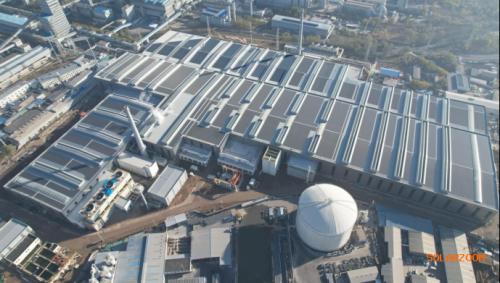
Core Insights - Longi Green Energy collaborates with Sente to integrate photovoltaic technology with building technology, transforming steel factory rooftops into power generation stations, which is crucial for cost reduction and green transformation in the steel industry [1] Group 1: Industry Context - The steel production industry is a high energy-consuming sector, with electricity consumption increasingly impacting operational costs [1] - Longi Sente's BIPV (Building-Integrated Photovoltaics) targets the actual needs of steel production, providing green electricity solutions to unlock spatial value and utilize rooftop resources [1] Group 2: Project Highlights - The Baowu Tai Steel new hot-rolling plant project incorporated Longi Sente's roofing system from the construction phase, integrating photovoltaic components with the roof structure to avoid resource waste, resulting in a carbon reduction of approximately 240,000 tons over the project's lifecycle [1] - The project also achieved significant energy cost savings and established a competitive advantage in carbon asset accumulation, providing an efficient green transformation path for new plants [1] Group 3: Technological Innovations - The Baowu New Steel silicon steel plant's rooftop renovation using Longi Sente's roofing system eliminated leakage issues through non-destructive connection technology, saving maintenance costs and generating an annual electricity output of 55.5 million kilowatt-hours [3] - The curved roofs, previously considered unsuitable for photovoltaic installations, were successfully utilized in projects by Shan Steel Long Steel and Jiangsu Changqiang Steel, achieving lifecycle electricity outputs of 227 million kilowatt-hours and 445 million kilowatt-hours, respectively [5] - Longi Sente's photovoltaic system features a dust prevention design that allows for self-cleaning through rainwater, enhancing electricity generation by 6% compared to traditional photovoltaic products [7]


世界最大直径高铁盾构机“领航号”掘进突破万米大关
Ke Ji Ri Bao· 2025-12-16 06:27
Core Viewpoint - The successful breakthrough of the "Pioneer" shield machine in the Chongtai Yangtze River Tunnel marks a significant step towards achieving a high-speed rail crossing of the Yangtze River at a speed of 350 km/h, with only 1.3 kilometers remaining to reach the southern bank of the river [1]. Group 1: Project Overview - The Chongtai Yangtze River Tunnel is a key project in China's "Eight Vertical and Eight Horizontal" high-speed railway network, connecting Chongming District in Shanghai with Taicang City in Jiangsu Province [2]. - The tunnel has a total length of 14.25 kilometers, with the shield section measuring 13.201 kilometers, featuring a maximum single-head excavation distance of 11.325 kilometers from the third to the second shaft [2]. - The tunnel is characterized by its large diameter of 15.4 meters, a water depth of 89 meters, and a design speed of 350 km/h, making it the highest standard, longest excavation distance, and largest scale high-speed rail river crossing project in the world [2]. Group 2: Technological Advancements - The "Pioneer" shield machine is equipped with the world's most advanced brain system, the I-TBM system, which enables autonomous decision-making and intelligent analysis during the excavation process [1]. - Key technological features include adaptive pressure control within the shield chamber, cloud-based predictive data, autonomous navigation, and self-adjusting muck circulation, resulting in smoother operations compared to manual control [1]. - The project has achieved a world record for monthly excavation of 718 meters for 15-meter high-speed rail tunnels, demonstrating the effectiveness of fully algorithm-controlled, unmanned intelligent excavation [1].
AI与人|“AI垃圾”泛滥,最后的防线在人类自身
Ke Ji Ri Bao· 2025-12-16 05:26
Core Viewpoint - The rise of "AI Slop" content, characterized by low-quality, repetitive, and meaningless material generated by AI tools, is increasingly prevalent on the internet, particularly on social media platforms [1][2][4]. Group 1: Definition and Characteristics of "AI Slop" - "AI Slop" refers to low-quality content produced by AI tools, including text, images, and videos, often found on social media and content farms [2][3]. - The term "Slop" originally described cheap and low-nutrition items, and its modern usage highlights the poor quality of AI-generated content [2]. - Unlike "deepfakes" or "AI hallucinations," which have specific deceptive intents or technical errors, "AI Slop" is produced without regard for accuracy or logic, leading to a flood of meaningless content [3]. Group 2: Causes of Proliferation - The proliferation of "AI Slop" is driven by the increasing power and low cost of AI technology, enabling rapid content generation that prioritizes clicks and ad revenue over quality [4]. - New AI tools like ChatGPT, Gemini, and Sora allow for quick production of readable text, images, and videos, leading to the rise of content farms that prioritize quantity over quality [4]. - Algorithms on social media platforms often favor engagement metrics over content quality, further encouraging the spread of "AI Slop" [4]. Group 3: Consequences of "AI Slop" - The overwhelming presence of "AI Slop" can obscure credible sources in search results, blurring the line between truth and fiction [5][6]. - As misinformation spreads more rapidly in an environment where distinguishing fact from fiction becomes challenging, the trust crisis in information sources intensifies [6]. Group 4: Potential Solutions - Some companies, like Spotify, are beginning to label AI-generated content and adjust algorithms to reduce the visibility of low-quality material [7]. - The C2PA (Coalition for Content Provenance and Authenticity) standard aims to embed metadata in digital files to trace their origins, helping to differentiate between human-created and AI-generated content [7]. - The most effective defense against "AI Slop" lies in individual responsibility, encouraging users to verify sources and support genuine creators [7][8].
成套工艺加持,软土路基“强筋健骨”
Ke Ji Ri Bao· 2025-12-16 05:26
Core Insights - The project led by Professor Wu Zhijian from Nanjing University of Technology has won the first prize of the 2025 China Highway Society Science and Technology Progress Award for its innovative low-carbon reinforcement and intelligent monitoring technology for soft soil foundation engineering [1] Group 1: Project Overview - The project addresses challenges in low-carbon reinforcement design technology for soft soil foundations, including theoretical deficiencies, lack of green disposal technologies, and insufficient intelligent monitoring platforms [1] - After 15 years of research, the team established theories, methods, and construction processes for low-carbon reinforcement in soft soil areas, applying these technologies to 26 major projects in China, generating nearly 6.5 billion yuan in added value and over 330 million yuan in profit [1] Group 2: Innovative Techniques - The team developed a new method using industrial and construction waste as raw materials to create a green gel material, which reduces carbon emissions by 92% compared to traditional cement production, and lowers costs by over 25% [3] - The new gel material acts as a high-performance "eco-friendly glue" for solidifying soft soil, reducing solidification costs to 40 yuan per cubic meter, which is 20%-40% cheaper than traditional methods and saves over 70% in transportation costs [3] Group 3: Material Advancements - The project introduced lightweight solidified soil piles made from gel materials and foaming agents, which significantly reduce additional stress on soft soil foundations while improving vertical bearing capacity by 38.3% and reducing settlement by 23% [4] - The full solid waste negative carbon composite pile shows a 70% improvement in horizontal bearing capacity compared to traditional piles, enhancing the structural integrity of soft soil foundations [4] Group 4: Intelligent Monitoring - The project features advanced monitoring technology that allows real-time assessment of foundation compaction and pile quality, achieving detection precision of 5 mm, which is ten times better than traditional methods [6] - A multifunctional intelligent monitoring platform provides real-time monitoring of reinforcement effects and construction risks, with a response time for alerts improved to 30 seconds, doubling the speed of traditional systems [6] Group 5: Environmental Impact - The technology has significant social and ecological benefits, transforming over 3.6 million cubic meters of plastic engineering waste into usable materials for projects like the Ningbo Metro, avoiding pollution from off-site disposal [7] - The project aims to promote its technology in soft soil concentrated areas such as the Pearl River Delta and Southeast coastal regions, facilitating more transportation engineering projects towards "low-carbon + intelligent" construction [7]
张江机器人谷加速打造具身智能产业高地
Ke Ji Ri Bao· 2025-12-16 04:54
"在迎接全球具身智能产业的浪潮中,张江前瞻布局、抢占先机,打造张江机器人谷特色产业园区,率 先布局全产业链、搭建关键功能平台、营造领先产业生态。"12月13日,张江机器人谷生态论坛暨卓益 得全球合作伙伴大会在上海举办,张江集团副总经理王蕾在会上表示,未来将加速具身智能产业集聚 化、规模化发展,打造具有全球影响力和最强竞争力的具身智能产业集聚区。 据张江具身智能机器人副总经理王涛介绍,张江机器人谷目前已集聚机器人产业链企业近百家,具身智 能机器人产业链日趋完善。园区聚集国地中心、智元机器人、傅利叶智能等一批人形机器人重点企业; 建有ABB全球规模最大的机器人研发、生产和应用基地ABB机器人超级工厂;微创医疗机器人等一批 医疗机器人企业也在此落地发展。 作为张江机器人谷的重点企业,卓益得创始人李清都介绍,卓益得已与包括京东、华为昇腾、征和工业 等在内的多家场景应用方达成合作,2025—2027年将聚焦企业端服务市场,布局机器人软硬件全产业 链,2028年后将向消费端家庭服务场景发展,实现安全性、性价比与性能的平衡。 现场,"卓益得生态加速器"正式启动,依托张江机器人谷的开源研发训练、实验加工、测试评估验证等 功能 ...

全固态电池要来了 到底“固”了啥?
Ke Ji Ri Bao· 2025-12-16 03:30
近日,国内首条大容量全固态电池产线已建成并进入小批量测试生产阶段。全固态电池能量密度近乎翻 倍、耐热性大幅提升,有望彻底改变电动车续航与安全格局。全固态电池到底"固"了啥?低温天气会让 续航"打折"吗?何时才能买到全固态电池汽车?请专家科普一下。 (文章来源:科技日报) ...
无线充电:迅猛发展易,保障安全难
Ke Ji Ri Bao· 2025-12-16 03:29
Core Insights - Wireless charging technology is transforming energy supply and management, with applications in healthcare, smart cities, space exploration, industrial robotics, autonomous transport systems, and electric vehicles [1][2] - The global wireless power market is projected to reach 96 billion RMB by 2026, tripling from 2021 levels, while China's industrial wireless charging market is expected to be valued at 5.95 billion RMB by 2025, with a compound annual growth rate of 16.66% from 2026 to 2033 [1] Group 1: Technology Overview - Wireless charging eliminates the need for cables, simplifying energy transmission; users can charge devices by bringing them close to a power source [2] - The technology operates similarly to microwaves, transmitting energy over distances of 1 to 10 meters, which is particularly advantageous in medical and industrial settings [2] - Advanced wireless charging systems utilize technologies like magnetic resonance and beamforming to reduce energy loss and can integrate with renewable energy sources [3] Group 2: Innovative Applications - Indiana, USA, is set to showcase a wireless charging highway in 2024, allowing vehicles to charge while in motion, potentially increasing electric vehicle adoption [4] - Ossia's Cota adapter enables wireless charging for all USB devices, while Energous' WattUp technology can transmit power over 5 meters, supporting multiple devices simultaneously [4] - Wi-Charge's LIGHTS device uses infrared light for remote wireless charging, with applications in hotels, smart homes, and wearable devices [5] Group 3: Challenges and Future Outlook - Despite its potential, wireless charging faces challenges such as health concerns related to electromagnetic radiation and technical limitations that hinder large-scale adoption [6] - Research indicates that electromagnetic radiation from wireless charging devices is significantly higher than that of standard wireless communications, necessitating safety measures [6] - Ongoing technological advancements are expected to reshape the global energy landscape, promoting a more sustainable and intelligent energy system [6]