
Ren Min Ri Bao Hai Wai Ban

Search documents
四海同心祭始祖 人文交流谱新篇
Ren Min Ri Bao Hai Wai Ban· 2025-11-06 22:11
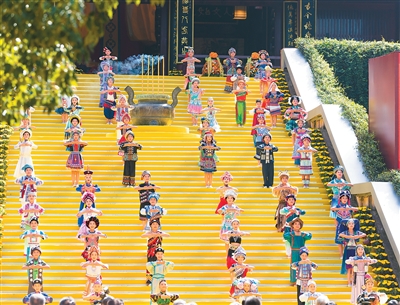
Core Viewpoint - The article highlights the significance of the Huangdi (Yellow Emperor) worship ceremony held in Xiandu Scenic Area, Jinyun County, Lishui City, Zhejiang Province, emphasizing its role in promoting cultural exchange and heritage among Chinese communities, especially overseas [6][9][10]. Cultural Significance - The Huangdi worship tradition in Jinyun dates back to the Eastern Jin Dynasty, with the current ceremony attracting over 400 participants, showcasing Huangdi as a cultural symbol and spiritual bond for the Chinese people [9][10]. - The event serves as a bridge for overseas Chinese to connect with their roots and honor their cultural heritage, with over 6,000 overseas Chinese participating in related activities in recent years [9][10]. Economic Development - Jinyun County has leveraged its cultural resources to promote local economic development, including the establishment of a handmade soap industry utilizing tea waste, which has attracted nearly 300 Taiwanese visitors in 2024 [11][12]. - The local economy benefits from tourism, with the scenic area being recognized as a cultural exchange base, attracting over 1,000 international students and friends from more than 80 countries [10][11]. Cultural Products and Promotion - The county has developed over 100 types and 270 varieties of cultural products related to Huangdi culture, enhancing local branding and cultural dissemination [13]. - The integration of Huangdi cultural elements into everyday life is evident, with local businesses and products reflecting this heritage, including the distribution of 70 million packages featuring Huangdi cultural symbols globally [12][13]. Educational Initiatives - Local schools incorporate Huangdi culture into their curriculum, fostering a sense of cultural identity among students through various educational programs and activities [14][15]. - The establishment of research think tanks and cultural academies in Jinyun aims to deepen the understanding and dissemination of Huangdi culture, reinforcing its significance in the broader context of Chinese cultural identity [15][16].

视频播客,好听又好看
Ren Min Ri Bao Hai Wai Ban· 2025-11-06 22:11
Core Insights - The rise of video podcasts is transforming the traditional podcast landscape, offering richer content and engaging formats that appeal to a broader audience [2][3][5] Group 1: Video Podcast Trends - Video podcasts are gaining popularity, with various formats including interviews, discussions, and casual chats, making the content more diverse [2][4] - A report indicates that the average length of a podcast episode is 59 minutes, with 61.5% of users listening to entire episodes, highlighting the preference for long-form content [3][5] - Platforms like Bilibili have seen significant growth, with over 40 million viewers and a 270% increase in viewing time, indicating strong market interest [5][11] Group 2: User Experience and Preferences - Users appreciate video podcasts for their ability to convey more information visually, enhancing understanding and emotional connection with hosts and guests [6][7] - The video format allows for richer content delivery, including visual cues and interactions that deepen audience engagement [6][7] - Despite the advantages, some users express concerns about the length of video podcasts, preferring shorter, more digestible content [4][6] Group 3: Production Challenges - Creating video podcasts is more complex than audio-only formats, requiring significant time and technical resources for editing and production [8] - The production process for video podcasts can take four to five times longer than audio podcasts, emphasizing the need for careful planning and execution [8] Group 4: Commercial Potential - The commercial viability of video podcasts is increasing, with opportunities for advertising that leverage visual elements, making them more appealing than audio-only formats [11][12] - Major platforms are actively promoting video podcasts, providing resources and support for creators to enhance content quality and reach [11][12]

在中原大地,感受强劲发展脉动
Ren Min Ri Bao Hai Wai Ban· 2025-11-06 22:11
Group 1: Cultural and Historical Insights - The visit to Henan by media representatives highlighted the province's transformation from an agricultural image to a modern, innovative landscape, showcasing its rich cultural heritage and economic development [1] - The significance of Ru porcelain, originating from Ruzhou, was emphasized, noting its historical importance as a royal porcelain during the Song Dynasty and its unique artistic value [1][2] Group 2: Technological Advancements in Traditional Industries - The introduction of smart farming techniques in the pig farming industry was showcased, with the use of intelligent feeding systems and air filtration, transforming traditional practices into high-tech operations [4] - The Nanyang Muyuan Meat Industry Complex was highlighted for its innovative building design and integration of over 84,000 smart devices, enhancing efficiency and biosecurity in pig farming [4][5] Group 3: Outdoor Leisure Products Industry - The outdoor leisure products industry in Pingyu was noted for its rapid growth, with 304 production and supporting enterprises, establishing itself as a major hub for outdoor products in Central and Western China [5] - The variety of products, including foldable chairs and tents, was praised for their innovative designs and global market reach, exporting to over 60 countries [5] Group 4: Retail and Employee Welfare - The retail company Pang Dong Lai, based in Xuchang, was recognized for its unique employee welfare initiatives, creating a positive work environment that enhances customer satisfaction [6] - The company's growth from a small shop to a popular retail chain was highlighted, attracting national attention and emulation from other businesses [6]
打破“橱窗式”展示(文旅棱镜)
Ren Min Ri Bao Hai Wai Ban· 2025-11-06 22:11
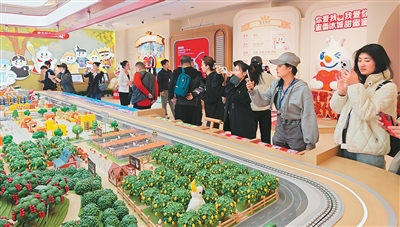
Core Viewpoint - The article emphasizes that intangible cultural heritage (ICH) should not be treated as mere museum exhibits but should be integrated into everyday life through immersive experiences, enhancing tourism and cultural engagement [1] Group 1: Integration of ICH in Tourism - ICH tourism should break away from "showcase" displays and instead incorporate situational experiences, such as learning blue dyeing techniques in Jiangnan or experiencing dragon boat racing in Lingnan, allowing visitors to deeply engage with ICH [1] - The narrative of ICH needs to be enriched with storytelling and scene charm, combining traditional performances like acrobatics and shadow puppetry with immersive theater, transforming visitors from passive observers to active participants [1] Group 2: Modern Applications of ICH - ICH should be integrated into contemporary life, with themed accommodations that blend traditional architectural wisdom with modern living needs, and cultural creative products that incorporate traditional patterns into daily life [1] - This innovation allows ICH to evolve from a protected "heritage" to a vibrant part of modern life, gaining new value [1] Group 3: Mutual Enhancement of ICH and Tourism - The fusion of ICH and tourism is not a simple addition but a deep connection that enhances both, where ICH gains transmission power through tourism, and tourism gains cultural depth from ICH [1] - This synergy allows for a beautiful resonance between traditional culture and modern life, showcasing the vitality of a thousand-year cultural lineage in contemporary settings [1]
身暖,更要心暖
Ren Min Ri Bao Hai Wai Ban· 2025-11-06 22:11
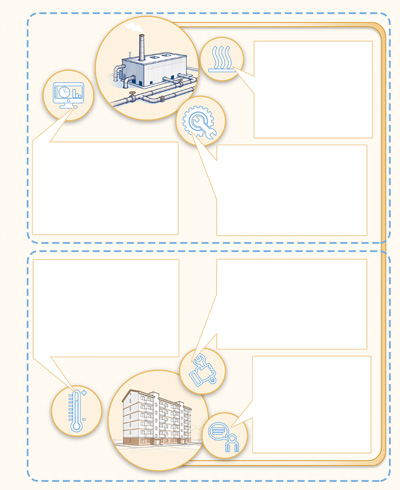
Core Insights - The heating season in northern China has become a hot topic online, reflecting the importance of heating as a vital public service and its impact on people's lives [2] Group 1: New Energy Heating and Cost Savings - Shandong Pingyuan County has initiated a clean energy project using geothermal resources to reduce energy consumption and costs, moving away from traditional coal heating [3] - The geothermal energy station extracts heat from underground water, providing a more cost-effective heating solution for residents [3] Group 2: Smart Monitoring and Management - Beijing's heating production and monitoring center has implemented a smart command system with nine core modules for real-time data monitoring and management, enhancing decision-making capabilities [4] - The system allows for automatic generation of heating plans and real-time adjustments, optimizing the heating network's operation [4] Group 3: Equipment Maintenance and Safety - In Lanzhou, extensive inspections and maintenance of heating facilities have been conducted to ensure efficiency and safety, with 85 gas heating stations and 166 heat and power stations checked [5] - A safety production and emergency mechanism has been established to address potential issues during the heating season [5] Group 4: Real-time Temperature Monitoring - In Liaoning Province, the installation of IoT balancing valves has been implemented to monitor and adjust heating for "island households" that previously experienced heating issues [6] Group 5: Emergency Response and Management - Xinjiang's Luntai County has formed emergency repair teams to address heating issues promptly, with a focus on maintaining service quality through a checklist management system [7] - Daily monitoring of heating data and random inspections are conducted to ensure compliance and accountability among heating service providers [7] Group 6: Public Sentiment and Feedback - Online discussions reflect positive public sentiment regarding heating services, with many residents expressing satisfaction with timely and effective heating solutions [8][9]
展现曲艺的青春活力
Ren Min Ri Bao Hai Wai Ban· 2025-11-06 22:11
Group 1 - The core event "Yiyuan Xieying - 2025 National Excellent Young Quyi Talent Exhibition" was held in Beijing from October 30 to November 1, showcasing 23 outstanding young quyi performers through three performances [1] - The performances featured a variety of quyi genres, including xiangsheng, pingju, kuaiban, Suzhou pingtan, and Cantonese opera, reflecting the diversity of Chinese quyi art [1] - Traditional classic works and new creations were presented together, with performances like Suzhou pingtan "Xiaoxiang Night Rain" and Shandong kuaishu "Da Piao Che" highlighting the essence of traditional quyi, while new works like Henan zui "Huanghe Ni'er" and Taihe Qingyin "Zhui Nuer" told contemporary stories [1] Group 2 - Since 2022, the China Quyi Artists Association has selected 82 outstanding young quyi talents for the "Yiyuan Xieying" series, supporting the new generation of quyi performers to take the stage [2]
“非遗+”打开文旅融合新空间
Ren Min Ri Bao Hai Wai Ban· 2025-11-06 22:11
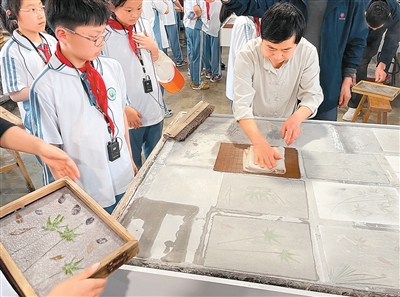
Core Insights - The integration of intangible cultural heritage (ICH) into tourism has emerged as an innovative trend, enhancing cultural transmission and economic development simultaneously [4][10]. Group 1: Non-Heritage Tourism Innovations - The China Tourism Association released the "2025 Annual Innovation Cases of ICH Tourism Integration," showcasing 20 innovative cases across various sectors, including scenic spots, cultural venues, and homestays [4]. - The Xuanzhi Town in Anhui Province has transformed traditional ICH displays into immersive experiences, allowing visitors to engage in the entire process of Xuanzhi paper making, thus enhancing visitor participation [5]. - Wu Qiao, known as the "Hometown of Chinese Acrobatics," has developed a "acrobatic + cultural tourism" model, significantly increasing tourist numbers by 94.3% during the recent holiday period [6]. Group 2: Economic Impact and Growth - The Xuanzhi Town received 47,400 visitors during the recent holiday, marking a 13% increase year-on-year, demonstrating the economic potential of ICH tourism [5]. - In Liuba County, the "non-heritage + homestay" model has led to the development of 193 homestays and generated over 1.5 million yuan in sales from ICH-related products [10]. - The integration of ICH into local economies has resulted in significant job creation, with over 5,000 entrepreneurs supported in Liuba County alone [10]. Group 3: Cultural and Experiential Engagement - The "Nanhai Longchao" brand in Guangdong integrates traditional dragon boat culture with sports and tourism, creating a series of events that enhance community engagement [8]. - The "Lin Qi Thirty-Six Courtyard" project in Dongyang combines ICH experiences with organic farming, showcasing the potential for ICH to drive multi-industry integration [9]. - The use of digital technology in ICH, such as creating digital museums and immersive experiences, is expected to attract younger audiences and enhance the appeal of traditional crafts [11].
百年非遗化身乡村发展新引擎
Ren Min Ri Bao Hai Wai Ban· 2025-11-06 22:11
Core Insights - The article highlights the revival and innovation of traditional silver and copper craftsmanship in Lu Shaer, Qinghai Province, showcasing its significance as a national intangible cultural heritage and its role in local economic development [1][2]. Group 1: Heritage and Craftsmanship - The "silver and copper craftsmanship and gilding technique" has a history of over a hundred years and was included in the third batch of national intangible cultural heritage in 2011, involving complex processes such as refining silver, shaping, and engraving [1]. - Wang Fubang, a representative inheritor of this craft, emphasizes the ongoing production of various silver and copper items, indicating a vibrant and bustling workshop environment [1]. Group 2: Economic Impact and Community Development - The establishment of the Lu Shaer ethnic handicraft processing base, supported by Nanjing's assistance, has created a 97-acre industrial park, attracting over 30 cooperatives and individual artisans, with nearly 40% of the village's 400 households benefiting from this craft [2]. - The annual output value of the silver and copper handicraft industry surpassed 100 million yuan in 2021, demonstrating significant economic contributions [2]. Group 3: Innovation and Future Prospects - The involvement of young artisans returning to their hometowns has led to innovative product development, integrating local ecological culture and aesthetics into new offerings such as titanium copper products and aluminum tiles for ancient buildings [2]. - There is a strong hope that traditional craftsmanship and the spirit of artisanship will attract more young people, driving comprehensive rural revitalization [2].
凝聚相知相融的精神力量(记者手记)
Ren Min Ri Bao Hai Wai Ban· 2025-11-06 22:11
Core Viewpoint - The article emphasizes the importance of cultural heritage and its role in fostering national identity and unity among Chinese people, particularly highlighting the connection between Taiwan and the broader Chinese cultural narrative [1]. Group 1: Cultural Significance - Huangdi culture is described as the cultural root of the Chinese nation and a bridge connecting Chinese people worldwide [1]. - The participation of Taiwanese youth in cultural events, such as the Huangdi worship ceremony, is seen as a means to enhance national confidence and promote unity among ethnic groups [1]. Group 2: Community Engagement - Increasing numbers of Taiwanese compatriots and overseas Chinese are visiting Jinyun to experience history and culture, contributing to the understanding of the continuous heritage of the Chinese nation [1]. - Many individuals are captivated by the unique cultural landscape of the area, leading them to settle there and contribute to rural revitalization and regional economic development [1]. Group 3: Cultural Power - The article highlights the infinite power of culture to transcend time and space, connecting people globally [1]. - It asserts that Chinese culture serves as a common root and belonging for all Chinese descendants, emphasizing the importance of cultural transmission in fostering deep connections among them [1].
“十四五”时期中国茶油产量增长53%
Ren Min Ri Bao Hai Wai Ban· 2025-11-06 03:22
Core Viewpoint - The Chinese oil tea industry has made significant progress during the "14th Five-Year Plan" period, with substantial increases in planting area and production, supported by government policies and financial investments [1] Group 1: Industry Development - Over the past three years, China has added more than 11.8 million mu of oil tea planting area and transformed over 9.7 million mu of low-yield forests [1] - The total oil tea planting area in China exceeds 75 million mu, with tea oil production reaching 1.1 million tons, a 53% increase compared to 2020 [1] Group 2: Government Support - The Chinese government has implemented a three-year action plan to accelerate the development of the oil tea industry, with over 12 billion yuan invested through central financial support policies [1] - There are currently 2.47 million operating entities in the oil tea industry and more than 2,200 tea oil processing enterprises [1] Group 3: Future Plans - During the "15th Five-Year Plan" period, the focus will be on improving quality, expanding area, and increasing efficiency, with an emphasis on innovative policy supply and strengthening resource guarantees [1]