
Ren Min Ri Bao Hai Wai Ban

Search documents
高水平对外开放“大舞台”精彩纷呈(进博连线)
Ren Min Ri Bao Hai Wai Ban· 2025-11-07 22:00
Core Points - The 8th China International Import Expo (CIIE) serves as a platform for high-level opening-up and cooperation, showcasing products from around the world and reflecting China's commitment to expanding its market [2][5][6] - The event has attracted a record number of exhibitors, including over 290 Fortune 500 companies, indicating strong global interest in the Chinese market [7][8] - CIIE is positioned as a significant economic diplomatic activity post the 20th Central Committee meeting, emphasizing China's role in global economic stability and development [5][6] Group 1: Event Overview - The CIIE features diverse products from various countries, including unique offerings like chocolate shaped like apples from Kazakhstan and fresh fruits from Malaysia and Australia [2][3] - The exhibition area exceeds 367,000 square meters, with over 600 new exhibitors compared to the previous year, marking a historical high in both exhibition space and number of participating companies [8][12] Group 2: International Participation - The event has seen participation from 123 countries involved in the Belt and Road Initiative, with a 23.1% increase in exhibitors from these nations, highlighting the expo's role in facilitating global trade [9][10] - The inclusion of 163 exhibitors from the least developed countries demonstrates CIIE's commitment to inclusivity and support for emerging markets [9][10] Group 3: Innovation and Technology - CIIE showcases 461 new products, technologies, and services, positioning China as a global innovation hub and a testing ground for new ideas [11][12] - Companies like Panasonic are leveraging AI technology in their products to meet the evolving demands of Chinese consumers, indicating a shift towards localized innovation [11][12] Group 4: Economic Impact - The expo has generated over $500 billion in intended transaction value across its seven previous editions, underscoring its significance as a marketplace for international trade [4][12] - CIIE is seen as a catalyst for domestic industry upgrades, encouraging competition and innovation within China by exposing local companies to global advancements [12][13]

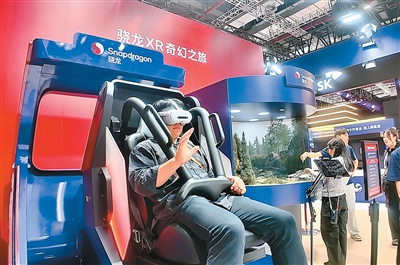
看,从钱凯到上海
Ren Min Ri Bao Hai Wai Ban· 2025-11-07 22:00
Core Insights - The Peru exhibition at the Import Expo showcased South American products, including alpaca toys and Inca civilization pottery, which attracted significant interest from buyers and professionals [1] - A new shipping route, "QianKai - Shanghai," has been established as a key project under the Belt and Road Initiative, facilitating the transport of South American goods to China [1] - The shipping route reduces delivery time to Shanghai to 23 days, which is over 10 days shorter than traditional routes, enhancing efficiency for South American products [1] Group 1 - The QianKai Port, invested and operated by COSCO Shipping, opened a year ago and has become an important hub in the new Asia-Latin America land-sea corridor [2] - During the Import Expo, COSCO Shipping showcased the QianKai Port's capabilities, including a smart terminal simulator and a comprehensive network of main and branch shipping routes connecting China and South America [2] - COSCO Shipping's chairman emphasized the port's efficient operation and the commitment to further develop and manage QianKai Port in collaboration with partners to support economic cooperation in Latin America [2]


虹桥论坛共商促进绿色发展
Ren Min Ri Bao Hai Wai Ban· 2025-11-07 22:00
Core Viewpoint - The eighth China International Import Expo is currently being held in Shanghai, emphasizing the need to combat unilateralism and "green protectionism" in the context of global green transformation [1] Group 1: Global Green Trade Challenges - The urgency of addressing climate change and the potential of the green industry are creating strong trade demand, but fragmented green standards and unilateral measures like carbon tariffs are forming new trade barriers [1][2] - The trend of fragmentation in global green trade rules is concerning, as it may lead to new trade barriers that increase costs and uncertainty, hindering the achievement of global climate goals [2] Group 2: Collaborative Governance Mechanism - A deep collaborative governance mechanism involving governments, enterprises, and international organizations is essential to address the challenges of fragmented rules [3] - Enterprises should transition from being "rule executors" to "rule co-creators" to gain true influence in global sustainable transformation [3] Group 3: Recommendations for Green Trade - The report "Towards a New Era of Green Trade: Opportunities, Pathways, and China's Role" suggests five recommendations to overcome institutional barriers to green trade liberalization [5] - Accelerate the construction of a more inclusive multilateral trade framework [5] - Design domestic policy systems that promote green trade development based on national development stages and resource endowments [5] - Strengthen international cooperation and experience sharing to drive green trade liberalization [5] - Leverage digital technology to reduce transaction costs for green technologies and products, especially for small green enterprises in developing countries [5] - Establish a global unified coding system, with China potentially leading the development of a "China Green Trade Statistical Classification Reference Standard" [5]
国台办:愿在共同政治基础上,与台湾各党派团体人士共推两岸关系发展
Ren Min Ri Bao Hai Wai Ban· 2025-11-07 22:00
Core Points - The historic meeting between cross-strait leaders on November 7, 2015, marked a significant step in promoting peaceful development of cross-strait relations and advancing national reunification efforts, establishing a new level of political interaction [1] - The meeting reinforced the critical role of the "1992 Consensus" as the political foundation for peaceful development of cross-strait relations, demonstrating that Chinese people have the capability and wisdom to resolve internal issues [1][2] Summary by Sections - **Historical Significance**: The meeting is viewed as a milestone in the development of cross-strait relations, elevating direct dialogue and communication between leaders [1] - **Political Foundation**: The "1992 Consensus" is emphasized as essential for peaceful development, with a call for the Taiwanese authorities to abandon policies that do not align with the interests of the Taiwanese people [1][2] - **Future Direction**: There is a strong emphasis on the need to oppose "Taiwan independence" and to strengthen dialogue with various Taiwanese political parties to promote peace and reunification [2]
在这里,窥见未来出行方式
Ren Min Ri Bao Hai Wai Ban· 2025-11-07 22:00
Group 1 - The Auto Show at this year's Import Expo has been renamed to the Auto and Smart Mobility Exhibition, showcasing advancements in automotive safety, smart mobility, and sustainable development from both foreign and Chinese companies [1] - Tesla's Cybercab, featuring a golden streamlined body without a steering wheel or pedals, demonstrates the arrival of the autonomous driving era, utilizing Tesla Vision and end-to-end neural networks without expensive hardware like LiDAR [1] - The Q-Tractor, a new energy autonomous driving tractor developed by Westwell Technology, offers a range of 200 kilometers and rapid battery swapping in 5 minutes, already implemented in logistics scenarios at Hong Kong International Airport and Chengdu Shuangliu Airport [1] Group 2 - The XCIENT hydrogen fuel cell heavy-duty truck, jointly developed by Hyundai Motor Group and Plus AI, made its debut in China, being the world's first mass-produced hydrogen-powered heavy truck, achieving zero-emission operations while enhancing logistics efficiency [1] - The 49-ton hydrogen fuel cell tractor developed by Toyota and China National Heavy Duty Truck Group, equipped with the TL Power 300 fuel cell system, is suitable for long-distance heavy-duty logistics and is already in use in regions like Shandong and Hubei [1] - The E20 eVTOL (electric vertical takeoff and landing aircraft) showcased by Times Technology offers a travel range of 30 to 150 kilometers, indicating the potential of low-altitude economy and innovative transportation methods [2]

截至9月底 中国新型储能装机规模超1亿千瓦
Ren Min Ri Bao Hai Wai Ban· 2025-11-07 01:40
Core Insights - The new energy storage sector in China is experiencing rapid growth, with installed capacity expected to exceed 100 million kilowatts by September 2025, representing a more than 30-fold increase compared to the end of the 13th Five-Year Plan [1] - China's new energy storage accounts for over 40% of the global total installed capacity, making it the largest in the world [1] - The industry is transitioning from the initial commercialization phase to large-scale development, with significant advancements in technology and business models [1] Installed Capacity and Trends - The majority of new energy storage installations are large-scale, with over two-thirds of installations exceeding 100,000 kilowatts [1] - The average storage duration is 2.34 hours, with 76.4% of installations providing 2-hour storage and 16.7% providing 4-hour storage [1] - The increase in installed capacity enhances the role of new energy storage in facilitating renewable energy development and improving the stability and reliability of the power system [1] Utilization and Regional Performance - In the first three quarters of 2025, the equivalent utilization hours for new energy storage in China reached approximately 770 hours, an increase of about 120 hours year-on-year [1] - Several provinces, including Yunnan, Zhejiang, Jiangsu, Xinjiang, Sichuan, Qinghai, and Hubei, have shown good performance in utilizing new energy storage, further enhancing its regulatory capabilities [1] Innovation and Technology - The innovation capability of new energy storage equipment is continuously improving, with a diversified development trend in technology routes [2]
激活乡村建筑的文化基因(侨界关注)
Ren Min Ri Bao Hai Wai Ban· 2025-11-07 01:08
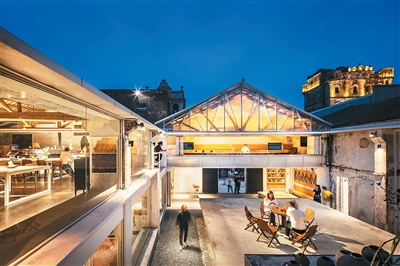
Core Viewpoint - The article highlights the journey of architect Chen Guodong, who, after studying and living in Japan, returned to China to focus on rural architecture, emphasizing the integration of traditional and modern building practices in rural revitalization efforts [1][2][3]. Group 1: Background and Education - Chen Guodong spent eight years in Japan, where he founded the architectural firm "Nameless Construction Society" in Kyoto [1]. - His interest in traditional architecture was sparked during high school, leading him to pursue further studies in Japan, where he focused on the fusion of traditional and modern architecture [2]. - He conducted extensive research on Japanese rural wooden structures and their applications in disaster recovery and rural revitalization [2]. Group 2: Transition to Rural Architecture - In 2017, Chen was inspired by the "Maogong Project," which aimed to preserve local culture and ecology while developing collective economies in rural areas [3]. - He accepted an invitation to work in the Miao and Dong Autonomous Prefecture of Qiandongnan, where he found a strong alignment with his research interests [3]. Group 3: Project Implementation and Challenges - Upon arriving in Maogong Town, Chen faced tight deadlines and limited resources, leading to a hands-on approach in designing and constructing buildings [4]. - He initiated the "Zhang Mo Master Plan" to collaborate with local craftsmen, enhancing the understanding of traditional wooden construction techniques [5]. Group 4: Community Engagement and Social Impact - The "For the People" initiative was launched to provide free housing designs for villagers, addressing the risk of losing traditional wooden structures to modern construction methods [5][6]. - The "Gui Liuyang House" project exemplified the integration of modern living needs with traditional architectural aesthetics, successfully enhancing the comfort of wooden structures [6]. Group 5: Expansion and New Opportunities - In 2020, Chen expanded his work to Tangkou Town in Guangdong, where he transformed an old grain station into a multifunctional workspace [7]. - The team discovered and collaborated with local artisans skilled in traditional crafts, such as "gray sculpture," to enhance their projects [7]. Group 6: Future Directions and Vision - The firm is currently working on a market renovation project aimed at balancing traditional functions with modern needs [8]. - Chen emphasizes the importance of creating spaces that attract young people and stimulate local economies, such as the "Youth Business Community" project [9]. - The company aims to establish a wooden construction industry base, inviting local craftsmen to participate and promote the global reach of Chinese wooden architecture [9].
“两岸关系的谈判协商:从回顾中找解方”座谈会在台北举行
Ren Min Ri Bao Hai Wai Ban· 2025-11-07 01:08
Core Viewpoint - The seminar held in Taipei emphasizes the importance of enhancing cross-strait communication and dialogue based on the "1992 Consensus" to restore negotiations between the two sides [1] Summary by Relevant Sections Historical Review - The "Wang-Koo Talks" in 1993 are highlighted as a successful and historically significant meeting that laid the groundwork for peaceful exchanges between the two sides from 2008 to 2016, which was based on the "1992 Consensus" [1] - The current lack of political foundation for cross-strait communication is attributed to the Democratic Progressive Party's (DPP) refusal to acknowledge the "1992 Consensus" [1] Political Foundation - Former Taiwan Mainland Affairs Council (MAC) Chairperson Xia Liyuan points out that the successful meeting between the leaders of both sides in 2015 was largely due to the shared political foundation of the "1992 Consensus" [1] - Xia believes that many issues between the two sides can be discussed if the "1992 Consensus" is upheld [1] Future Outlook - Former MAC Chairperson Su Qi emphasizes that Taiwan is merely a geopolitical pawn for the United States, urging all sectors in Taiwan to collaborate in finding a path forward through negotiation with the mainland to avoid war [1] - Former MAC Vice Chairperson Zhang Liangren expresses a common desire for peace and the avoidance of war, hoping for future dialogues similar to the "Wang-Koo Talks" to reassure the public [1]
无言的忠诚(人民家书)
Ren Min Ri Bao Hai Wai Ban· 2025-11-06 23:09
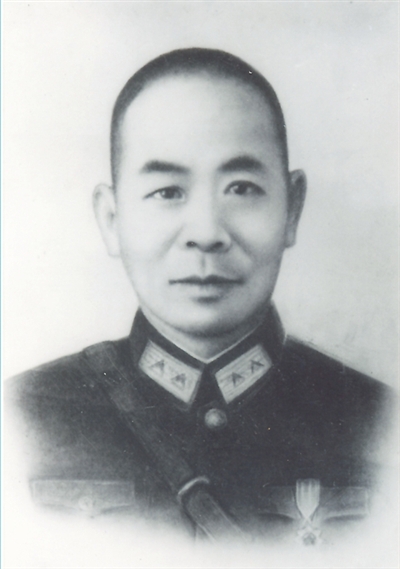
Core Points - The article focuses on the letters written by revolutionary martyrs, highlighting their dedication to the country and the sacrifices they made for the greater good [21][28][40]. Group 1: Wu Shi - Wu Shi expressed his regrets about not being able to dedicate more time to personal growth due to his military commitments during the war [24]. - He emphasized his loyalty and integrity, stating that his only asset was his collection of books, which he wished to be used to establish a small library in his memory [27]. - Wu Shi was captured and executed in 1950, after providing crucial military intelligence to the Communist Party [28]. Group 2: Li Bai - Li Bai wrote to his father expressing joy over Japan's surrender and a commitment to unite for the establishment of a new China [29][31]. - His letter reflects his revolutionary spirit and dedication to the cause, despite the personal sacrifices involved [31]. Group 3: Leng Shaonong - Leng Shaonong articulated his commitment to the suffering of humanity over personal familial duties, stating he would rather dedicate his life to the greater cause [33]. - His letter to his mother reveals the internal conflict he faced between familial obligations and revolutionary duties [34]. Group 4: Xiao Minghua - Xiao Minghua requested her family not to mourn excessively and to prioritize their health, showcasing her calm demeanor before execution [36]. - She expressed a desire for her remains to stay in Taiwan, indicating her commitment to her cause [37]. Group 5: Zhang Leping - Zhang Leping's poem reflects the spirit of resilience and the readiness to sacrifice for a brighter future, emphasizing the bloodshed of martyrs [39][40]. - Her writings during imprisonment highlight her unwavering commitment to the revolutionary cause [41]. Group 6: Liu Guangdian - Liu Guangdian communicated critical intelligence to his organization through coded messages, demonstrating his role in the underground resistance [43][44]. - His final messages indicated the urgency and danger of his situation as he faced imminent capture [46]. Group 7: Hou Wenli - Hou Wenli provided practical advice to his children, emphasizing the importance of education and integrity, while preparing for his mission [50][51]. - His letter reflects a deep sense of responsibility towards both his family and the nation [55].
“文化+”“+文化”双向奔赴
Ren Min Ri Bao Hai Wai Ban· 2025-11-06 22:36
Core Insights - The cultural industry in China is increasingly integrating creative products into daily life, leading to significant market benefits and collaborative development across the industry [1][3][5] Group 1: Cultural Products and Market Impact - The animated film "Chang'an 30,000 Miles" has generated over 1.82 billion yuan in box office revenue, sparking a renewed interest in Tang poetry and boosting related book sales [2] - The dance poetry drama "Just This Green" has performed over 800 shows, expanding into various media formats, showcasing the successful commercialization of stage art [2] - The cultural industry’s GDP contribution reached 4.59% in 2023, nearing the 5% threshold for pillar industries, with projected revenue of 19.14 trillion yuan in 2024 [3] Group 2: Cultural Integration and Innovation - The "Cultural + Creative Products" trend has led to a surge in cultural consumption, with products like the Palace Museum calendar selling over 8.5 million copies [5] - "Cultural + Technology" initiatives have produced immersive exhibitions and digital museums, enhancing public engagement with history [6] - "Cultural + Tourism" has enriched local tourism experiences, with projects like "Impression Liu Sanjie" attracting significant visitor numbers [7] Group 3: Broader Cultural Engagement - The integration of culture into sports events has increased tourism, with local cultural elements featured prominently in team branding and performances [7] - Urban renewal projects are transforming old industrial sites into cultural and recreational spaces, revitalizing local economies [7] - The dual approach of "Cultural +" and "+ Culture" is expected to further stimulate industry growth and enhance cultural consumption [8]