
Ren Min Wang

Search documents
国家外汇局:2025年外汇市场交易量达42.6万亿美元
Ren Min Wang· 2026-01-15 08:03
Core Viewpoint - The press conference highlighted the achievements of monetary and financial policies in supporting the high-quality development of the real economy, with a focus on the foreign exchange market and regulatory measures [1] Group 1: Foreign Exchange Market Developments - By 2025, the foreign exchange market transaction volume is projected to reach $42.6 trillion, marking a historical high [1] - The corporate foreign exchange hedging ratio is expected to rise to 30%, also a record level [1] Group 2: Regulatory Actions - Over 1,100 cases of foreign exchange violations, including underground banks and illegal cross-border fund transfers through false transactions, were addressed throughout the year [1] - These regulatory actions effectively maintained the order of foreign exchange transactions [1]
诺奖得主齐聚港大 启迪科研未来
Ren Min Wang· 2026-01-15 07:24
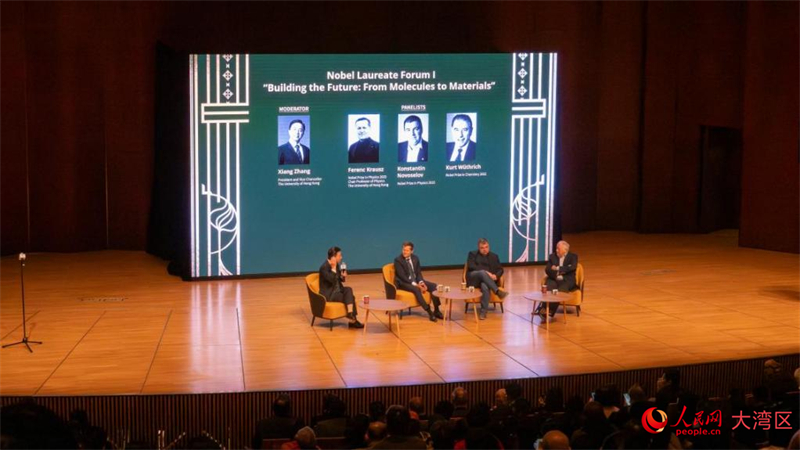
香港大学与林道诺贝尔奖得主大会1月12日联合主办"诺贝尔英雄论坛:引领科学与未来"。6位诺贝尔奖得主 齐聚港大校园,就基础研究如何影响未来科学、科技、健康,以及全球经济展开深度对话。活动吸引来自学术 界、政界等超过800位人士参与。 "诺贝尔英雄论坛:引领科学与未来"在香港大学举行。人民网 吴宇扬扬 摄 香港大学校长张翔致辞。人民网 吴宇扬扬 摄 参与论坛的诺奖得主包括:1997年诺贝尔经济科学奖得主莫顿(Robert C. Merton)、1998年诺贝尔生理学或 医学奖得主伊格纳罗(Louis J. Ignarro)、2001年诺贝尔生理学或医学奖得主亨特(Tim Hunt)、2002年诺贝尔化 学奖得主维特里希(Kurt Wüthrich)、2010年诺贝尔物理学奖得主诺沃肖诺夫(Konstantin Novoselov)以及2023 年诺贝尔物理学奖得主、香港大学激光物理学讲座教授克劳斯(Ferenc Krausz)。 "在复杂多变的环境中,如何携手合作,实现科学领域的共同目标?"香港大学校长张翔指出,自牛顿、爱因 斯坦时代起,他们的发现与发明便塑造了我们当下的生活方式,许多最初看似毫无应用价值的基础 ...

中疾控提示:这些“无糖食品”正悄悄升高你的血糖
Ren Min Wang· 2026-01-15 06:55
Core Insights - The rise of "sugar-free" products in supermarkets reflects an increasing health awareness among consumers, but these products may contain hidden risks associated with sweeteners [1][2] Group 1: Definition and Composition of Sugar-Free Foods - "Sugar-free" foods can claim to be so if they contain ≤0.5 grams of sugar per 100 grams or 100 milliliters, primarily referring to monosaccharides and disaccharides [1] - Sugar-free products often include sweeteners, categorized into three types: - Artificial non-nutritive sweeteners (e.g., aspartame, sucralose) that are high in sweetness and low in calories [1] - Natural non-nutritive sweeteners (e.g., steviol glycosides) that also have low energy and do not affect blood sugar [1] - Nutritional sweeteners (e.g., erythritol, xylitol) that can affect blood sugar levels if consumed in excess [1] Group 2: Misconceptions about Sugar-Free Products - "Sugar-free" does not equate to "zero carbohydrates," "zero calories," or "zero fat," as digestible carbohydrates, particularly starches, can still raise blood sugar levels [3] - Many sugar-free foods still contain high levels of starch, which can convert to glucose in the body, leading to increased blood sugar [3] - Products labeled "sugar-free" may still contain glucose or maltodextrin, which can act as "invisible sugar bombs" for individuals with diabetes [3] Group 3: Guidelines for Choosing Sugar-Free Foods - Consumers should follow a "three-step label reading method" to avoid risks associated with sugar-free foods [4] - Step 1: Examine the ingredient list for hidden sugars and the order of ingredients to identify high-carb or high-fat products [5] - Step 2: Monitor the nutritional content, focusing on carbohydrates and fats, to understand the impact on blood sugar and weight [6] - Step 3: Verify the authenticity of claims, ensuring that products labeled as "sugar-free" do not contain high carbohydrate levels or misleading information [8] Group 4: Principles for Consuming Sugar-Free Foods - Sugar-free foods should be viewed as tools for dietary management rather than as a free pass for indulgence [9] - Strict portion control is essential, and consumers should prioritize natural foods over processed sugar-free options [9] - Monitoring blood sugar levels after trying new sugar-free foods is recommended for personalized dietary adjustments [9] - Comprehensive management of diabetes should include balanced diets, regular exercise, and medication adherence, with sugar-free foods serving as supplementary aids [9]
政策协同发力 为民间投资提质增效添动能
Ren Min Wang· 2026-01-15 02:08
Group 1 - The core viewpoint emphasizes the importance of private investment in stabilizing growth, adjusting structure, and promoting employment, highlighting the need for coordinated efforts between fiscal and financial sectors [1] - The State Council meeting proposed several measures to support private investment, including implementing interest subsidies for loans to small and micro enterprises, establishing special guarantee plans for private investment, and optimizing fiscal interest subsidies for equipment updates [1] - Experts suggest that the interest subsidy policy will alleviate the burden on enterprises, allowing more funds to be directed towards operations and development, particularly in high-tech and high-employment sectors [1] Group 2 - Local governments have introduced supporting policies since 2025 to promote private investment by broadening investment fields, optimizing financing environments, and removing entry barriers [2] - The National Development and Reform Commission reported that as of October 29, 2025, 500 billion yuan of new policy financial tools had been fully allocated, effectively supporting eligible private investment projects [2] - The new policy financial tools are designed to supplement project capital, reducing initial investment pressure on private capital and enhancing project financing qualifications through government-backed funding [2] Group 3 - The measures also focus on improving financing coordination for small and micro enterprises, with banks required to set annual service targets for private enterprises and enhance credit access [3] - A specialized work mechanism has been established to facilitate financing connections, with banks receiving lists of eligible private investment projects to guide their financing services [3] - Some regions have successfully created online platforms for project information sharing, allowing banks to efficiently match funding with projects using big data technology [3] Group 4 - A series of policies have shown significant results, with private project investments (excluding real estate) growing by 2.1% year-on-year in the first three quarters of 2025, indicating stable growth [4] - Infrastructure private investment increased by 7% year-on-year, while manufacturing private investment grew by 3.2%, reflecting a positive development trend [4]
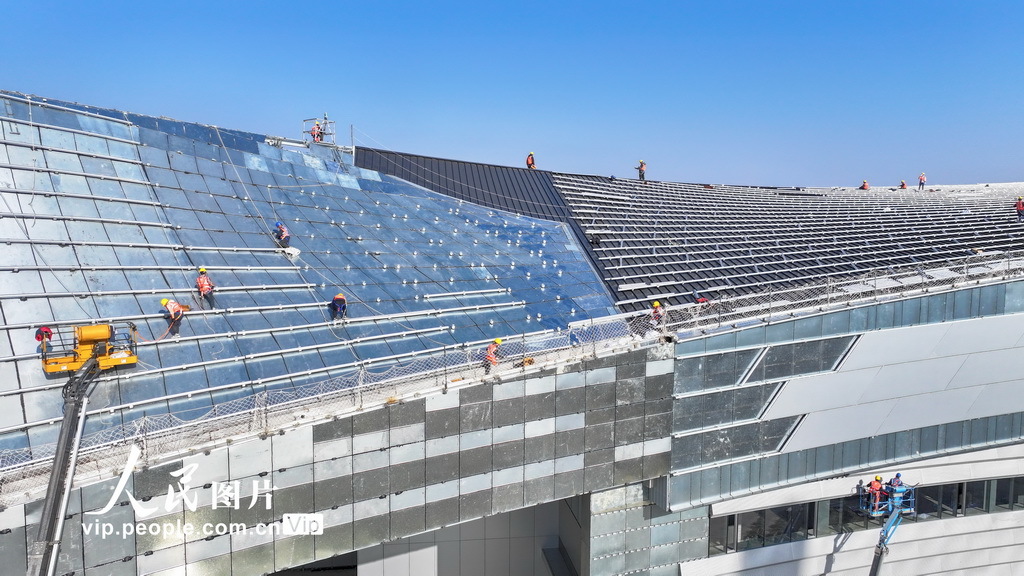
合肥加速建设紧凑型聚变能实验装置
Ren Min Wang· 2026-01-15 01:00
12 11:52 FL BL T 1 MILL - 14 11 11 12 20 11 11 8 11 f and a letter HFFF ATTACT < e UNDA HOUDERS! CONTRACTOR COLLECTION COLLECTION AND SECTING BEAUTH CADS HELL A GOPE SAMAR BUNDER BEFEL NODOWNEDS AND START THE THE COLLECT OF THE STORES CHOOL THE THE COLLECT COLLECTION COUP TO BE LOV TT the / the for de 1 d - l a st 游之 HTV T Vip CO FC 1 0 5 @ -89- ANANA ANALA AND A 100 E E F ...... RE 21 2 om.cn Vip ple le 9 1 4000 72 om. on Vip 0 yip.peop (2 No ...
小麦赤霉病关键“感病开关”基因被发现
Ren Min Wang· 2026-01-14 22:23
Core Viewpoint - The Chinese Academy of Agricultural Sciences, in collaboration with domestic universities, has identified a key "susceptibility switch" gene related to wheat fusarium head blight, leading to the development of new wheat materials that are resistant to both fusarium head blight and powdery mildew without affecting growth and yield [1]. Group 1: Research Findings - The research team identified the key gene TaROD1 in wheat, which, when knocked out, significantly enhances resistance to fusarium head blight and also improves resistance to powdery mildew [1]. - The study highlights the urgent need to discover new regulatory genes for fusarium head blight resistance, as there are currently only two main effective resistance loci cloned [1]. Group 2: Agricultural Implications - The newly developed mutant wheat lines show no significant differences in key agronomic traits such as plant height, spike characteristics, and single-plant yield compared to the wild type, achieving disease resistance without yield loss [1]. - The research results provide important genetic resources and technical pathways for improving disease resistance in wheat [1].
2025年我国汽车产销双超3400万辆
Ren Min Wang· 2026-01-14 22:23
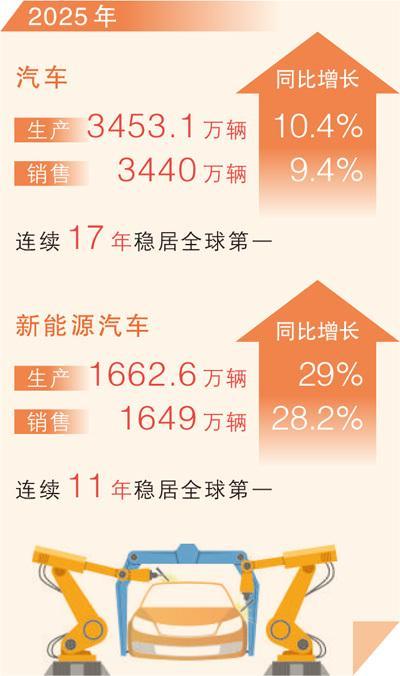
Core Insights - The Chinese automotive industry is projected to produce and sell 34.53 million and 34.40 million vehicles respectively by 2025, marking year-on-year growth of 10.4% and 9.4%, maintaining a scale above 30 million for three consecutive years and remaining the world's largest for 17 years [2] Industry Overview - The demand in the automotive market is being driven by policies such as trade-in programs for consumer goods, the promotion of new energy vehicles in rural areas, and enhanced supply-demand adaptability [2] - The automotive manufacturing industry has a long supply chain and significant employment absorption, contributing notably to economic growth [2] New Energy Vehicles - By 2025, the production and sales of new energy vehicles in China are expected to reach 16.626 million and 16.49 million respectively, with year-on-year growth of 29% and 28.2%, maintaining the global lead for 11 consecutive years [2] - New energy vehicles are projected to account for 47.9% of total new vehicle sales [2] Technological Advancements - Key technologies such as next-generation power batteries, electronic and electrical architecture, smart cockpits, and intelligent driving assistance are experiencing continuous breakthroughs [2] - By 2025, the application of 800V high-voltage silicon carbide platforms and fast-charging technology that allows for 80% charge in 15 minutes will be in mass production, and the first batch of L3 conditional autonomous driving vehicles will receive approval [2]
山东青岛:人形机器人“实训”忙
Ren Min Wang· 2026-01-14 15:53
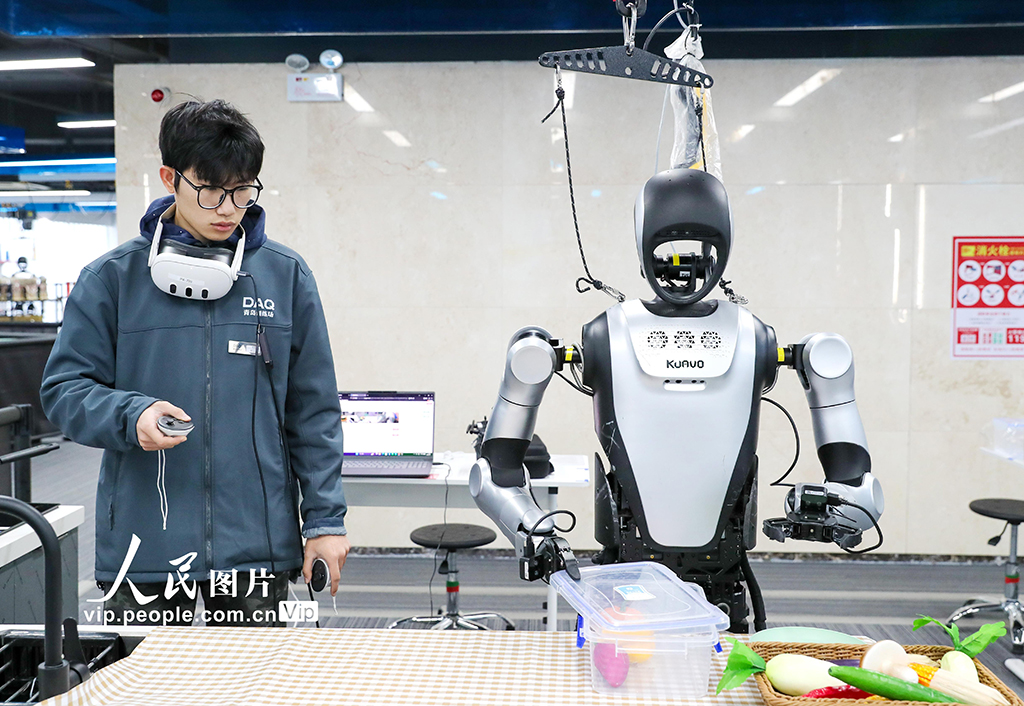
Core Viewpoint - The training facility in Qingdao, Shandong, utilizes 5G-A networks to enhance human-robot collaboration, enabling robots to evolve from imitation to autonomy through high-quality data collection and real-world scenario training [2] Group 1: Technology and Innovation - The training site employs VR technology and sensory handles to guide humanoid robots in tasks such as grasping, transporting, and sorting [2] - The facility captures high-quality real machine data through seven realistic scenarios, addressing industrial application bottlenecks [2] Group 2: Industry Impact - The initiative aims to continuously supply "training data" and "skill experience" to the industry, facilitating the advancement of robotic technology [2]

《固体废物综合治理行动计划》出台 如何构建“无废未来”?
Ren Min Wang· 2026-01-14 09:32
Core Viewpoint - Strengthening solid waste comprehensive management is crucial for promoting the construction of a beautiful China and accelerating the green transformation of economic and social development [1] Group 1: Action Plan Overview - The State Council has issued the "Solid Waste Comprehensive Management Action Plan," which, along with previous pollution prevention documents, forms a policy system for pollution control [1] - The Action Plan sets clear goals for 2030, including significant improvements in solid waste management, effective control of historical stockpiles, and a reduction in illegal dumping [1] - The annual comprehensive utilization of major solid waste is targeted to reach 4.5 billion tons, and the annual recycling of major renewable resources is aimed at 510 million tons [1] Group 2: Industrial Solid Waste Management - China generates over 4 billion tons of industrial solid waste annually, accounting for nearly half of the total solid waste, leading to increasing environmental pollution risks [2] - The Ministry of Ecology and Environment emphasizes the need to address both historical stockpiles and the rising new stockpiles of industrial solid waste [2] - Efforts will focus on exploring new channels for large-scale utilization of industrial solid waste and gradually advancing the remediation of historical stockpiles [2] Group 3: Current Status and Initiatives - A survey identified approximately 33 billion tons of accumulated industrial solid waste in China, occupying around 3,500 square kilometers [3] - Over 5,000 tailings ponds have undergone safety inspections and remediation, with more than 2,200 completed in key river basins [3] - The Action Plan calls for accelerating the construction of "waste-free cities" and enhancing unified supervision and management of solid waste pollution prevention [3] Group 4: Strategic Focus Areas - The Ministry of Ecology and Environment will focus on planning guidance, responsibility assessment, regulatory standards, and technological support to enhance solid waste management [3] - The "14th Five-Year Plan" will include solid waste pollution prevention requirements and specific tasks, aiming to address shortcomings in solid waste management [3] - A comprehensive and industry-specific control standard system for hazardous solid waste will be established to reduce the generation of harmful solid waste at the source [3]
人民财评:让“AI+制造”成为产业升级“加速器”
Ren Min Wang· 2026-01-14 09:09
Core Viewpoint - The implementation of the "Artificial Intelligence + Manufacturing" initiative by eight government departments aims to deeply integrate AI with the manufacturing sector, enhancing productivity and driving industrial upgrades in China [1][2]. Group 1: Policy and Objectives - The "Artificial Intelligence + Manufacturing" initiative outlines a systematic policy framework to promote the integration of AI into manufacturing, emphasizing that AI is a key variable while manufacturing is the core carrier [1]. - The initiative includes seven key tasks and 21 specific measures to accelerate the intelligent, green, and integrated development of the manufacturing industry [1]. Group 2: Industry Impact - The initiative is expected to benefit the entire "Artificial Intelligence + Manufacturing" supply chain, including sectors such as AI chips, industrial software, smart equipment manufacturing, and data services [2]. - AI is anticipated to optimize production processes, enhance quality, efficiency, and flexibility, and facilitate a dual empowerment of AI technology and manufacturing applications [2]. Group 3: Implementation and Collaboration - Successful implementation of the initiative requires collaboration among various stakeholders, including government, enterprises, and industry organizations [3]. - The government needs to optimize the institutional environment, while enterprises should actively engage in transformation, and industry organizations must enhance collaboration between academia and industry [3].