
2 1 Shi Ji Jing Ji Bao Dao

Search documents
银轮股份:电力能源板块柴油发电机冷却业务已进入量产阶段,燃气发电机相关业务处于开发及产能筹备阶段
2 1 Shi Ji Jing Ji Bao Dao· 2026-02-11 10:00
Group 1 - The core viewpoint of the article highlights that the electric power energy sector is benefiting from the explosive growth of overseas AI data centers, leading to continuous expansion of downstream customers in diesel (including backup and power generation) and gas generator sets [1] - The company’s product offerings in the generator field primarily include generator cooling and exhaust emission treatment [1] - The diesel generator (backup power) cooling business has entered the mass production stage, while the gas generator-related business is in the development and capacity preparation phase [1]

科技股疑虑盘旋,AI会否成为软件股的“屠龙刀”
2 1 Shi Ji Jing Ji Bao Dao· 2026-02-11 10:00
Core Viewpoint - The recent sell-off in US software stocks has ended, but concerns about the impact of AI on the software industry remain, leading to a divided market perspective on future valuations and investment opportunities [1][2]. Group 1: Market Performance and Reactions - After a significant decline, software stocks experienced a strong rebound, with the S&P 500 Information Technology Index down 0.58% and notable movements in individual stocks like Microsoft down 0.08% and Oracle up 2.11% [1]. - Year-to-date, Oracle's stock has dropped 18.3%, and Salesforce has retreated 23.72%, while the iShares North American Software ETF (IGV) has fallen 15% in January, marking its worst monthly performance since 2008 [1]. - The market has seen a net outflow of approximately $4.2 billion from the IGV over the past year, with Microsoft’s stock down 29.5% from its peak in October [1]. Group 2: Diverging Opinions on Software Stocks - UBS downgraded the rating of US IT stocks due to ongoing uncertainties in the software sector and increased capital expenditures, while Citigroup warned that software stocks have not yet fully bottomed out [2]. - Conversely, some analysts, like those from Wedbush, argue that the "software apocalypse" narrative is overly pessimistic, suggesting that AI will not broadly replace software applications [2]. - Experts believe that AI will not end the software industry but will reshape it, with companies closer to AI likely to thrive while others may struggle [2]. Group 3: AI's Impact on Software Valuation - The launch of AI tools by companies like Anthropic has raised fears that subscription software may become obsolete, leading to a significant market sell-off that saw software stocks lose $830 billion in value within a week [3]. - The forward P/E ratio for European software and IT service companies is currently around 16.8 times, reflecting a mere 9% premium over the broader market, nearing levels seen during the 2009 financial crisis [3]. Group 4: Future Outlook and Structural Changes - Analysts predict a structural divide in the software industry, where subscription-based companies may face pressure, while usage-based companies could benefit from increased demand driven by AI [7][8]. - Companies that successfully adapt to AI and leverage data effectively are expected to continue growing, while those unable to adjust may face significant challenges [8]. - The current P/E ratio for software stocks has dropped from over 50 to around 30, leading some analysts to suggest that certain stocks, like Microsoft and Palantir, are now attractive buying opportunities [8].
齐翔腾达:混烷脱氢装置提升原料利用效率,可转产高附加值异丁烯增强产业链韧性
2 1 Shi Ji Jing Ji Bao Dao· 2026-02-11 10:00
Core Viewpoint - The company has upgraded its propane dehydrogenation unit to a mixed alkane dehydrogenation unit, significantly improving the utilization efficiency of mixed propane and butane feedstock, enhancing product flexibility and resilience against raw material supply fluctuations [1] Group 1 - The technical transformation allows for the production of high-value isobutylene, which can be used to manufacture downstream fine chemicals such as MTBE, TBA, and high-purity isobutylene [1] - The new product route enhances the company's ability to respond to market changes and strengthens the resilience of the industrial chain [1]

海峡股份:海安航线客滚船舶折旧年限为18年,目前有4艘船舶船龄超过该年限
2 1 Shi Ji Jing Ji Bao Dao· 2026-02-11 10:00
Core Viewpoint - Haixia Co., Ltd. indicated that the depreciation period for passenger and roll-on/roll-off vessels on the Hai'an route is 18 years, with currently 4 vessels exceeding this age limit [1] Group 1 - The company has established a depreciation period of 18 years for its vessels [1] - There are currently 4 vessels in the fleet that have surpassed the 18-year depreciation limit [1]

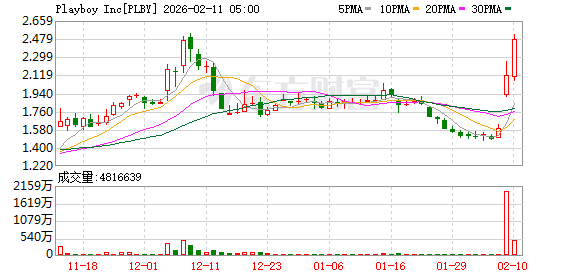
“品牌稀释”之后,花花公子转让中国业务50%股权
2 1 Shi Ji Jing Ji Bao Dao· 2026-02-11 09:59
Core Viewpoint - Playboy, Inc. has signed a final agreement to sell a 50% stake in its Chinese business to United Trademark Group (UTG) for a total of $122 million, aiming to address brand dilution issues and enhance operational management in the region [2][4]. Group 1: Transaction Details - The agreement includes three payment components: $45 million paid over two years for the stake, $67 million as a minimum guaranteed dividend over eight years, and an additional $10 million for brand support over the next three years [2]. - After the transaction, UTG will take over product development, channel expansion, and brand operations in China, while Playboy retains a 50% stake and guaranteed dividends [2]. Group 2: UTG's Background - UTG, headquartered in Shanghai, is a global consumer brand management group that manages over 10 international brands, including Jeep and several Italian brands [3]. - Previously, UTG was the exclusive agent for the Playboy brand in mainland China and is now transitioning from a brand agent to a co-owner [3]. Group 3: Brand Management Issues - Playboy's aggressive brand licensing strategy in China has led to brand value dilution, with the company relying heavily on licensing for revenue, which constitutes nearly half of its total income [4]. - The brand has been licensed to multiple local companies for over 30 years, covering various product categories, which has contributed to the dilution of its brand value [4][6]. Group 4: Financial Performance - In 2021, the Chinese market accounted for 27% of Playboy's total revenue, second only to the U.S. market at 52%, with approximately 2,500 physical stores and 1,000 online stores in China [5]. - However, by fiscal year 2024, revenue from the Chinese market dropped to $11.04 million, representing only 9.51% of total revenue, indicating a significant decline from its previous high [7].


盘龙药业:酮洛芬凝胶贴膏获临床试验批准
2 1 Shi Ji Jing Ji Bao Dao· 2026-02-11 09:57
Core Viewpoint - Panlong Pharmaceutical has received approval from the National Medical Products Administration for the clinical trial of Ketoprofen gel patch, which is intended for pain relief in various conditions [1] Group 1: Product Details - The approved drug is a Ketoprofen gel patch, classified as a Class 3 chemical drug [1] - The patch is designed for local application, with a size of 14cm x 10cm, containing 10g of gel and 30mg of Ketoprofen [1] - Indications for the drug include osteoarthritis, periarthritis of the shoulder, tendonitis, tenosynovitis, lateral epicondylitis (tennis elbow), muscle pain, and swelling and pain due to trauma [1] Group 2: Regulatory Approval - The clinical trial approval notification number is 2026LP00383 [1] - The approval allows the company to conduct clinical trials aimed at pain relief [1]

借款、担保与“退市”,西安旅游的失血残局
2 1 Shi Ji Jing Ji Bao Dao· 2026-02-11 09:57
Core Viewpoint - The tourism market in Xi'an is facing significant challenges, highlighted by Xi'an Tourism's (000610.SZ) warning of delisting risks due to ongoing financial struggles and a projected net loss of up to 290 million yuan for 2025 [1][2]. Financial Performance - Xi'an Tourism is expected to report a net loss of 154 million yuan in 2023, 260 million yuan in 2024, and between 230 million to 290 million yuan in 2025 [4]. - The company has faced 12 consecutive years of non-recurring net profit losses, leading to a negative net asset forecast and potential delisting [2][4]. Business Strategy and Challenges - The company's previous expansion strategy, which aimed to raise 600 million yuan for nationwide hotel development, has been drastically scaled back to 300 million yuan, primarily for debt repayment rather than growth [4]. - Xi'an Tourism's main revenue-generating business, which accounted for over 60% of revenue, has seen a dramatic decline, with revenue dropping by over 80% [4]. Operational Issues - The hotel business has reported a negative gross margin of -12.54% in the first half of 2025, indicating that increased orders lead to greater losses [5]. - The company is relying on borrowing 50 million yuan from its major shareholder and providing 80 million yuan in guarantees for struggling subsidiaries, revealing a fragile financial structure [5][12]. Market Comparison - In contrast to Xi'an Tourism's struggles, Shaanxi Tourism (603402) has successfully listed and is projected to achieve a net profit of up to 436 million yuan in 2025, highlighting a stark divergence in performance within the same market [6][10]. - While Xi'an Tourism is entrenched in low-margin, high-volatility businesses, Shaanxi Tourism has capitalized on high-value attractions and performances, leading to a more favorable market position [11]. Parent Company Financial Health - The parent company, Xili Group, is also experiencing financial difficulties, with net losses of 386 million yuan, 435 million yuan, and 187 million yuan from 2023 to the first half of 2025, alongside high debt ratios [12][13]. - The financial strain on Xili Group raises concerns about the sustainability of its support for Xi'an Tourism, potentially leading to a broader financial crisis if Xi'an Tourism fails to recover [13].


又一家千亿市值A股公司诞生
2 1 Shi Ji Jing Ji Bao Dao· 2026-02-11 09:53
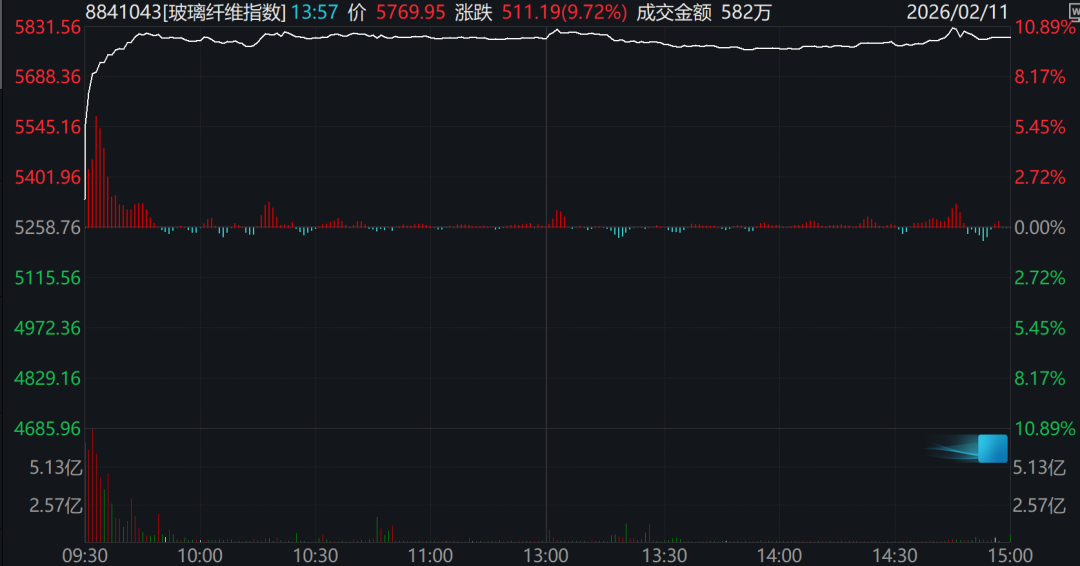
Group 1 - The A-share fiberglass sector experienced a significant surge, with multiple companies hitting the daily limit up, and the fiberglass index rising over 10% on February 11 [2] - China Jushi's market capitalization surpassed 100 billion yuan, reaching 102.7 billion yuan due to the stock price increase [2] Group 2 - Institutions are optimistic about the continuous price increase of electronic cloth, which is essential for manufacturing copper-clad laminates (CCL) and printed circuit boards (PCB) used in high-end fields like communication devices and automotive electronics [3][4] - The electronic cloth industry has undergone four rounds of price increases since 2025, with recent price hikes reflecting a tightening supply situation [3][4] Group 3 - Analysts predict that the price increase of electronic cloth will persist into 2026 due to strong demand for high-end products and supply constraints [4] - The anticipated supply gap in the electronic cloth market is expected to continue, with limited new production capacity and increasing demand from sectors like home appliances and electric vehicles [4] Group 4 - The global AI technology upgrade is driving demand for high-performance, multi-layer printed circuit boards, which in turn boosts the need for electronic cloth [5] - The global AI server market is projected to grow from $125.1 billion in 2024 to $158.7 billion in 2025, with electronic cloth playing a critical role in supporting high data transmission rates [5] Group 5 - The recent price increase of electronic cloth is attributed to the demand from high-performance computing scenarios, leading to significant improvements in the financial performance of leading electronic cloth manufacturers [6] - Companies like International Composites and Zhongcai Technology have reported substantial profit growth for 2025, driven by rising prices of fiberglass products [6] Group 6 - China Jushi is expected to achieve high growth in 2025, with a reported revenue of 3.323 billion yuan in the first three quarters of the previous year, reflecting a year-on-year increase of 77.27% [6] - The company is actively developing low dielectric and low thermal expansion products, indicating ongoing innovation in its product line [7]


临港新片区人才企业年金新政解读来了,核心要点抢先看!
2 1 Shi Ji Jing Ji Bao Dao· 2026-02-11 09:51
Core Viewpoint - The "Lingang New Area Talent Enterprise Annuity Plan" has been significantly upgraded to enhance talent retention and provide better long-term pension security for employees, aligning with national pension system reforms and the development needs of the Lingang New Area [4]. Summary by Sections Policy Overview - The upgraded talent enterprise annuity plan aims to strengthen the competitive edge of organizations in the Lingang New Area and enhance individual pension security, translating regional development benefits into tangible gains for both organizations and talent [4]. Coverage and Participation - The plan now allows all organizations located in the Lingang New Area to apply for participation, expanding the coverage significantly [7]. - Group companies that have joined the plan can have their subsidiaries nationwide apply for participation without geographical restrictions [7]. Flexibility and Options - The policy's validity has been extended until December 31, 2030, providing a stable expectation for long-term planning [9]. - The application threshold for talent incentive funds has been lowered, making benefits more accessible [11]. - New payment options include the "social security payment base," allowing units and individuals to choose based on actual circumstances [11]. - The contribution ratio can be adjusted within specified ranges, catering to personalized needs at different stages [11]. Incentives and Benefits - Each participant can receive up to 10,000 yuan annually as an incentive directly credited to their personal annuity account, enhancing retirement security [13]. - The plan includes tax benefits, allowing for deferred personal income tax and cost savings for organizations [16]. - The program aims to create a robust pension system, ensuring worry-free retirement living and shared growth between individuals and the city [16]. Application Process - Organizations must submit application materials through an internal democratic decision-making process, which will be reviewed by the Lingang New Area Management Committee [17]. - The committee will verify the employees proposed for participation based on talent standards [17]. - A professional trustee, Changjiang Pension Company, will manage the plan's establishment and contributions [17].

科技股疑虑盘旋 AI会否成为软件股的“屠龙刀”|美股一线
2 1 Shi Ji Jing Ji Bao Dao· 2026-02-11 09:51
Core Viewpoint - The recent sell-off in U.S. software stocks has ended, with a mixed performance observed in the sector, raising questions about the impact of AI on software companies and their long-term revenue potential [1][2][4]. Group 1: Market Performance - Software stocks experienced a significant decline, with the S&P 500 Information Technology Index falling by 0.58% and notable individual stock movements, such as Microsoft down 0.08% and Oracle up 2.11% [1]. - Year-to-date, Oracle's stock has dropped by 18.3%, and Salesforce has retreated by 23.72%, while the iShares North American Software ETF (IGV) has seen a cumulative decline of 15% in January, marking its worst monthly performance since 2008 [1]. - The market capitalization of U.S. software stocks plummeted by $830 billion within a week due to fears surrounding AI's impact on traditional software subscriptions [3]. Group 2: Analyst Opinions - UBS downgraded the rating of U.S. IT stocks, citing ongoing uncertainty in the software industry and increased capital expenditures, while Citigroup warned that software stocks have not yet fully bottomed out [2]. - Contrarily, some analysts, like those from Wedbush, argue that the "software apocalypse" narrative is overly pessimistic, suggesting that AI will not broadly replace software applications [2]. - Experts believe that AI will not end the software industry but will reshape it, with companies closer to AI potentially thriving while others may struggle [2][6]. Group 3: AI Impact on Software Industry - The introduction of AI tools, such as Anthropic's Claude Cowork, has raised concerns that traditional software subscriptions may become obsolete, leading to a reevaluation of software companies' revenue models [3][4]. - Analysts predict a structural division within the software industry, where subscription-based companies may face challenges, while usage-based companies could benefit from increased demand driven by AI [7][8]. - The market is witnessing a potential bifurcation, with companies that successfully adapt to AI and leverage data advantages likely to continue growing, while those unable to do so may face obsolescence [8][9]. Group 4: Future Outlook - Despite the recent downturn, some analysts believe that software stocks may now present attractive buying opportunities, with the IGV's price-to-earnings ratio dropping from over 50 to around 30 [8]. - Companies like Microsoft and Oracle, supported by diverse business units beyond software, may still find a place in the AI era, although overall valuations in the software sector remain high [9]. - There is a cautionary note regarding industries with high standardization, such as basic programming and low-barrier SaaS tools, which may face significant efficiency challenges and profit compression due to AI advancements [9].