2 1 Shi Ji Jing Ji Bao Dao

Search documents
中润光学:2025年净利润同比增长18.77%
2 1 Shi Ji Jing Ji Bao Dao· 2026-02-26 08:11
Group 1 - The core point of the article is that Zhongrun Optical has reported significant growth in its financial performance for the fiscal year 2025, with notable increases in revenue and net profit [1] Group 2 - The company achieved an operating income of 658 million yuan, representing a year-on-year increase of 44.79% [1] - The net profit attributable to shareholders of the listed company was 63 million yuan, reflecting a year-on-year growth of 18.77% [1] - The basic earnings per share were 0.72 yuan, which is an increase of 18.03% compared to the previous year [1]
中信博:2025年净亏损988.17万元
2 1 Shi Ji Jing Ji Bao Dao· 2026-02-26 08:09
Group 1 - The core point of the article is that CITIC Bo reported a significant decline in its financial performance for the year 2025, with a notable drop in both revenue and net profit [1] Group 2 - The company achieved an operating income of 6.852 billion yuan, representing a year-on-year decrease of 24.09% [1] - The net profit attributable to shareholders was -9.8817 million yuan, reflecting a year-on-year decline of 101.56% [1] - The basic earnings per share were -0.05 yuan, which is a decrease of 101.61% compared to the previous year [1]

携程集团总裁、董事双双辞职
2 1 Shi Ji Jing Ji Bao Dao· 2026-02-26 08:08
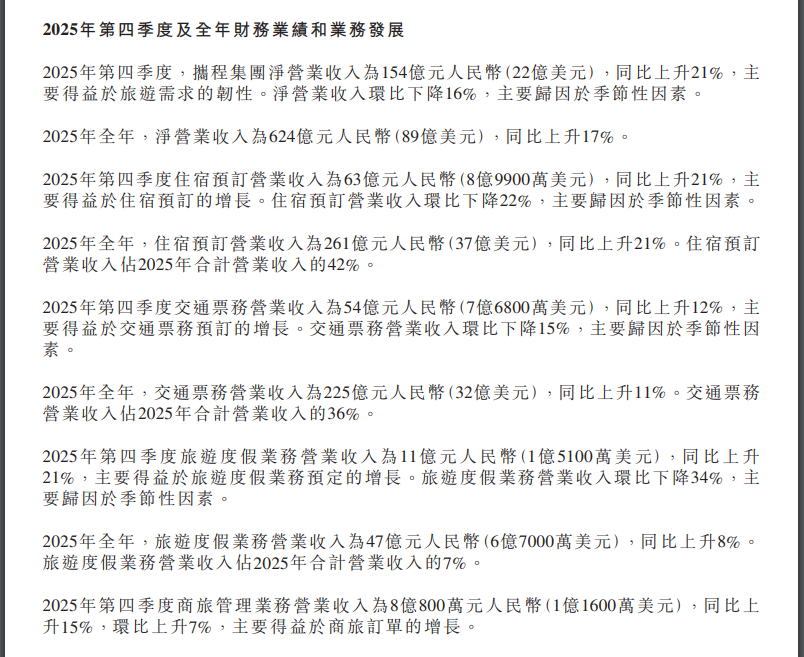
Financial Performance - In Q4 2025, Ctrip Group reported a net operating revenue of 15.4 billion yuan, a year-on-year increase of 21%, driven by resilient travel demand, with a net profit of 4.3 billion yuan. However, there was a quarter-on-quarter decline of 16% due to seasonal factors [1]. - For the full year 2025, Ctrip Group's net operating revenue reached 62.4 billion yuan, up 17% year-on-year, with a net profit of 33.4 billion yuan, compared to 17.2 billion yuan in 2024. The increase was primarily attributed to investment gains of 19.9 billion yuan (2.8 billion USD) included in other income/expenses, compared to 1.1 billion yuan in 2024 [1]. Board Changes - Ctrip announced significant board changes effective February 25, 2026, with Fan Min resigning as a director and president, and Qi Ji resigning as a director. Wu Yihong and Xiao Yang were appointed as new independent directors [3][4]. - Fan Min co-founded Ctrip in 1999 and has held various executive roles, including COO and president since 2013. Qi Ji is a co-founder and has served as CEO and independent director [4]. Stock Performance - As of 15:47, Ctrip's Hong Kong stock fell over 3%, trading at 401.2 HKD per share, with a market capitalization of 286.3 billion HKD, reflecting a cumulative decline of over 27% year-to-date. In contrast, its US stock rose over 1% in pre-market trading [6].


无人驾驶的士+无人机送餐,年内将落地广州海珠
2 1 Shi Ji Jing Ji Bao Dao· 2026-02-26 08:07
Core Viewpoint - The Haizhu District is focusing on the development of smart driving and low-altitude economy through the integration of autonomous vehicles and drone delivery services in 2023 [1] Group 1: Key Initiatives - The district aims to promote the use of Hello's autonomous taxis and Xunyi's delivery drones for residents [1] - A key focus is on building a "ground-air linkage" system that integrates smart driving with low-altitude economic activities [1] - The initiative includes the development of a "vehicle-road-cloud integration" system, which combines vehicle networks with cloud technology [1]
天河CBD管委会戴维:以场景招引人工智能头部企业
2 1 Shi Ji Jing Ji Bao Dao· 2026-02-26 08:03
Core Viewpoint - The Guangzhou Tianhe District is focusing on high-quality development by attracting major projects and capital, particularly in the technology sector, with an emphasis on artificial intelligence and robotics [1] Group 1: Development Strategy - The Tianhe Central Business District aims to lead in attracting large projects and capital headquarters, particularly in technology [1] - The district plans to recruit over 20 key projects in the Guangtang Science and Technology Innovation City, focusing on artificial intelligence and embodied intelligent robotics [1] Group 2: Industry Focus - The strategy includes attracting leading artificial intelligence companies through specific application scenarios, especially in AI safety [1] - The district has made significant efforts and layouts in the AI safety sector, with international top teams already in contact for potential projects [1]
南财v快评:机器人们该起来打工了
2 1 Shi Ji Jing Ji Bao Dao· 2026-02-26 08:03
Core Viewpoint - The article emphasizes the importance of the "coordinated development" of manufacturing and service industries in Guangdong, highlighting the need for integration to enhance competitiveness and achieve high-quality growth [1][2]. Group 1: Manufacturing Industry - Guangdong has historically been known as the "world's factory," with manufacturing serving as a crucial foundation for its economy [1]. - The manufacturing sector is evolving beyond traditional roles, incorporating robotics and AI into production lines, which necessitates a focus on soft skills such as R&D, digital technology, and financial support [1]. - The province boasts all 31 categories of manufacturing industries and has led the nation in revenue from industrial enterprises for several consecutive years [2]. Group 2: Service Industry - The service industry is increasingly intertwined with manufacturing, as seen in examples like the integration of high-tech products into traditional markets, which stimulates consumer demand [1]. - Guangdong's service sector has consistently outperformed the national average in value-added contributions for 41 years, indicating a strong service industry foundation [2]. - The article suggests that without addressing the service sector's shortcomings, Guangdong risks remaining in the lower end of the value chain [2]. Group 3: Strategic Importance - The theme of coordinated development is framed as a necessary path for Guangdong's industrial growth, likening it to a mandatory question rather than a choice [2]. - The global trend of "re-industrialization" in countries like the U.S., Germany, and Japan underscores the urgency for Guangdong to enhance the integration of manufacturing and services [2]. - The article calls for a sense of urgency and action to maximize the potential of this "new engine" of coordinated development, aiming for tangible benefits in everyday life [2].

人民币汇率三连涨,离岸价升破6.83
2 1 Shi Ji Jing Ji Bao Dao· 2026-02-26 08:02
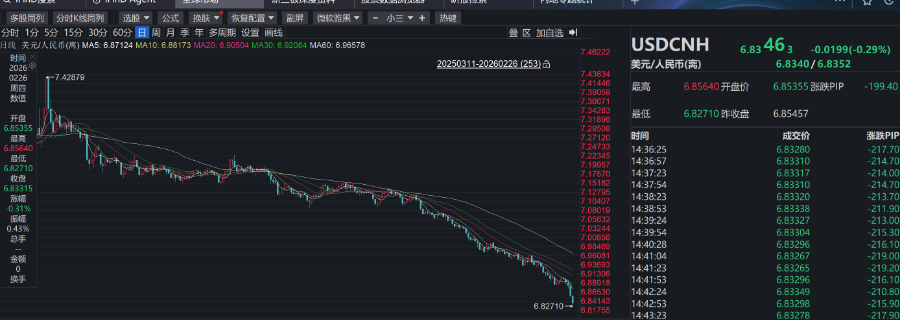
Core Viewpoint - The recent appreciation of the Renminbi (RMB) against the US dollar is attributed to a combination of factors, including a weaker US dollar and improved external economic conditions, leading to a significant increase in the RMB's value over the past few days [3][4]. Group 1: RMB Exchange Rate Movement - The onshore and offshore RMB both surpassed the 6.84 mark against the US dollar, with the offshore RMB reaching a high of 6.8271, marking the highest level since April 2023 [1]. - The RMB's central parity rate against the US dollar was set at 6.9228, an increase of 93 basis points, marking the third consecutive day of upward adjustment [1]. - Since the beginning of February, the RMB has appreciated over 300 basis points against the US dollar, with both onshore and offshore rates showing an increase of more than 2% this year [3]. Group 2: Factors Influencing RMB Strength - The stabilization of Sino-US economic and trade relations since late 2025 has contributed to the RMB's strong performance [3]. - The recent criminal investigation into Federal Reserve Chairman Jerome Powell has put pressure on the US dollar, leading to a general appreciation of non-US currencies, including the RMB [3]. - The release of accumulated settlement demand from high export growth has accelerated the RMB's appreciation, with significant surpluses in bank customer settlement and sales recorded in late 2025 and early 2026 [4]. Group 3: Market Sentiment and Future Outlook - Analysts suggest that the current high market sentiment is a key factor supporting the RMB's strength, with expectations of continued robust export growth in the first quarter [4]. - The RMB's appreciation is viewed as a passive response to a weaker US dollar rather than a direct strengthening of the RMB itself [4]. - The People's Bank of China has emphasized the role of the exchange rate as a macroeconomic stabilizer, indicating a commitment to maintaining stability while allowing for flexibility [5].
一年分野,深圳机器人八企突围记
2 1 Shi Ji Jing Ji Bao Dao· 2026-02-26 07:58
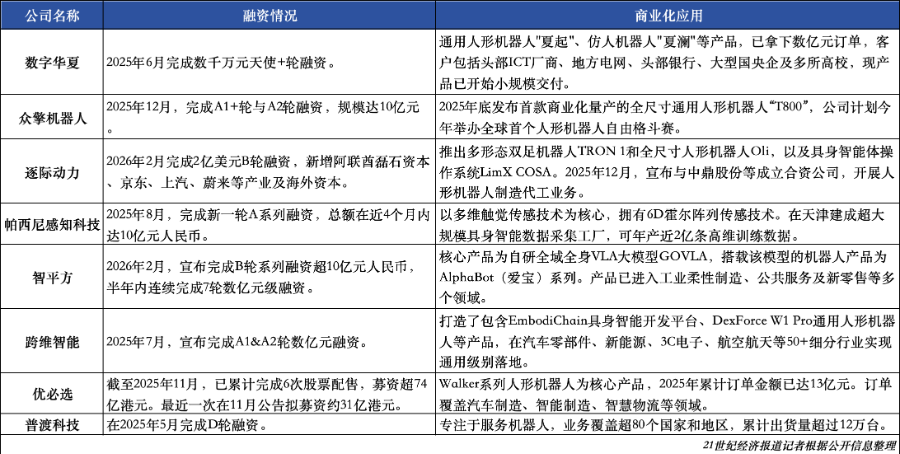
Core Insights - The article highlights the contrasting fortunes of robotics companies in the US and China, with Cartwheel Robotics ceasing operations due to funding failures, while Shenzhen's robotics sector thrives with significant investments and technological advancements [1][2][3]. Company Developments - Cartwheel Robotics, founded in 2022, has shut down due to unsuccessful financing efforts [1]. - Shenzhen's robotics companies, including Digital Huaxia, Zhongqing Robotics, Zhijijia, and others, have seen varied trajectories, with some achieving significant funding and commercial success [3]. - Zhijijia has completed 12 rounds of financing, surpassing a valuation of 10 billion yuan, becoming Shenzhen's first embodied intelligence company to reach this milestone [5]. - Zhongqing Robotics raised 1 billion yuan in multiple financing rounds and launched the T800 humanoid robot, marking a significant step in commercialization [5][9]. - Digital Huaxia has secured orders worth hundreds of millions for its humanoid robots, indicating strong market demand [8]. Industry Trends - The embodied intelligence sector has experienced explosive growth, with total financing exceeding 50 billion yuan, a 400% increase from the previous year [4]. - Shenzhen's government aims to establish the city as a global leader in artificial intelligence, with a target of over 1,200 related enterprises by 2027 [13]. - The robotics industry in Shenzhen has shown robust growth, with a 31.4% increase in added value in the first three quarters of 2025 [12]. Technological Advancements - Companies are focusing on practical applications of robotics, with significant innovations in product development and technology upgrades [6]. - Zhijijia launched the GOVLA 0.5 model, while Zhongqing Robotics introduced the T800 humanoid robot, showcasing advancements in robotics technology [6][9]. - Cross-dimensional Intelligence has developed a model that achieved over 100 million yuan in revenue, indicating successful market penetration [7]. Market Applications - Shenzhen's robotics companies are expanding into various sectors, including industrial manufacturing, commercial services, and household applications [9]. - Digital Huaxia's robots are being utilized in government and banking sectors, while Zhijijia's modular service space is set to deploy 1,000 units in three years [9]. - The industry is increasingly focused on real-world applications, with companies like Pudu Technology and others achieving significant sales and international reach [9].
长阳科技:2025年净亏损1.45亿元
2 1 Shi Ji Jing Ji Bao Dao· 2026-02-26 07:57
Group 1 - The core point of the article is that Changyang Technology reported a significant decline in its financial performance for the fiscal year 2025, with a notable drop in revenue and a net loss [1] Group 2 - The company achieved an operating income of 1.079 billion yuan, representing a year-on-year decrease of 19.24% [1] - The net profit attributable to shareholders of the listed company was a loss of 145 million yuan [1] - The basic earnings per share were reported at -0.50 yuan [1]

英伟达财报引爆A股算力概念,寒武纪涨近8%,电力股走强,港股科网股集体下挫
2 1 Shi Ji Jing Ji Bao Dao· 2026-02-26 07:47
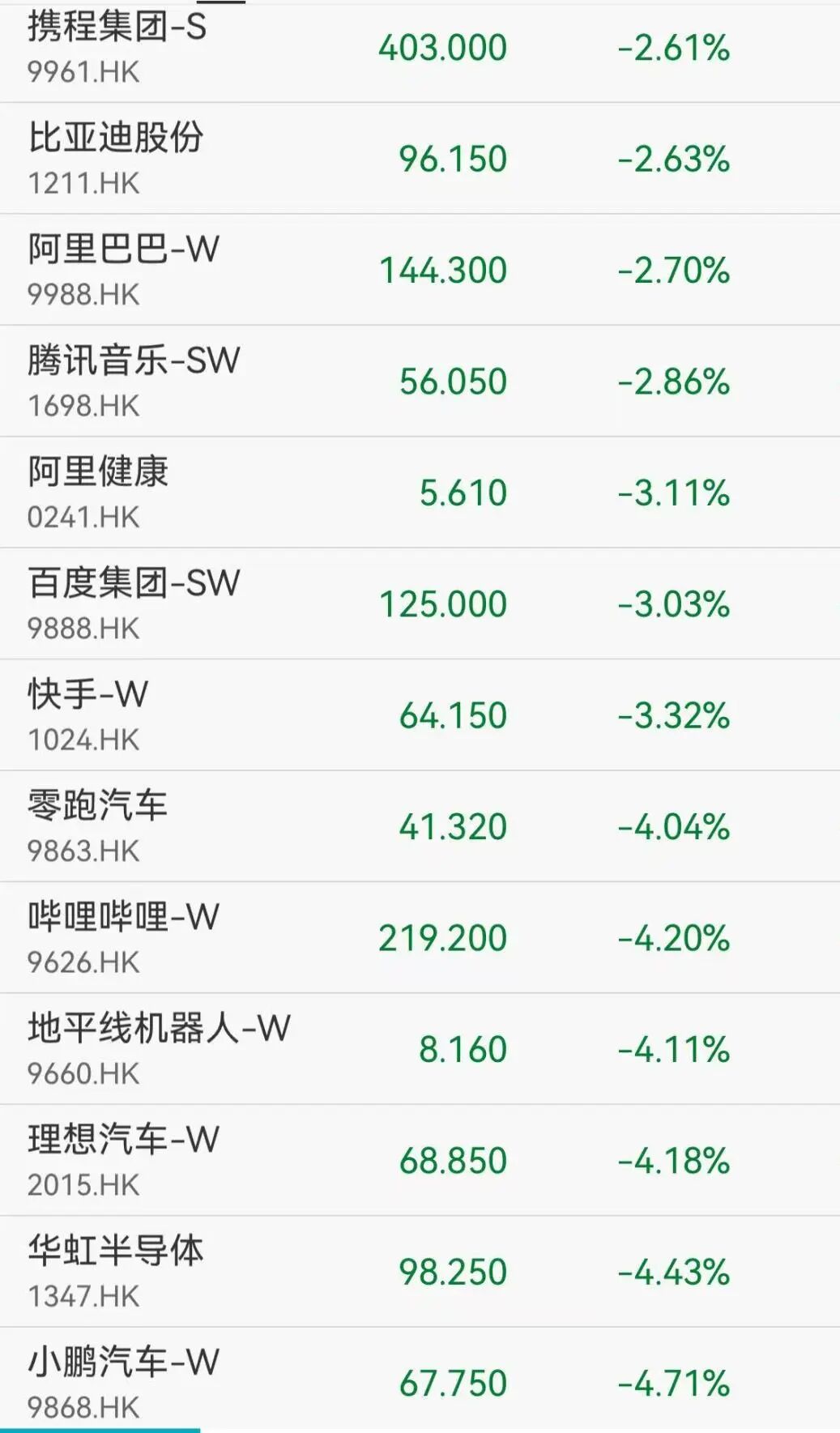
Group 1 - A-shares showed mixed performance on February 26, with the ChiNext Index dropping over 1% at one point, while the Sci-Tech Innovation Board rose by 1.29%. Over 2800 stocks in the market declined [1] - The computing hardware sector led the gains, with strong performances from PCB, CPO, liquid cooling servers, and computing chip concepts. Notable stocks included ShenNan Circuit, Han's Laser, and Guanghe Technology, all hitting the daily limit [1] - The computing rental concept expanded its gains, with Runze Technology hitting the daily limit and closing up 17.7%. Other stocks like Zhongbei Communication and Huasheng Tiancheng also reached their daily limits [1] Group 2 - The power sector strengthened due to the AI wave, with Ganneng Co. achieving two consecutive limits and Huayin Power hitting the daily limit. The wind power sector also saw gains, with stocks like Xinqianglian and Dajin Heavy Industry rising significantly [2] - The commercial aerospace sector experienced a surge, with stocks like Chunhui Zhikong hitting a 20% limit and many others seeing substantial increases [2] - Conversely, the film and insurance sectors faced declines, with the film industry continuing to adjust, leading to significant drops in stocks like Bona Film and Hengdian Film [2] Group 3 - In the Hong Kong market, the Hang Seng Index fell over 0.8%, and the Hang Seng Tech Index dropped over 2% [3] - Tech stocks in Hong Kong collectively declined, with companies like Hua Hong Semiconductor and Xpeng Motors dropping over 4%, while Baidu and Kuaishou fell over 3% [4] Group 4 - The Asia-Pacific market saw the Nikkei 225 index rise by 0.29%, closing at 58753.39 points, while the KOSPI index increased by 3.67%, reaching a new historical high of 6307.32 points [6]