
2 1 Shi Ji Jing Ji Bao Dao

Search documents
全省推动超5万家规模以上工业企业数字化转型
2 1 Shi Ji Jing Ji Bao Dao· 2026-02-25 12:11
Group 1 - The provincial high-quality development conference was held in Guangzhou on February 24, focusing on the development paths of intelligent manufacturing and industrial internet [1] - The conference emphasized the importance of building a modern industrial system with advanced manufacturing as its backbone [1]
专家把脉“百千万” 县域发展不能“贪多求全”
2 1 Shi Ji Jing Ji Bao Dao· 2026-02-25 12:11
Group 1 - The forum on "Hundred Million Thousand Project" focused on the integration of county industries and high-quality development, gathering officials, experts, and business representatives to discuss stimulating county economic vitality and promoting industrial integration [1] - The discussions aimed to provide strategies and insights for the high-quality development of Guangdong province [1]
恒指温和收涨 周期股领涨科技分化
2 1 Shi Ji Jing Ji Bao Dao· 2026-02-25 12:09
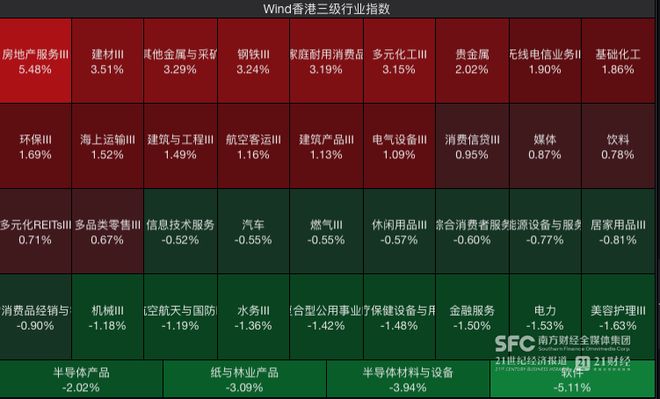
Market Overview - The Hong Kong stock market experienced a mixed performance with a structural characteristic of "strong cyclicals, weak technology" as policy support and rising commodity prices drove the market upward, while profit-taking affected the technology sector [1][2] - The Hang Seng Index rose by 0.66% to 26,765.72 points with a trading volume of 236.765 billion HKD, while the Hang Seng Tech Index slightly declined by 0.19% to 5,260.5 points with a trading volume of 51.908 billion HKD [1][2] Sector Performance - Cyclical sectors such as real estate services (+5.48%), building materials (+3.51%), and mining (+3.29%) led the gains, supported by favorable policies and rising commodity prices [2] - In contrast, technology sectors like software (-5.11%) and semiconductor materials and equipment (-3.94%) saw significant declines due to profit-taking from previously high-performing stocks [2] Individual Stocks - Notable gainers included Tianbao Energy (+69.49%) due to a projected profit increase of 84.5% year-on-year, and Semir Holdings (+60.53%) benefiting from active small-cap market sentiment [2] - Major decliners included Zhijing International Financial (-26.32%), Zhuoyue Holdings (-23.08%), and China National Pharmaceutical Group (-18.75%) [2] Trading Activity - The top three stocks by trading volume were Tencent Holdings (11.981 billion HKD), Alibaba-W (7.110 billion HKD), and HSBC Holdings (6.193 billion HKD) [2] Policy and Economic Developments - The Hong Kong budget proposed optimizing the listing system, including revising "same share, different rights" requirements and advancing T+1 settlement cycle consultations, aiming to enhance market efficiency [2] - New policies in Shanghai's real estate market, including shortening the social security period for non-local buyers and increasing public housing loan limits, stimulated the Hong Kong real estate sector [2] Future Outlook - Analysts suggest focusing on three sectors: precious metals and energy due to rising geopolitical risks, consumer sectors at relatively low valuations, and technology sectors expected to rebound as AI applications accelerate [3] - Concerns over potential VAT increases in service sectors may affect investor sentiment, but pre-meeting policy expectations could support the Hong Kong market [3] - The real estate sector showed overall gains during the Spring Festival, with a continued positive outlook for first-tier and select second-tier cities [3]






最高法:推进房地产、金融、地方平台公司等重点领域破产处置工作
2 1 Shi Ji Jing Ji Bao Dao· 2026-02-25 12:09
21世纪经济报道记者章驰 最高人民法院民二庭庭长王闯表示,要聚焦重点领域风险处置,守住不发生系统性风险底线,针对房地 产、金融、地方平台公司等重点领域风险,各级法院稳妥推进破产处置工作。 2025年,全国法院受理破产申请审查案件44936件,同比增长7.31%;受理破产清算、重整、和解案件 3.69万件,同比增长18.00%,审结3.19万件,同比增长5.07%。通过破产审判累计化解债务约4万亿元、 盘活存量资产1.16万亿元、稳住就业岗位超12万个。其中江苏、浙江、广东三省收案量占全国61.94%, 成为破产审判服务构建新发展格局的核心阵地。 各地法院严格秉持"出清与挽救并举"原则,依法推动落后产能有序退出,促推地方经济转型升级,创新 运用"司法重整+产业升级"模式,精准挽救有发展潜力的困境企业。 2月24日,最高人民法院召开新闻发布会,介绍2025年人民法院民商事审判工作总体情况。 ...
国家加码,银发经济进入“重仓时刻”
2 1 Shi Ji Jing Ji Bao Dao· 2026-02-25 12:01
Core Viewpoint - The Chinese government is actively promoting the development of the silver economy and elderly care services to address the challenges of an aging population, with significant potential for growth in this sector by 2035, projected to exceed 30 trillion yuan [5]. Policy Initiatives - A series of policies have been introduced since 2024 to enhance the silver economy, including opinions and measures aimed at improving elderly welfare and promoting consumption in the elderly care sector [4][6]. - The government is focusing on creating a comprehensive and sustainable elderly care service system that is accessible to all, ensuring better support for the elderly [6]. Market Dynamics - Experts indicate that while the silver economy has substantial potential, challenges such as insufficient supply, low professional standards, and a shortage of workforce hinder its high-quality development [5]. - The government is encouraging the establishment of community-based and small-scale elderly care institutions, as well as supporting state-owned and private enterprises to enter the silver economy [7]. Safety and Regulation - The government emphasizes the importance of safety management in elderly care institutions, including risk assessment and combating fraudulent activities to protect the rights of the elderly [8]. Consumption Incentives - The government is promoting consumption subsidies to stimulate demand among the elderly, with initiatives such as integrating home adaptation into consumption policies and organizing "Elderly Service Consumption Seasons" during key festivals [9][10]. - Various regions have begun issuing electronic consumption vouchers for elderly care services, with specific examples of subsidies provided to support elderly individuals [10]. Technological Innovation - The Ministry of Civil Affairs is advocating for technological innovation as a key strategy to address aging, focusing on developing smart elderly care products and services [11]. - The integration of advanced technologies such as robotics and artificial intelligence is expected to play a significant role in enhancing elderly care services [11]. New Consumption Models - The exploration of new consumption scenarios and business models for the silver economy is ongoing, with initiatives to establish dedicated sections for elderly care products at major trade fairs and e-commerce platforms [12]. - The government plans to further embed silver consumption into online activities, encouraging e-commerce platforms to enhance the supply of quality products and services tailored for the elderly [12].

恒指温和收涨 周期股领涨科技分化丨港股复盘
2 1 Shi Ji Jing Ji Bao Dao· 2026-02-25 12:00
Core Viewpoint - The Hong Kong stock market experienced a mixed performance with a structural divergence, where cyclical sectors outperformed while technology stocks faced profit-taking pressures [1] Market Performance - The Hang Seng Index rose by 0.66% to 26,765.72 points with a trading volume of 236.765 billion HKD, while the Hang Seng Tech Index slightly declined by 0.19% to 5,260.5 points with a trading volume of 51.908 billion HKD [1] - Southbound capital recorded a net outflow of 3.569 billion HKD [1] Sector Performance - Cyclical sectors such as real estate services (+5.48%), building materials (+3.51%), and other metals and mining (+3.29%) led the gains, driven by favorable policies and rising commodity prices [1][2] - Technology sectors, including software (-5.11%) and semiconductor materials and equipment (-3.94%), showed significant declines due to profit-taking [1][2] Individual Stock Movements - Notable gainers included Tianbao Energy (+69.49%) due to a profit forecast increase of 84.5% year-on-year, and Semmy Holdings (+60.53%) benefiting from active small-cap market sentiment [2] - Major decliners included Zhijing International Finance (-26.32%), Chuangyue Holdings (-23.08%), and China National Pharmaceutical Group (-18.75%) [2] Major Transactions - The top three stocks by trading volume were Tencent Holdings (11.981 billion HKD), Alibaba-W (7.110 billion HKD), and HSBC Holdings (6.193 billion HKD) [3] - Conch Group plans to increase its stake in Conch Cement A-shares (7 to 14 billion HKD) and Conch Venture (10.61%), contributing to the rise in building materials stocks [3] Policy and Economic Factors - The Hong Kong budget proposed optimizing the listing system, including revising "same share different rights" requirements and advancing T+1 settlement cycle consultations [3] - New policies in Shanghai's real estate market aimed at stimulating demand, such as shortening social security requirements for non-local buyers and increasing public housing loan limits [3] Future Outlook - Analysts suggest focusing on three sectors: precious metals and energy due to rising geopolitical risks, consumer sectors at relatively low valuations, and technology sectors expected to rebound as AI applications accelerate [4]
航天火箭回收消息频出,机构称商业航天已进入去伪留真阶段丨A股明日线索
2 1 Shi Ji Jing Ji Bao Dao· 2026-02-25 11:53
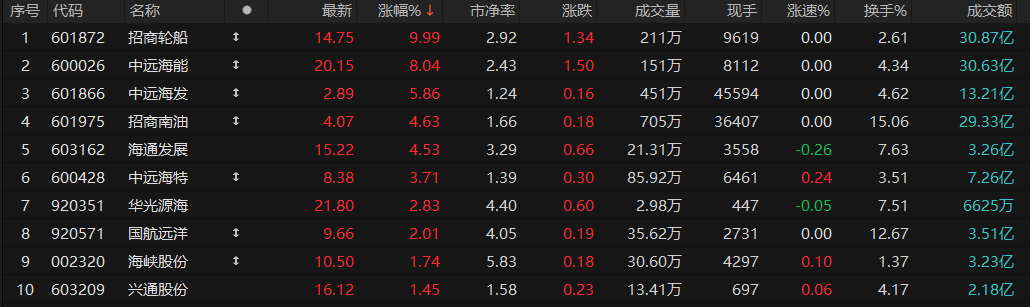
Group 1: Commercial Aerospace - Zhongke Aerospace's reusable liquid rocket, Lijian-2, is set for its maiden flight in late March 2023, carrying the prototype of China's light cargo spacecraft, with plans for four launches this year [1] - The solid rocket, Lijian-1, aims for at least eight launches this year, including two at sea, reinforcing its position in commercial launches [1] - Investment focus in the commercial aerospace sector is shifting towards core industry players, with recommendations for companies like Feiwo Technology, Western Materials, Aerospace Power, and others [1] Group 2: Semiconductor Industry - SK Hynix plans to invest 21.6 trillion KRW (approximately 15.1 billion USD) in new facilities for its semiconductor factory in Yongin, with the investment period from March 2026 to December 2030 [2] Group 3: Storage Industry - Demand for storage is driven by AI, with prices in an upward cycle; DRAM market value is expected to grow by 144% to 404.3 billion USD by 2026, while NAND Flash is projected to increase by 112% to 147.3 billion USD [3] - Recommended companies in the storage sector include Jiangbolong, Demingli, Baiwei Storage, and others [3] Group 4: Shipping Industry - Global oil tanker freight rates have surged to a near six-year high, with the cost of transporting crude oil from the Middle East to China exceeding 170,000 USD per day, tripling since the beginning of the year [5] - The shipping sector is expected to benefit from this upward trend, with companies like COSCO Shipping Energy and China Merchants Energy being highlighted as strong performers [5] Group 5: Phosphate Chemical Industry - The phosphate chemical sector has seen renewed interest, with companies like Chuanjin Nuo and Chengxing Co. experiencing significant stock price increases [5] - The U.S. has prioritized phosphorus and glyphosate as national security issues, indicating a potential for increased demand and price appreciation in the phosphate market [6] Group 6: Lithium Mining Industry - Lithium mining stocks have shown strong performance, with companies like Dazhong Mining and Jiangte Electric reaching their price limits [7] - Concerns over Zimbabwean lithium exports being hindered have contributed to market volatility, but expectations for strong demand in the battery sector remain [8] Group 7: Rare Earth Industry - Prices for rare earth products have significantly increased, with neodymium oxide averaging 882,000 CNY per ton, up 41,600 CNY from before the holiday [16] - The market is experiencing fluctuations due to export control measures, but purchasing activity is expected to gradually resume as production adjusts [17]

产业巨变酝酿!多地“新春第一会”点名AI,释放重大投资信号
2 1 Shi Ji Jing Ji Bao Dao· 2026-02-25 11:48
Core Viewpoint - The focus for 2026 is on accelerating the construction of a modern industrial system, with an emphasis on artificial intelligence (AI) and emerging industries to drive economic growth and stability across various provinces in China [1][2][5]. Group 1: Modern Industrial System - Multiple provinces, including Guangdong, Jiangsu, and Shandong, are prioritizing the establishment of a modern industrial system, emphasizing the integration of advanced manufacturing and modern services [1][4]. - The Guangdong provincial government highlights the importance of AI in transforming production and service models, aiming for a collaborative development between manufacturing and services [2][5]. - Jiangsu is focusing on nurturing AI innovation and enhancing the competitiveness of industrial clusters, particularly in healthcare applications [4][5]. Group 2: Investment and Economic Growth - Provinces are set to implement measures to boost investment and expand domestic demand, targeting a 5% economic growth rate for 2026 [8][10]. - Initiatives include enhancing infrastructure, promoting consumption, and supporting new industries, with specific projects in transportation and energy sectors outlined by various provincial leaders [9][10]. - The emphasis is on overcoming barriers to private investment and ensuring sustainable funding for major strategic projects through long-term bonds and other financial mechanisms [10]. Group 3: Support for Private Enterprises - Several provinces are focusing on enhancing the environment for private enterprises, aiming to stimulate their growth and address issues such as unpaid debts [11][12]. - Hunan's "New Spring First Meeting" centers on the development of private enterprises, with a commitment to improving policy accessibility and reducing operational costs for businesses [11][12]. - Other provinces, including Fujian and Hubei, are also implementing practical measures to create a more favorable business environment for private companies [12].

消息称魅族手机业务实质性停摆,3月正式退市
2 1 Shi Ji Jing Ji Bao Dao· 2026-02-25 11:34
Core Viewpoint - Meizu's mobile phone business is effectively ceasing operations and is set to officially delist by March 2026, while its FlymeAuto automotive business will operate independently within the Geely system [1] Group 1: Company Status - Meizu has faced significant financial difficulties, with many suppliers unable to receive payments since April of last year, leading to a substantial amount of bad debts [1] - There are indications that Meizu may likely file for bankruptcy due to its financial situation [1] Group 2: Employee Situation - The current employee count in the Meizu group chat is over 1,000, but many employees have already resigned, and a few have transitioned to Geely's Zeekr automotive division [1]
顺灏股份:太空数据中心建设分为三个阶段,2025年至2027年突破能源与散热等关键技术
2 1 Shi Ji Jing Ji Bao Dao· 2026-02-25 11:29
Core Viewpoint - Shunhao Co., Ltd. announced the construction plan for its affiliated company, Treadlight, regarding the space data center, which will be executed in three phases from 2025 to 2035 [1] Group 1: Construction Phases - Phase 1 (2025-2027): Focus on breakthroughs in key technologies such as energy and heat dissipation, iterative development of experimental satellites, and construction of the first phase of the computing satellite constellation [1] - Phase 2 (2028-2030): Aim to achieve breakthroughs in on-orbit assembly and construction technologies, reduce construction and operational costs, and build the second phase of the computing satellite constellation [1] - Phase 3 (2031-2035): Involves large-scale mass production of satellites, network launch, and on-orbit docking to establish a large-scale space data center [1]
