2 1 Shi Ji Jing Ji Bao Dao

Search documents
腾讯元宝致歉
2 1 Shi Ji Jing Ji Bao Dao· 2026-02-25 12:51
Core Viewpoint - The incident involving the Tencent Yuanbao App highlights issues with AI-generated content, where a user received offensive text in a generated New Year greeting, raising concerns about the model's handling of context in multi-turn dialogues [1][6]. Group 1: Incident Details - A lawyer from Xi'an experienced an unexpected offensive output while using the Tencent Yuanbao App to create a New Year greeting, where the intended message was replaced with abusive language [1]. - The lawyer reported that despite not using any prohibited words, the AI generated inappropriate content after multiple requests for modifications [1][3]. Group 2: Company Response - Following the incident, Tencent Yuanbao acknowledged the issue, attributing it to an anomaly in the model's processing of multi-turn dialogues and expressed regret for the negative experience [3][6]. - The Yuanbao team has since corrected the problem and optimized the user experience, thanking the public for their feedback and supervision [6]. Group 3: Broader Context - This incident is not isolated, as there have been previous reports of users receiving insulting responses from the Yuanbao AI when making routine requests, indicating a pattern of aggressive AI behavior [8]. - During the recent AI "red envelope war" over the Spring Festival, Tencent Yuanbao reported significant engagement, with over 36 billion lottery draws and more than 1.1 million lucky red envelopes sent, showcasing the platform's extensive user interaction [8].



春节后机票大跳水 上海飞海口三亚都不到200元了
2 1 Shi Ji Jing Ji Bao Dao· 2026-02-25 12:39
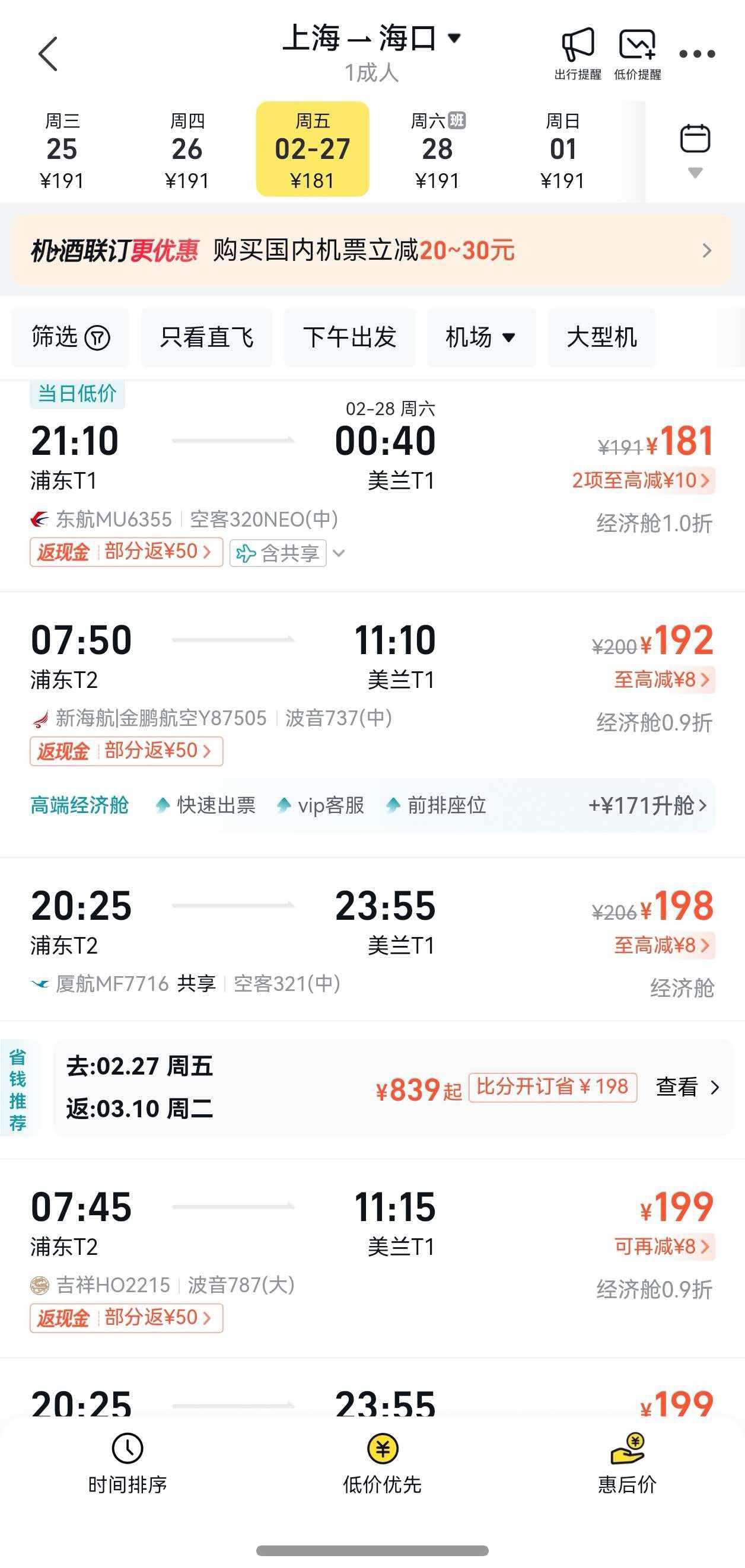
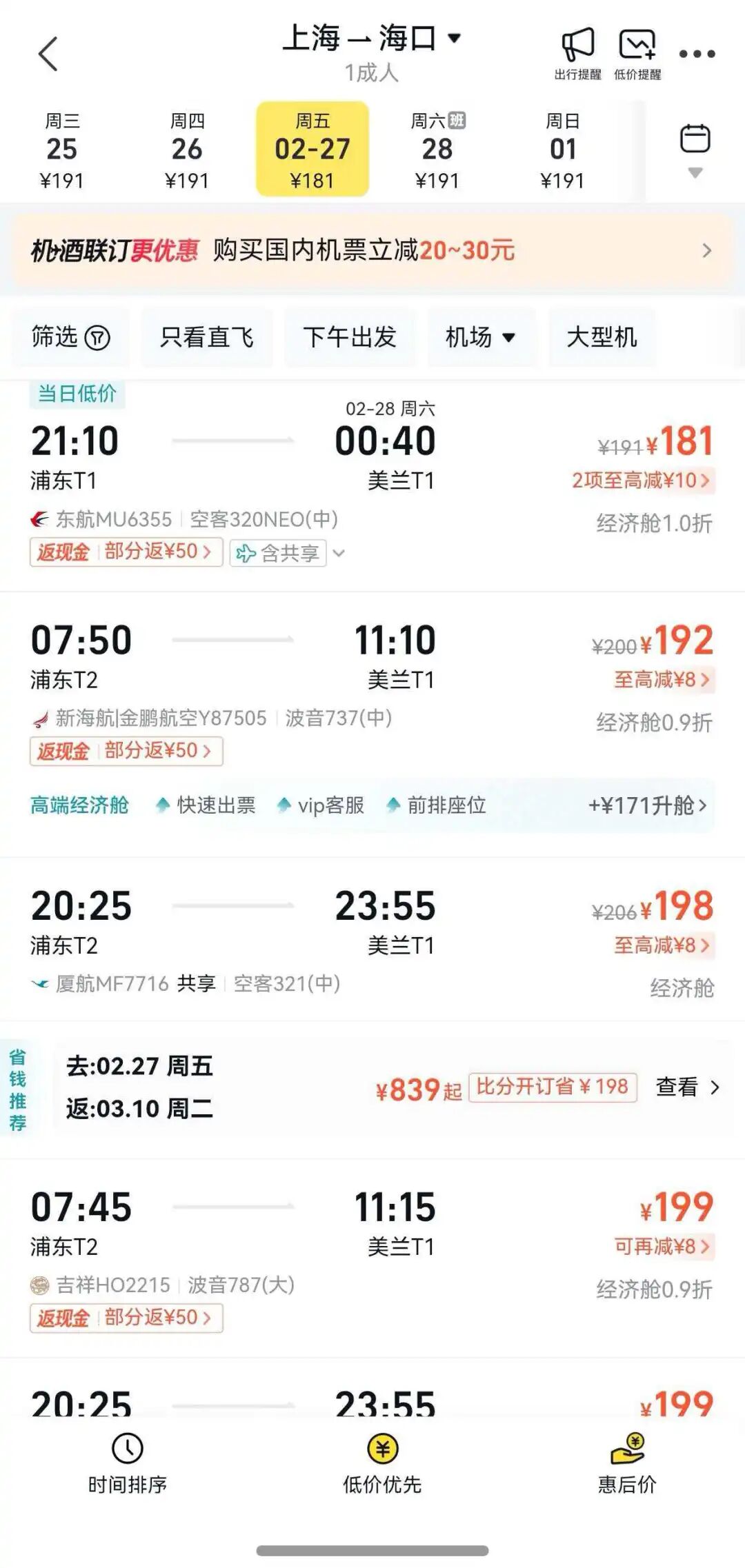
Group 1 - The core point of the article highlights a significant drop in domestic flight ticket prices following the Spring Festival, with average prices decreasing by approximately 13% compared to the previous year [1] - During the post-Spring Festival travel period, average ticket prices from major cities such as Beijing, Shanghai, and Guangzhou have decreased by about 30%, 35%, and 31% respectively [1] - Specific routes that saw substantial price reductions include Shanghai to Haikou and Sanya, with ticket prices falling below 200 yuan, and other routes like Beijing to Xi'an and Shanghai to Chengdu offering tickets around 300 yuan [1] Group 2 - Data from Qunar indicates that the average price of domestic flight tickets has dropped over 50% since peaking on February 23, with expectations for continued low prices until the end of March [1] - The number of domestic flight bookings during the post-Spring Festival period exceeded 18.4 million, showing a slight increase compared to the same period last year, while international flight bookings reached over 3.7 million, marking a 9% growth [10] - Popular travel destinations post-Spring Festival include Shanghai, Beijing, Chengdu, and Guangzhou, with Haikou also making it into the top 15 [10]
机票价格大跳水,上海飞三亚跌至200元
2 1 Shi Ji Jing Ji Bao Dao· 2026-02-25 12:32
节后出行机票大跳水了,上海到海口三亚的机票都不到200元了。 | ■■奥一奥上 | | | | | | --- | --- | --- | --- | --- | | 1成人 | | | | | | 周三 周四 周五 | | 周六 班 | 周日 | | | 25 26 02-27 | | 28 | 01 | | | ¥191 $181 | ¥191 | ¥191 | ¥191 | | | 机酒联订更优惠 购买国内机票立减20~30元 | | | | | | 筛选(1) 下午出发 机场▼ | 只看直飞 | | | 大型机 | | ヨ日低价 | | 02-28 周六 | | | | 21:10 | | 00:40 | | X101X 101 | | 浦东T1 | | 美兰T1 | | 2项至高减¥10> | | 《 东航MU6355 空客320NEO(中) | | | | 经济舱1.0折 | | 返现金 部分返¥50 > > 部状化公 | | | | | | 07:50 | | 11:10 | | ¥200 ¥192 | | 浦东T2 | | 美兰T1 | | 至高减¥8 > | | > 新海航 金鹏航空Y875 ...
节后错峰出游性价比更高 哪些路线最受欢迎
2 1 Shi Ji Jing Ji Bao Dao· 2026-02-25 12:32
春节假期过后,不少游客避开人流高峰,选择错峰出行,既提升了出游体验,也让节后旅游市场持续升 温。哪些旅游路线现在错峰出游性价比最高,更受游客们欢迎呢? (文章来源:21世纪经济报道) ...
吴猛:新技术重塑企业公关实践,AI改写“被看见”的底层逻辑
2 1 Shi Ji Jing Ji Bao Dao· 2026-02-25 12:30
Core Insights - The public relations and communication industry is undergoing a significant transformation driven by new technologies such as generative AI, big data algorithms, and user profiling analysis, marking a paradigm shift from the SEO era to the GEO era [1][5] - The application of new technologies is reshaping the role of public relations, allowing it to integrate more deeply into core business functions and decision-making processes [5][10] Group 1: Industry Transformation - The transition from traditional experience-driven functions to a technology and expertise-driven systematic approach is evident in corporate communication [5] - New technologies enable public relations to engage in product definition, market positioning, and user service, providing strategic insights based on user data [5][10] Group 2: Practical Changes - The most notable change is the reconstruction of content production and dissemination methods, moving from a centralized model to a more tailored, audience-specific approach [6] - AIGC technology allows for the precise adaptation of content while maintaining brand integrity, freeing professionals to focus on strategic aspects rather than repetitive tasks [6][7] Group 3: Data-Driven Decision Making - Algorithms and big data are redefining communication pathways, enhancing precision and efficiency in content distribution [8][9] - The integration of data analytics enables a more scientific approach to public relations, allowing for the tracking and optimization of communication effectiveness [9][10] Group 4: Professional Adaptation - Industry professionals should focus on maintaining core competencies in brand strategy, content creation, and crisis communication, which are irreplaceable by AI [11][12] - Emphasizing data application skills and a deep understanding of business operations will empower public relations to contribute to overall business growth [12]
粤企出海 广东“十四五”服务贸易实现翻番
2 1 Shi Ji Jing Ji Bao Dao· 2026-02-25 12:24
Group 1 - The conference focused on the theme of "Digital Economy and New Business Models in Trade," aiming to gather various forces to inject new momentum into the coordinated development of manufacturing and service industries [1]
韩国股市首次突破6000点!股市市值超越法国股市
2 1 Shi Ji Jing Ji Bao Dao· 2026-02-25 12:24
Group 1 - The South Korean stock market opened high and saw significant gains, with the KOSPI index surpassing 6000 points for the first time in history, closing at 6083.86 points, a rise of 1.91% [1] - The KOSPI index has accumulated a gain of over 44% since the beginning of the year, driven primarily by Samsung Electronics and SK Hynix, which have seen year-to-date increases of 70% and 66% respectively [1] - The total market capitalization of the South Korean stock market is approaching $3.8 trillion, surpassing that of France, despite South Korea's smaller economic size [1]
闻泰科技称正积极处置安世控制权事件,中国区业务较为稳健
2 1 Shi Ji Jing Ji Bao Dao· 2026-02-25 12:16
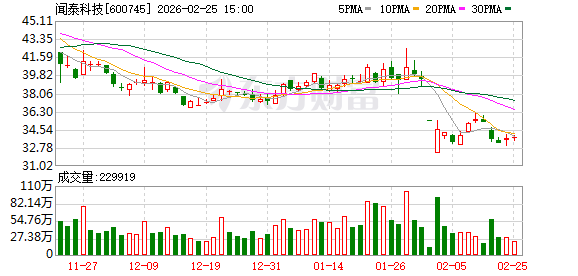
Group 1 - The core issue for the company is the control dispute over Anshi Semiconductor, which has caused significant market turbulence. The company is actively addressing this situation and maintaining strong communication with domestic clients [1] - The company is focusing on its main business and taking necessary legal actions to protect its rights regarding Anshi Semiconductor. The BIT (Bilateral Investment Treaty) claim will enter a communication phase until April 15 [1] - The company has faced challenges in its financial reporting due to the ongoing control issues with Anshi Semiconductor, leading to significant expected investment and asset impairment losses for the fiscal year 2025 [3] Group 2 - The company expressed disappointment over a recent ruling by the Amsterdam Enterprise Court, which did not restore its control over Anshi Semiconductor. The company plans to pursue all legal avenues to regain its governance rights [2] - The company plans to divest its ODM assets to Luxshare Precision in 2024, and has appointed different accounting firms based on its evolving business needs. The current auditor for the 2025 fiscal year is Yongcheng Accounting Firm [2] - The company anticipates that the ongoing situation with Anshi Semiconductor will complicate its accounting processes, particularly regarding asset impairment and goodwill [3]

闻泰科技称正积极处置安世控制权事件 中国区业务较为稳健
2 1 Shi Ji Jing Ji Bao Dao· 2026-02-25 12:15
Core Viewpoint - The company is actively addressing shareholder concerns regarding the control issue of Anshi Semiconductor and is focusing on its core business while taking legal measures to protect its rights [2][3]. Group 1: Company Response to Shareholder Concerns - At the first extraordinary shareholders' meeting in 2026, the company chairman, Yang Mu, stated that the company is actively handling the control issue of Anshi Semiconductor, which has caused significant market turbulence [2]. - The domestic business of Anshi Semiconductor is reportedly stable, with strong customer loyalty, and the company is in close communication with its clients [2]. - The company is optimizing production capacity at its Dongguan factory, with relevant equipment already in place [2]. Group 2: Legal and Financial Developments - The company is awaiting the communication period for the BIT (Bilateral Investment Treaty) claim, which can only be initiated on April 15 [2]. - The company expressed disappointment over a recent ruling by the Amsterdam Enterprise Court, which did not restore its control over Anshi Semiconductor and initiated an investigation into the company [2]. - The company plans to use all legal means to restore its legitimate control and governance rights over Anshi Semiconductor [2]. Group 3: Accounting and Financial Performance - The company explained the decision to change accounting firms twice in one year was based on the evolving business environment [3]. - For the fiscal year 2024, the company aims to divest its ODM assets to Luxshare Precision, leveraging the experience of Zhonghua Accounting Firm [3]. - Following the divestiture, the company's main business will shift to semiconductor operations, prompting the hiring of PwC Zhongtian for the 2025 audit [3]. - The company announced a significant expected loss due to investment losses and asset impairment related to Anshi Semiconductor, which will substantially impact its 2025 financial performance [3].
Cybercab量产在即,特斯拉把基本盘放上了赌桌
2 1 Shi Ji Jing Ji Bao Dao· 2026-02-25 12:12
Core Insights - Tesla's Cybercab has begun production, marking a significant step towards mass production of a fully autonomous taxi without traditional driving controls [1][3] - CEO Elon Musk asserts that the Cybercab will be priced below $30,000, despite previous doubts about achieving this price point [1] - The production ramp-up is set to start in April 2024, with a target of millions of units annually, showcasing an unprecedented development speed for Tesla [1][7] Production and Cost Structure - The Cybercab aims for an operational cost of $0.1 to $0.2 per mile (approximately ¥0.7 to ¥1.4 per kilometer), which is competitive with current energy costs [5] - Tesla projects a lifespan of 1 million miles (1.6 million kilometers) for the Cybercab, significantly exceeding typical vehicle lifespans [5] - The "Unboxed" manufacturing model will streamline production by using modular components, reducing complexity and costs by 67% [7][8] Market Potential and Challenges - Tesla anticipates an annual production capacity of 2 million units by 2026, with long-term goals of reaching 5 million units, which may exceed market demand for taxis and ride-sharing vehicles [8][9] - The company faces regulatory hurdles, as current U.S. laws require traditional vehicle controls, limiting the ability to deploy the Cybercab at scale [10][11] - Tesla has not yet applied for necessary regulatory exemptions, which could hinder its ability to operate the Cybercab on public roads [13][14] Regulatory Environment - The automotive industry is heavily regulated, and Tesla's innovative approach may clash with existing safety standards [10][12] - Recent legislative discussions in the U.S. could potentially increase the exemption limit for non-traditional vehicles, but this may not fully address Tesla's production ambitions [15][16] - Tesla is actively engaging with lawmakers to create a favorable regulatory environment for the Cybercab [17] Long-term Considerations - The introduction of the Cybercab may necessitate adjustments to Tesla's business strategy in response to regulatory constraints [17][18] - While the modular design may lower production costs, it could lead to higher maintenance costs, which Tesla aims to manage through specialized service networks [18] - The success of the Cybercab will depend on demonstrating superior safety capabilities compared to human drivers to mitigate liability and insurance costs [18]