Jing Ji Guan Cha Bao

Search documents
董峰:资产端数字化是RWA的本质特征
Jing Ji Guan Cha Bao· 2025-10-31 11:42
Core Viewpoint - Shenzhen Qianhai Hesu Technology Co., Ltd. and Zhengding Shumao Center launched the first fully closed-loop RWA product in mainland China, the eRWA (enhanced Real World Asset) brown sugar chain, aiming to provide a replicable case and standard for the digital transformation of industries [1][5]. Group 1: Product Launch and Features - The eRWA brown sugar chain product is based on the digitalization of physical assets, specifically in the agricultural sector, utilizing advanced technologies such as drones and algorithms for data collection [5]. - The product emphasizes the importance of strict one-to-one mapping between physical assets and their digital representations, distinguishing it from other RWA products that may rely on vague or virtual rights [7][8]. - eRWA products are characterized by their ability to be fully digitalized and must possess independent, usable value after physical segmentation, ensuring they can generate actual benefits in both industrial and consumer contexts [6][7]. Group 2: Market Context and Differentiation - The eRWA product is positioned as a pre-sale of physical production capacity rather than a tokenized financing tool, marking a significant distinction from many existing RWA products that are based on the credit of the issuing entity [8]. - The launch of eRWA aims to create a complete commercial closed loop within China, avoiding the complexities and costs associated with cross-border transactions that many current RWA products face [8][9]. - The product seeks to enhance the connection between production and consumption, thereby optimizing resource allocation and improving market efficiency through digitalization [9][10]. Group 3: Broader Implications and Future Vision - The introduction of eRWA is seen as a step towards the digitalization of the asset side of the economy, potentially transforming the modern financial system by eliminating the need for intermediaries in asset-funding matching [10][13]. - The initiative aligns with China's goal of surpassing the income threshold of $30,000 per capita by 2035, emphasizing the need for continuous industrial upgrading and technological innovation [11][12]. - The eRWA product is viewed as a pioneering effort in the Web3 space, aiming to bind digital assets with various stakeholders, thus representing a significant commercial innovation [13][14].
低空经济从“景观体验”迈向“产业集群”
Jing Ji Guan Cha Bao· 2025-10-31 10:50
Core Viewpoint - The low-altitude economy in Lianyungang's Haizhou District is transitioning from "scenic experience" to "industrial cluster," enhancing high-quality development through the establishment of specialized operational entities, diverse application scenarios, and targeted professional talent cultivation [1] Group 1: Low-altitude Economy Development - Haizhou District has invested in 500 high-performance drones and formed a drone performance cluster with over 1,000 drones, launching regular drone light shows and aerial shadow performances, significantly boosting local tourism and consumption [1] - The establishment of Lianyungang Low-altitude Industry Investment and Operation Co., Ltd. has led to the creation of a low-altitude security laboratory, integrating resources from various disciplines to enhance the low-altitude security system [1] Group 2: Logistics and Urban Management - The opening of the first cross-province drone logistics route has reduced delivery time for fresh seafood from one hour to thirty minutes, demonstrating the efficiency of drone logistics [2] - Drones are being utilized for urban management tasks, such as high-rise building cleaning, achieving a tenfold increase in efficiency and a 70% reduction in water usage compared to traditional methods [2] Group 3: Talent Development - The "order-based" training model at the Jindouyun Drone Training Base has enrolled 121 students, achieving a pass rate of over 95%, ensuring a steady supply of skilled professionals for the low-altitude economy [3]
国家发改委等五部门印发《深化智慧城市发展推进全域数字化转型行动计划》
Jing Ji Guan Cha Bao· 2025-10-31 09:58
Core Viewpoint - The article discusses the "Action Plan for Deepening Smart City Development and Promoting Comprehensive Digital Transformation," aimed at enhancing urban governance and improving the quality of life through data-driven initiatives and digital infrastructure development [1][2]. Summary by Sections Overall Requirements - The plan is guided by Xi Jinping's thoughts and aims to integrate data into urban economic and social development, focusing on building a digital foundation and enhancing urban governance by 2027 [3]. Implementation of Smart Governance - Establish a smart governance system through integrated management and data sharing, enhancing capabilities in monitoring, decision-making, and emergency management [4]. - Develop a risk monitoring and early warning system for urban safety, utilizing advanced technologies for disaster prevention and response [5]. - Improve public service efficiency by integrating various governance channels and enhancing community engagement [5]. Digital Quality of Life Initiatives - Promote integrated public services through digital platforms, reducing processing times and improving accessibility in healthcare and education [6]. - Foster innovative digital lifestyles by enhancing cultural and recreational services through technology [7]. Economic Empowerment through Digitalization - Leverage urban data resources to stimulate economic growth and innovation, supporting the development of data-driven industries [8]. - Encourage the transformation of underutilized spaces into innovation hubs, fostering collaboration between traditional and emerging industries [9]. Urban Digital Renewal - Accelerate the digital transformation of urban infrastructure, focusing on smart sensing and management of essential services [10]. - Support the development of smart communities with enhanced digital services and community engagement [11]. Foundation for Digital Transformation - Build a robust digital infrastructure that supports data sharing and integration across various platforms [12]. - Establish a comprehensive data resource system to enhance public data management and accessibility [13]. Reform and Innovation in Governance - Innovate governance structures to facilitate data-driven decision-making and improve inter-departmental collaboration [14]. - Develop a standardization framework to guide the digital transformation process across cities [14]. Implementation and Coordination - The National Data Bureau will oversee the implementation of the action plan, ensuring collaboration among various departments and local governments [15].


三十年后,我们还需要《新世纪福音战士》吗?
Jing Ji Guan Cha Bao· 2025-10-31 09:58
Core Insights - The article discusses the cultural impact and enduring relevance of "Neon Genesis Evangelion" (EVA), highlighting its exploration of human emotions and existential themes over the past thirty years [1][2][3] Group 1: Historical Context - "Neon Genesis Evangelion" emerged during a time of social upheaval in Japan, marked by economic collapse and a series of disasters that shattered the illusion of safety and order [2][6] - The series reflects the collective sense of loss and anxiety experienced by Japanese youth in the 1990s, addressing themes of isolation and the struggle for identity in a rapidly changing society [5][6] Group 2: Themes and Characters - The protagonist, Shinji Ikari, represents a departure from traditional heroic narratives, embodying reluctance and emotional turmoil rather than strength and confidence [7][8] - The "Human Instrumentality Project" serves as a metaphor for the desire to eliminate individual differences in pursuit of a harmonious existence, raising questions about identity and autonomy [8][9] Group 3: Modern Relevance - The article draws parallels between the themes of EVA and contemporary issues such as algorithm-driven social interactions and the commodification of emotions, suggesting that the quest for understanding has evolved but remains fraught with challenges [9][10] - The concept of "self-exploitation" in modern society is highlighted, where individuals feel pressured to constantly improve and produce, reflecting a shift in the nature of personal responsibility and societal expectations [11][12] Group 4: Cultural Impact - EVA has influenced the animation industry by integrating complex psychological themes into storytelling, moving beyond mere entertainment to address deeper emotional and social issues [17][18] - The series has opened up discussions about mental health and personal identity, resonating with audiences who grapple with similar feelings of isolation and confusion in today's digital age [16][18]
日赚超6亿,“寿险一哥”中国人寿是怎么做到的?
Jing Ji Guan Cha Bao· 2025-10-31 06:43
Core Insights - China Life Insurance Company reported a strong growth in new business value by 41.8% for the first three quarters of 2025, with net profit exceeding 167.8 billion yuan, marking a 60.5% increase year-on-year [1][2] Group 1: Financial Performance - The company achieved a daily profit of 614 million yuan during the first three quarters [2] - Total premium income reached 669.645 billion yuan, reflecting a year-on-year growth of 10.1%, with renewal premiums at 451.611 billion yuan and new single premiums at 218.034 billion yuan, both showing positive growth [4][5] - Total investment income for the first three quarters was 368.551 billion yuan, an increase of 40% compared to the same period in 2024, with an investment yield of 6.42% [6] Group 2: Business Strategy - The significant increase in net profit is attributed to the diversification of liability-side business and enhanced investment income from the asset side [3] - The company has focused on floating income products, which have increased their share in first-year premiums by over 45 percentage points compared to the previous year, helping to lower liability costs [6] - The company has actively invested in the equity market, which has contributed to the overall increase in investment income, coinciding with a 15.84% rise in the Shanghai Composite Index [6]

长江经济带如何迈向“十五五”?统一市场与绿色转型成关键
Jing Ji Guan Cha Bao· 2025-10-31 06:43
Core Insights - The Longjiang Economic Belt is crucial for China's high-quality development and modernization, spanning 11 provinces and accounting for over 40% of the national economy [4][7] - The upcoming "15th Five-Year Plan" emphasizes sustainable economic growth, ecological protection, and the establishment of a unified market [5][6] Group 1: Ecological Protection and Economic Growth - During the "14th Five-Year Plan," the Longjiang Economic Belt achieved significant ecological improvements, with water quality maintaining a Class II standard for five consecutive years and a notable increase in aquatic biodiversity [2] - The shift from a "shortage" to an "excess" economy necessitates a focus on consumption and demand expansion, alongside investment optimization [2][5] Group 2: Unified Market and Regional Coordination - The construction of a unified market in the Longjiang Economic Belt is essential for integrating into the new development framework, although challenges such as institutional barriers and market efficiency remain [3] - The Longjiang Economic Belt connects major urban clusters, contributing over 40% to the national population and GDP, and is poised to become China's fourth economic growth pole [3][4] Group 3: Strategic Development and Innovation - The strategic focus for the Longjiang Economic Belt is shifting from physical connectivity to functional collaboration and value co-creation, with an emphasis on high-quality development [4] - Key recommendations for the "15th Five-Year Plan" include enhancing transportation networks, ecological governance, and public service collaboration [4][6] Group 4: Future Outlook and Challenges - The "15th Five-Year Plan" is seen as a critical period for achieving sustainable economic growth of around 5% annually, with a focus on improving consumer income and employment systems [5][6] - The Longjiang Economic Belt is expected to evolve into a more ecologically friendly and technologically advanced economic corridor, addressing the balance between development and environmental protection [6][7]
宏盟集团回应淘汰DDB厂牌
Jing Ji Guan Cha Bao· 2025-10-31 05:57
Core Insights - The company is evaluating its agencies in preparation for the completion of the $13.5 billion acquisition of Interpublic Group (IPG) and has not confirmed or denied reports about retiring the DDB brand [1] - There are speculations about integrating creative businesses among three global networks—BBDO, TBWA, and McCann, which may lead to DDB no longer existing as an independent global brand [1][2] - The company is undergoing a rigorous process to find the best solutions that meet both corporate and client needs [1] Integration Process - DDB, founded in 1949, is one of the three major creative agency networks under the company, alongside BBDO and TBWA [2] - DDB has begun integrating parts of its business, including the unification of its North American operations under new leadership [2] - In 2023, DDB New York merged with adam&eveNYC, rebranding as adam&eveDDB, and the company previously unified its creative networks into Omnicom Advertising Group (OAG) to streamline its brand portfolio [2] Creative Legacy of DDB - DDB operates in over 40 markets globally and has subsidiaries like adam&eveDDB in London, which have received numerous industry awards [3] - The brand has produced iconic advertisements, such as Volkswagen's "Think Small" and McDonald's "You Deserve a Break Today," solidifying its position in the advertising industry [3] - Recently, DDB faced criticism for its creative output, including the withdrawal of a Grand Prix award at the Cannes Lions International Festival due to the use of AI in an advertisement [3] Acquisition and Integration Outlook - The acquisition of IPG is expected to be completed by the end of November 2023, making the company the largest advertising holding company globally, surpassing Publicis and WPP [4] - The deal is anticipated to generate approximately $750 million in cost synergies [4] - The company is in the final stages of the acquisition, awaiting regulatory approval from the European Union, which is the last market to review the deal [4]


重庆上线全国首个数字分保平台,首批项目辐射11省
Jing Ji Guan Cha Bao· 2025-10-31 05:05
Core Insights - The launch of China's first digital reinsurance platform in Chongqing marks a significant advancement in the guarantee industry, utilizing technologies like digital encryption and biometrics to enhance operational efficiency and standardization [2][3] Group 1: Platform Overview - The digital reinsurance platform was developed by Chongqing Three Gorges Guarantee Group and officially launched on October 29, 2023 [2] - The platform facilitates online publishing, application, electronic signing, and comprehensive management of reinsurance products, aiming to upgrade the guarantee industry [2] - The platform has already aggregated 164 reinsurance projects worth 22.9 billion yuan, covering 14 districts in Chongqing and extending to 11 provinces nationwide [2] Group 2: Market Impact - The platform is expected to enhance financial accessibility for local market entities by breaking down regional and informational barriers, creating a collaborative guarantee ecosystem [2][3] - Strategic cooperation agreements worth 55 billion yuan have been signed, with an additional 12.4 billion yuan in intended reinsurance amounts [2] Group 3: Industry Context - The launch is part of a broader reform in Chongqing's state-owned enterprises, with the merger of three major guarantee institutions forming the Chongqing Three Gorges Guarantee Group, which now has an asset scale of 40 billion yuan and a guarantee balance exceeding 250 billion yuan [3] - The integration is seen as a key achievement in Chongqing's state-owned enterprise reform, with over 20 billion yuan invested in the guarantee sector [3] Group 4: Future Directions - Chongqing Three Gorges Guarantee Group aims to innovate service models and optimize platform functions to create a more inclusive and growth-oriented collaborative ecosystem [4] - The group intends to enhance its core competitiveness and contribute to the construction of a western financial center in China [4]
低情商家庭和孩子较劲斗狠,高情商家庭都做好了这两件事
Jing Ji Guan Cha Bao· 2025-10-31 04:19
Core Viewpoint - The article emphasizes the importance of emotional intelligence in parenting, highlighting that high emotional intelligence leads to better communication and cooperation between parents and children, while low emotional intelligence results in conflict and resistance [3][19]. Group 1: Parenting Styles - Authoritative parenting, characterized by warmth and firmness, fosters self-discipline, responsibility, and problem-solving abilities in children [3]. - Authoritarian parenting, marked by control and commands, often leads to rebellion and poor emotional outcomes in children [12][13]. - The article illustrates a case of a professor whose authoritarian style drove his son away, demonstrating the negative impact of high-pressure parenting [4][10]. Group 2: Effective Communication - Parents should avoid using a commanding tone, as it creates resistance in children; instead, a collaborative approach is more effective [15][19]. - The article provides an example of a parent who shifted from a controlling role to a supportive one, resulting in improved cooperation with their child [15][16]. - High emotional intelligence in parents allows for better understanding and respect for children's autonomy, leading to a more harmonious relationship [19][31]. Group 3: Strategies for Improvement - Treating children as equals and involving them in family decisions can significantly boost their confidence and strengthen parent-child relationships [23][26]. - Parents should focus on winning the child's heart rather than merely asserting authority, fostering genuine cooperation [30][31]. - The article suggests that effective parenting is not about exerting control but about guiding children with respect and understanding, allowing them to explore and grow independently [32].
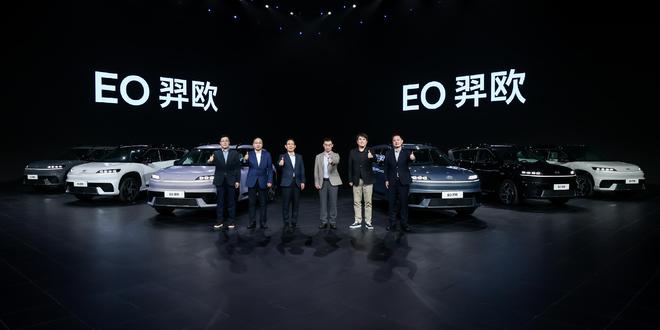
北京现代启动“智启2030计划”,以“新质力”EO羿欧重塑新能源时代竞争力
Jing Ji Guan Cha Bao· 2025-10-31 03:52
Core Viewpoint - Beijing Hyundai is entering the "smart electric era" with the launch of its first pure electric SUV, EO Yiyou, and the announcement of the "Smart Start 2030 Plan," aiming to transform its strategy and product offerings in the new energy vehicle market [2][6][22]. Group 1: Strategic Initiatives - The "Smart Start 2030 Plan" aims for a sales target of 500,000 units over the next five years, focusing on new products, local R&D, partnerships, exports, services, and social responsibility [6][23]. - The plan emphasizes a dual-path development strategy of "fuel and electricity" with a goal to launch 20 new products by 2030, including 13 new energy models [8][23]. - The company is committed to localizing R&D and integrating AI technology to enhance user experience and product performance [9][10]. Group 2: Product Launch and Features - EO Yiyou is positioned as a "new quality pure electric SUV," reflecting the brand's commitment to user-centric design, technological strength, and quality assurance [11][20]. - The vehicle features a sleek design inspired by nature, with a focus on comfort and practicality, including a soft-touch interior and ample storage space [13][15]. - EO Yiyou is built on the E-GMP platform, ensuring high safety standards and performance, with options for a four-wheel drive version delivering a total power of 233 kW [16][18]. Group 3: Market Positioning and Future Outlook - The launch of EO Yiyou sets a benchmark for joint venture brands in the new energy sector, offering high-quality features at a competitive price range of 119,800 to 149,800 yuan [2][20]. - The company aims to leverage its global manufacturing capabilities and local partnerships to enhance its competitiveness in the Chinese market [10][22]. - As Beijing Hyundai progresses with the "Smart Start 2030 Plan," it seeks to redefine its brand competitiveness and establish a new model for joint venture transformation in the new energy vehicle landscape [23].