Jing Ji Guan Cha Bao

Search documents
第十届中国北京国际美术双年展
Jing Ji Guan Cha Bao· 2026-01-02 23:37
Group 1 - The 10th China Beijing International Art Biennale is being held at the Beijing Exhibition Center with the theme "Symbiosis" and the purpose of "building a community with a shared future for mankind" [1] - The exhibition features over 600 top art pieces presented by artists from more than 100 countries and regions, showcasing new developments in contemporary painting and sculpture [1] - Contemporary art new categories represented by digital, video, installation, and new media continue to explore new ideas in global art creation, enhancing the discourse power and leadership of Chinese contemporary art on the world stage [1] Group 2 - The exhibition is scheduled to take place from December 29, 2025, to January 28, 2026, at the Beijing Exhibition Center [2]
光伏“反内卷”成效几何
Jing Ji Guan Cha Bao· 2026-01-02 06:02
Core Viewpoint - The photovoltaic (PV) industry, known for its cost reduction achievements, is expected to shift towards price increases in 2026 after a period of intense competition and low margins [2][3]. Group 1: Industry Developments - The establishment of the "Silicon Material Capacity Integration Acquisition Platform" by Guanghe Qiancheng aims to consolidate silicon material capacity and stabilize production levels to drive up silicon prices [3]. - As of December 17, 2025, the prices of photovoltaic modules have started to rise due to increases in commodity prices, including silver and silicon, along with production cuts by module manufacturers [3]. - Current silicon prices have risen to approximately 52,000 yuan per ton, with expectations that they could reach between 65,000 to 70,000 yuan per ton due to the capacity integration plan [3]. Group 2: Market Dynamics - The photovoltaic industry is undergoing a "reverse involution" strategy, with leading companies potentially prioritizing price over volume to establish new self-discipline agreements [3]. - The efficiency of photovoltaic modules is becoming a key standard for capacity replacement, with lower efficiency modules being phased out in favor of those with higher efficiency [4]. - The release of Document No. 136 in 2025 has restructured profit distribution across the industry chain, shifting the burden of consumption costs to photovoltaic power stations [4]. Group 3: Future Outlook - The new installations of photovoltaic systems in 2025 are expected to show a "pulse-like" growth pattern, with significant installations concentrated in the first half of the year, followed by a decline in the second half [5]. - Historical parallels are drawn to the 2018 policy changes that led to a sharp decline in new installations, indicating that policy shifts can create short-term challenges but may lead to new business models [5]. - Recommendations for photovoltaic developers include exploring domestic green electricity potential and promoting the use of green hydrogen, ammonia, and alcohol applications [5][6].


越聪明的孩子越难带?脑科学:若娃有这4种“烦人”表现,你就偷着乐吧
Jing Ji Guan Cha Bao· 2026-01-02 01:57
(原标题:越聪明的孩子越难带?脑科学:若娃有这4种"烦人"表现,你就偷着乐吧) 这时,你着急崩溃,觉得孩子烦人、不听话,羡慕别人家的孩子安安静静、乖巧懂事。 脑科学相关研究表明: 如果你娃有下面这4种表现,偷着乐就对了! 01 问题太多,话痨 曾看到一个搞笑漫画: 虽是笑话,但日常生活中,孩子那些永无止境的"为什么",从早上睁眼开始,嘴巴就没停过的话痨娃, 确实常常让父母头疼不已。 面对每天上几十个问题,有的没的的话,家长经常被问得哑口无言、口干舌燥、头皮发麻。 脑科学研究表明: 孩子爱提问、话多,本质是大脑神经元高速连接的表现。 每个"为什么"都是他们认知世界的一个节点,帮助他们理解这个复杂的世界。当孩子提问时,他们不仅 在寻求答案,更在训练自己的思维能力和观察能力。 提问是孩子构建世界观的方式。 养孩子,你是否经历过这样被"逼疯"的时刻? 叫3遍吃饭了,他头也不抬,盯着玩具能玩1小时; 让穿外套,他偏说不冷,跟你犟到底; 说他一句,他能搬出来十句理由反驳你; 去超市像脱缰野马,东看西摸,根本拉不住…… 甚至哀叹:为啥我的娃这么难带? 今天我想告诉你 ,千万别这么想,你反而应该高兴。 为啥呢? 孩子的这些" ...
向海而行——中国南海西北陆坡海域深海考古特展
Jing Ji Guan Cha Bao· 2026-01-02 00:17
Core Viewpoint - The exhibition "Sailing Towards the Sea: Special Exhibition of Deep-sea Archaeology in the Northwest Slope of the South China Sea" showcases the latest achievements in deep-sea archaeology, featuring the significant discoveries of two shipwrecks from the Ming Dynasty, highlighting their historical, scientific, and artistic value [1][2]. Group 1 - The shipwrecks, identified as No. 1 and No. 2 in the northwest slope of the South China Sea, were discovered in October 2022 at a depth of approximately 1500 meters, dating back to the Zhengde and Hongzhi periods of the Ming Dynasty [1]. - The archaeological findings from these shipwrecks are considered a milestone in China's underwater archaeology and have been selected as one of the "Top Ten Archaeological Discoveries of 2023" [1]. - The exhibition features 377 artifacts from the shipwrecks, utilizing innovative display technologies and interactive elements to engage visitors in the exploration of the maritime Silk Road's role in cultural exchange during the Ming Dynasty [2]. Group 2 - The exhibition emphasizes the complexities and challenges of deep-sea archaeology, showcasing advanced technologies and equipment, such as the "Deep Sea Warrior" manned submersible, and the harsh conditions of high pressure, low temperature, and darkness [2]. - It also highlights the importance of artifact preservation, demonstrating the onsite operations and laboratory processes involved in protecting these historical items [2]. - The exhibition is set to run until March 15, 2026, allowing ample time for public engagement and education on deep-sea archaeological practices [3].
数字生活“不可承受之重”
Jing Ji Guan Cha Bao· 2026-01-01 15:22
这一回应解释了微信安装包变大的客观逻辑。马斯克就一直羡慕微信之"重",他多次赞叹:"在中国, 你可以只用微信生活。"当一个应用足以支撑十亿人海量的数字生活需求时,它本身已演变为一种数字 基础设施。 从更深层次看,这一现象也折射出:随着移动互联网的快速发展,手机、应用及数据在日常生活中日益 重要,由此引发的一系列连锁反应。人类的数字生活正变得越来越"沉重"。 不仅仅是微信,我们日常使用的几乎所有应用,都在以肉眼可见的速度变重、变大。以至于手机硬件的 升级,都难以完全抵消应用膨胀带来的负担。臃肿的软件不断挤占手机空间,拖慢运行速度,最终损害 了用户的体验。 寄望于"微信们"主动大幅"瘦身"不太现实。因为无论从技术还是市场角度分析,其体积的膨胀都具有一 定的必然性。时至今日,那些初期功能单一的应用工具,已演变为集聊天、支付、游戏、社交、媒体、 办公协作等功能于一体的超级应用和超级入口。从技术上看,每一次功能迭代都意味着更多代码、逻辑 和资源需要被打包进安装包;从市场角度看,更丰富的功能意味着更强的竞争力——在诸多厂商求超级 入口而不得的当下,已占据优势的"微信们"很难主动做减法。相反,未来或许还会有更多功能被整合进 ...

2026,人形机器人奇点将至?| 小白商业观
Jing Ji Guan Cha Bao· 2026-01-01 15:16
这种能力的飞跃,让市场意识到,人形机器人不是一种特殊的机器,而是有望成为下一代人机交互的新 端口。 人形机器人之所以被设计成人的样子,核心逻辑在于我们的社会基础设施是以人为主体的延伸。从楼梯 扶手到厨房橱柜,全是为人类身体比例量身定制的。这意味着人形机器人天然具备进入家庭的物理基 础。从这个角度说,相比于我们过去理解的传统机器人,人形机器人最大的价值,恰恰就在于它是人的 形态。 陈白 | 文 具身智能无疑是2025年全球科技界最火爆的赛道。从今年年初宇树机器人登上春晚舞台,到如 今机器人创业公司如雨后春笋般涌现,机器人似乎真的要从科幻走进现实了。 根据TrendForce(集邦咨询)日前发布的趋势预测,2026年将成为人形机器人迈向商用化的关键元年, 全球出货量有望突破5万台大关,年度增长超过7倍。 这一数字在传统制造业眼中或许并不惊人,但对于一个尚处于襁褓之中的高精尖产业而言,它标志着人 形机器人正式从实验室的"精密玩具"和发布会上的"视觉奇观",跨入了以AI为驱动、以应用为核心的产 业新阶段。 回顾2025年,围绕具身智能曾出现的路线之争与价值质疑,最具代表性的莫过于以朱啸虎为代表的风险 投资人对人形机器 ...

前瞻2026:全新的大周期正在开启
Jing Ji Guan Cha Bao· 2026-01-01 07:34
Group 1 - The core theme for 2026 is characterized by uncertainty and possibility, driven by geopolitical dynamics and technological advancements, particularly in AI [2][3] - The AI bubble may burst, similar to past technological waves, but the long-term evolution of AI remains unchanged as it is still in its early stages [2] - The first cohort of AI Native graduates in 2026 will face significant workplace transformations as AI replaces entry-level jobs, providing insights into the future of work [2] Group 2 - The concept of "rebalancing" describes the shift from Western dominance to a more equitable global power structure, particularly between the US and China [7] - The G2 relationship between the US and China is crucial, as both countries can learn from each other while navigating their respective economic challenges [7][8] - The global perception of Chinese innovation is changing, with foreign companies increasingly recognizing the value of China's technological advancements [8] Group 3 - The era of creativity is emerging as AI takes over repetitive tasks, prompting organizations to rethink the value of human contributions [10] - Key human attributes such as intuition, imagination, emotion, and common sense will become increasingly valuable in the AI-driven workplace [10][11][12][13] - The focus will shift from knowledge itself to the ability to transform knowledge into insights and creativity [14] Group 4 - The attention economy is being disrupted by AI, which is changing how information is accessed and consumed, leading to a re-evaluation of business models [16][17] - AI is expected to streamline processes, reducing the time spent on searching for information and products, thus altering the dynamics of consumer engagement [16][17] - New technological standards are emerging to facilitate AI interactions, shifting the focus from user attention to efficient problem-solving [18] Group 5 - A "relativistic world" is emerging, emphasizing development over security and the importance of human exploration in an AI-dominated landscape [19][20] - The value of different types of capital (financial, natural, human, and social) will fluctuate, impacting economic growth and development strategies [21][22] - The rise of social capital, characterized by trust and community, will become increasingly important as AI handles standardized tasks [22] Group 6 - The dual-speed economy is a significant issue in both the US and China, where technological sectors are thriving while traditional sectors face stagnation [23][24] - In the US, economic growth is concentrated among elites in tech, while ordinary citizens experience rising living costs and stagnant wages [23][24] - China's economic challenges are compounded by structural issues, including a sluggish domestic market and pressures on consumer confidence [24][25] Group 7 - The transition to a stock economy signifies a shift from growth-driven to capability-driven economic dynamics, where opportunities become more differentiated [25][26] - The need for policy focus on service sector reforms and stable job creation is critical in addressing the dual-speed economy [25][26] - The future will require a reevaluation of human capital development in light of AI's impact on labor markets and job structures [26] Group 8 - The cyclical nature of economic phases suggests that understanding past growth patterns can inform future strategies in a changing global landscape [27][28] - The upcoming economic cycle will necessitate embracing AI-driven opportunities while navigating geopolitical uncertainties [28][29]

看见所有为改变而努力的人
Jing Ji Guan Cha Bao· 2026-01-01 05:36
我们看见所有为改变而努力的人们。他们和我们一样,却可能比我们多一些勇气和执拗。每一次打破常规的突围,每一次为公平公正的呐喊,甚至每一次 公开表达的欢喜和愤怒,都可能让我们的世界变得更好一些。 经济观察报的2025年以年终特刊《我们的四分之一世纪》画上了句号。我们与曾经的新闻当事人重逢,试着追寻高光过后的寻常。当一个个熟悉或陌生的 名字重新还原成有血有肉的人,个体记忆就汇聚成四分之一世纪的岁月交响。 我们希望看见更远的世界。当现实被"内卷""躺平"这样的词汇填充,当不确定性弥漫,或许正是企业家精神闪耀之时。每一个时代都有属于自己的商业英 雄,但是潮水总会退去,风口也时时改变,基业长青由此成为很多"弄潮儿"无法企及的彼岸。每一代雄心勃勃的企业家终将见证时间的魔法。无论成功还 是失败,都隐藏着商业文明跃迁的密码。 我们希望看见统计数据背后那些真实的人。一旦习惯于在"三驾马车"的框架中谈论增长,就很容易忘记这样的常识:增长的终极动力无非是老百姓对"好 日子"的渴望。当我们将增长视为物的堆积时,就可能忽视了每个普通人奋斗的意义。在起伏的增长曲线背后是亿万人的步履不停。正是对美好生活的向 往,使卸去枷锁的他们成为奇迹的真 ...

陈林:“三位一体”合作经济改革实践者|我们的四分之一世纪
Jing Ji Guan Cha Bao· 2026-01-01 04:32
Core Viewpoint - The article discusses the evolution and significance of the "three-in-one" cooperative economic model in rural finance, highlighting its historical context, challenges, and ongoing relevance in addressing rural financing issues in China [1][2]. Group 1: Historical Context and Development - In April 2005, Chen Lin initiated the "three-in-one" cooperative economic reform in Ruian, Zhejiang, focusing on integrating production, supply, and credit systems to address rural financing challenges [3][4]. - The Ruian Rural Cooperative Bank was established in 2005, transitioning from a credit cooperative, which faced governance issues due to unclear ownership of member shares [3]. - By 2006, the "three-in-one" concept was formally adopted in Ruian, leading to the establishment of the Ruian Rural Cooperative Association, the first county-level comprehensive rural cooperative organization in China [4][5]. Group 2: Implementation and Expansion - The reform model gained recognition, with the Ruian cooperative model being included in national governance innovation achievements by 2014, and later incorporated into national rural reform pilot zones [8]. - Chen Lin emphasized the importance of a cooperative mechanism to complement rather than replace traditional banking, aiming to reduce costs and improve access to finance for rural communities [5][6]. - By 2009, the cooperative association had over 10,000 members, demonstrating the model's success in expanding financial access in rural areas [6]. Group 3: Challenges and Ongoing Issues - Despite initial successes, the model faced challenges post-2007, including regulatory caution from financial authorities and a slowdown in reform progress in some regions [7][9]. - The emergence of funding mutual aid societies has been beneficial for rural financing, but these organizations face increasing regulatory pressure and uncertainty regarding their legal status [9][10]. - Chen Lin argues that the core issue is the unclear institutional positioning of rural cooperative finance, which has led to a "one-size-fits-all" regulatory approach that may undermine the sustainability of these financial models [10][11].
L3只是过渡?小鹏Robotaxi与L4同源,中国车企弯道超车倒计时
Jing Ji Guan Cha Bao· 2026-01-01 02:11
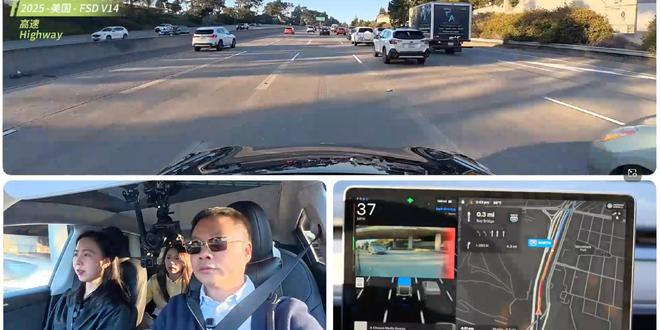
Core Insights - Physical AI is emerging as a new benchmark for assessing the core competitiveness of global tech companies, marking a shift from digital algorithm competition to real-world interactions [2][4] - The competition in autonomous driving, a key battleground for AI and the physical world, is characterized by a bipolar development trend led by the US and China [4][20] Industry Developments - Xiaopeng Motors' CEO He Xiaopeng plans to retest Tesla's FSD V14 in the US in December 2025, highlighting a collaborative dialogue between leading tech firms [2][3] - The second-generation VLA model from Xiaopeng is set to enter mass production, transforming industry consensus into practical momentum for change [3][20] Competitive Landscape - The competition in the physical AI sector is defined by a consensus on technology routes, with Tesla focusing on a pure vision approach and Xiaopeng developing a full-stack self-research system [4][10] - Both companies are moving away from the contentious L3 transitional phase, aiming for L4 capabilities directly, which reflects a collective understanding of the limitations of L3 [13][20] Technological Innovations - Xiaopeng's second-generation VLA model eliminates the language translation step, allowing for direct generation of driving commands from visual signals, significantly enhancing response speed and decision-making accuracy [8][10] - The model's training data volume reaches 100 million clips, equivalent to 65,000 years of human driving experience, enabling it to handle complex scenarios effectively [17][18] Market Positioning - Xiaopeng's full-stack self-research system creates a competitive barrier, allowing for rapid iterations and deployment of advanced models, with a cloud-based model supporting 72 billion parameters [8][18] - The unique challenges of Chinese road conditions have become a strategic asset for local companies, enhancing their AI capabilities and providing a rich training environment [17][20] Future Outlook - 2026 is projected to be a pivotal year for Xiaopeng, with plans to launch L4-level vehicles and Robotaxis, positioning the company as a key player in defining the next generation of AI paradigms [20] - The collaboration and competition between Tesla and Xiaopeng are expected to drive innovation and set industry standards, with both companies aiming for a fair competitive landscape in the global market [9][20]