
Ren Min Ri Bao

Search documents
2025年我国制造业智能化、绿色化、融合化加快发展
Ren Min Ri Bao· 2026-01-22 00:56
Core Insights - The core viewpoint of the article highlights the accelerated development of China's manufacturing industry towards intelligence, greenness, and integration by 2025, with significant growth in sales revenue and structural optimization [1] Group 1: Intelligent Upgrading - By 2025, the sales revenue of the manufacturing sector is expected to grow 1.7 percentage points faster than the overall national sales growth [1] - The procurement of automation and digital equipment by manufacturing enterprises is projected to increase by 11.3% and 10% year-on-year, respectively, indicating a rapid advancement in intelligent transformation and digital renovation [1] - The sales revenue of the intelligent equipment manufacturing industry is anticipated to grow by 28.1% year-on-year, driven by the intelligent upgrading of the manufacturing sector [1] Group 2: Green Transformation - The sales revenue of high-energy-consuming manufacturing industries is expected to decrease by 1.1 percentage points as a proportion of total manufacturing, reflecting ongoing structural optimization [1] - The amount spent by manufacturing enterprises on environmental governance services is projected to increase by 7.3% year-on-year, with high-energy-consuming sectors seeing a 14.6% increase in spending on environmental governance services [1] Group 3: Digital Integration - The sales revenue of the digital product manufacturing industry is expected to grow by 9.4% year-on-year, indicating a deepening integration of the digital economy with the real economy [1] - The procurement of digital technologies by manufacturing enterprises is projected to increase by 10.4% year-on-year, further emphasizing the trend of digital integration [1]
中国微短剧,走红东南亚(国际视点)
Ren Min Ri Bao· 2026-01-22 00:49
"画面美得像一幅画!""第一次听说苏扇,现在特别想深入了解!""求泰语字幕,想和爸妈一起 看!"……在TikTok平台上,中国微短剧《一梦枕星河》的评论区里,来自泰国、印度尼西亚、马来西 亚等国的网友用不同语言分享观剧感受,从剧情发展到中国非物质文化遗产,从城市风貌到青年故事, 评论区俨然成为跨文化交流的"小广场"。 《一梦枕星河》以苏州为背景,讲述苏扇非遗代表性传承人与海归古城保护工程师携手守护古城、传承 非遗的故事。剧中巧妙融入苏绣、宋锦、缂丝、评弹、昆曲等非遗元素,既展现了苏州古今交融的文化 韵味,也传递了青年一代守护传统文化的责任担当。该剧自2024年6月在新加坡新媒体平台上线以来, 引发东南亚观众对"传统文化传承"这一共同议题的深度共鸣。 近年来,中国微短剧产业加速向海外布局,东南亚是重点拓展区域。这类微短剧以竖屏呈现,节奏紧 凑、主题鲜明,单集时长不超过3分钟,总集数在50至90集之间,涵盖都市爱情、家庭伦理、奇幻悬疑 等多元题材。强烈的情节冲突与积极的情感表达,让不少东南亚观众沉浸其中,形成持续观看的习惯。 而剧中展现的中国自然风光、传统服饰、都市风貌,也让不少东南亚观众对中国产生浓厚兴趣,直接 ...


【人民日报】漠河:冰天雪地里产品测试“热气腾腾”
Ren Min Ri Bao· 2026-01-22 00:45
眼下,黑龙江漠河市最低气温已跌破零下30摄氏度。 在环能国检漠河极寒实证基地,中国建研院建科环能科技有限公司建筑环境与能源检测院的工程师 们身着防寒服、脚穿防滑鞋,正开展每日例行巡检、参数设置及测试记录工作。 这次测试周期近5个月,从2025年12月一直持续到2026年4月底,覆盖了漠河一年中最冷的时间。 明明实验室里也能开展测试,为何偏要跑到漠河来"自讨苦吃"?面对记者的疑惑,杨强给出了答 案。 "我们就是要在真实环境里,验证产品在极端低温下的可靠性和能效表现。在日常工作中,我们经 常看到产品实际运行数据和实验室数据不一致,常规实验室很难达到漠河这种低温高湿的环境条件,这 充分说明真实环境测试的必要性,也为产品优化和行业技术升级提供实打实的数据支撑,助力推动相关 国家标准一步步完善。"杨强说。 空调行业里常说"制冷制热皆硬功",极寒环境下的制热能力,是检验产品硬实力的关键。这次测试 不仅聚焦核心制热性能,还重点排查低温运行时的噪声异常、电气安全隐患,同步验证压缩机、换热器 等关键零部件的耐寒极限。通过实验室模拟、漠河实地测试、用户使用反馈多维度测评,形成一套完整 的质量闭环,让产品性能更有保障。 凛冽的寒风 ...
美国高校国际学生数量下降
Ren Min Ri Bao· 2026-01-22 00:38
最近一段时间,美国持续收紧对赴美留学生申请签证时的社交媒体审查。美国大学通用申请系统最 新统计显示,截至1月1日,2025—2026年度申请美国高校的国际学生数量同比降幅达7%。此前,美国 国际教育学会发布的《2025年秋季国际学生入学情况概览》报告显示,2025年秋季美国高校新入学国际 学生人数同比下降17%,全美57%的高校均出现生源下滑。分析认为,美国政府的签证政策不仅冲击美 高校财政,更削弱其全球教育与人才竞争优势。 印度是美国高校国际学生最大来源国之一。据《纽约时报》报道,2025年8月入境美国的国际学生 数量同比下降19%,其中印度学生下降44%,中国学生下降12%,韩国学生下降11%,非洲学生下降 32%。美国国际教育学会的报告还显示,新入学国际学生人数减少,导致美高校科研助理岗位空缺、实 验室人力不足等问题愈加显现。例如,得克萨斯大学达拉斯分校的研究生项目中,国际学生占比约 62%,新生短缺已直接影响科研项目推进。 调查显示,96%的受访高校将国际学生减少归咎于签证申请障碍。《华盛顿邮报》报道,2025年以 来美国政府暂停学生签证面谈、延长审核周期等措施,导致大量学生错过入学截止日期,更严格的 ...
狂购30多处房产,她是咋“借”到钱的(不断提高反腐败穿透力)
Ren Min Ri Bao· 2026-01-22 00:36
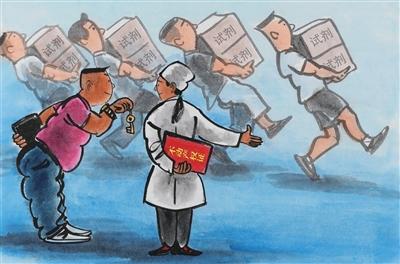
Core Viewpoint - The article highlights the case of She Qian, a former director of the laboratory department at a hospital in Chongqing, who engaged in corrupt practices by accepting bribes and using her position to facilitate illegal financial transactions, particularly in real estate investments [1][5][6]. Group 1: Corruption and Bribery - She Qian received over 1.82 million yuan in bribes from a pharmaceutical company owner to facilitate the sale of medical equipment and supplies [2]. - She utilized her dual roles in the hospital and the Chongqing Clinical Laboratory Center to accept various fees, including lecture and evaluation fees, often exceeding compliant amounts [2]. - The investigation revealed that She Qian had acquired over 30 properties across various provinces, indicating a pattern of using her position for personal financial gain [5]. Group 2: Investigation and Legal Consequences - In 2023, national authorities initiated a concentrated effort to address corruption in the medical field, leading to a thorough investigation of She Qian's financial activities [5]. - By May 2024, She Qian was subjected to detention as evidence of her corrupt practices was gathered, including the tracing of funds used for property purchases [6]. - Ultimately, She Qian was convicted of bribery, sentenced to ten and a half years in prison, and ordered to return illicit funds totaling over 10.42 million yuan [6].
法润黄河 活力奔涌(法治头条)
Ren Min Ri Bao· 2026-01-22 00:36
越冬候鸟在山东黄河三角洲国家级自然保护区飞翔。 泰安市泰山区人民法院法官开展黄河流域文物保护工作。 资料图片 滨州市沾化区人民法院法官实地查看供热设备存续状况。 资料图片 九曲黄河,奔腾万里,在山东入海。 新华社记者 朱 峥摄 山东省作为黄河流域唯一河海交汇区,是下游生态保护的主战场。司法如何护航黄河流域生态保护和高 质量发展?近年来,山东省法院系统牢固树立和践行绿水青山就是金山银山的理念,搭建巡回审判、生 态修复、府院联动等多项机制,构建起全方位司法保护体系,为黄河重大国家战略落地见效提供有力服 务和保障。 "审理一案、教育一片",让生态环境保护法律法规长出"牙齿" "被告人李某虎、李某安的行为均已构成非法采矿罪。判处李某虎有期徒刑十个月,并处罚金一万元; 判处李某安有期徒刑八个月,并处罚金八千元。"在泰安市东平县人民法院,随着法槌敲响,两被告人 因非法采砂受到了法律严惩。 原来,两人为了牟利,便打起了在黄河河道内非法采砂的主意。两人分工明确:李某虎雇用他人使用采 砂船在黄河河道内实施采砂作业,李某安联系晾砂场地事宜。案发后,经勘测认定,两人非法开采河砂 共计1.5万多立方米,总价值31万多元。 "黄河河砂 ...

日本观光局:去年12月赴日中国游客同比下降45.3%
Ren Min Ri Bao· 2026-01-22 00:31
Core Viewpoint - The report from the Japan National Tourism Organization indicates a significant decline in the number of visitors from mainland China to Japan, attributed to rising tensions in Sino-Japanese relations following controversial remarks by Japanese Prime Minister Suga Yoshihide [1] Group 1: Visitor Statistics - In December of last year, the number of visitors from mainland China to Japan was 330,400, representing a substantial decrease of 45.3% compared to the same period the previous year [1] - The number of visitors from mainland China dropped from 562,600 in November to 715,700 in October of the same year, indicating a clear downward trend [1] Group 2: Economic Impact - Japanese media and experts have noted that the remarks made by Prime Minister Suga have led to ongoing tensions in Sino-Japanese relations, negatively affecting various sectors in Japan, including retail, accommodation, and dining [1] - Japan's largest travel agency, JTB Corporation, forecasts that due to the uncertain outlook for visitors from mainland China, the number of tourists entering Japan in 2026 may decrease by 3% [1]
GDP增长5.0%,我们的机会在哪?
Ren Min Ri Bao· 2026-01-22 00:29
Group 1 - The core economic growth of 5.0% in 2025 is driven by high-tech manufacturing and equipment manufacturing, which grew by 9.4% and 9.2% respectively, while real estate investment declined by 17.2% [1] - Industries such as AI development, smart manufacturing, and the new energy sector are experiencing significant growth, while traditional sectors like construction materials are facing challenges [1] - The disparity in economic growth indicates that while some sectors thrive, others may struggle, highlighting the need for individuals to adapt to changing market conditions [1] Group 2 - Recommendations include focusing on high-growth sectors like high-tech manufacturing, new energy, and digital economy for career and investment opportunities [2] - Companies in declining industries should consider strategic shifts rather than relying solely on hard work, emphasizing the importance of adapting to new growth points [2] - Traditional industries can still thrive by adopting innovative practices and technologies, such as using big data and AI to enhance efficiency and responsiveness [2] Group 3 - The government is increasingly investing in human capital, emphasizing education, healthcare, and social security, which supports individuals in transitioning to new opportunities [3] - Policies aimed at skill training, entrepreneurship support, and improved social safety nets provide a foundation for individuals to adapt and thrive despite not being in high-growth sectors [3] - The overall economic environment is designed to ensure that benefits are shared broadly, not just among those in booming industries, promoting a more inclusive growth model [3]
“为推动全球经济复苏与发展贡献重要力量”——国际人士积极评价2025年中国经济成绩单
Ren Min Ri Bao· 2026-01-22 00:12
Group 1: Economic Growth and Stability - In 2025, China's GDP reached 140 trillion RMB, marking a 5.0% increase from the previous year, showcasing resilience amid complex domestic and international economic conditions [1] - China's economic growth rate is expected to remain among the highest globally, contributing approximately 30% to world economic growth [2] - The ability of China to maintain stable economic performance despite external pressures is attributed to its robust macroeconomic management and competitive industrial base [2][3] Group 2: Innovation and Green Development - The proportion of high-tech manufacturing value added in China's industrial output rose to 17.1%, with significant growth in digital product manufacturing [4] - China has become a global leader in renewable energy, with installed capacity for wind and solar power surpassing that of thermal power for the first time in 2025 [5] - The rapid development in high-tech manufacturing and green economy sectors reflects China's commitment to high-quality development and innovation [5][6] Group 3: Global Economic Impact - International organizations have raised their growth forecasts for China, indicating confidence in its long-term economic stability and potential to create new opportunities for global economic recovery [7] - China's economic structure and demand for high-quality products are expected to enhance regional cooperation and provide significant benefits to developing countries [8] - The ongoing development of China's economy is anticipated to contribute positively to global sustainable growth and industrialization efforts in other nations [7][8]
解码数字里的“机遇清单”:全球首个“十四亿吨”级港映照的开放新气象
Ren Min Ri Bao· 2026-01-22 00:02
前些年,当国际上一些人产生"中国构建新发展格局,是否意味着舍弃开放"的疑问时,习近平总书记态 度鲜明地指出:"'双循环'不是要闭关锁国,而是当别人不给我们开门的时候,我们自己还能活下去、 活得更好。我们敞开大门,谁来与我们合作都欢迎。" 近期,浙江宁波舟山港公布了2025年成绩单:货物吞吐量突破14亿吨,连续17年位居全球第一,成为全 球首个迈入"14亿吨"级的超级大港。在经济全球化遭遇逆风、地缘政治格局与贸易政策复杂多变的当 下,这一成绩来之不易,背后是审时度势的前瞻布局,是发展理念的深刻变革。 "大进大出的环境条件已经变化,必须根据新的形势提出引领发展的新思路。"2020年,习近平总书记到 宁波舟山港考察,回京后不久就提出构建以国内大循环为主体、国内国际双循环相互促进的新发展格 局。近6年来,宁波舟山港的成长,清晰映照出中国高水平对外开放的新气象。 从"大进大出"到"优进优出",折射中国外贸的动力转换。出口产品更"新"更"绿"。观察宁波口岸的出口 数据,高新技术产品表现亮眼。2025年,"新三样"产品出口额同比增长76.3%,工业机器人走俏国际市 场,出口额同比增长113%。在创新引领和绿色加持下,新质生 ...