Guan Cha Zhe Wang

Search documents
水羊“长约”撞若羽臣“铁契”:美斯蒂克这只5亿鸭子到底归谁?
Guan Cha Zhe Wang· 2025-12-17 08:53
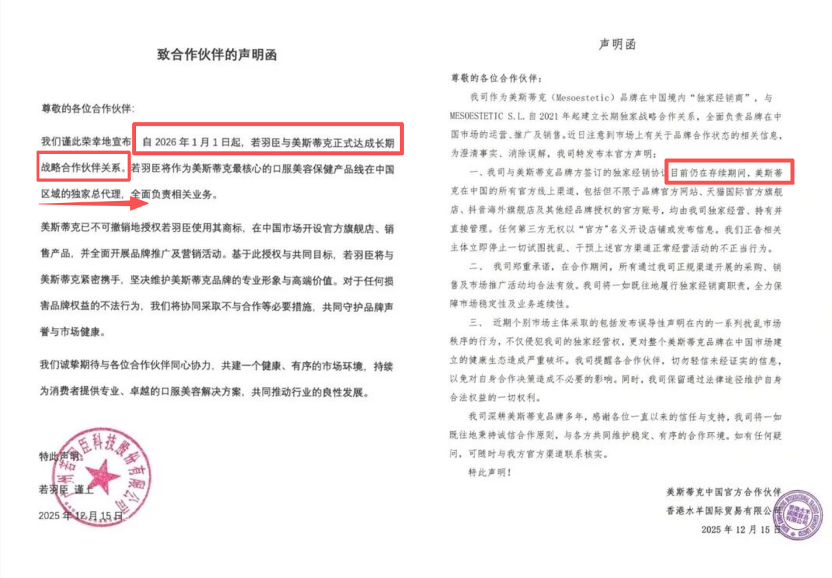
Core Viewpoint - The recent announcements from two companies, Shuiyang International and Ruoyuchen, have put Meisidike in the spotlight regarding its exclusive distribution agreements in China for its oral beauty product line. Group 1: Company Announcements - Shuiyang International claims to be the exclusive distributor in China but does not specify the duration of the agreement [1] - Ruoyuchen has entered a strategic cooperation with Meisidike, with a contract running from January 1, 2026, to December 31, 2028, including an automatic renewal clause [3] - Ruoyuchen will be the exclusive general agent for Meisidike's oral beauty product line in China, which constitutes approximately 98% of the brand's total volume [3][4] Group 2: Operational Details - Ruoyuchen will have full control over the product line's pricing and distribution in the Chinese market [4] - Shuiyang International's announcement lacks clarity on the expiration date and the scope of the licensed product categories [5][6] - Legal experts note that the lack of specific details in the agreements makes it difficult to assess potential conflicts between the two companies [7] Group 3: Market Position and Performance - Meisidike, a Spanish medical beauty brand, has seen significant growth in China, with its sales reaching 5 billion yuan, accounting for half of the brand's global volume [7][10] - The brand's flagship product, the Brightening Drink, is priced at approximately 459.8 yuan per box, translating to 76.7 yuan per 30ml bottle [8] - Ruoyuchen's recent contract with Meisidike is seen as a strategic move to fill a gap in the high-end market segment, complementing its existing product offerings [11][12]


宗馥莉卸任娃哈哈食品公司多个职务,许思敏接任
Guan Cha Zhe Wang· 2025-12-17 06:49
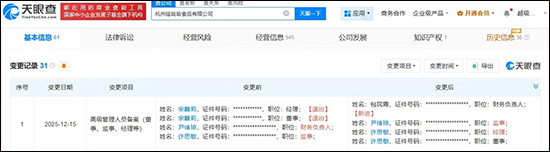
天眼查网站显示,12月15日,杭州娃哈哈食品有限公司发生工商变更,宗馥莉卸任法定代表人、董事、 经理,由许思敏接任,同时部分高管也发生变更。 此前,白山宏胜饮料有限公司早在9日也已发生工商变更,祝丽丹卸任法定代表人及总经理,由许思敏 接任。 | 天眼骨 | | | Bron ByK | | | | | | --- | --- | --- | --- | --- | --- | --- | --- | | | | CRIDING GOTHE / KETHE | BURETHER AND | o | 用服-下 | ● 应用 · 廣务合作 企业服产品· 查 开通公员· 血 受采 | | | 基本值息 60 | | 法律诉讼 | 经营风险 > | 经营值息 251 | | 公司发展 | 知识产权 / 历中位商业 | | 变更记录 23 ○ ● | | | | | | 变要项目· | 受到间 · 0 导出 C天服自 | | 序号 | 变量日期 | 变更适合 | 变更加 | | | 变量后 | | | 2025-12-09 | | 顾虑是优惠 | 姓名 被断夜, 身份证件号码 * | | | 姓名许思敏, 身份证件号码 ...
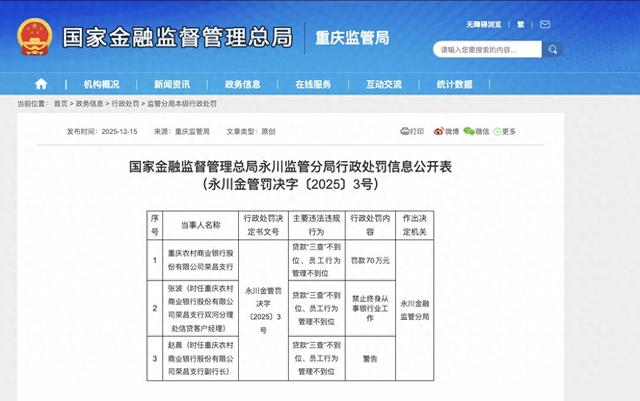
渝农商行旗下支行因信贷管理违规领70万元罚单
Guan Cha Zhe Wang· 2025-12-17 06:24
Group 1 - The Chongqing Rural Commercial Bank's Rongchang branch was fined 700,000 yuan due to internal control management issues [1][3] - The bank has faced multiple penalties this year, including a fine of 2.9586 million yuan for foreign exchange business violations on January 9 [3] - The bank's Q3 2025 report shows a slight increase in revenue to 21.658 billion yuan, with a net profit of 10.694 billion yuan, reflecting a year-on-year increase of 3.74% [3] Group 2 - The bank's Q3 revenue showed signs of pressure, with a quarter-on-quarter contraction of 7.98% and a year-on-year increase of only 1.1% [3] - The bank's intermediary business income has weakened, with net income from fees and commissions decreasing by 16.71% year-on-year [3] - As of the end of Q3, the bank's non-performing loan ratio was 1.12%, which has decreased compared to the end of the previous year [3] Group 3 - The Chongqing Rural Commercial Bank was established in 1951 and underwent a shareholding reform in 2008, becoming the first rural commercial bank listed in both Hong Kong and A-share markets [3]

宗馥莉从娃哈哈食品公司卸任,后者持有娃哈哈大量商标资产
Guan Cha Zhe Wang· 2025-12-17 06:08
娃哈哈食品有限公司法人在今年2月,才由宗庆后变更为宗馥莉。仅10个月后,宗馥莉便从公司卸任。 但从股权关系来看,娃哈哈食品有限公司持股51%的控股股东,仍是宗馥莉全资持股的杭州娃哈哈宏振 投资有限公司。持有39%股权的杭州娃哈哈集团中,宗馥莉的持股比例也达到29.4%,穿透之后宗馥莉 仍是娃哈哈食品公司的实际控制人。 从近期的变动来看,宗馥莉正在陆续从娃哈哈集团内重要的公司中隐身。早些时间,在今年10月从娃哈 哈集团董事会请辞后,娃哈哈集团有限公司在11月27日完成变更,宗馥莉卸任集团法人、董事长和总经 理职务,同样由许思敏接任。 另外,许思敏近期还接任多家宏振系企业的法人职务。今年12月11日,许思敏接替祝丽丹出任白山宏胜 饮料公司法定代表人、总经理。 (文/孙梅欣 编辑/张广凯) 继辞去娃哈哈集团董事长职务之后,宗馥莉近期卸任了杭州娃哈哈食品有限公司法人、董事、总经理等 相关职务。 企查查信息显示,12月17日,杭州娃哈哈食品有限公司法人发生工商变更,宗馥莉卸任杭州娃哈哈食品 有限公司公司职务,公司法定代表人变更为许思敏,同时许思敏还接任公司董事、总经理等职务。 除了许思敏接棒宗馥莉之外,公司管理层还发生 ...

欧盟委员会公布提案:放弃自2035年对新燃油车实施禁令,重新调整减排目标
Guan Cha Zhe Wang· 2025-12-17 04:40
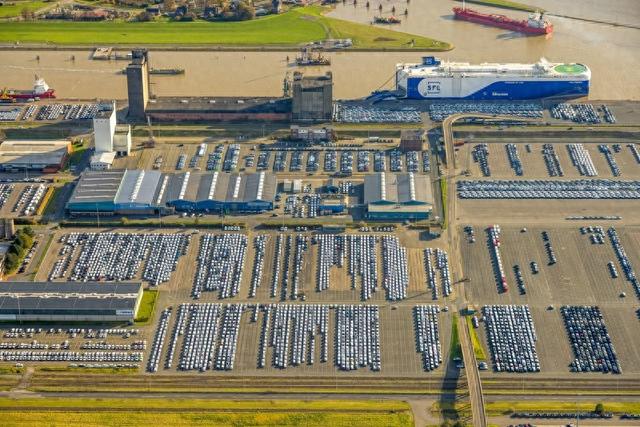
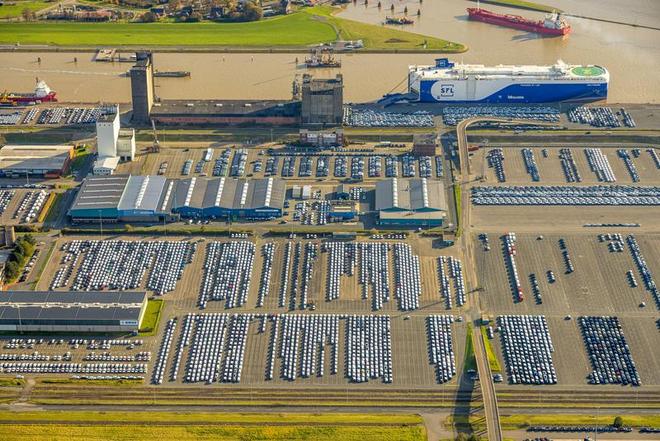
【文/观察者网 熊超然】竞争不过中国车企,让欧盟大伤脑筋,甚至不惜"违背祖训"——抛弃此前达成 的汽车禁令和多来年设定的环保减排目标。 当地时间12月16日,欧盟委员会公布一项提案计划,在欧洲汽车行业承受压力之下,放弃自2035年对新 燃油车实施的实际禁令。路透社当天报道指出,这标志着欧盟近年来在绿色政策方面所作出的"最大退 让"(biggest retreat)。 "在对排放进行补偿的同时,向燃油车开放市场是务实的做法,也符合市场实际情况。"欧洲销量最大的 汽车制造商德国大众汽车表示。 该公司还认为,新的二氧化碳减排目标草案,"总体上在经济上是合理的",并对欧盟支持小型电动汽车 和为2030年设定更灵活目标表示赞赏。 非营利机构"气候组织"(Climate Group)的交通运输负责人多米尼克·芬恩(Dominic Phinn)则反驳 说,这一措施对传统汽车行业来说堪称"悲剧性的胜利",将电动汽车置于不利地位。 目前,这项提案仍需得到欧盟各国政府和欧洲议会的批准,而一旦获批,将允许部分非电动汽车继续销 售。此前,欧洲地区工业强国德国和意大利的汽车制造商一直寻求放宽相关规定。 从目前的发展态势来看,欧盟委员会 ...
高盈利、高科技、高价值,2026汽车产业面对跑通新发展模式挑战
Guan Cha Zhe Wang· 2025-12-17 03:02
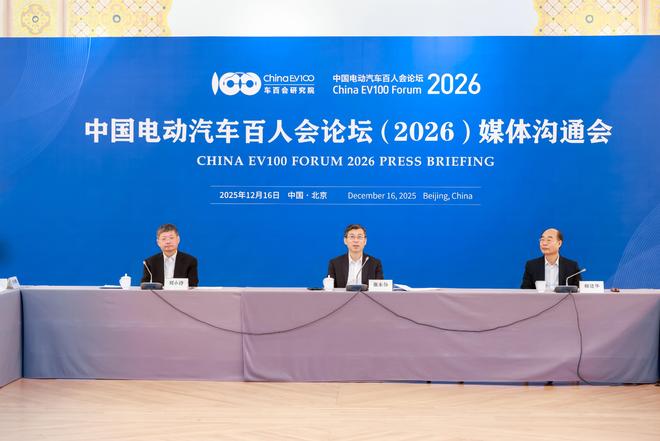
张永伟表示,进入2026年,汽车产业将加速探索高盈利、高科技、高价值的新发展模式。 据统计,全国共有超80家车企、230多家旗下工厂,但2024年汽车制造业产能利用率仅有72.2%。此 外,中国汽车制造业利润曲线自2017年以来持续走低:今年前三季度,汽车行业汽车制造业整体利润率 仅为4.5%,明显低于历史平均水平。 张永伟认为,随着国内汽车市场进入高销量低增长周期,未来,汽车行业将探索高科技与汽车深度融合 的驱动模式:融合高科技的汽车行业盈利水平将更为合理,反向也能支撑产品迭代所需的高投入,并获 得资本市场的认可,从而跑通新模式,实现良性循环。 在电动化科技方面,张永伟认为,明年起新一代电池技术将进入兑现应用期,其中全固态电池有望在未 来2年完成小批量上车,到2030年实现初步规模化应用,到2035年实现大规模量产应用;钠离子电池从 材料、制造到应用的上下游体系也正逐步完善,2030年出货量有望突破100GWh。 【文/观察者网 潘昱辰 编辑/高莘】12月16日,中国电动汽车百人会论坛(2026)媒体沟通会在北京举 行。此次沟通会对2026年中国汽车产业即将迎来的重大变化进行了洞察与研判,并对明年论坛的设计 ...
GPU独角兽沐曦股份上市暴涨超600%:市值3000亿,上半年营收9亿
Guan Cha Zhe Wang· 2025-12-17 02:27
摩尔线程股价上市遭爆炒后,被市场视为"国产GPU第二股"的沐曦股份也备受关注。 12月17日,沐曦股份正式在上交所科创板上市,开盘价格高达700元/股,涨幅超过550%,高于摩尔线 程开盘约468.78%的涨幅。截至发稿,沐曦股份涨超614%,市值接近3000亿元。 12月7日晚间,沐曦股份披露了首次公开发行股票并在科创板上市网上发行申购情况及中签率公告。公 告显示,根据上交所提供的数据,网上发行有效申购户数为517.52万户,有效申购股数为288.62亿股。 回拨机制启动后,沐曦股份网下最终发行数量约2282.91万股,网上最终发行数量为966.55万股,网上发 行最终中签率为0.03348913%。也就是说,每万名"打新"股民中,仅有不到4人能中签。 按照17日的开盘价来计算,"打新"的股民中一签(500股)可赚29.7万元。无怪乎,之前曾有投资者表 示,券商客服通知自己中签时让他"考虑换辆车"。 公开资料显示,沐曦集成电路(上海)股份有限公司于2020年9月成立于上海,技术团队多位核心成员 曾在超威半导体(AMD)长期从事研发工作,主导过十多款世界主流高性能GPU产品研发及量产。 业绩方面,2025年上 ...
竞争不过中国就掀桌,欧盟不惜“违背祖训”…
Guan Cha Zhe Wang· 2025-12-17 01:17
Core Viewpoint - The European Union (EU) is planning to abandon its 2035 ban on new combustion engine vehicles due to pressure from automotive manufacturers, marking a significant retreat from its green policies [1][7]. Group 1: Proposal Details - The EU Commission's proposal will allow the continued sale of certain non-electric vehicles, including plug-in hybrid and range-extended combustion engine vehicles, in response to competition from Tesla and Chinese manufacturers [1][4]. - The new carbon emission targets will be adjusted to a 90% reduction from 2021 levels, rather than achieving zero emissions for all new cars and vans by 2035 as previously mandated [1][2]. Group 2: Industry Reactions - Major automotive manufacturers, such as Volkswagen, view the new carbon reduction targets as economically reasonable and support the flexibility in setting goals for electric vehicles [5]. - The Climate Group criticized the measures as a "tragic victory" for traditional automotive industries, arguing that it undermines the push for electric vehicles and stability in the market [5]. Group 3: Competitive Landscape - German automakers are under significant pressure as they face fierce competition from Chinese electric vehicle manufacturers, both domestically and in international markets [6][10]. - The EU's decision to relax emission targets is seen as a response to the anxiety among European leaders regarding the competitiveness of their automotive industry against Chinese firms [7][8]. Group 4: Broader Implications - The relaxation of emission targets may weaken investments in critical charging infrastructure and hinder Europe's transition to clean driving, potentially allowing China to advance further in the electric vehicle sector [10][11]. - The EU's shift in policy reflects a broader trend of reevaluating environmental goals in light of economic pressures and competitive dynamics in the global automotive market [8][10].
鲍韶山:美国想要“权力下放”,这是一场高风险的赌局
Guan Cha Zhe Wang· 2025-12-17 00:39
Group 1 - The 2025 National Security Strategy (NSS) report emphasizes a need for the U.S. to adjust its global strategy, moving away from the illusion of maintaining permanent dominance and towards a modular system that shares risks and costs with allies and partners [1][5][39] - The report reflects a significant ideological battle over the concept of multipolarity, with differing views on its implications for U.S. dominance and global order [4][5] - The NSS aims to maintain U.S. leadership through a structured alliance system while recognizing the need for allies to take on more responsibilities, including increased defense spending and military deployments [13][14][25] Group 2 - The NSS acknowledges the structural weaknesses in U.S. industrial capacity, particularly in ammunition production and supply chain vulnerabilities, which could undermine military readiness [19][20][23] - The report highlights the reliance on foreign suppliers for critical materials, such as rare earth elements, which poses a risk to U.S. defense capabilities [20][26] - The NSS indicates a shift towards a state of "permanent near-war," where competition occurs continuously across multiple domains, rather than only during crises [17][39] Group 3 - The NSS report's success hinges on the ability to mobilize industrial capacity rapidly, enhance supply chain resilience, and foster deeper cooperation among allies [41][42] - The report suggests that U.S. allies may begin to question the reliability of American commitments, leading to a potential shift in their defense strategies and partnerships [25][29][37] - The NSS reflects a high-risk strategy that relies on the willingness of other nations to bear costs and responsibilities, which may not be sustainable if trust in U.S. capabilities erodes [43][44]

心智观察所|谁来叫醒那只青蛙:中国新能源出海的隐秘战场
Guan Cha Zhe Wang· 2025-12-17 00:39
Core Insights - The article discusses the complexities and challenges faced by Chinese new energy companies in their global expansion efforts, highlighting both risks and opportunities in the process [1][16]. Group 1: Compliance and Regulatory Challenges - Chinese new energy companies are encountering unexpected compliance challenges, such as environmental assessments being delayed due to local wildlife, exemplified by a case involving a rare frog in Sweden [3][6]. - The 2016 "child labor" scandal involving Huayou Cobalt in the Democratic Republic of Congo serves as a significant example of the reputational risks and compliance issues that can arise in international operations [4][5]. - Companies are increasingly recognizing that ESG (Environmental, Social, and Governance) compliance is not merely a superficial requirement but a core competitive advantage that can influence customer trust and market access [5][10]. Group 2: Hidden Costs and Political Risks - The article emphasizes the importance of understanding hidden costs, such as compliance costs and political risks, which can significantly impact project success beyond visible expenses like land prices and taxes [6][8]. - Geopolitical tensions are complicating the compliance landscape, with environmental accusations often serving as tools in political disputes, as illustrated by a case involving Ningde Times in Hungary [8][9]. Group 3: Strategic Adaptations - Companies are adapting by engaging in the formulation of international standards and regulations, as seen with Ningde Times participating in the EU Battery Law expert committee [10][11]. - A shift towards deep localization is being adopted, where companies implement a three-tier employee structure to balance technical expertise with local operational needs [11][13]. - The necessity for cultural adaptation is highlighted, particularly in mining investments, where understanding local customs and building trust with indigenous communities is crucial for project success [13][14]. Group 4: Evolution of Legal Roles - The role of legal departments is evolving from a reactive "firefighting" function to a proactive "strategic advisory" role, focusing on risk identification and compliance strategy [15][16]. - Legal teams are expected to become more integrated into business operations, requiring a deeper understanding of industry dynamics and resource coordination [15][16]. Group 5: Conclusion and Future Outlook - The article concludes that the journey of Chinese new energy companies in global markets is just beginning, with the need for continuous adaptation to complex regulatory environments and geopolitical landscapes [16][18].