Yang Shi Xin Wen Ke Hu Duan

Search documents
格陵兰岛重申不想被美国拥有或控制
Yang Shi Xin Wen Ke Hu Duan· 2026-01-13 16:41
当地时间1月13日,丹麦首相弗雷泽里克森与格陵兰岛自治政府总理延斯-弗雷德里克·尼尔森举行联合 记者会。 (文章来源:央视新闻客户端) 面对美国政府的领土野心,尼尔森强调,格陵兰岛选择丹麦而非美国,格陵兰岛不希望被美国拥有或控 制,不想成为美国的一部分。 ...
1月13日晚间央视新闻联播要闻集锦
Yang Shi Xin Wen Ke Hu Duan· 2026-01-13 13:59
Group 1 - The core message of Xi Jinping's speech at the Fifth Plenary Session of the 20th Central Commission for Discipline Inspection emphasizes the need to strengthen the Party's comprehensive leadership and advance strict governance with higher standards and practical measures [7] - The speech has sparked enthusiastic responses among attendees, who expressed commitment to deeply study and implement the spirit of the speech, ensuring the Party's self-revolution progresses steadily [7] Group 2 - During the "14th Five-Year Plan" period, China has significantly improved the efficiency of land resource utilization through various initiatives, including revitalizing inefficient and idle land [12] - The Ministry of Civil Affairs and other departments have introduced measures to promote the high-quality development of elderly care services and the silver economy, focusing on brand development and other key areas [13] - By 2030, China aims to achieve significant results in the special rectification of solid waste in key areas, as outlined in the recently released comprehensive governance action plan [14]
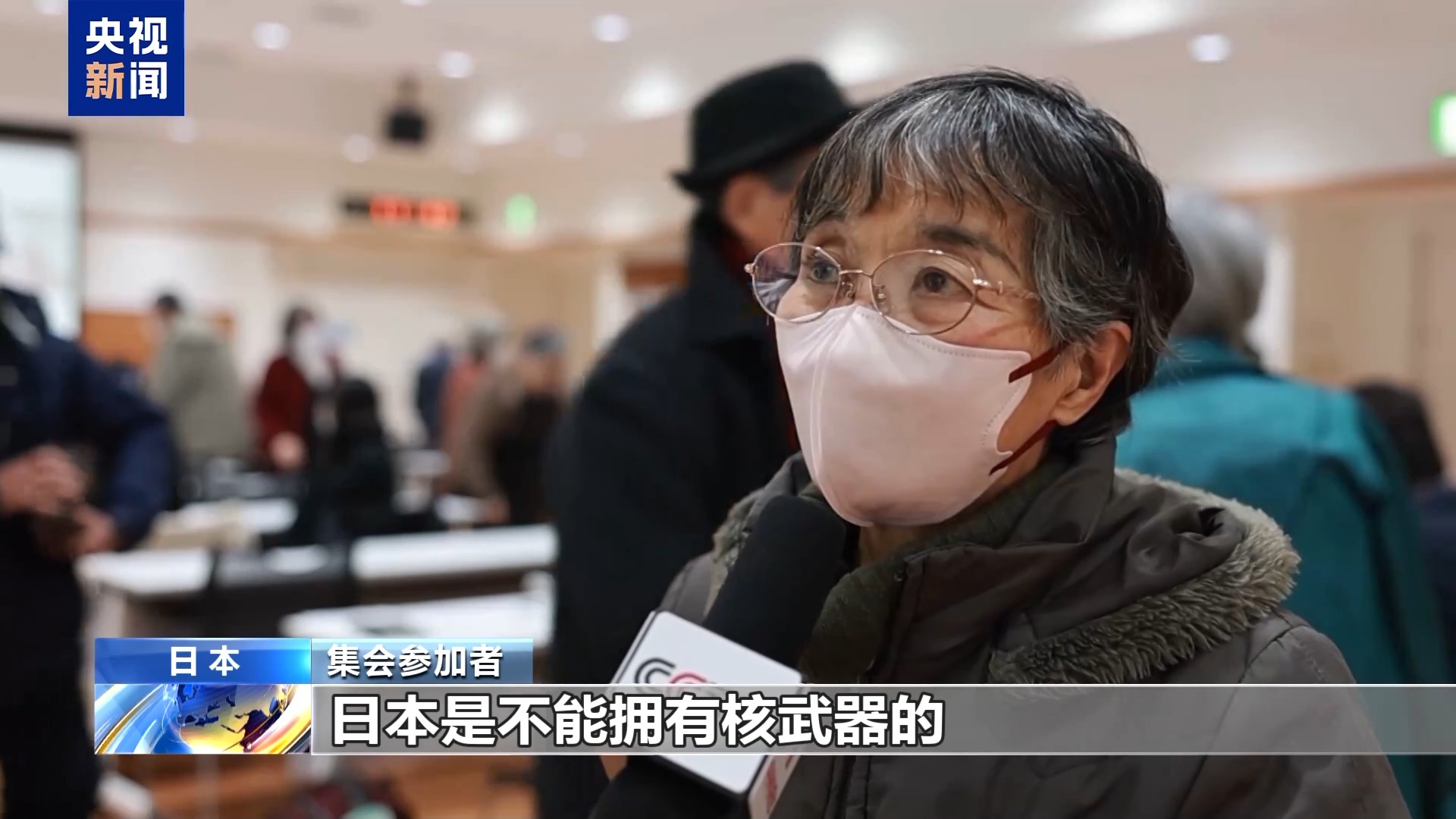
视频丨日本民间团体:反对日本政府军事扩张路线
Yang Shi Xin Wen Ke Hu Duan· 2026-01-13 13:14
Core Viewpoint - A civil group in Nagaoka City, Niigata Prefecture, Japan, held a peace study meeting opposing the government's military expansion policy, arguing it contradicts post-war peace principles and may escalate regional tensions [1]. Group 1: Opposition to Military Expansion - Participants emphasized that Japan's constitution advocates for non-aggression and disarmament, urging adherence to these principles [3]. - The "Three Non-Nuclear Principles" should remain unchanged, asserting Japan must not possess or manufacture nuclear weapons [5]. - Organizers argued that relying solely on military expansion does not enhance security but may deepen confrontational sentiments, advocating for dialogue and cooperation instead [6]. Group 2: Criticism of Political Statements - The vice president of the Niigata Peace Committee criticized remarks made by a political figure, calling for their retraction [8]. - The president of the Niigata Peace Committee expressed a desire for citizens' movements and elections to prompt the government to reconsider its current policies [9]. - Participants condemned the political figure's statements as interference in China's internal affairs, highlighting the historical context of Japan's acknowledgment of Taiwan as part of China [10].

中欧电动汽车反补贴案磋商取得积极成果 中汽协发布声明
Yang Shi Xin Wen Ke Hu Duan· 2026-01-13 09:37
Core Viewpoint - The EU and China are working towards a "soft landing" in the electric vehicle case through ongoing dialogue and negotiations, achieving significant positive results [1] Group 1: EU's Actions - The European Commission has released guidelines for submitting price commitment applications, indicating that the EU will evaluate applications from Chinese exporting car companies based on non-discrimination, objectivity, and fairness, in accordance with WTO rules [1] - Eligible companies will be able to replace countervailing duties with price commitments [1] Group 2: China's Position - The China Association of Automobile Manufacturers views the "soft landing" in the electric vehicle case as a successful example of resolving differences through dialogue within the WTO framework, which is crucial for maintaining healthy and stable development of China-EU economic and trade cooperation and bilateral relations [1] - The competitive advantage of Chinese electric vehicles stems from continuous technological innovation across the industry chain and cost and technological advantages formed through competition in a large-scale market, rather than relying on subsidies [1] - The association supports relevant companies in striving for export rights to the EU based on their actual conditions and business needs [1]
红灯变短、通行更顺畅 272个路口夜间开启“冬季模式”
Yang Shi Xin Wen Ke Hu Duan· 2026-01-13 08:33
Group 1: Traffic Management in Hefei - Hefei has implemented a "winter mode" for traffic signals at night, resulting in shorter waiting times and smoother traffic flow for drivers [1][2] - The "winter mode" has been activated at 272 intersections, allowing simultaneous green signals for left turns and straight traffic, reducing the signal cycle from approximately 90 seconds to 75 seconds, a 15-second reduction [2][4] - The traffic management department is using big data analysis to adapt signal timings based on real-time traffic conditions, enhancing overall traffic efficiency [4][6] Group 2: Healthcare Services in Zhejiang - Zhejiang has been enhancing grassroots medical services, enabling residents to receive care locally, with initiatives like island visits and village health clinics [7][9] - A team of 20 doctors from Taizhou has been providing on-site medical services to residents of Dachen Island, addressing the challenge of accessibility to healthcare [7][9] - Ningbo has also established village-level medical facilities, with the first community hemodialysis center completed, increasing the number of dialysis beds from 13 to 20 [12][14]

无人机植保+数字化管控 “00后种菜班”让智慧种菜成为田间日常
Yang Shi Xin Wen Ke Hu Duan· 2026-01-13 08:33
Core Insights - The article highlights the transformation of agricultural practices in Suining, Sichuan, through the establishment of a "post-00s vegetable planting class" that utilizes advanced technologies such as drones, smart irrigation, and digital management to cultivate specialty vegetables and educate local farmers [1][5]. Group 1: Technological Implementation - The "post-00s vegetable planting class" has constructed a smart greenhouse over the course of a year, employing young individuals to manage various agricultural tasks, including pest control and nutrient management [5]. - The use of drones allows a single operator to cover thousands of acres for pest control, while specialized technicians tailor nutrient solutions based on soil characteristics [5]. - Digital management has increased the output value per acre from 30,000 yuan to 120,000 yuan, representing a fourfold increase [5]. Group 2: Soil Improvement and Automation - The initial challenge faced by the planting class was soil improvement, which they addressed by consulting university professors and using organic fertilizers and probiotics [7]. - An automated fertilization and irrigation system was developed, allowing for precise nutrient delivery to the soil, which significantly reduced manual labor [9]. Group 3: Education and Community Impact - The young team has created easy-to-understand instructional materials to teach local farmers about smart greenhouse technologies, leading to over 100 villagers finding new employment opportunities in the smart greenhouse [3][13]. - The "post-00s vegetable planting class" is actively expanding its smart greenhouse initiatives to neighboring villages, with two new greenhouses covering 180 acres currently under construction [15].

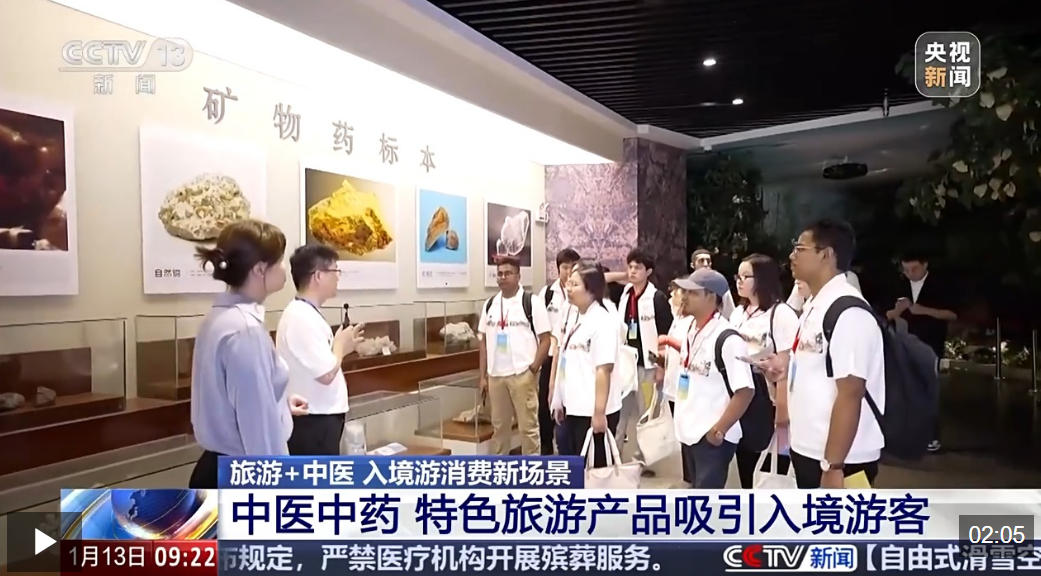
视频丨闻药香、学康养 China Travel解锁消费新场景
Yang Shi Xin Wen Ke Hu Duan· 2026-01-13 08:25
Core Viewpoint - The article discusses the growing trend of integrating traditional Chinese medicine (TCM) into tourism, particularly for foreign visitors, highlighting the potential for TCM to enhance the travel experience and attract more international tourists [2][10]. Group 1: TCM Tourism Development - The Ministry of Commerce and nine other departments issued policies to expand service consumption, emphasizing the use of TCM and traditional cultural resources to create unique tourism experiences for foreign visitors [2]. - Regions like Hainan, Sichuan, and Guangdong are seeing an increase in TCM-related tourism products, which are becoming popular among inbound tourists [2]. - Sichuan's TCM Museum showcases over 50,000 unique medicinal materials, providing a distinctive experience for international tourists [2]. Group 2: Tourist Experiences - Foreign tourists, such as those from Germany and Bulgaria, express positive experiences with TCM practices like acupuncture and herbal medicine, noting the comfort and natural aspects of TCM [4][6][7]. - Tourists are engaging in hands-on activities, such as making herbal sachets, which enhances their understanding and appreciation of TCM [7]. Group 3: Challenges in TCM Tourism - The TCM tourism sector faces challenges, including a shortage of professionals who are knowledgeable in both TCM and foreign languages, which limits marketing efforts [10]. - There is a high overlap in TCM tourism projects across different regions, leading to a lack of diversity in offerings [10]. - The integration of medical and tourism sectors is not smooth, which hampers the development of TCM tourism [12]. Group 4: Recommendations for Improvement - Experts suggest a long-term development strategy for the health tourism industry to avoid issues of homogenization and to build a strong international brand [12][14]. - Establishing a coordination mechanism between the medical and tourism sectors is recommended to create a comprehensive inbound medical tourism service platform [14]. - There is a call for a focus on training professionals who can bridge the gap between TCM knowledge and foreign language skills, as well as enhancing the overall tourist experience [16][18].
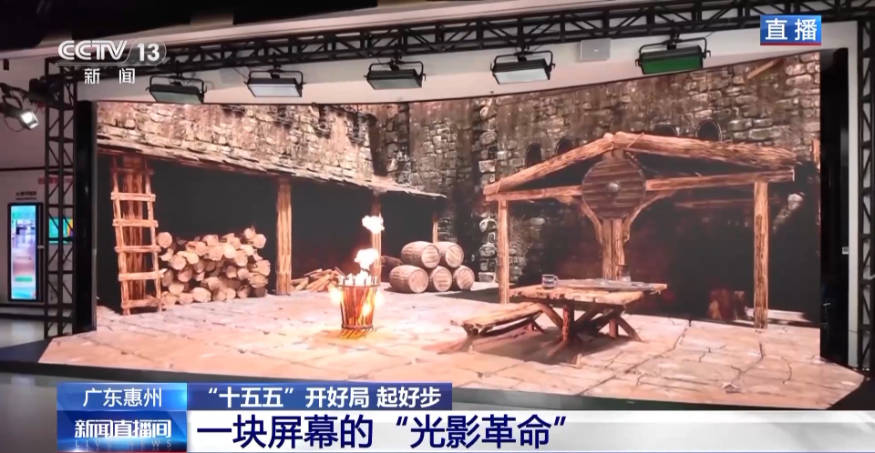
LED屏:让中国“智”造点亮“视”界
Yang Shi Xin Wen Ke Hu Duan· 2026-01-13 08:16
Core Insights - The article highlights the significant role of LED screens in various industries, particularly in film production and immersive entertainment experiences, emphasizing that nearly 80% of global LED display products are sourced from China, with Guangdong Huizhou being a key production area [1][2]. Group 1: Industry Development - The LED screen industry has evolved from traditional manufacturing to intelligent manufacturing, enhancing the quality and performance of products [3]. - LED screens are now utilized in diverse applications, including outdoor advertising, 8K ultra-high-definition televisions, smart car interiors, and immersive virtual spaces for cultural tourism projects [4]. Group 2: Technological Advancements - The use of LED screens in film production has eliminated the need for physical sets, relying instead on virtual studios that require high display quality, addressing challenges such as refresh rates and moiré patterns [5]. - Innovations in LED technology have led to the development of specialized products for film shooting, ensuring natural and clear visuals for both the naked eye and cameras [5]. Group 3: Digital Transformation - The demand for larger and more impactful LED screens has driven companies towards digital transformation, ensuring product quality and maintenance efficiency [7]. - Each LED display module is now equipped with a QR code that provides comprehensive production information, enabling full lifecycle quality management [9]. Group 4: Collaborative Innovation - The presence of a complete industrial chain in Huizhou allows for rapid problem-solving, reducing the time needed to address technical challenges from months to weeks [10]. - This efficient collaboration has accelerated product iteration and expanded the reach of Chinese LED products to global events and immersive experiences in various countries [12]. Group 5: Market Growth - The Guangdong super high-definition video industry is projected to exceed 900 billion yuan in revenue by 2024, positioning it as the tenth trillion-yuan industry cluster in Guangdong [14]. - The advancements in LED technology and collaborative innovation are contributing to the rise of a trillion-yuan industry cluster, providing robust hardware support for the high-quality development of China's film and cultural industries [14].
“十五五”开好局起好步丨新质生产力焕新电影经济 虚拟拍摄赋能全产业链
Yang Shi Xin Wen Ke Hu Duan· 2026-01-13 07:15
Core Insights - The article highlights the establishment of a leading AI film industry base in Deqing, Zhejiang, focusing on the integration of culture and technology to foster high-quality development in Chinese cinema [2][10]. Group 1: Virtual Filming Technology - The Deqing AI virtual film base features the world's largest single LED virtual studio, currently hosting the filming of a Hong Kong football-themed movie, which utilizes a 50-meter diameter curved screen to create a realistic environment [3]. - The virtual filming technology allows for a seamless integration of imagination and reality, enabling directors to make last-minute changes, such as adding scenes with mechanical horses that synchronize with computer-generated imagery [7]. - This comprehensive virtual filming technology system enhances the efficiency of the filmmaking process, making the base a sought-after location in the industry [9]. Group 2: Industry Transformation and Investment - The virtual filming approach not only improves the creative workflow but also drives a transformation across the entire film industry chain, from hardware development to service support [9]. - Deqing County has announced the establishment of China's first "virtual filming pre-production fund" with an initial scale of 100 million yuan, aimed at supporting high-quality projects with Chinese cultural elements and advanced technology [10]. - As of now, 43 companies related to virtual filming and AI film production have been introduced to the area, with training programs for nearly 100 film talents already underway [12]. Group 3: Future Development Plans - Deqing is planning initiatives such as the "Film Nine Measures" to support the film industry and is in the process of establishing a film service center to create a complete film industry chain [14]. - The local government aims to build a digital entertainment ecosystem that integrates technology, scenarios, and industry, focusing on emerging fields like data processing, virtual filming, and AI-generated content [16].

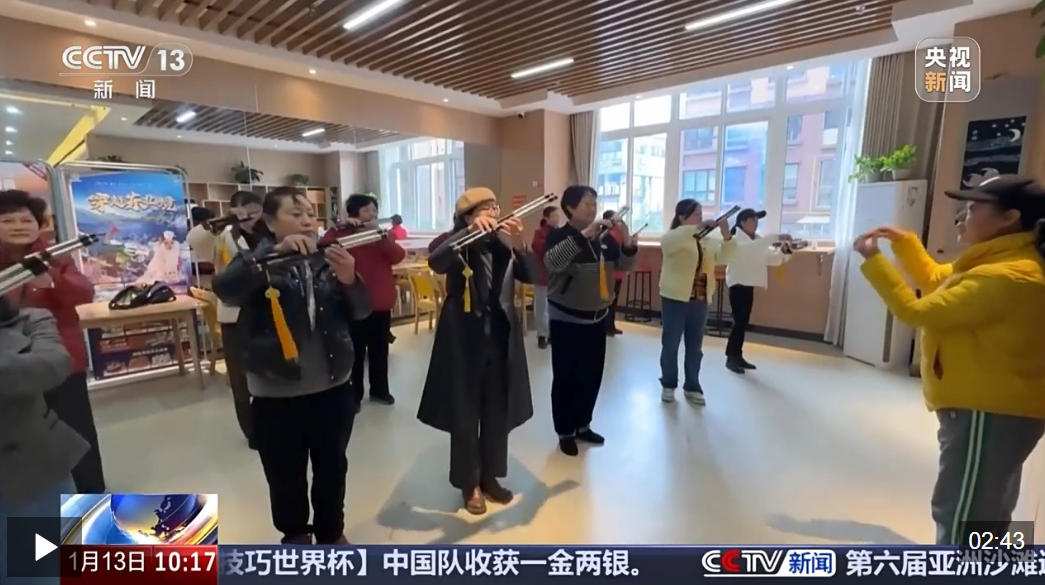
视频丨优化养老服务发展环境 民政部等八部门出台多项措施
Yang Shi Xin Wen Ke Hu Duan· 2026-01-13 07:12
Core Viewpoint - The Ministry of Civil Affairs and seven other departments have introduced measures to cultivate the elderly care service industry and promote the silver economy, aiming to enhance the vitality of various elderly care service providers and better meet the diverse needs of the elderly population [2] Group 1: Brand Development - The measures emphasize strengthening brand building for elderly care services, encouraging the establishment of distinctive brand signage and enhancing brand recognition [3] - Provincial civil affairs departments are encouraged to standardize the names and signage of various elderly care service providers to improve brand identification [3] - Support for trademark registration and protection for well-known brands in the elderly care sector is also highlighted [3] Group 2: Market Supply and Demand - The measures propose optimizing the supply of elderly care services and age-friendly products, promoting community-based service integration [4] - Encouragement for the development of specialized medical accompaniment services and mobile bathing services for the elderly is included [4] - The initiative also promotes the development of age-appropriate clothing and food products tailored to the elderly [4] Group 3: Supply-Demand Platform - Support for local governments to establish dedicated elderly care sections within existing platforms to enhance service demonstration and resource linkage is outlined [5] - The measures encourage the use of trade fairs and exhibitions to facilitate connections between manufacturers, service providers, and consumers in the elderly care market [5] - E-commerce platforms and supermarkets are encouraged to create special shopping events and interfaces for elderly consumers [5] Group 4: Technological Empowerment - The measures advocate for technological advancements in elderly care, including the use of big data, AI, and smart home technologies [6] - Support for the development of care robots and other innovative technologies to meet the daily needs of the elderly is emphasized [6] - The initiative encourages collaboration between elderly care institutions and technology developers to enhance user experience with smart products [6] Group 5: Development Environment - The measures call for the creation of a fair competitive environment for elderly care institutions, including the reform of classification and support policies [7] - Restrictions that hinder fair competition in government procurement processes for elderly care services are to be eliminated [7] Group 6: Standards and Certification - The establishment of national standards for elderly products and services is prioritized, along with a certification system to guide procurement practices [8] - The measures aim to protect the rights of the elderly by combating fraudulent practices and ensuring compliance in the elderly care market [8] Group 7: Support and Resources - Local civil affairs departments are tasked with providing regular updates on elderly population statistics and available support policies [9] - The measures encourage the establishment of a nurturing mechanism for elderly care service providers and the optimization of licensing processes [9] - Support for stable operations of elderly care institutions through land supply and financial assistance is also included [9]