
Zhong Guo Jing Ying Bao

Search documents
南网能源2026年战略调整,停止新增光伏等绿电项目
Zhong Guo Jing Ying Bao· 2025-12-24 11:41
Core Viewpoint - The company, Nanfang Energy, announced a strategic shift for 2026, focusing on industrial and building energy efficiency while ceasing new investments in photovoltaic and smart green energy projects [1][2] Group 1: Strategic Focus - Nanfang Energy will concentrate on two core businesses: industrial energy efficiency and building energy efficiency, halting new investments in comprehensive resource utilization [1] - The company aims to adapt to market changes and enhance its risk resilience by optimizing its business structure [1] Group 2: Business Performance - As of the first three quarters of 2025, Nanfang Energy reported a revenue of 2.629 billion yuan, reflecting a year-on-year growth of 15.37%, and a net profit attributable to shareholders of 342 million yuan, which is a significant increase of 125.08% [2] - The main revenue contributors are industrial energy efficiency (54.92%) and building energy efficiency (26.92%) [1] Group 3: Market Context - The company recognizes that the renewable energy sector has become increasingly competitive, with low-tech projects yielding uncertain returns due to new policies like full electricity market entry [1] - Nanfang Energy plans to transition from holding smart green energy projects to focusing on multi-energy collaboration and intelligent operations [2]


北京市投资促进服务中心副主任唐永宏:北京甲级写字楼市场延续持续回暖态势
Zhong Guo Jing Ying Bao· 2025-12-24 09:33
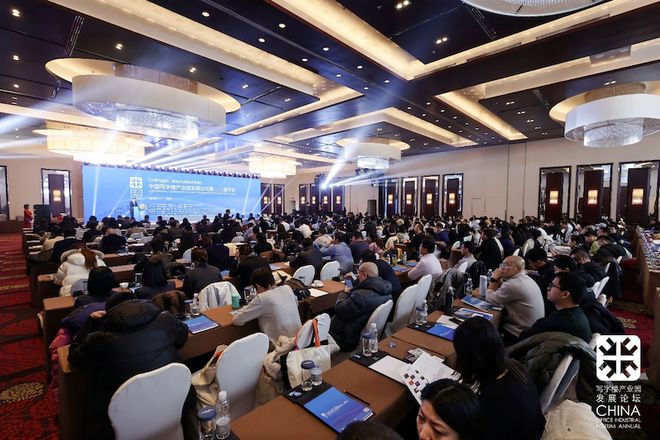
中经记者 颜世龙 北京报道 12月23日—24日,中国写字楼产业园发展论坛第22届年会在北京富力万丽酒店举办,本届年会由北京市 投资促进服务中心、全联房地产商会指导,房讯网、房讯指数CORC联合主办,主题为"内卷与进化: 商业办公的范式变革"。 论坛年会聚焦"十五五"规划建议与房地产发展新模式、宏观经济与商业地产可持续发展之道、写字楼产 业园从空间到价值的进化之路、写字楼从运营管理到资产管理的范式变革、产业园从空间进化到产业生 态的范式变革五大核心主题,深入探讨在全球经济格局变迁与科技革命的交织影响下商业办公的范式变 革。 据悉,中国写字楼产业园发展论坛源于2004年12月,已连续成功举办22届年会,聚焦商业地产行业发展 进程,记录并见证写字楼产业园行业历史轨迹,是国内商业地产行业规格最高、规模最大、影响最广的 专业论坛之一。 北京市投资促进服务中心党组成员、副主任唐永宏表示,商业地产在现代化经济体系中担任了重要位 置,在城市发展中扮演着塑造城市形象和提升竞争力的关键角色,是城市经济的重要驱动力。目前,北 京甲级写字楼市场延续持续回暖态势,租赁活跃度稳步提升,空置率持续回落。自三季度末,全市平均 空置率19% ...
2026年北京普惠家财保升级 已提供风险保障超万亿元
Zhong Guo Jing Ying Bao· 2025-12-24 09:33
Core Viewpoint - The Beijing Inclusive Home Insurance has launched an upgraded product plan for 2026, introducing two new specialized products, "Cycling Version" and "Farmhouse Version," to enhance its coverage and service offerings for residents in Beijing [1][3]. Group 1: Product Overview - The Beijing Inclusive Home Insurance is the first inclusive home insurance product in Beijing, launched in 2025, which has served over 300,000 households and provided risk coverage exceeding 1 trillion yuan within a year [1][2]. - The 2025 product features a "basic + optional" model, offering coverage for significant risks such as fire, floods, and gas leaks, with a base premium of 128 yuan and a minimum coverage of 3.65 million yuan [2]. - The 2026 upgrade expands the product into three series, maintaining the 128 yuan premium while increasing coverage for multiple properties and enhancing the service package with new options like telecom fraud loss coverage [3][4]. Group 2: New Product Features - The "Cycling Version" offers customized plans ranging from 59 yuan to 299 yuan for electric bicycles, including benefits like free helmets to comply with local regulations [3]. - The "Farmhouse Version" has a premium of 100 yuan, covering the main structure and interior of homes, with a maximum risk coverage of 480,000 yuan, facilitating access to insurance for urban and rural residents [4]. - The integration of earthquake catastrophe insurance for residential properties into the Beijing Inclusive Home Insurance platform aims to provide more convenient services for household property insurance [4].
国铁集团与7家航运企业签约扩容多式联运一单制
Zhong Guo Jing Ying Bao· 2025-12-24 09:04
Core Viewpoint - The China National Railway Group (CRG) has signed agreements with seven shipping companies to expand the "one document" system for container multimodal transport, increasing the number of partners to 11, aimed at enhancing logistics efficiency and reducing costs for the economy [1][2]. Group 1: Agreements and Collaborations - CRG has partnered with Tangshan Port Hede Shipping Co., China Foreign Trade Changjiang Shipping Co., Shanghai Xinyangshan Container Transport Co., and others to implement the "one document" multimodal transport system [1]. - The collaboration aims to leverage the strengths of each party to offer more efficient multimodal transport products, supporting the smooth circulation of the real economy and lowering logistics costs [1][2]. Group 2: Implementation and Benefits - The first "one document" multimodal transport consignment was issued on November 22, 2024, for 3,000 tons of aluminum bars, marking the trial launch of this system [1]. - Customers can fill in multimodal transport order information through the railway 95306 platform, which automates the booking process for both water and rail transport, allowing for a single payment for the entire logistics service [2]. - The "one document" system simplifies the logistics process by eliminating the cumbersome paperwork associated with different transport modes, thus saving time and reducing overall logistics costs [2]. Group 3: Policy Support and Market Growth - Recent policies from central authorities, including the Ministry of Transport and the National Development and Reform Commission, have been aimed at promoting the development of the "one document" system [3]. - The CRG reported that the railway 95306 platform has published 243 "one document" products this year, establishing multiple iron-water transport corridors across various regions [3].
房企化债进程加速 融创境外债务重组正式生效
Zhong Guo Jing Ying Bao· 2025-12-24 08:41
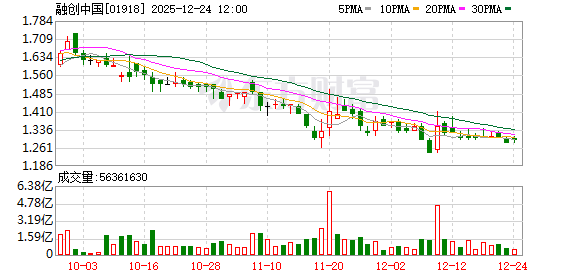
Core Viewpoint - Sunac China has successfully completed its offshore debt restructuring plan, effectively resolving its debt risks at the company level, marking a significant milestone in the real estate sector's debt resolution efforts [2][3]. Group 1: Debt Restructuring Overview - Sunac China announced the formal effectiveness of its offshore debt restructuring plan on December 23, which has resolved its debt risks [2]. - The company completed a total of 154 billion yuan in domestic debt restructuring in 2024, becoming the first real estate company to achieve overall restructuring of domestic corporate bonds [3]. - The restructuring plan includes options such as cash tender offers, stock economic rights payment, debt-for-equity swaps, and debt extensions, aiming to reduce nearly 70% of its domestic public debt [3][4]. Group 2: Offshore Debt Restructuring Details - In 2023, Sunac China completed its first round of offshore debt restructuring, introducing a "debt-for-equity + extension" approach, which included options for new notes, convertible bonds, and mandatory convertible bonds [3][5]. - By October 14, 98.5% of creditors approved the offshore debt restructuring plan, with a corresponding debt amount support rate of 94.5% [5]. - The Hong Kong High Court approved the restructuring of approximately 9.6 billion USD in offshore debt on November 5, leading to the complete elimination of existing offshore debt [5]. Group 3: Industry Context and Implications - As of now, 21 distressed real estate companies have completed debt restructuring or reorganization, with a total debt resolution scale of approximately 1.2 trillion yuan [7]. - The successful debt restructuring of large real estate firms like Sunac China is expected to optimize the industry's balance sheets and accelerate market stabilization [7]. - The debt restructuring has fundamentally alleviated debt pressure, but real estate companies must restore their liquidity capabilities to fully resolve their financial issues [7]. Group 4: Operational Recovery - Sunac China is projected to deliver over 50,000 new homes this year, with cumulative deliveries exceeding 700,000 homes over the past four years [8]. - Despite sales pressures, the company reported a cumulative contract sales amount of 33.89 billion yuan in the first 11 months of this year, with high-end products performing well [8]. - The company currently holds a total land reserve of over 12.4 million square meters, with nearly 70% located in core first- and second-tier cities, providing a solid foundation for future asset activation [8].
集装箱多式联运“一单制”扩容 国铁集团再签7家航运企业
Zhong Guo Jing Ying Bao· 2025-12-24 08:40
Core Viewpoint - The China National Railway Group (China Railway Group) is expanding its collaboration with shipping companies to enhance the container multimodal transport "single document" system, aiming to streamline logistics and reduce costs for the economy [1][2]. Group 1: Collaboration and Agreements - On December 23, 2025, China Railway Group signed agreements with seven shipping companies, increasing the total number of partners in the multimodal transport "single document" initiative to 11 [1]. - The collaboration aims to leverage the strengths of each party to offer more efficient multimodal transport products, supporting the smooth circulation of the real economy and lowering logistics costs [1][2]. Group 2: Implementation and Benefits - The first multimodal transport "single document" was issued on November 22, 2024, for the joint transport of 3,000 tons of aluminum bars, marking the trial launch of this system [1]. - Customers can fill in transport information through the railway 95306 platform, which automates the booking process for both water and rail transport, allowing for a single payment for the entire logistics service [2]. - The "single document" system addresses previous issues of cumbersome paperwork and data sharing between different transport modes, simplifying the logistics process and reducing overall costs [2]. Group 3: Policy Support and Development - Recent policies from central authorities have promoted the development of the multimodal transport "single document" system, including the "Action Plan for Reducing Costs and Improving Quality in Transportation Logistics" released in November 2024 [3]. - The China National Railway Group reported that the railway 95306 platform has published 243 "single document" products this year, establishing multiple iron-water transport corridors across various regions [3].
中国汽研发布2025智能底盘测试成果及八项团体标准
Zhong Guo Jing Ying Bao· 2025-12-24 02:12
Core Insights - The "2025 Intelligent Chassis Pioneer Plan" results were released by the China Automotive Engineering Research Institute, focusing on the construction of systems and ecological leadership [1] - The report addresses key industry questions regarding the planning of the industry, technology project initiation, and consumer perception of intelligent chassis performance [1] - The report presents performance metrics of various vehicle models in scenarios such as emergency obstacle avoidance and slippery road conditions, analyzing the current capabilities and challenges of intelligent chassis technology [1] Industry Developments - The release of the "2025 Intelligent Chassis Testing Research Results Report" serves as a benchmark for the technical characteristics and performance standards that excellent intelligent chassis should possess, guiding industry resources towards high-quality technology [1] - The Director of the Chassis Research Center at China Automotive Engineering Research Institute announced the "2026 Pioneer Plan Testing Technology Innovation and Planning," emphasizing the evolution of testing frameworks and the need to track technological trends closely [2] - The new plan aims to expand testing depth in extreme scenarios and complex conditions, driving the synchronous iteration of testing standards and technological research with a forward-looking and detailed evaluation approach [2]

银行科创债规模逼近3000亿元 中小银行发行提速
Zhong Guo Jing Ying Bao· 2025-12-24 01:46
临近年末,商业银行科创债发行步伐持续加快。12月19日,平安银行、海南银行相继发布2025年科技创 新债券上市流通公告。仅12月份以来,已有10家商业银行发行科创债券,合计规模接近240亿元。 总体来看,自5月份债市"科技板"落地以来,金融机构、科技型企业、股权投资机构等市场主体发行范 围持续扩容。据Wind统计显示,截至12月23日,银行间市场发行规模已突破9730亿元,其中64家商业 银行发行规模达2774亿元。尤其城商银行、农商银行等中小地方银行发行主体增速明显。 中经传媒智库专家、中国城市发展研究院投资部副主任袁帅表示,监管层为推动科创金融产品创新,提 供了多方面具体支持。在政策引导上,明确鼓励银行发行科创债,为科创企业提供长期稳定资金,给予 政策倾斜与引导。在审批流程方面,简化科创债发行审批环节,提高审批效率,降低银行发行的时间成 本,加快资金投向科创领域。 余丰慧进一步强调,银行在评估和监控资金使用的"科创属性"时,通常会建立一套严格的评审标准和流 程,涵盖项目的技术先进性、市场前景、团队实力等多个维度。同时,还会定期对资金使用情况进行跟 踪检查,确保资金真正用于科技创新活动。部分银行还会与第三方 ...
霍尼韦尔孙建能称规模效应不足推高可持续航空燃料成本
Zhong Guo Jing Ying Bao· 2025-12-24 00:17
Core Insights - The high cost of Sustainable Aviation Fuel (SAF) is primarily due to insufficient economies of scale in the industry, limited raw material supply, and high initial investment requirements for advanced production technologies [1][3]. Group 1: Market Demand and Supply - There is a high demand for SAF in the international market, while the supply of used cooking oil, a key raw material for SAF production, is insufficient [1]. - The price of SAF has exceeded $2000 per ton (approximately 14,000 RMB per ton), with the price of used cooking oil rising from over 1000 RMB per ton two years ago to over 6000 RMB per ton currently [1]. Group 2: Production Capacity and Technology - Honeywell's Ecofining™ technology has achieved commercial production of SAF in China, with a large production facility in Lianyungang capable of converting 10,000 barrels of kitchen waste oil into SAF daily, equating to an annual capacity of approximately 500,000 tons [2]. - Another SAF production base in Suining, Sichuan, is expected to have an annual output of 500,000 tons, potentially becoming the largest sustainable aviation fuel project in Western China [2]. Group 3: Cost Challenges and Solutions - The high cost of SAF is attributed to the early stage of the industry, limited production scale, and high raw material costs, alongside the need for clear and long-term policy support to stabilize market demand [3]. - Honeywell is focused on continuous technological innovation and industry collaboration to reduce SAF costs, including the development of the FT Unicracking™ technology, which can lower carbon emissions by 90% and reduce costs by up to 20% [4]. - The company is also expanding the range of raw materials used for SAF production, such as utilizing corn-based, cellulose-based, or sugar-based ethanol, to diversify sources and meet growing aviation market demand [4]. Group 4: Environmental Impact and Future Outlook - SAF has a significant carbon reduction potential, with the ability to reduce greenhouse gas emissions by over 80% throughout its lifecycle [4]. - The International Air Transport Association predicts that by 2050, SAF will contribute to 65% of the aviation industry's carbon reduction efforts, making it a key pathway for achieving net-zero emissions in aviation [4].

成都都市圈5年:加速打造长江上游核心增长极
Zhong Guo Jing Ying Bao· 2025-12-23 17:04
Core Insights - Chengdu Metropolitan Area is the third nationally approved urban agglomeration in China and the first in the Midwest, comprising Chengdu, Deyang, Meishan, and Ziyang [1][2] - The area has transitioned from a "growth phase" to an "enhancement phase" over the past five years, with significant improvements in urban integration and overall strength [1][3] Development Achievements - The Chengdu Metropolitan Area has established over 350 educational partnerships and facilitated 757.78 million medical insurance settlements, with a total payment of 2.965 billion yuan [2] - The "one-hour traffic circle" has been realized, with ongoing construction of railways expected to fully cover the metropolitan area by 2027 [2] - The cross-city railway S3 line has seen an average monthly passenger volume of approximately 907,000, with a peak of 1.06 million in a month [2] Industrial Growth - The area has developed nine key industrial chains, including new displays, rail transit, and clean energy equipment, with a total scale exceeding 1.2 trillion yuan [3] - Eighteen national-level industrial clusters have been cultivated, with over 2,860 enterprises in cross-city cooperation, marking a year-on-year growth of 21.8% [3] Collaborative Development - The Chengdu Metropolitan Area is increasingly collaborating with the Yangtze River Delta, showcasing its development achievements and inviting investment opportunities [4][5] - The area aims to leverage the advanced industries and capital from the Yangtze River Delta while serving as a strategic hub for the Belt and Road Initiative [5] Future Goals - Future plans include enhancing the metropolitan area's core functions, industrial collaboration, and technological transformation, aligning with national and provincial development strategies [5]