Zhong Guo Hua Gong Bao

Search documents
沧州炼化2025年效益目标超额完成
Zhong Guo Hua Gong Bao· 2026-01-12 03:00
Core Viewpoint - From 2025 onwards, Cangzhou Refining has implemented a quality and efficiency enhancement strategy, achieving operational performance that exceeds target objectives and improving financial indicators such as asset-liability ratio and operating cash flow [1] Group 1: Operational Strategy - Cangzhou Refining has adopted comprehensive budget management as a key approach to deepen system optimization and cost control, aiming to win the efficiency battle [1] - The company has established a daily tracking and reporting mechanism for production, inventory, delivery, and settlement data to ensure a smooth production-sales-settlement chain, targeting "fast production, fast delivery, fast settlement" [1] Group 2: Financial Management - The company has focused on key aspects of cash flow management through four dimensions: accelerating cash recovery, optimizing payments, strengthening supervision, and dynamic control, resulting in improved financial conditions and the best asset-liability ratio in recent years [1] - Non-production expenditures have been reduced by over 10% year-on-year through initiatives targeting 36 expense categories, including environmental, office, and financial costs [1] Group 3: Optimization Projects - Cangzhou Refining has formed a "three-in-one" optimization framework and established a large optimization team, launching 16 production and operational optimization projects through a "project solicitation + leaderboard" approach [1] - Regular specialized meetings are held to ensure thorough calculations of optimization benefits, promoting a cost culture and conducting activities aimed at diagnosing expenses [1]
“四维”闯出“内卷”重围 | 大家谈 如何破除“内卷式”竞争
Zhong Guo Hua Gong Bao· 2026-01-12 03:00
Core Viewpoint - The chemical industry is facing significant challenges such as product homogeneity and ongoing price wars, leading to shrinking profits and a state of "involution." To break this cycle, companies need a comprehensive strategy focusing on long-term value, resource optimization, innovation, and digital transformation [1][2]. Group 1: Strategic Direction - Companies should recalibrate their development logic with a long-term value mindset, determining what to focus on and what to avoid, thus seizing structural opportunities during industry restructuring. New Yangfeng has consistently implemented its "three doubles, one more" and "special, excellent, strong" strategies, allowing it to navigate away from the "involution" vortex [1]. Group 2: Resource Optimization - Companies need to proactively secure key raw material resources through recycling and process optimization, establishing unique resource control and allocation efficiency. New Yangfeng has strategically reserved mineral resources in regions like Hubei and Sichuan, achieving a total phosphate resource reserve of several hundred million tons, which enhances its cost advantage as mining capabilities develop [1]. Group 3: Innovation and Collaboration - Companies should strengthen industry-academia-research cooperation to create an open and collaborative innovation ecosystem, linking market demands with R&D. New Yangfeng has established specialized research institutes for its two main businesses, increased R&D investment, and built high-level research teams, facilitating rapid conversion of research outcomes into productivity [2]. Group 4: Digital Transformation - Companies must accelerate digital transformation to connect production, supply chains, and client interfaces, creating differential advantages in cost control, safety management, and customized services. New Yangfeng has implemented digital pilot projects over three years, enhancing overall management levels in safety, environmental protection, quality, and sales, which directly translates into economic benefits. In the first three quarters of 2025, despite adverse conditions, New Yangfeng achieved a net profit of 1.374 billion yuan, a year-on-year increase of 23.43% [2]. Conclusion - Breaking the cycle of "involution" requires a long-term strategic vision, resource optimization, technological innovation, and digital transformation. Only through these measures can chemical companies achieve high-quality development [2].

四化建交出市场开拓亮眼答卷
Zhong Guo Hua Gong Bao· 2026-01-12 03:00
Core Viewpoint - China Chemical Engineering Fourth Construction Co., Ltd. (referred to as "the company") has made significant progress in its business development, securing contracts for major projects, which indicates a strong market position and growth strategy moving forward [1][2]. Group 1: Project Achievements - The company has recently won contracts for over 30 projects with a scale exceeding 100 million yuan since 2025 [2]. - Notable projects include the Phase I engineering of a 200,000-ton metal magnesium project for Xinjiang Hefeng Magnesium Industry Co., Ltd., which involves refining and casting, hydrochloric acid resolution systems, and hydrogen chloride absorption systems [2]. - Another significant contract is with Guangzhi Technology (Jingzhou) Co., Ltd. for the construction of an acrylic resin production base, which includes production facilities, utilities, storage, and office R&D areas, with a planned construction period of 365 days [2]. Group 2: Strategic Development - In 2025, the company aims to enhance its operational layout and market expansion in response to a complex market environment, guided by the China Chemical Engineering Group's "135" development strategy and "123456" work approach [1]. - The company is focusing on consolidating its main business market, expanding into non-chemical markets, and solidifying its overseas market presence [1]. - Leadership is actively engaging in high-end marketing across various regions, including Thailand, Vietnam, and Cambodia, to foster communication with project owners and expand the company's development space [1].
石化企业品牌故事征文比赛结果揭晓
Zhong Guo Hua Gong Bao· 2026-01-12 02:53
Core Viewpoint - The China Petroleum and Chemical Industry Federation has announced the results of the 11th Petroleum and Chemical Enterprise Brand Story Writing Competition, aimed at promoting brand development in the oil and chemical industry through the enhancement of product variety, quality, and brand creation [1] Group 1: Competition Results - A total of 15 first prizes, 25 second prizes, and 30 third prizes were awarded in the graphic category, while the video category saw 10 first prizes and 20 second prizes awarded [1] - Notable winners in the graphic category include Hubei Xingfu Electronic Materials Co., Ltd. with "Awakening of Light, Eternal Flame of 'Chip'", China Chemical Engineering Group Co., Ltd. with "Three Times Advancing to the Poles, Creating the Legend of Iron Army", and China National Petroleum Corporation's Natural Gas Sales Sichuan-Chongqing Branch with "The Guardian of the Lamp at Mount Shengdeng" [1] - In the video category, first prize winners include Shaanxi Yanchang Petroleum (Group) Co., Ltd. with "Spark" and CNOOC (China) Limited Hainan Branch with "Deep Sea No. 1 Phase II Project Tour" [1]



“人工智能+制造”专项行动实施意见印发
Zhong Guo Hua Gong Bao· 2026-01-12 02:53
Core Viewpoint - The recent implementation of the "Artificial Intelligence + Manufacturing" initiative by the Ministry of Industry and Information Technology and eight other departments aims to enhance the intelligent transformation of the petrochemical industry, providing a clear path and methods for upgrading through AI technologies [2][3]. Group 1: Policy and Implementation - The "Opinions" document sets a target for 2027, aiming for the secure supply of key AI technologies and maintaining a leading position in industrial scale and empowerment levels globally [2]. - The initiative includes the application of 3-5 general large models in manufacturing, the launch of 1,000 high-level industrial intelligent entities, and the creation of 100 high-quality data sets in industrial fields [2]. - It emphasizes the cultivation of 2-3 globally influential leading enterprises and a number of specialized small and medium-sized enterprises, along with the establishment of 1,000 benchmark enterprises [2]. Group 2: Industry-Specific Measures - The "Guidelines" propose enhancing quality and efficiency in the petrochemical sector by utilizing large models and digital twin technologies to innovate oil and gas exploration and chemical material development [3]. - The integration of production operations, pipeline transportation, and chemical processes with expert experience and operational data is essential for developing large models specific to the petrochemical industry [3]. - The focus is on building high-quality data sets and data resource nodes to support the training and development of industry-specific AI models, thereby improving AI application levels in complex scenarios [3]. Group 3: Current Challenges and Future Prospects - Despite the emergence of specialized large models in 2023, challenges remain, such as slow progress in building high-quality data sets and insufficient reliability [3][4]. - The petrochemical industry, characterized by complex production processes, can benefit from AI by bridging the gap between mechanistic models and real systems through the fitting of long-distance and multimodal data [4]. - The industry's strong automation foundation and vast data volume provide significant opportunities for the application of AI technologies [4].
化外部“碳约束”为内部“绿动能” ——写在CBAM正式实施之际
Zhong Guo Hua Gong Bao· 2026-01-12 02:51
Core Viewpoint - The EU's Carbon Border Adjustment Mechanism (CBAM) has transitioned into a mandatory phase, posing significant challenges and opportunities for China's petroleum and chemical industries, necessitating a shift towards greener practices and compliance with international standards [1] Group 1: Fertilizer Industry - The default emission value for Chinese urea products is set at 2.85 tons of CO2 per ton, nearly double that of major natural gas-producing countries like Algeria, while anhydrous ammonia has a default value of 4.36 tons of CO2 per ton [2] - Fertilizer companies must transition from "extensive management" to "refined accounting" by establishing a Monitoring, Reporting, and Verification (MRV) system that meets international standards to counter unreasonable default values [2] Group 2: Hydrogen Industry - The hydrogen industry, although small, is crucial for the green development of the petrochemical sector, with a default emission intensity for Chinese hydrogen set at 26.64 tons of CO2 per ton [2] - The CBAM's inclusion of hydrogen signifies a rejection of traditional "grey hydrogen" production methods, pushing the industry towards green hydrogen production using renewable energy [2] Group 3: Refining and Chemical Industries - The refining and organic chemicals sectors are identified as potential main battlegrounds under CBAM, with the EU targeting organic chemicals and polymers to prevent "carbon leakage" [3] - Refining products will have their carbon footprints traced throughout the supply chain, and any expansion of CBAM will impact the entire petrochemical industry, including synthetic resins and plastics [3] Group 4: Data Management and Compliance - CBAM challenges companies not only in production processes but also in data governance, requiring transparent and verifiable supply chain data [4] - Companies need to establish a digital carbon management platform to track carbon footprints from raw material procurement to end products, while adhering to compliance standards [4] - The industry must view the CBAM as both a long-term and a critical challenge, transforming external carbon constraints into internal green momentum through technological innovation and management upgrades [4]
25家中国化企上榜全球研发投入2000强(附名单)
Zhong Guo Hua Gong Bao· 2026-01-11 04:33
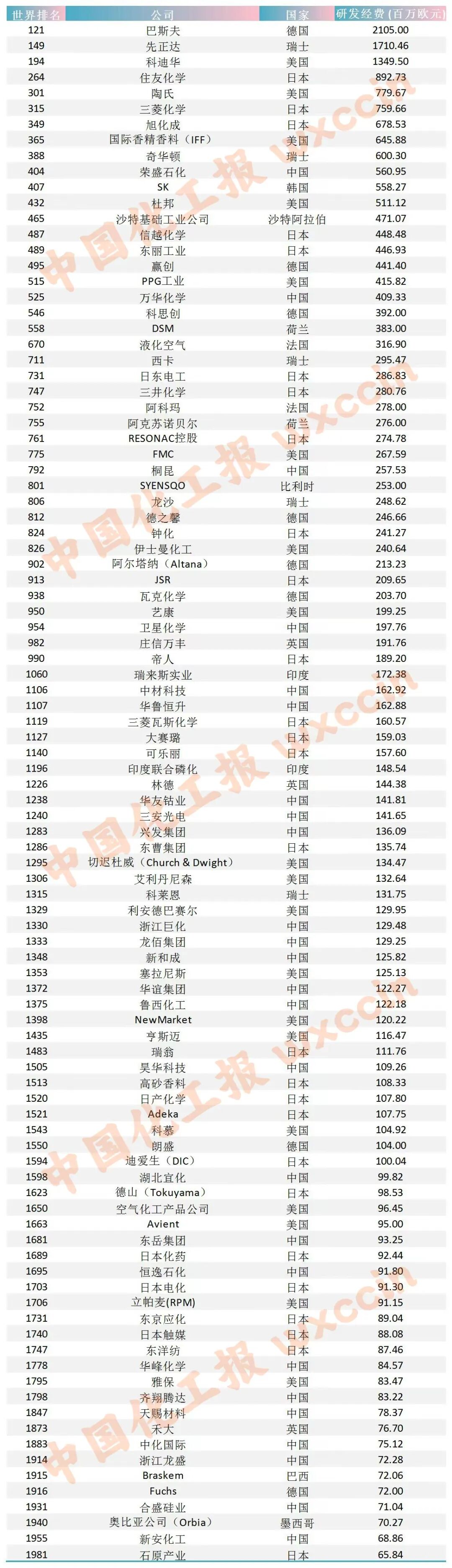
Group 1 - The European Commission's report on the "2025 EU Industrial R&D Investment Scoreboard" reveals that 25 Chinese chemical companies are among the top 2000 global industrial R&D investors for 2025 [1] - Among the top 2000 companies, there are 98 chemical firms, with a total R&D investment of €26 billion in 2024, averaging €1.32 million per chemical company [2] - BASF leads the chemical industry with an R&D investment of €2.1 billion in 2024, ranking 121st overall; Syngenta ranks 149th with €1.71 billion, and Corteva ranks 194th with €1.34 billion [2] Group 2 - By country, Japan has the highest number of companies on the list with 27, followed by China with 25, the USA with 19, Germany with 8, and Switzerland with 5 [3] - The total R&D investment of the top 2000 companies in 2024 is €144.6 billion, accounting for over 90% of global corporate R&D investment [3] - The top ten companies globally include Amazon, Alphabet (Google's parent company), Meta (Facebook's parent company), Microsoft, Apple, Huawei, Samsung Electronics, Volkswagen, Johnson & Johnson, and Intel [4] Group 3 - The detailed list of the top chemical companies includes BASF (Germany), Syngenta (Switzerland), Corteva (USA), and others, with their respective R&D expenditures listed in millions of euros [5][6] - Notable Chinese companies in the list include Rongsheng Petrochemical (ranked 404th with €560.95 million), Wanhua Chemical (525th with €409.33 million), and others [5][6] - The report highlights the competitive landscape of the chemical industry, showcasing significant investments in R&D by various global players [2][3]





中国石化与中国航油实施重组,释放哪些信号?
Zhong Guo Hua Gong Bao· 2026-01-09 09:40
Core Viewpoint - The restructuring of China Petroleum & Chemical Corporation (Sinopec) and China Aviation Oil Holding Company marks the first major state-owned enterprise (SOE) restructuring in 2026, signaling the beginning of deeper reforms in China's state-owned economy [1] Group 1: Restructuring Details - The merger aims to enhance the integration of aviation fuel production and sales, allowing Sinopec to streamline its operations and improve inventory management, thereby reducing costs and increasing efficiency [2] - The restructuring is expected to strengthen the competitive position of SOEs in the global market, particularly in response to complex international environments [1][2] Group 2: Market Potential - With the rapid development of new energy sources, demand for aviation kerosene is projected to grow, with estimates suggesting a need of approximately 50 million tons by 2030, reflecting an average annual growth rate of about 4% during the 14th Five-Year Plan [2] - China has the potential for significant growth in air travel frequency, currently at 0.6 trips per person per year, compared to developed countries, indicating a robust future demand for aviation fuel [2] Group 3: Sustainable Aviation Fuel (SAF) - The restructuring will facilitate the entire supply chain for sustainable aviation fuel (SAF), positioning the companies to capitalize on the global shift towards low-carbon solutions [3] - Sinopec is recognized as the first Asian company to develop and commercialize bio-jet fuel production technology, while China Aviation Oil plays a crucial role in the promotion and application of SAF [3]

大洋生物:穿越产业周期 缔造长青“传奇”
Zhong Guo Hua Gong Bao· 2026-01-09 08:44
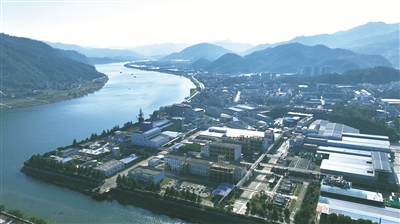
Core Viewpoint - The potassium carbonate industry has transformed from a high-energy, high-pollution sector to a green and sustainable one, exemplified by Zhejiang Dayang Biotechnology Group Co., Ltd's journey over the past 50 years, showcasing its growth and adaptation in response to China's economic reforms and market demands [1][4]. Group 1: Company Evolution - Dayang Biotechnology has evolved from a small collective workshop in 1976 to a leading enterprise with products sold globally, marking significant milestones such as shareholding reform, listing on the Shenzhen Stock Exchange, and receiving multiple honors like "National Intellectual Property Advantage Enterprise" [1][4]. - The company anticipates a net profit increase of over 50% for the fiscal year 2025, driven by the growth of its core products, potassium carbonate and veterinary raw materials, indicating strong growth momentum [9][23]. Group 2: Technological Innovation - Dayang Biotechnology has prioritized technological innovation, achieving a three-stage evolution from survival to competitive advantage and future leadership, with significant advancements in production processes and environmental sustainability [11][13]. - The company developed a proprietary low-temperature carbonization technology for potassium carbonate production, which integrates environmental protection and cost efficiency, establishing a competitive edge in the market [13][15]. Group 3: Environmental Commitment - Dayang Biotechnology has invested nearly 100 million yuan in environmental initiatives, achieving zero wastewater discharge in inorganic product production, and transforming environmental compliance into a competitive asset [15][16]. - The company has pioneered technologies for treating low-concentration ammonium chloride wastewater, contributing to its zero discharge goal and creating new profit sources from recovered materials [15][16]. Group 4: Community Engagement - Over its 50-year history, Dayang Biotechnology has played a crucial role in local economic development, contributing significantly to tax revenues and community welfare, and demonstrating strong social responsibility [18][19]. - The company has actively participated in local governance and infrastructure projects, such as securing water sources for the community, showcasing its commitment to social engagement and environmental stewardship [19][21]. Group 5: Future Outlook - Dayang Biotechnology aims to leverage technological innovation and high-quality development to enhance its competitive position, with plans to invest in high-end materials like polyether ether ketone (PEEK) to meet national strategic needs [14][23]. - The company is positioned for sustainable growth, with a focus on maintaining its core business while exploring new high-value sectors, reflecting a balanced strategy of preservation and innovation [22][23].
在时代激流中向新致远——湖北三宁化工从传统化工到产业新赛道的跨越与升腾
Zhong Guo Hua Gong Bao· 2026-01-09 06:00
Core Viewpoint - The transformation of Hubei Sanning Chemical Co., Ltd. from traditional fertilizers to new chemical materials during the "14th Five-Year Plan" period exemplifies a significant industrial change in China's chemical industry, driven by innovation and practical efforts [1][3]. Group 1: Company Transformation and Growth - During the "14th Five-Year Plan," Sanning expanded its product matrix from 20 to 32, enhancing its industrial chain and achieving a 78% increase in synthetic ammonia production [3][5]. - The company has successfully entered new markets such as nylon new materials, showcasing its ability to adapt and thrive amid market fluctuations and international challenges [1][3]. - Sanning's coal chemical segment has seen significant advancements, including a hydrogen supply capacity of 150,000 standard cubic meters per hour and a battery-grade dimethyl carbonate capacity of 150,000 tons per year [3][5]. Group 2: Innovation and R&D - Sanning has invested 2.27 billion yuan in R&D, maintaining a research intensity of over 3.2%, with high-tech product revenue accounting for over 68% [11][12]. - The establishment of the Sanning Technology R&D Center in Wuhan, with an investment of approximately 700 million yuan, aims to foster innovation and attract high-end talent [9][10]. - The company has achieved over 50 invention patents and 760 utility model patents, contributing to a comprehensive patent defense system across production, R&D, and environmental protection [11][12]. Group 3: Green and Intelligent Transformation - Sanning is committed to green development, implementing projects for VOCs deep treatment and energy-saving modifications, aligning with national "dual carbon" goals [7][11]. - The company has adopted intelligent manufacturing practices, including unmanned operations, significantly reducing manual intervention in production processes [7][8]. - Sanning's focus on sustainable practices has led to the development of eco-friendly fertilizers, enhancing agricultural productivity and soil quality [14]. Group 4: Future Goals and Strategic Vision - Looking ahead to the "15th Five-Year Plan," Sanning aims to achieve sales revenue exceeding 50 billion yuan and tax contributions over 5 billion yuan by 2030 [15]. - The company plans to strengthen its core technologies, enhance resource utilization, and expand its product offerings in fine phosphorus chemicals and new materials [15]. - Sanning's strategic vision includes deepening digital upgrades and exploring mergers and acquisitions to expand its market presence while adhering to green development principles [15].