
Zhong Guo Hua Gong Bao

Search documents
天津滨海高新区:聚焦创新驱动 打造产业高地
Zhong Guo Hua Gong Bao· 2025-12-31 01:42
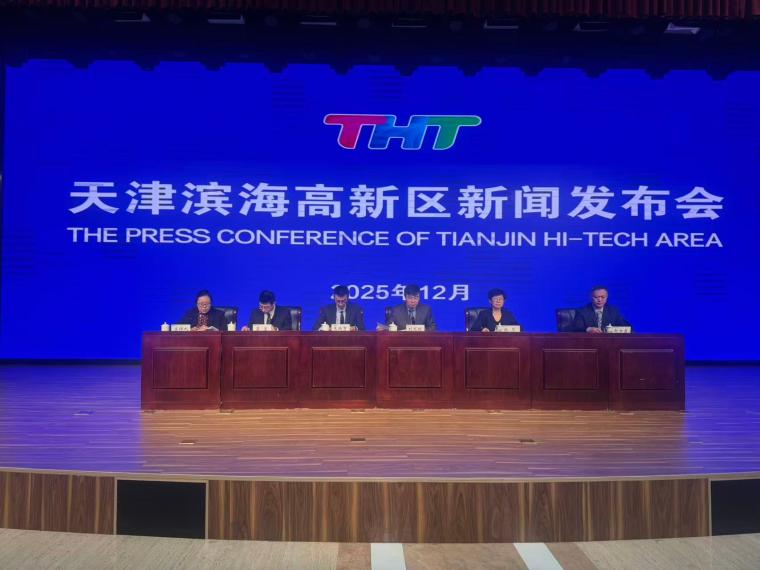
Core Viewpoint - Tianjin Binhai High-tech Zone is focusing on the high-quality development of the biopharmaceutical industry during the 14th Five-Year Plan period, aiming for an annual output growth rate of 16% and maintaining a leading position in national rankings for three consecutive years [3][4]. Group 1: Development Overview - During the 14th Five-Year Plan, the biopharmaceutical industry is identified as a core leading industry, integrating technological and industrial innovation [3]. - The region has established nearly 20 national-level innovation platforms and over 60 municipal-level platforms in the biopharmaceutical field, receiving nearly 30 national and Tianjin municipal science awards [4]. Group 2: Infrastructure and Innovation - The establishment of a matrix of innovation platforms, including national key laboratories and the Haihe Laboratory, has been a focus, with multiple functional platforms such as GMP centers and incubators [4]. - The region has gathered over 100 companies in the cell and gene therapy industry chain, covering the entire industry chain from cell extraction to clinical application [4]. Group 3: Future Outlook - Looking ahead to the 15th Five-Year Plan, the goal is to establish a nationally leading biotechnological and biomanufacturing industry hub, focusing on five core industries: innovative drugs, medical devices, cell therapy, brain-computer interaction, and pharmaceutical services [5]. - The region aims to create a significant industrial cluster with national influence and global competitiveness in the biopharmaceutical sector [5][6].

中国SAF产业加速驶入全球航道
Zhong Guo Hua Gong Bao· 2025-12-30 07:38
Core Insights - The SAF production facility in Lianyungang, supported by Honeywell and Jiaao Environmental, has achieved large-scale production, processing 10,000 barrels daily, equating to an annual capacity of approximately 500,000 tons, marking a significant step towards commercial operation in China's SAF industry [1] - The project is seen as a pivotal element in the intersection of policy and market opportunities, reshaping China's green aviation energy landscape and positioning "Made in China" within the global green energy supply chain [1] Market Dynamics - The global aviation industry faces unprecedented carbon reduction pressures, with SAF being the most viable decarbonization pathway, potentially reducing lifecycle carbon emissions by up to 80% compared to traditional jet fuel [2] - In Europe, the demand for SAF is expected to surge due to regulatory drivers, with a projected consumption of 1.9 million tons by 2025, while domestic production capacity is only around 1 million tons, leading to a significant supply gap [2] - The International Air Transport Association forecasts that global SAF production could reach 2 million tons by 2025, representing only 0.7% of total fuel consumption, indicating substantial market potential [2] - The limited supply of SAF in the U.S. due to trade policies is shifting global buyers' focus towards Asia-Pacific production capabilities, presenting historic opportunities for Chinese SAF exports [2] Domestic Support and Infrastructure - China is establishing a comprehensive support system for the SAF industry, with top-level design and legal frameworks such as the Energy Law and Renewable Energy Law laying the groundwork for bio-liquid fuel development [3] - The People's Bank of China and other departments have included SAF in the 2025 Green Finance Support Project Directory, facilitating access to green loans and bonds to alleviate financing challenges [3] - Local governments are actively building industrial ecosystems, exemplified by Chengdu's establishment of a dedicated SAF industrial park and the introduction of supportive policies with over 100 million yuan investment planned over three years [3] Industry Growth Projections - The combination of policy and market forces is propelling the Chinese SAF industry into a rapid growth phase, with predictions of nearly tenfold market growth over the next five years, potentially reaching a market size in the trillions [4] Strategic Collaborations - The partnership between Honeywell and Jiaao Environmental aims to create a complete commercial loop from technology to product, utilizing Honeywell's Ecofining technology to efficiently convert waste oils into high-quality SAF [5] - Jiaao Environmental has established itself as a leader in SAF production with a designed capacity of 372,400 tons per year, leveraging its expertise in biomass energy [5] Market Expansion and Achievements - Jiaao Environmental has made significant strides in 2025, obtaining necessary approvals for domestic sales and becoming the first company on China's bio-jet fuel export list, exporting approximately 13,400 tons to Rotterdam [6] - Strategic investments from major players like BP and China National Aviation Fuel have solidified Jiaao's market position and distribution channels [6] Future Directions - The focus for the SAF industry will be on continuous cost reduction, with efforts to narrow the cost gap with traditional jet fuel through technological advancements and financial support [7] - Diversification of raw materials is essential to mitigate supply risks, with potential future developments in utilizing agricultural waste and synthetic fuels from green hydrogen and carbon dioxide [7] - Companies may explore advanced SAF production technologies and integrate carbon capture and utilization to develop "negative carbon" fuels as a future direction [7]


石油与化工指数多数上涨(12月22日至26日)
Zhong Guo Hua Gong Bao· 2025-12-30 06:24
Group 1: Industry Performance - The majority of indices in the petroleum and chemical sectors increased last week, with only the petroleum trade index declining [1] - The chemical raw materials index rose by 5.09%, the chemical machinery index by 5.46%, the chemical pharmaceuticals index by 0.14%, and the pesticide and fertilizer index by 3.86% [1] - In the petroleum sector, the petroleum processing index increased by 0.87%, and the petroleum extraction index by 1.96%, while the petroleum trade index fell by 1.60% [1] Group 2: Commodity Prices - International crude oil prices showed a strong performance, with WTI settling at $56.74 per barrel, up 0.14% from December 19, and Brent at $60.64 per barrel, up 0.28% [1] - The top five petrochemical products with price increases included battery-grade lithium carbonate up 15.29%, purified terephthalic acid up 8.32%, paraxylene (CFR China) up 7.26%, polyester FDY up 5.04%, and shale oil up 4.98% [1] - The top five petrochemical products with price declines included liquid chlorine down 37.72%, liquefied natural gas down 6.69%, pure MDI down 4.23%, sulfur down 3.96%, and vitamin D3 down 3.85% [1] Group 3: Capital Market Performance - The top five listed chemical companies with the highest stock price increases were Shenjian Co. up 61.20%, Jiuding New Materials up 48.75%, Jinlitai up 33.12%, Zaiseng Technology up 28.39%, and Dongcai Technology up 28.34% [2] - The top five listed chemical companies with the largest stock price declines were Bohai Chemical down 28.32%, Suli Co. down 13.71%, Tiantie Co. down 13.06%, Bofei Electric down 11.76%, and Kesi Co. down 10.22% [2]


硫酸行情回落 短期价格企稳
Zhong Guo Hua Gong Bao· 2025-12-30 06:24
Core Insights - The recent surge in sulfuric acid prices, with a cumulative increase of 63.9%, is primarily driven by rising sulfur raw material prices and supply constraints [1][2] - As of late December, sulfur prices have begun to decline, leading to price reductions in sulfuric acid in key production areas [1][2] Group 1: Price Dynamics - Sulfur prices have significantly increased, reaching a peak of over 4200 yuan in mid-December, marking a 130% rise since the beginning of the year [2] - The domestic sulfuric acid market has seen a price increase due to the rising costs of sulfur and sulfur iron ore, which have provided strong cost support [2][3] Group 2: Supply and Demand Factors - Domestic sulfuric acid production has been affected by maintenance shutdowns, with approximately 21.38 million tons of annual processing capacity undergoing repairs [2] - Export orders for sulfuric acid have been robust, with exports increasing by 90.69% year-on-year, while imports have decreased by 23.21% [2] Group 3: Industry Response and Policy Measures - In response to rising sulfur prices, a meeting was held to stabilize sulfuric acid prices and prioritize domestic supply, leading to a reduction in export volumes [4][5] - The industry is shifting towards a collaborative approach to ensure supply stability, with encouragement for long-term purchase agreements between sulfuric acid and phosphate fertilizer producers [5] Group 4: Market Outlook - Analysts predict that the sulfuric acid market will experience a period of price stabilization and supply prioritization, with a potential return to more reasonable price levels [7] - Despite a slight decline in sulfur prices, the overall cost support from sulfur iron ore remains strong, limiting the downward price movement of sulfuric acid [7]
2025年硅化物行业发展稳中向好
Zhong Guo Hua Gong Bao· 2025-12-30 06:17
Group 1 - The overall inorganic silicon industry is experiencing stable supply on the upstream side and expanding applications on the downstream side, leading to good economic benefits in 2025 [1] - The five major sub-sectors of the silicon industry are maintaining profitability, with white carbon black, silica sol, and molecular sieves leading the industry in profit margins; production of sodium silicate, white carbon black, and silica sol has increased by 7% to 8% year-on-year, with profit margins for white carbon black and silica sol averaging between 15% and 20% [1] - The white carbon black sector has a high concentration of leading enterprises, with a notable trend towards low-carbon production methods; the annual production capacity of fumed silica has exceeded 200,000 tons, showing rapid growth [1] Group 2 - The silica sol industry has clear expansion expectations, with an anticipated addition of 300,000 tons of production capacity over the next three years; current annual production is about 600,000 tons, with capacity expected to exceed 1 million tons, primarily concentrated in Hubei [2] - Demand for silica sol is rapidly increasing in industries such as catalysts and paints due to technological advancements [2] - In the catalyst and molecular sieve sectors, leading enterprise Luoyang Jianlong Micro Sodium is experiencing rapid growth, with a gross profit margin of 30%; the annual production capacity of sodium metasilicate is about 500,000 tons, with an annual output of approximately 400,000 tons [2] Group 3 - Looking ahead to 2026, the industry aims to focus on structural adjustments, technological innovation, and safety and environmental protection to lay a solid foundation for the "14th Five-Year Plan" [3] - The industry is encouraged to enhance traditional sectors through green technology, promoting smart, green, and integrated development while leveraging digital technologies [3] - There is an emphasis on utilizing regional advantages across different areas to create a self-controlled, safe, and differentiated competitive silicon-based industry [3]
制冷剂行业长期景气获支撑
Zhong Guo Hua Gong Bao· 2025-12-30 06:17
Group 1 - The core viewpoint of the articles highlights the ongoing regulatory changes in China's refrigerant industry, particularly focusing on the production, use, and import quotas for ozone-depleting substances (ODS) and hydrofluorocarbons (HFCs) for the year 2026, which are expected to support the long-term market stability of refrigerant products [1][2] - The 2026 quota plan emphasizes "total control and structural optimization," with a total production quota for second-generation refrigerants set at 151,400 tons, a decrease of 12,100 tons from 2025, indicating a continued push towards phasing out these substances [1] - The production quota for R22 is 146,100 tons, reflecting a 2.02% reduction from 2025, while R141b's quota is set to zero, showcasing the accelerated exit of second-generation refrigerants from the mainstream market [1] Group 2 - For third-generation refrigerants, the total production quota remains stable at 797,800 tons, an increase of 5,963 tons from 2025, with notable increases in quotas for key varieties such as R32 and R134a [2] - The new quota adjustment mechanism allows production companies to apply for inter-species quota adjustments under specific conditions, which is expected to benefit leading companies with diverse product lines and high quota bases, enhancing their capacity structure and profitability [2] - The downstream refrigerant market is characterized by dual support from traditional and emerging sectors, with the air conditioning industry entering a replacement cycle and the electric vehicle market driving steady demand for refrigerants [3]
元力股份拟全资收购同晟新材料
Zhong Guo Hua Gong Bao· 2025-12-30 06:17
Core Viewpoint - Fujian Yuanli Activated Carbon Co., Ltd. plans to acquire 100% equity of Fujian Tongsheng New Materials Technology Co., Ltd. for 470.7 million yuan to enhance its silica (white carbon black) business and create industrial chain synergy [1] Group 1: Acquisition Details - The acquisition will make Tongsheng New Materials a wholly-owned subsidiary of Yuanli, helping to reduce existing related-party transactions and avoid potential competition [1] - Yuanli has engaged in regular related-party transactions with Tongsheng, selling sodium silicate worth 5.119 million yuan in 2023 and 12.3536 million yuan in 2024 [1] - The integration is expected to save 8% to 12% in external sales costs and taxes [1] Group 2: Business Strategy - Tongsheng focuses on precipitated silica, while Yuanli produces silica through a carbonate method, indicating potential competition that will be resolved through the acquisition [1] - The acquisition aims to quickly fill gaps in Yuanli's silica business and create synergy with its existing activated carbon and sodium silicate operations, establishing a "tripod" development structure [1]

德企拟开发稀土回收新技术
Zhong Guo Hua Gong Bao· 2025-12-30 06:09
Group 1 - Bioweg UG, a German biotechnology and green chemistry company, has received €1.5 million in funding from the German government to develop technology for recovering rare earth elements (REEs) from wastewater [1] - The funding is part of the "Technology Metals Transformation Challenge" program initiated by the German Innovation Agency, aimed at developing and validating innovative processes for recovering critical metals from complex waste streams [1] - The project is in collaboration with the Technical University of Berlin, focusing on selective water-based methods to achieve high-purity outputs suitable for downstream applications [1] Group 2 - Bioweg's co-founder and CEO, Pratik Maharwal, stated that the funding will accelerate the development of a sustainable, biotechnology-based rare earth recovery platform in collaboration with the Technical University of Berlin [1] - The platform builds on Bioweg's expertise in fermentation technology and green chemistry, which has already been applied at scale in bacterial cellulose production [1]
澳大利亚将强制储备天然气
Zhong Guo Hua Gong Bao· 2025-12-30 06:09
业界对政府此举表示支持但同时持谨慎态度。澳大利亚能源生产商代表马卡洛克表示,他支持为新的天 然气生产商建立国内天然气储备体系,但他也表达了谨慎态度,他说:"澳大利亚竞争与消费者委员会 指出,过去政府的干预导致了投资的延迟和下降,这可能会对供应产生长期影响。" 昆士兰州主要液化天然气出口商、本地能源巨头Origin Energy以及英国石油巨头壳牌也呼吁该制度在制 定时充分考虑对投资的影响。 西澳大利亚州要求,国内天然气储备量必须达到15%。 澳大利亚气候变化及能源部长鲍恩表示:"国内生产的天然气应该优先供应国内用户。"他指出,随着现 有合同到期,预计国内天然气供应能力将会增加,价格将会下降。他还表示,已将该计划告知主要出口 方。为响应各方对天然气市场进行审查的呼吁,该制度的设计将基于以下原则:与各州和领地政府合 作,建立全国性框架;优先发展国内天然气储备;强调长期商业生产和投资确定性。 此外,鲍恩强调其LNG产业虽长期支撑国内经济,但前保守联盟政府因政策失当导致供应短缺与价格 飙升,国内燃气用户需要得到保护。他还表示,政府将实施放松管制和简化治理体系,以提高市场透明 度。 中化新网讯 近日,澳大利亚联邦政府宣 ...
韩国石化企业主动削减裂解产能
Zhong Guo Hua Gong Bao· 2025-12-30 06:09
Core Viewpoint - South Korean petrochemical companies have submitted restructuring plans to the government, proposing to reduce cracker capacity due to oversupply and declining profits, with a target capacity reduction of 2.7 to 3.7 million tons [1] Group 1: Restructuring Plans - As of December 19, petrochemical companies in Ulsan, Yeosu, and Daesan have submitted business restructuring proposals to the government [1] - The Ministry of Trade, Industry and Energy will review these plans and provide support policies covering finance, taxation, research and development, and regulatory exemptions [1] - The specific details of the restructuring plans have not been disclosed, but the integration of assets between HD Hyundai and LG Chem in the Daesan petrochemical complex has been confirmed [1] Group 2: Capacity Reduction - The restructuring aims to achieve a maximum reduction of 25% in naphtha cracker capacity, translating to an annual capacity reduction of 2.7 to 3.7 million tons [1] - The Minister of Trade, Industry and Energy, Kim Jong-kwan, stated that if these plans are effectively executed, the industry could achieve its capacity reduction goals [1] - The year 2023 is seen as a preparatory year for strategic planning, while 2024 will be critical for the execution of these plans [1]