
Zhong Guo Qi Che Bao Wang

Search documents
付于武“八十自述”折射中国汽车崛起宏大叙事
Zhong Guo Qi Che Bao Wang· 2025-10-15 01:55
这是付于武同志的一部人生口述,在我看来,既是一幅精彩纷呈的人生画卷,更是一幅中国汽车崛 起的时代画卷!读后掩卷,感慨万千。 书中的最精彩之笔,当然是其中第五部分:学会旅程。在书中,付老历数了从胡亮、张兴业、张小虞到 他自己的这一段旅程,每个人都璀璨夺目。这些汽车工业的前辈,在我眼中,有些也只是一个名字,但 在付老眼中,他们都是精彩故事的主角。比如他说张兴业,只参加了10天的俄语速成班,但"半年之 后,他购买的80多本俄语书上,已然找不到一个生字……"张兴业追随饶斌从一汽调入一机部汽车局, 后来苏联停止向我国供应飞机坦克轴承,他临危受命专攻军用轴承,结果"三年内建成专用生产线";比 如他讲述张小虞,一位为了中国汽车"鞠躬尽瘁、死而后已"的学者型官员形象跃然纸上;对于付老自 己,他回忆了学会的"二次创业"。从张小虞时期起,他就"主导"了学会日常工作,后来张小虞因病去 世,付老又开始独当一面,再后来,到了李骏、张进华、侯福深时期,又以名誉理事长的身份继续发光 发热。可以说,学会的发展,深深打上了付老的烙印…… 要感谢这个时代,这个中国汽车大转型、大崛起的历史窗口期,给了汽车人以历史性的机遇和可以尽情 挥洒的平台。 ...


从田间到车轮 “车农融合”架起共富桥 ——2025人民车市消费节暨供销市集开启
Zhong Guo Qi Che Bao Wang· 2025-10-15 01:54
作为活动的核心参与方与乡村振兴的深度践行者,启辰汽车以"共创价值,共谋福祉"为使命,全程深度 融入系列活动。自2010年成立以来,启辰汽车历经15年发展,累计服务近140万用户,2022年底全面开 启新能源转型后,迅速构建起覆盖插混、纯电、氢能源三大路线的"三纵三横"技术体系,打造Vita原生 纯电平台、V-Joy智能座舱、鲁班电池三大核心技术品牌,形成"新能源车+燃油车"的全车系产品矩 阵,可精准匹配城乡家庭多元化出行需求。为响应国家新能源汽车下乡政策,启辰于2025年正式启 动"十百千是时候启辰"十市百县千镇巡回购车季,上半年已走进山东、贵州、山西等多地的县乡市场并 获广泛认可。活动现场,启辰汽车展区人气高涨,工作人员热情为到场群众讲解车型优点、专属福利政 策,不少观众围在展车旁仔细咨询,亲身体验车内空间与智能功能。试乘试驾区域排起长队,参与试乘 试驾的观众反馈良好,纷纷表示车辆驾驶平顺、空间充足,符合日常使用需求。此外,启辰还设置趣味 互动环节,通过问答、游戏等形式,让群众更深入了解品牌与车型,进一步拉近与消费者的距离,真正 将"好车、好服务、好政策"送到百姓身边。15年滚烫之路将继续前行,后续,启辰汽 ...
汽车早餐 | 京东11月9日将发布新车;小马智行、文远知行港股IPO获证监会备案;全国机动车保有量达4.6亿辆
Zhong Guo Qi Che Bao Wang· 2025-10-15 01:23
Domestic News - The Ministry of Public Security reported that the total number of motor vehicles in China reached 460 million by the end of September 2025, with 360 million being cars and 550 million drivers, making it the largest in the world in terms of total and incremental numbers [2] - The State Administration for Market Regulation unconditionally approved several mergers and acquisitions, including Mitsubishi Motors' acquisition of GAC Mitsubishi's equity [3] - The China Semiconductor Industry Association expressed serious concerns regarding the intervention of the Dutch government in Nexperia, a subsidiary of Wingtech Technology, emphasizing support for fair business practices and opposing discriminatory measures against Chinese companies [4] - The China Automotive Power Battery Industry Innovation Alliance reported that the total production of power and other batteries in September was 151.2 GWh, a year-on-year increase of 35.4%, with cumulative production from January to September reaching 1,121.9 GWh, up 51.4% year-on-year [5] International News - The Abu Dhabi Investment Authority signed a strategic cooperation agreement with Stellantis to develop an integrated automotive ecosystem in the UAE [6] - Germany's Federal Statistical Office reported a 10.4% year-on-year increase in the number of companies filing for bankruptcy in September [7] - South Korea's semiconductor exports in September reached $16.62 billion, a year-on-year increase of 21.9% [8] - South Korea's ICT product exports in September totaled $25.43 billion, a 14% year-on-year increase, with a trade surplus of $11.65 billion [9] Corporate News - Honda reported a total of 54,544 vehicles sold in China in September 2025, with cumulative sales from January to September reaching 467,867 vehicles [10] - CATL and Dongfeng Commercial Vehicle established a new five-year strategic cooperation agreement focusing on product development and industry standards [11] - Pony.ai and WeRide received approval from the China Securities Regulatory Commission for their respective IPOs in Hong Kong [12] - JD.com announced a new car launch in collaboration with GAC and CATL, set for November 9, focusing on consumer insights and sales without direct involvement in manufacturing [13] - Bohai Automotive received approval from the Beijing State-owned Assets Supervision and Administration Commission for a major asset restructuring plan [14] - ZTE announced that its automotive-grade chip, Han域 M1, has been shipped by the end of September 2025, designed for next-generation automotive electronic architectures [15]


航天智造:前三季度净利润同比预增12%-24%
Zhong Guo Qi Che Bao Wang· 2025-10-15 01:13
Core Viewpoint - Aerospace Intelligence (300446) expects a net profit attributable to shareholders of 600 million to 664 million yuan for the first three quarters of 2025, representing a year-on-year growth of 12% to 24% [1] Group 1: Financial Performance - The company's automotive parts business is driven by increased customer demand, achieving a revenue growth of approximately 25% year-on-year [1] - This growth in the automotive parts segment contributes to the overall increase in both revenue and profit for the company [1]

韧性增长,上汽集团深化改革路径渐明
Zhong Guo Qi Che Bao Wang· 2025-10-14 08:16
Core Viewpoint - SAIC Motor Corporation has demonstrated significant growth and resilience in the automotive market, achieving record sales and showcasing the effectiveness of its comprehensive reform initiatives [1][3][19]. Sales Performance - In September, SAIC Motor sold 440,000 vehicles, marking a year-on-year increase of 40.4% and a quarter-on-quarter increase of 21%, setting a new high for the year [1]. - From January to September, the company achieved cumulative vehicle sales of 3.193 million units, a year-on-year growth of 20.5%, and maintained a leading position in the industry [3]. Organizational Restructuring - The company restructured its organizational framework by establishing a "Large Passenger Vehicle Sector" and "SAIC Commercial Vehicle" entity to enhance efficiency and responsiveness across the entire product lifecycle [4]. - The restructuring led to a consolidated revenue of 299.59 billion yuan, a year-on-year increase of 5.2%, and a net profit attributable to shareholders of 6.02 billion yuan, with a significant growth of 432.2% in the net profit excluding non-recurring items [4]. Financial Health - The net cash flow from operating activities reached 21.04 billion yuan, representing an 85.9% year-on-year increase, providing ample funding for ongoing technology development and market expansion [4]. - The company’s focus on optimizing production, sales, and inventory structures has resulted in quality growth and improved operational efficiency [4]. Product Innovation - SAIC Motor has launched several innovative products, including the MG4 with solid-state battery technology, which has received over 45,000 pre-orders, and the new generation IM LS6 with advanced range and charging capabilities [10][12]. - The company’s product lineup reflects a strong emphasis on technological innovation, with multiple models achieving significant order volumes shortly after their launch [12]. Technological Advancements - The company has developed a comprehensive technology framework focusing on intelligent connectivity, vehicle safety, and advanced power systems, enhancing its competitive edge in the market [16][17]. - SAIC Motor's DMH hybrid engine has achieved a thermal efficiency of 46.3%, and its vehicles are gaining traction in the European market, showcasing the company's advancements in energy efficiency and sustainability [17]. Strategic Direction - The reforms and innovations at SAIC Motor signify a shift from scale growth to quality management and from price competition to technology competition, reflecting the company's unique market resilience [19]. - The company’s approach emphasizes long-termism and the development of systemic capabilities to secure a sustainable competitive advantage in a rapidly evolving automotive landscape [19].


消息:宝马大中华区副总裁孙玮荣退
Zhong Guo Qi Che Bao Wang· 2025-10-14 08:16
10月14日获悉,根据慕尼黑宝马总部10月13日发出的"管理层级"邮件,宝马大中华区企业事务副总 裁孙玮退休。 ...
智启新元 全链共济 福田康明斯第三届制造技术节擘画智能制造新未来
Zhong Guo Qi Che Bao Wang· 2025-10-14 07:47
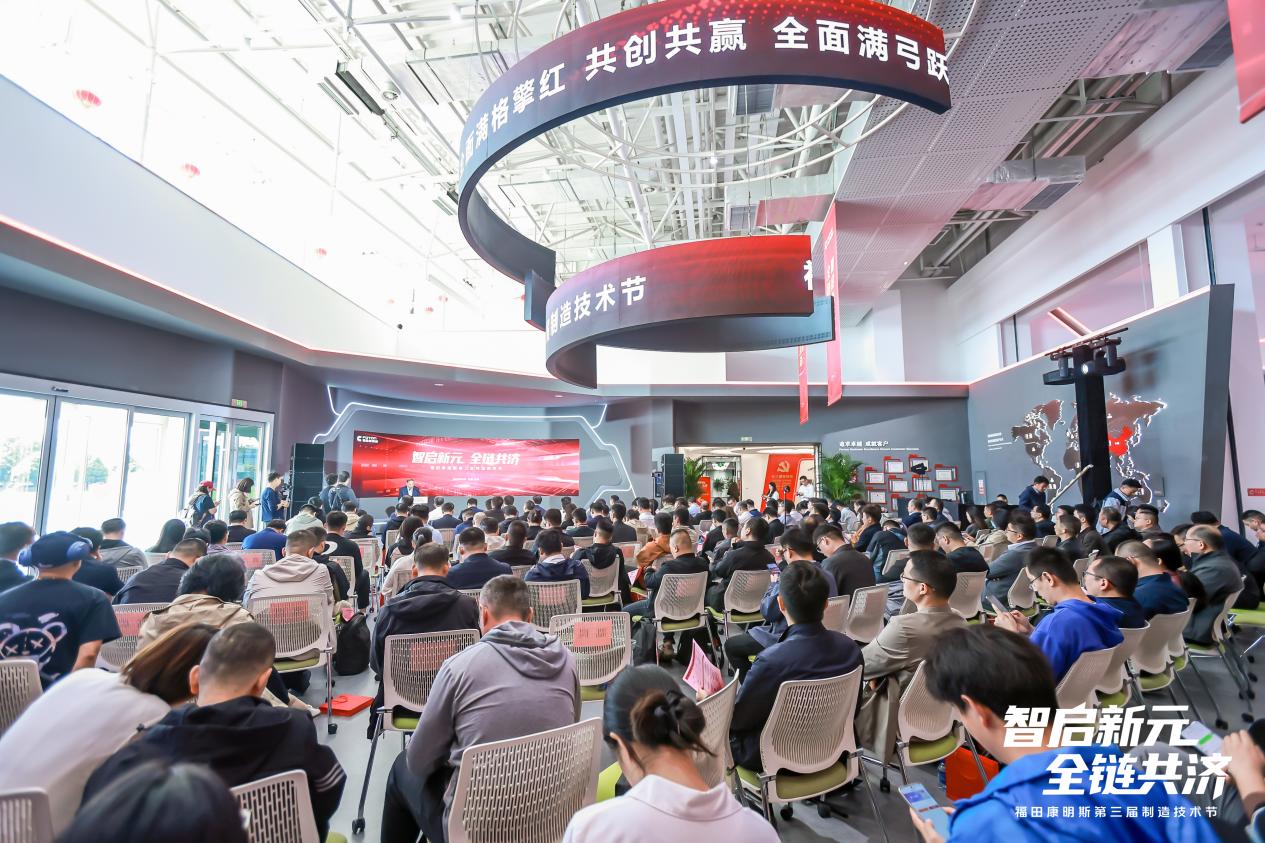
秋高气爽,硕果盈枝。 10月13日,福田康明斯第三届制造技术节在北京隆重开幕。本届技术节以"智启新元 全链共济"为主题,汇聚了来自行业协会、产业链伙伴及媒体代表 的众多嘉宾,共同见证了一场融合前沿思想、技术创新与生态协同的制造业盛会。 工业4.0浪潮奔涌向前,当智能制造成为产业升级的核心引擎,当人工智能成为推动工业化发展的强大动能,福田康明斯以全新数智姿态,展现其在智 能制造领域的深厚积淀与前瞻布局,为推动行业迈向高质量发展注入了磅礴动能。 一、智启新元:以AI+制造引领产业变革新浪潮 在新一轮科技革命与产业变革的浪潮中,智能制造已成为推动制造业高质量发展的核心引擎。福田康明斯总经理陈剑在开幕致辞中回顾了公司从探索到 实践、从搭建平台到深化生态的智能制造历程。他指出,第一届技术节以探索者之姿叩响智能制造大门,第二届以"新质动力、智造生态、链合共赢"凝聚行 业共识,而本届技术节则站在新起点,聚焦"系统化推进"与"产业链协同",致力于构建一个开放、融合、共创的交流平台。他强调,智能制造不仅是技术升 级,更是生态重构、价值链融合与发展模式的深刻转型,是企业提升全球竞争力的关键路径。 "独行快,众行远"。智能制造绝非 ...
以创新装备彰显中国智造力量 中国国际消防展在京开幕
Zhong Guo Qi Che Bao Wang· 2025-10-14 07:46
Group 1 - The 21st China International Fire Equipment Technology Exchange Exhibition was held in Beijing, showcasing a record number of exhibitors and products from both domestic and international sources [1][3] - Over 1,200 exhibitors from more than 40 countries and regions participated, with a significant increase in international guests and buyer groups [3] - The exhibition covered the entire fire rescue industry chain, featuring the latest technologies in fire monitoring, firefighting, emergency rescue, and smart fire safety management, including innovative equipment like drones and robots developed in China [5][10] Group 2 - Shanghai Greman Systems showcased a "5+1" product matrix, highlighting innovations in firefighting, rescue, and emergency command scenarios [6] - Notable products included the M180GD four-wheel drive firefighting robot, high-altitude drone firefighting vehicles, and multifunctional fire trucks, all designed to address specific challenges in high-risk environments [8][10] - The exhibition served as a platform for industry experts to exchange ideas and promote the integration of innovative equipment into practical rescue operations, enhancing China's emergency response capabilities [10][12]

占比50%以上 中国重汽实力登陆第二十一届中国国际消防展
Zhong Guo Qi Che Bao Wang· 2025-10-14 07:11
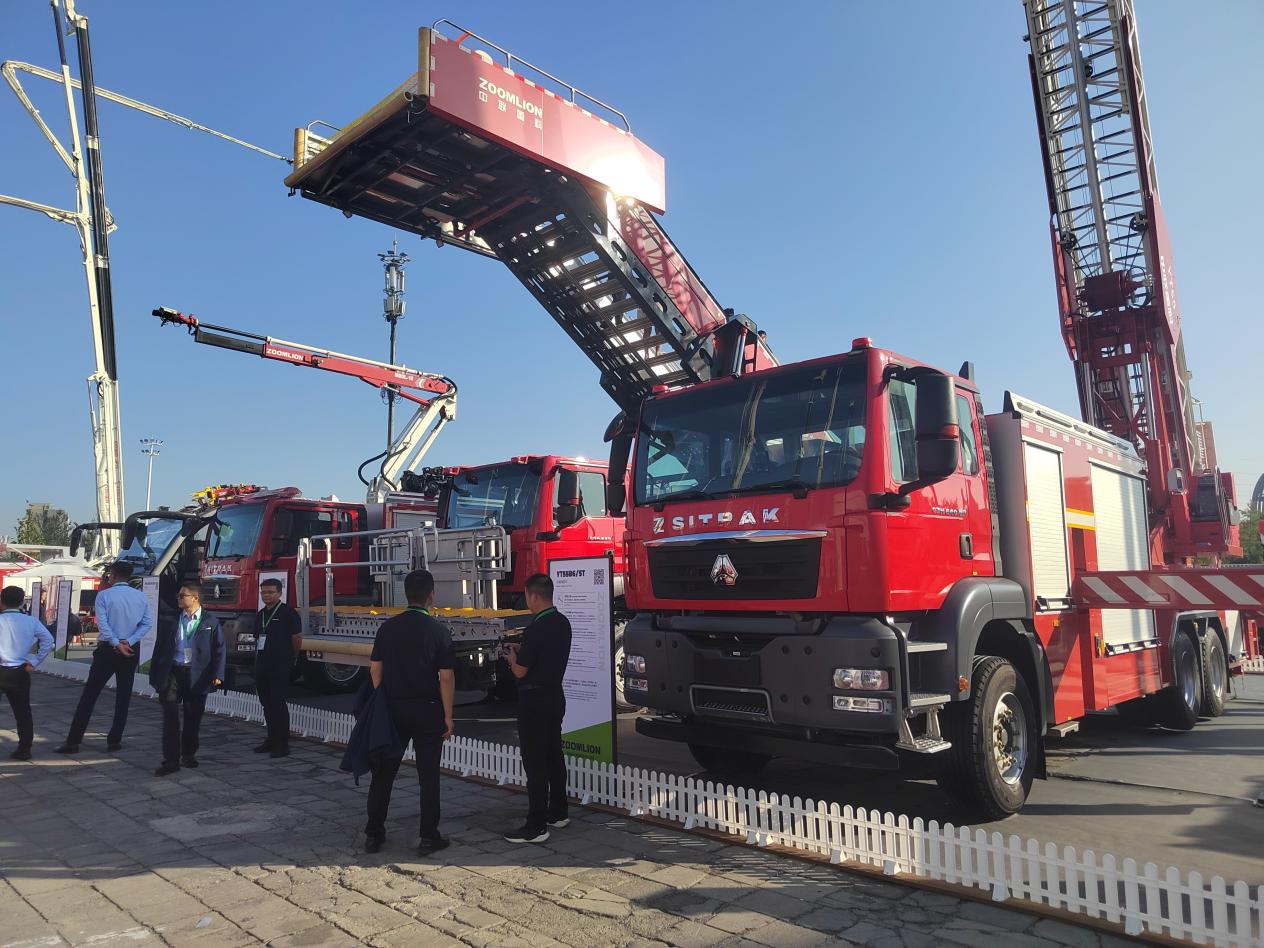
Core Viewpoint - The 21st China International Fire Equipment Technology Exchange Exhibition showcases China's leading position in the fire emergency equipment sector, with China National Heavy Duty Truck Group (CNHTC) prominently featuring its products, particularly the SITRAK series, which dominates the exhibition with over 50% of the showcased vehicles [1][10]. Group 1: Exhibition Highlights - The exhibition, held in Beijing, is a significant event in Asia's fire safety industry, attracting global cutting-edge technologies and innovative solutions [1]. - CNHTC's specialized vehicles, particularly those based on the SITRAK chassis, accounted for more than 90 vehicles out of approximately 170 fire protection heavy trucks displayed, representing over 50% of the total [3][5]. Group 2: Product Features and Innovations - The SITRAK series includes various fire emergency vehicles such as water tankers, foam fire trucks, aerial fire trucks, airport fire trucks, and rescue vehicles, designed to meet diverse emergency scenarios [5][7]. - The SITRAK chassis has undergone significant upgrades, including the transition from EGR to Hi-SCR technology for engines, enhancing reliability, economy, and lightweight design [7]. - The interior of the SITRAK vehicles has been fully upgraded, featuring a 12.3-inch central control LCD screen, safety airbags, and various advanced safety and comfort features [7]. Group 3: Market Position and Brand Influence - SITRAK, a high-end heavy truck brand created in collaboration with Germany's MAN in 2009, has established a strong market presence in over 50 countries and regions [5]. - The brand has achieved a market share of over 250,000 units in the past decade, leading the high-end heavy truck industry in China [5][10]. - CNHTC's commitment to high-end fire emergency equipment is evident in its extensive R&D capabilities and market competitiveness, aiming to elevate China's fire safety equipment to international standards [10]. Group 4: After-Sales Support - SITRAK offers comprehensive after-sales services, including unconditional on-site service, exclusive binding services, extended warranties, regular inspections, and lifetime technical support to meet user operational needs [8].

沈方俊加盟极氪出任公关总监
Zhong Guo Qi Che Bao Wang· 2025-10-14 06:52
10月13日消息,前阿里系的沈方俊已加盟极氪,担任极氪公关总监一职。沈方俊今年5月离开淘宝 公关部,此前去向未明。在加入阿里之前,他曾担任海尔集团新媒体总监,还是中国企业蓝V联盟发起 人。在阿里任职期间,他主导策划了"中国锦鲤""淘宝直播间卖火箭卫星"等多个知名案例。此次沈方俊 加盟极氪,有望凭借其丰富的经验,为极氪的公关工作带来新的思路和活力,助力极氪在市场竞争中取 得更好的成绩。 ...