Guo Ji Jin Rong Bao

Search documents
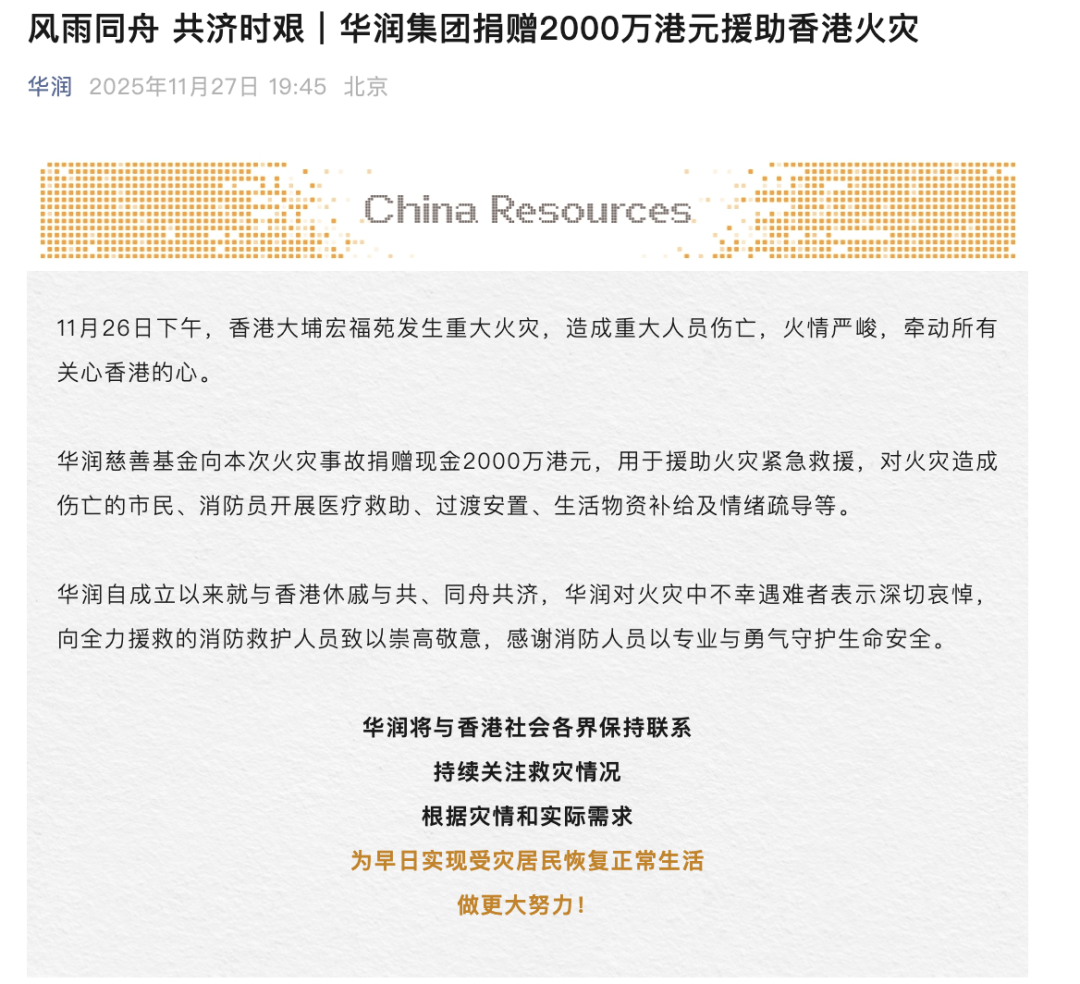
华润饮料、伊利、霸王茶姬、绿茶……多家食品饮料企业驰援香港
Guo Ji Jin Rong Bao· 2025-11-28 07:29
Core Viewpoint - The fire disaster in Hong Kong's Tai Po district has resulted in significant casualties and property damage, prompting a swift response from various companies to provide aid and support for recovery efforts [1]. Company Responses - China Resources Beverage activated its emergency response mechanism, delivering 10,080 bottles of water within two hours to ensure basic drinking water safety for affected residents [1]. - China Resources Vanguard coordinated with local welfare agencies to provide over 5,000 essential supplies, including milk and instant noodles, to support disaster relief efforts [1]. - China Resources Charity Fund donated HKD 20 million for emergency rescue, medical assistance, and emotional support for victims [1]. - Wens Foodstuff Group pledged HKD 40 million in cash and supplies to assist local residents with recovery and rebuilding efforts [1]. - Nongfu Spring delivered drinking water and beverages to shelters and donated HKD 10 million in cash and HKD 5 million in supplies for emergency relief and recovery [5]. - Haitian Flavoring & Food Company donated HKD 10 million for medical aid, emergency housing, and rebuilding efforts [7]. - Heytea contributed HKD 5 million to support disaster relief and subsequent recovery efforts for affected residents [11]. - Cha Baidao initiated a donation of HKD 5 million for medical assistance and rebuilding efforts for the affected population [13]. - Yum China, through its brands, donated RMB 3 million to aid Hong Kong's Tai Po fire relief efforts [15]. - Green Tea Group donated HKD 1 million for emergency assistance to affected residents and will continue to monitor the situation [18]. - Haidilao initiated an emergency response, sending over 1,200 boxes of instant food and donating RMB 4 million for medical aid and essential supplies [22].





高途转型阵痛持续......
Guo Ji Jin Rong Bao· 2025-11-28 07:26
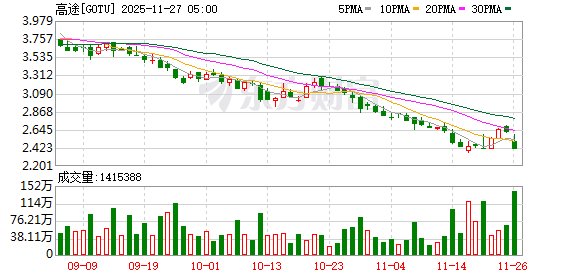
Core Viewpoint - Gaotu reported significant revenue growth but continued to face net losses, indicating a struggle to achieve profitability despite increasing sales [2][6][9]. Financial Performance - For the first three quarters of the year, Gaotu's revenue reached 4.462 billion yuan, a year-on-year increase of 41.0%, with Q3 revenue at 1.579 billion yuan, up 30.7% [2][4]. - The company recorded a net loss of 239 million yuan for the first three quarters, with a Q3 net loss of 147 million yuan [2][4]. - Gross billings for Q3 were 1.189 billion yuan, reflecting an 11.2% increase [4]. - Operating loss decreased by 63.7% to 178 million yuan, while net loss improved by 68.8% to 147 million yuan [4]. Stock Buyback and Market Reaction - Gaotu completed an $80 million stock buyback plan ahead of schedule and initiated a new $100 million buyback plan, having repurchased approximately 2,752 American Depositary Shares for nearly 620 million yuan [4][5]. - Despite the buyback efforts, Gaotu's stock price fell by 8.05% to $2.40 per share as of November 26 [5]. Business Segments and Growth Prospects - The company's revenue is primarily derived from learning services, which account for over 95% of total revenue, with non-subject and traditional learning services contributing over 80% of Q3 revenue [7][9]. - Gaotu expects Q4 revenue for FY2025 to be between 1.628 billion and 1.648 billion yuan, representing a year-on-year growth of 17.2% to 18.7% [7]. Cost Structure and Profitability Challenges - Gaotu's main business costs for Q3 were 536 million yuan, a 24.6% increase from the previous year, driven by rising personnel costs and other operational expenses [9]. - Operating expenses remained high at 1.222 billion yuan, with sales expenses constituting 55.29% of total revenue [9]. Strategic Initiatives and Compliance Issues - Gaotu is pursuing an "All with AI, Always AI" strategy, integrating AI into its educational services, but R&D spending has decreased, indicating a mismatch between investment and outcomes [14]. - The company has faced compliance issues, including penalties for violations related to offline education operations [12]. Historical Context and Industry Trends - Gaotu has experienced significant fluctuations in its business since its inception, with revenue dropping from 6.562 billion yuan in 2020 to 2.961 billion yuan in 2023, despite a recovery to 4.554 billion yuan in 2024 [11]. - The online education sector is facing challenges with high customer acquisition costs and declining conversion rates, impacting Gaotu's profitability [9].
11月游戏版号出炉:B站杀入捉宠赛道,和平精英PC端来了
Guo Ji Jin Rong Bao· 2025-11-28 07:25
Core Insights - The National Press and Publication Administration released information on the approval of domestic online games for November 2025, issuing a total of 184 licenses, including 178 domestic and 6 imported games [1] - The number of game licenses issued in November set a new annual high, with a total of 1,624 licenses granted in 2025 so far, surpassing the total of 1,416 licenses issued in 2024 [1] - Notable companies such as Tencent, Perfect World, Bilibili, and others received approvals for key products, including Tencent's "No Man's Land" and Perfect World's "New Zhu Xian: Light Enjoy" [1] Group 1: Game Approvals - A total of 184 online games received licenses in November, marking a significant increase in the number of approvals compared to previous months [1] - The cumulative number of game licenses issued in 2025 reached 1,624, with 1,532 for domestic games and 92 for imported games [1] - The approval of 184 games includes several key products from well-known companies, indicating a robust market for new game releases [1] Group 2: Specific Game Insights - Bilibili's new game "Shining! Luming" is likely a pet-catching and nurturing game, marking Bilibili's entry into the pet game segment [2] - The competitive landscape for pet-catching games is intense, with major players like miHoYo and NetEase also launching similar titles [4] - "Star Sand Island," developed by Seed Lab, is a farming simulation game set to release in February 2026 on multiple platforms, highlighting the popularity of life simulation games [4] Group 3: Imported Games - The imported game "Rhythm Source Point" is the domestic version of the popular music game "Arcaea," known for its unique 3D gameplay and high reputation among players [5]






“动刀”子品牌,江淮全力押注尊界
Guo Ji Jin Rong Bao· 2025-11-28 06:37
Core Insights - The launch of the high-end brand "Zun Jie" has shifted Jianghuai Automobile's strategic focus, with the Zun Jie S800 achieving significant sales in the ultra-luxury sedan market [1][5] - Jianghuai is restructuring its operations to prioritize the Zun Jie brand, integrating various business units and pausing investments in other brands like Yuwei [3][4] Group 1: Zun Jie Brand Development - Zun Jie plans to introduce six new models next year, covering multiple vehicle categories including SUVs and MPVs [3] - The Zun Jie S800, launched at a price range of 708,000 to 1,018,000 yuan, is positioned to target high-net-worth individuals with advanced technology features [5][6] - In just four months, Zun Jie S800 has received over 15,000 orders, with October sales reaching 1,970 units, making it the best-selling model in the ultra-luxury segment [8] Group 2: Financial Performance - Jianghuai's third-quarter revenue reached 11.534 billion yuan, a year-on-year increase of 5.52%, with a gross margin improvement to 14.10% [8][10] - The average revenue per vehicle sold increased by 26.47% year-on-year, from 100,100 yuan to 126,600 yuan [8] - Despite the positive sales performance, the company reported a net loss of 661 million yuan, influenced by high initial investments in the Zun Jie brand and competitive pressures in the export market [10] Group 3: Challenges and Market Position - The Yuwei brand, which was expected to play a key role in Jianghuai's transition to electric vehicles, has not met market expectations, with low sales figures [4] - Jianghuai's other brands, including Jianghuai and Jianghuai Ruifeng, are also struggling, with monthly sales figures in the hundreds for some models [4]


共克时艰!华润、越秀、招商......多家开发商驰援香港
Guo Ji Jin Rong Bao· 2025-11-28 06:35
11月26日下午,香港新界大埔屋邨宏福苑多栋住宅楼发生火灾,造成重大人员伤亡。 据多家媒体报道,香港消防处11月28日通报,大埔宏福苑火灾已造成94人遇难。另外,截至11月28日5时,火灾的78名伤者中,有12人危殆、28人严 重、16人稳定,22人已出院。 28日凌晨,香港特区政府消防处举行发布会称,灭火行动已大致完成,有4个单位仍在灭火,并对其他单位进行洒水降温,避免死灰复燃。消防处表 示,将进入受火灾影响的7栋大厦里所有单位进行搜索,确保里面没有其他被困人士,该行动预计在28日早9点完成。 火灾牵动人心,各大地产商纷纷伸出援手。自11月27日以来,多家内地及香港企业宣布向香港捐赠慈善基金,用于火灾救援、灾后恢复等事宜 其中,华润慈善基金向此次火灾事故捐赠现金2000万港元,用于援助火灾紧急救援,对火灾造成伤亡的市民、消防员开展医疗救助、过渡安置、生活 物资补给及情绪疏导等。 越秀集团亦宣布携越秀地产、创兴银行、香港人寿等下属企业,捐赠1000万港元现金,用于应急救援和人道救助,全力支持受灾家庭渡过难关。 招商局集团则通过慈善基金会拨出2000万港元设立专项慈善基金,用于应急救灾和灾后恢复等工作,为受灾市 ...
营业部“大撤退”!券商员工下一站去哪?
Guo Ji Jin Rong Bao· 2025-11-28 05:41
Core Viewpoint - The brokerage industry is undergoing significant downsizing, with over 30 firms, including prominent names like Industrial Securities and Guosen Securities, closing more than 180 branches in response to rising operational costs and the shift towards online services driven by technology [1][2][4]. Group 1: Branch Closures - Industrial Securities has led the industry in branch closures, announcing the cancellation of 41 branches this year alone, including multiple locations in November [2][3]. - Other firms, such as Caida Securities and Jin Yuan Securities, have also announced branch closures, indicating a broader trend within the industry [3]. Group 2: Operational Efficiency - The brokerage sector faces challenges such as increased competition and rising fixed costs, prompting firms to streamline operations by closing physical branches [4]. - Merging nearby branches can create economies of scale, reduce operational costs, and enhance management efficiency, allowing firms to focus resources on wealth management [4]. Group 3: Employee Transition Challenges - Employees in brokerage firms are facing job insecurity due to branch closures, with a notable decrease in the number of securities brokers from 29,000 to 23,800 over the past year [5][6]. - The industry is shifting towards specialized roles in wealth management and advisory services, necessitating a transformation in employee skill sets to remain competitive [6].


177亿!公募下半年“押注”红利资产
Guo Ji Jin Rong Bao· 2025-11-28 05:39
Core Viewpoint - The recent volatility in the growth sector has led to increased interest in "low volatility + high dividend" assets, resulting in a significant rebound in the fundraising of dividend funds and a surge in new product launches by public funds in the second half of the year [1][2]. Group 1: Fundraising and New Products - As of November 27, 49 dividend funds have been reported in the second half of the year, a substantial increase from 37 in the first half [2][4]. - In November alone, seven new dividend-themed funds were established, with two exceeding 1 billion yuan and five surpassing 500 million yuan in size [2][3]. - The total size of the 35 new dividend funds established in the second half reached 17.685 billion yuan, compared to only 5.565 billion yuan for the 26 funds launched in the first half [2][4]. Group 2: Market Trends and Investor Behavior - The surge in fundraising for dividend funds is attributed to the low volatility characteristics that meet the defensive needs of certain investors, especially in the context of a potential value reassessment of dividend assets [2][5]. - The fourth quarter is traditionally seen as a favorable time for investing in dividend themes, with expectations for high-dividend companies increasing as the annual report disclosure period approaches [5][6]. - The low interest rate environment and weak economic recovery in China are favorable for dividend strategies, particularly in the Hong Kong stock market, which offers attractive dividend yields [5][6]. Group 3: Long-term Investment Outlook - The valuation of dividend assets remains low, indicating significant long-term upside potential [6]. - The new "National Nine Articles" policy encourages listed companies to distribute dividends, reinforcing mainstream capital's preference for dividend strategies [6]. - Despite uncertainties in U.S. tariff policies, the net dividend yield of Hong Kong dividend stocks remains higher than that of A-shares after accounting for dividend taxes [6].
基金代销“大洗牌”!
Guo Ji Jin Rong Bao· 2025-11-28 05:39
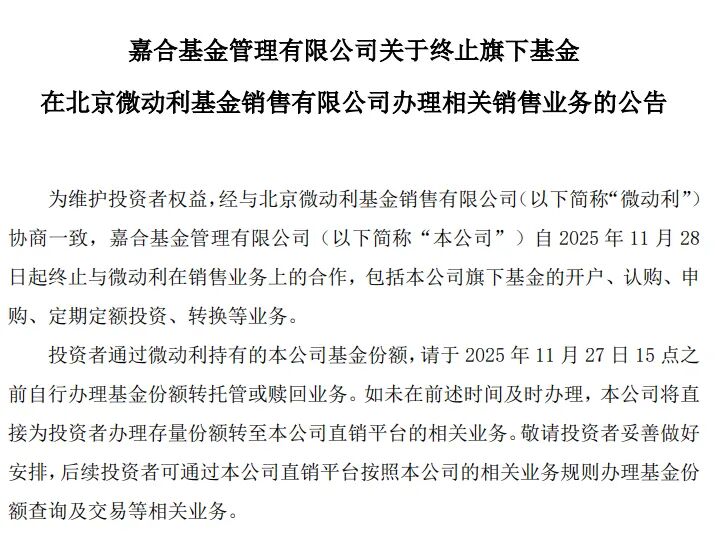
Core Viewpoint - The fund sales market is undergoing a rapid reshuffle, with major fund companies terminating partnerships with certain sales agencies, indicating a clearer trend of industry restructuring [1][9]. Group 1: Termination of Partnerships - Jiahe Fund and CMB Fund announced the termination of their sales partnerships with Beijing Weidongli Fund Sales Co., Ltd. and Fangzheng Zhongqi Futures Co., Ltd., respectively, effective November 27 and 28, 2025 [2][4]. - The decision to end these partnerships is primarily driven by the need to protect investor interests and improve channel efficiency [7][8]. Group 2: Background of Sales Agencies - Weidongli Fund, established in March 2014 with a registered capital of 20 million yuan, faced regulatory issues in July 2022, including a negative net asset value and multiple legal disputes [4][6]. - Fangzheng Zhongqi, which obtained its fund sales license in November 2019, is terminating its fund sales as part of a strategic adjustment, with several fund companies already ending their collaborations with it [6][7]. Group 3: Industry Trends - The termination of partnerships reflects a broader trend in the fund sales industry, where companies are focusing on optimizing channel structures and enhancing risk control amid stricter regulations and fee reforms [7][8]. - There has been a significant increase in the number of smaller sales agencies losing their licenses, indicating a market-driven consolidation towards larger, more capable institutions [9]. - Analysts suggest that the future of fund sales will concentrate on leading banks, brokerages, and internet platforms, promoting a shift towards professional and service-oriented channels [9].
麦肯锡:中国企业全球化加速,外企重塑在华战略
Guo Ji Jin Rong Bao· 2025-11-28 04:38
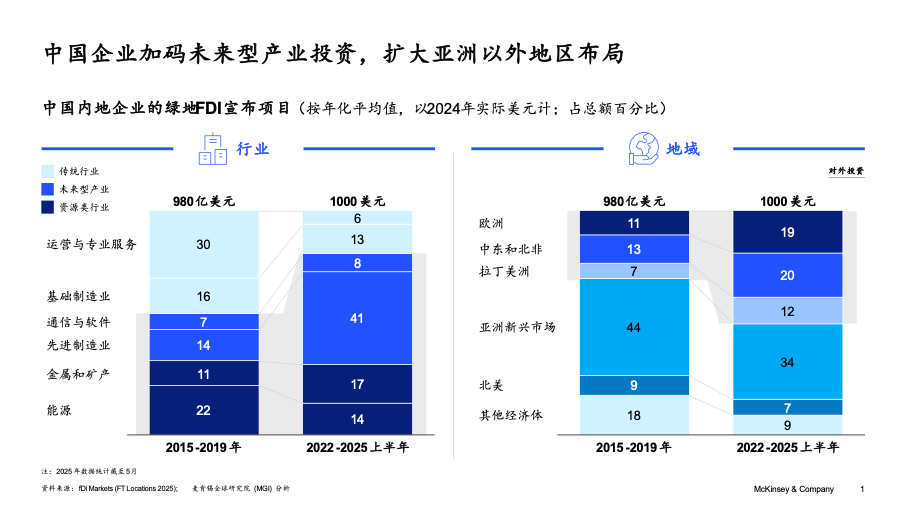
Core Insights - McKinsey's recent media day in Shanghai focused on strategies for companies to succeed in the future Chinese market and navigate global expansion [1] Group 1: Foreign Investment Trends - Global capital flows are undergoing structural changes, with China transitioning from a major recipient of foreign direct investment (FDI) to a key global investor [2] - Chinese companies are increasing capital deployment in Europe, Latin America, and the Middle East and North Africa by over two-thirds [2] - Since 2022, China's annual greenfield investment has decreased by 65% compared to pre-pandemic levels, while outbound investment in future industries and resources has grown by 54% [2] Group 2: Automotive Industry Developments - Chinese automotive companies have shifted from "market for technology" to "technology for the world," gaining approximately 30% market share from multinational joint ventures in the domestic market [5] - By 2030, it is expected that 3 to 5 Chinese companies will be among the top ten global automakers, with Chinese brands projected to capture 10% to 20% of core overseas markets [6] - In 2025, two Chinese automakers are anticipated to enter the global top ten in sales, with 2023 expected to see record-high annual exports, surpassing Japan and Germany [6] Group 3: Pharmaceutical Industry Evolution - China's innovative drug development has seen significant growth, with about one-third of global innovative drug pipelines originating from China [11] - Chinese pharmaceutical companies need to evolve from developing globally competitive products to establishing a global presence [11] - Three strategic upgrades are necessary for Chinese pharmaceutical firms: transitioning from specialized talent to global and diverse talent, from efficient decision-making to a balance of agility and stability, and from following innovation to leading innovation [12] Group 4: Manufacturing Sector Opportunities - China has evolved from a "world factory" to a strategic market and innovation hub for global advanced industrial enterprises [15] - Leading Chinese manufacturers are integrating digitalization, AI, and IoT technologies to maintain competitive advantages [15] - For multinational companies, deep engagement in China's vibrant industrial ecosystem is essential for enhancing global competitiveness [15] Group 5: Consumer Market Dynamics - The middle class in China is expected to grow, with high-income households projected to reach 259 million by 2030, accounting for 62% of urban families [16] - Despite declining consumer confidence, retail sales in China grew by 4.6% year-on-year in the first eight months of 2025, with significant increases in home appliance and electric vehicle sales [16] - E-commerce platforms are evolving from a fresh food-centric model to a comprehensive category approach, driving growth through new consumption scenarios [19]
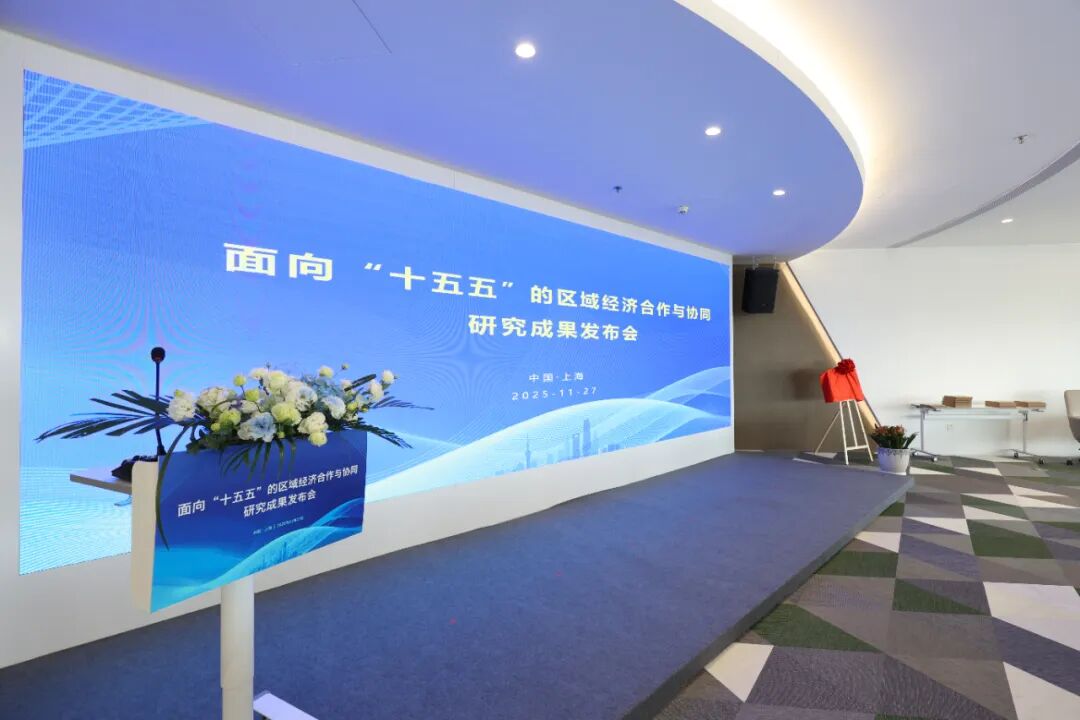
面向“十五五”,政产学研媒共话区域经济高质量发展
Guo Ji Jin Rong Bao· 2025-11-28 02:34
Core Viewpoint - The recent conference on regional economic cooperation and collaboration focuses on the "14th Five-Year Plan" and aims to provide intellectual support and practical references for high-quality regional economic development through the release of mid-term research results and application system construction [1][3]. Group 1: Research Outcomes and Their Importance - The research outcomes presented are foundational for regional economic and cooperative development under the "14th Five-Year Plan," emphasizing their forward-looking nature and practical value [3]. - The series of research results showcases the collaboration among government, industry, academia, research, and media, highlighting their theoretical and practical significance in regional economic cooperation [5]. - The research includes three main outcomes: a model for high-quality development in the Yangtze River Delta, exploration of Shanghai's international financial center construction, and reflections on regional economic cooperation and collaboration [9]. Group 2: Systems and Frameworks - The proposed system consists of three integrated components: institutional guarantee system, innovation-driven system, and financial empowerment system, each addressing different aspects of regional economic development [11]. - The institutional guarantee system outlines the economic connotations and construction processes of the Yangtze River Delta, emphasizing the importance of market and government collaboration [11]. - The innovation-driven system focuses on the role of technological innovation in leading regional economic development, aligning with the strategy of becoming a strong technological nation [11]. Group 3: Expert Review and Recommendations - The expert review team found the research comprehensive, data-rich, and methodologically sound, providing forward-looking and actionable development strategies for regional economic cooperation [12]. - Recommendations include establishing a coherent introduction to the three subsystems, enhancing the institutional guarantee system, and optimizing the financial empowerment system to improve Shanghai's role in regional economic development [14]. Group 4: Collaborative Platforms and Initiatives - The "Yangtze River Delta Regional Economic Research Workshop" was established to promote in-depth research and facilitate collaboration among government, industry, academia, and media [16]. - The workshop aims to create a strong application research team composed of various stakeholders to support regional economic cooperation and collaboration [16]. - The first roundtable meeting of the workshop discussed the importance of cross-regional collaboration and the need for unified institutional rules to facilitate regional market integration [18][19].