
Guo Ji Jin Rong Bao

Search documents
兴业证券“向上向善”谱写金融公益新篇
Guo Ji Jin Rong Bao· 2025-11-18 06:27
Core Viewpoint - The company emphasizes its commitment to social responsibility through various volunteer initiatives, aiming to integrate the spirit of "dedication, friendship, mutual assistance, and progress" into its community service efforts [1][5]. Group 1: Volunteer Activities - The company has launched its "I Have an Acre of Land in the Countryside" initiative for the fourth consecutive year, engaging in agricultural support by claiming 15 acres of farmland in Fujian Province [2]. - During the Double Ninth Festival, volunteers provided care to the elderly, including services like a "Happiness Photo Studio" and health care offerings in welfare homes [2]. - Volunteers also focused on assisting disabled individuals, organizing activities that fostered interaction and provided financial knowledge [2][3]. Group 2: Educational Support - The company has contributed educational materials and support to rural schools, including 79 sets of new uniforms and stationery for students in Guizhou [3]. - Volunteers have shared knowledge on career planning and investment strategies with high school students, helping them prepare for their futures [3]. - Financial literacy programs were conducted in various schools, using engaging methods to teach children about money management [3]. Group 3: Environmental Initiatives - Volunteers participated in ecological restoration by planting 200 mangrove seedlings in a nature reserve, contributing to coastal protection [4]. - Clean-up activities were organized in parks and natural areas, promoting environmental awareness and responsibility [4]. Group 4: Organizational Structure and Achievements - Since its establishment in 2011, the company's volunteer service team has grown to approximately 800 members, with over 60% being party members, and has accumulated nearly 14,000 service hours since 2020 [5]. - The company has raised over 10 million yuan in donations over six years and conducted nearly 200 volunteer service events, earning national recognition for its efforts [5]. - The volunteer service team has developed two main projects focusing on financial education and support for rural children, benefiting over 17,000 children in mountainous areas [6].

日本股市继续大跌
Guo Ji Jin Rong Bao· 2025-11-18 06:11
Market Reaction - The Japanese stock market experienced significant volatility, with the Nikkei 225 index opening down 1.02% and later dropping over 2.5%, falling below 49,000 points, marking a near one-month low [1] - The Japanese yen fell to 155.38 against the US dollar, the lowest level in a year, while the 30-year and 20-year Japanese government bond yields rose by 7 basis points to 3.325% and 2.810%, respectively [1] Impact on Tourism and Retail Sectors - The tourism sector was severely impacted following provocative remarks by Prime Minister Sanna Takashi, leading to a warning from China's Ministry of Culture and Tourism advising Chinese tourists to avoid Japan [2][3] - Major companies in the tourism and retail sectors saw significant stock declines, with Isetan Mitsukoshi Holdings dropping over 10%, Shiseido down more than 9%, and FOOD&LIFE COMPANIES falling over 14% [3] Economic Forecast and Implications - The reduction in Chinese tourists is expected to have a substantial negative impact on Japan's economy, with estimates suggesting a potential loss of approximately 2.2 trillion yen (about 101.16 billion yuan) in tourism revenue, which could reduce Japan's GDP by 0.36% [4] - The overall economic situation is concerning, as Japan's GDP contracted by 0.4% quarter-on-quarter and 1.8% year-on-year, marking the first negative growth in six quarters [5][6] - Japan's reliance on China as its largest trading partner is highlighted, with trade totals projected at $308.3 billion for 2024, emphasizing the critical nature of this relationship for Japan's economic stability [6]
特朗普家族又添赚钱新项目
Guo Ji Jin Rong Bao· 2025-11-18 06:08
Core Insights - The Trump family business has partnered with Saudi Arabia's largest private real estate developer, Dar Al Arkan, to develop a luxury hotel project in the Maldives, combining real estate development and cryptocurrency trading [1][3] - The project will feature 80 ultra-luxury villas and is expected to redefine local luxury standards while innovating real estate investment through tokenization [3][6] Real Estate Development - Dar Global, a subsidiary of Dar Al Arkan, plans to build the luxury villas, which will be accessible by a 25-minute speedboat ride from the capital, Male, with the hotel expected to open by the end of 2028 [3] - This Maldives project is not the only collaboration between the Trump Group and Dar Global, with additional projects planned in Oman, Qatar, UAE, and Saudi Arabia [3] Financial Aspects - The Trump family typically does not invest their own funds in projects but licenses their brand to increase property values, earning millions in fees and profit shares from related sales [4] - In the past year, Trump reportedly earned over $20 million from transactions with Dar Al Arkan [4] Tokenization in Real Estate - The new project involves real estate tokenization, allowing investors to purchase fractional ownership through digital tokens on a blockchain platform, broadening the investor base [6][7] - This innovative financing structure reduces reliance on traditional bank loans and leverages the Trump family's political influence for commercial advantage [6] Cryptocurrency Engagement - The project marks a new chapter for the Trump family in the cryptocurrency sector, with previous ventures including the establishment of a cryptocurrency company and various asset applications related to digital currencies [9] - The Trump family's involvement in cryptocurrency has led to a more favorable regulatory environment, contrasting with the Biden administration's stance [9][10]
直降7880万元!中银三星人寿24%股权再寻买家
Guo Ji Jin Rong Bao· 2025-11-17 15:51
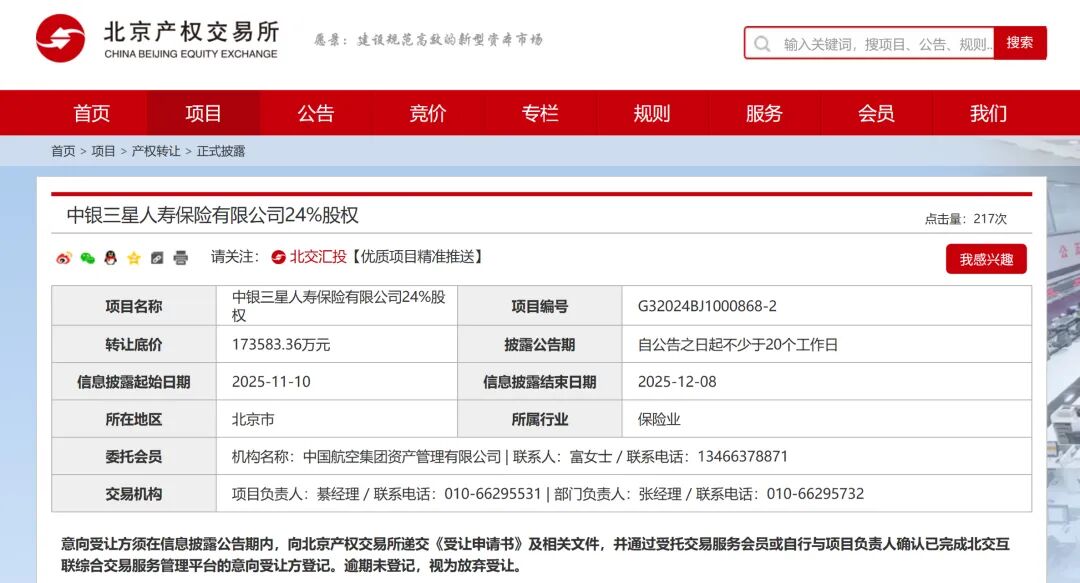
Core Viewpoint - China Aviation Group is selling its 24% stake in Bank of China Samsung Life Insurance Co., Ltd. for a base price of 1.736 billion yuan, marking a significant move in the insurance sector as part of a broader trend of state-owned enterprises divesting from non-core financial investments [1][3][4]. Group 1: Share Transfer Details - The stake transfer is being conducted through the Beijing Equity Exchange, with a minimum transfer price of 1.736 billion yuan [1][2]. - This marks the second attempt by China Aviation Group to divest its stake, with the previous attempt in December 2024 having a higher base price of 1.815 billion yuan, indicating a decrease of 78.8 million yuan in the current offering [3]. - China Aviation Group has held its stake for over 20 years since the establishment of the company in 2005, originally co-founded with Samsung Life Insurance [3][4]. Group 2: Strategic Implications - The divestment aligns with the "retreat from finance" policy initiated by the State-owned Assets Supervision and Administration Commission (SASAC), which aims to refocus state-owned enterprises on their core businesses and limit non-core investments [4]. - The exit of China Aviation Group is expected to facilitate the introduction of new strategic investors that are more aligned with the insurance sector, potentially enhancing governance and innovation within the company [5]. Group 3: Management Changes - Concurrently, significant changes in the management of Bank of China Samsung Life Insurance have occurred, with the resignation of Chairman Ma Chaolong due to age, and the appointment of Qiu Zhikun as acting chairman [6][7]. - The management transition may lead to further changes in the company's governance structure, especially if the stake transfer is completed [10]. Group 4: Financial Performance - Despite being backed by one of China's major banks, Bank of China Samsung Life Insurance has struggled with profitability, showing fluctuating net profits from 2016 to 2024, with a notable loss of 5.43 million yuan in the first half of 2025 [11][12]. - The company reported a significant increase in insurance revenue over the years, reaching 29.862 billion yuan in the first three quarters of 2025, but faced substantial quarterly profit volatility [11][12].

比特币为何涨不动了?
Guo Ji Jin Rong Bao· 2025-11-17 15:48
Core Viewpoint - Bitcoin has fallen below the $100,000 mark, erasing over 30% of its gains for the year, with a recent low of $93,778.6, indicating a significant market correction driven by various macroeconomic factors and changes in investor sentiment [1][2]. Market Dynamics - The recent decline in Bitcoin's price is attributed to a shift in market expectations regarding the Federal Reserve's interest rate policies, leading to a synchronized pressure on global risk assets [2]. - The liquidity in the market has decreased, exacerbating the downward trend, as many exchange-traded funds (ETFs) have seen capital outflows, and long-term holders are cashing out profits [2][5]. - The psychological barrier of $100,000 has led to increased selling pressure, with institutional funds withdrawing and a lack of new liquidity entering the market [2][5]. Historical Context - Bitcoin has experienced multiple corrections since first surpassing $100,000, with significant drops occurring in early 2025, influenced by geopolitical concerns and security incidents [3]. - The current downturn is seen as a result of compounded factors, including macroeconomic risks, market structure issues, and investor psychology, similar to past market corrections [3][4]. Long-term Outlook - Despite short-term pressures, Bitcoin's long-term potential remains, supported by increasing institutional participation and a healthier market structure [7]. - Analysts suggest that once a substantial interest rate cut cycle begins, Bitcoin could see renewed upward momentum as funds are reallocated across asset classes [7]. - The current liquidity constraints are viewed as a temporary effect from recent market shocks, with the potential for Bitcoin to find a new equilibrium and open up upward price movement in the future [7].
金价“先扬后抑”,原因找到了!
Guo Ji Jin Rong Bao· 2025-11-17 14:57
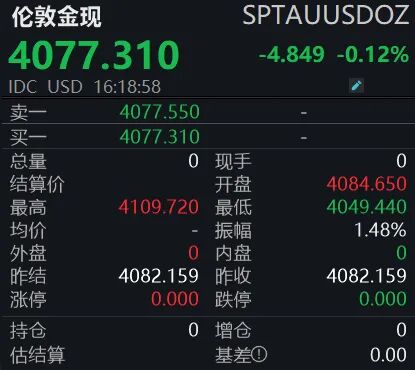
Core Viewpoint - International gold prices continue to experience fluctuations following a significant drop last Friday, with current prices showing a slight decline and key support levels being tested [1][4]. Price Movements - As of the latest report, London gold is down 0.12% at $4,077.31 per ounce, with intraday lows dipping below $4,050 per ounce [1][2]. - COMEX gold futures also saw a decline of 0.32%, trading at $4,081.20 per ounce, with a minimum price of $4,051.10 during the session [2][3]. Market Influences - The primary factor for the recent gold price correction is the sharp decline in expectations for a Federal Reserve interest rate cut, with market probabilities for a December cut dropping from over 90% to below 50% [3][4]. - A strengthening U.S. dollar has increased the cost of gold for non-U.S. investors, further impacting demand [3][4]. - Easing geopolitical tensions have led to a withdrawal of some safe-haven investments from the gold market [3][4]. Future Outlook - Short-term expectations indicate high volatility and a potential trading range around the psychological level of $4,000 per ounce, with market participants focused on Federal Reserve policy and economic data [4]. - Long-term bullish sentiment remains intact, supported by ongoing central bank gold purchases and concerns over U.S. debt impacting dollar credibility [4]. - Analysts suggest that the recent volatility is a normal correction following historical highs, with expectations for a rebound once stabilization occurs [4].
旭辉架构大洗牌!百亿债重组后,轻资产扛起“活下去”大旗
Guo Ji Jin Rong Bao· 2025-11-17 14:57
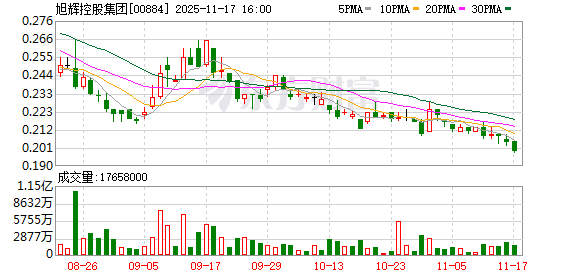
Core Viewpoint - CIFI Group is undergoing a significant restructuring aimed at transitioning from a high-leverage model to a focus on light assets, low debt, and high-quality operations, with a target to realign its business strategy over the next three years [2] Group 1: Business Restructuring - CIFI Group has initiated a new round of structural adjustments, including the merger of regional groups and a focus on core operations, resulting in the establishment of two major divisions: East China and South China [1] - The heavy asset segment will see the cancellation of several regional groups and the formation of new area divisions, with a shift to a project management model that allows for direct oversight from headquarters [1] - In the light asset segment, CIFI is moving towards independent operational divisions, dissolving three major construction management regions and creating five new provincial companies [1] Group 2: Business Focus and Strategy - The company aims to shift away from the old model characterized by high leverage and turnover, focusing instead on rental income, self-operated development, and real estate asset management [2] - CIFI has established a construction management platform, with over 240 projects under management and a significant portion of these projects being government-related [2] - The company plans to learn from international firms like Blackstone and Tishman Speyer to enhance its real estate asset management capabilities [2] Group 3: Sales Performance - CIFI's contract sales for the first half of the year amounted to 10.16 billion yuan, a 50% decline from the previous year's 20.31 billion yuan, with residential sales making up 88% of this figure [3] - The sales distribution shows that 37.6% of sales came from the central and western regions, while the South China region contributed only 12.5%, which is also the area being restructured [3] Group 4: Financial Health - As of the end of June, CIFI's recognized property sales revenue was approximately 7.862 billion yuan, down 50.4% year-on-year, indicating a significant decline in its revenue-generating capacity [4] - The company's net cash from operating activities was 1.444 billion yuan, a nearly 79% decrease compared to the previous year, highlighting a severe drop in cash flow [4] - CIFI's outstanding debts include approximately 18.473 billion yuan in bank loans and 28.853 billion yuan in senior notes, leading to defaults or cross-defaults [5] Group 5: Debt Restructuring - CIFI's primary focus remains on debt restructuring, with a recent announcement of a successful restructuring plan for domestic bonds totaling approximately 10.06 billion yuan [6] - The company has also received court approval for a restructuring plan concerning its 6.85 billion USD in offshore debt, with an overall debt reduction ratio of 66% expected [6]
旭辉架构大洗牌!百亿债重组后 轻资产扛起“活下去”大旗
Guo Ji Jin Rong Bao· 2025-11-17 14:53
喊出"二次创业"的旭辉朝着目标方向又进了一步。 近日,市场有消息称,旭辉集团开启了新一轮架构调整,范围包括重资产和轻资产两个维度。 其中,重资产层面的调整主线是区域合并、聚焦核心。具体操作包括撤销苏皖区域集团、东南区域集 团、华南区域集团、上海区域事业部、长沙事业部及下属城市公司;新组建华东、华南两大事业部,华 东区域事业部覆盖上海、浙江、江苏、福建、安徽、江西,华南区域事业部覆盖广东、湖南、湖北、广 西、海南。 这部分业务的管理模式同步调整,城市公司平台取消,改为片区制,区域设项目管理、营销、财务等核 心部门,实现总部直管一线。另据媒体报道称,旭辉集团在11月12日于内部发文,称将撤销北京区域集 团及下属城市公司,新成立华北区域事业部,负责旭辉在北京、天津、河北、河南、陕西、山西、东北 三省的战略经营和业务发展。 轻资产业务方面则进行独立化细分运营:撤销了3大建管区域,分别为苏皖区域、东南区域、上海区域 及其下属省级公司;新成立5家省级公司,即建管苏南公司、上海公司、浙江公司、安徽公司、苏北公 司,后续拟新增广东公司。 两条业务线,一缩一扩,折射出旭辉的转型诉求。 今年8月,旭辉控股董事局主席林中公开提到, ...
半年烧掉1.78亿!侯毅创办的“宠物版盒马”要全部关停
Guo Ji Jin Rong Bao· 2025-11-17 14:23
Core Insights - The founder of Hema, Hou Yi, announced the closure of all physical stores of the pet fresh food chain "Pait Fresh" by mid-December due to unexpected operational pressures [1] - Pait Fresh, which launched its first store in February, was initially seen as a promising venture in the pet industry, aiming to expand rapidly with plans for 100 stores [2] - Despite initial interest, customer traffic declined significantly, leading to the closure of multiple locations [3] Company Overview - Pait Fresh was positioned as a "pet version of Hema," focusing on fresh pet food while also offering snacks, staple foods, and health products [2] - The company raised $25 million (approximately 178 million yuan) in angel funding, marking it as one of the largest angel funding rounds in the pet industry in recent years [2] - The brand's rapid expansion included opening multiple stores in key shopping areas in Shanghai, but the initial excitement did not translate into sustained customer engagement [2][3] Industry Context - The Chinese pet industry is growing but remains in its early stages, with most pet owners satisfied with packaged pet food, limiting the market for fresh food options [5] - Pait Fresh's pricing for self-service fresh food is around 24.9 yuan per pound, which is competitive, but many customers felt the quality did not justify the price [5] - Complaints about the freshness of ingredients and negative feedback regarding pet health issues have surfaced, indicating a disconnect between customer expectations and product offerings [5]
上市公司认购私募产品须防四大风险
Guo Ji Jin Rong Bao· 2025-11-17 14:01
Core Insights - As of November 7, 2023, a total of 10 listed companies have disclosed information regarding the subscription or renewal of private placement products, with a cumulative subscription amount reaching 818 million yuan [1] - The trend of listed companies investing in private placement products is notable, with potential risks that need to be monitored [3][4] Group 1: Investment Trends - The total amount invested by the 10 listed companies varies, with Yaxing Anchor Chain leading by subscribing 263 million yuan, accounting for 32.15% of the total [1] - Other companies that invested 100 million yuan include Yongji Co., Zhongxing Junye, and Innovation New Materials, while companies like Keli Sensor and Rongtai Health invested smaller amounts of 10 million yuan and 5 million yuan respectively [1] - A majority of A-share listed companies are keen on financial management, with investment scales typically ranging from tens of millions to billions of yuan [1] Group 2: Private Fund Industry Growth - The private fund industry in China has grown significantly, with the total asset management scale of the asset management industry reaching 75.38 trillion yuan as of June 30, 2023 [2] - Private funds account for 20.60 trillion yuan of this total, positioning them as the second-largest segment in asset management [2] - The number of private fund products exceeds 140,000, representing 71.87% of the total 195,500 products in the market, indicating robust growth in the private fund sector [2] Group 3: Risks Associated with Private Placement Products - There are four main risks associated with listed companies subscribing to private placement products: 1. The risk of investment losses from private funds, which could negatively impact the performance of the listed companies [3] 2. Financial pressure on listed companies due to large investments in private products, potentially affecting liquidity [3] 3. The risk of fund managers absconding, which has been a recurring issue in the industry [4] 4. The risk of stock price manipulation, where private funds might collaborate with listed companies to influence stock prices for profit [4]