Qian Zhan Wang

Search documents
2025年中国传媒行业细分市场分析 技术赋能与垂类深耕成市场发展双引擎【组图】
Qian Zhan Wang· 2025-11-20 04:33
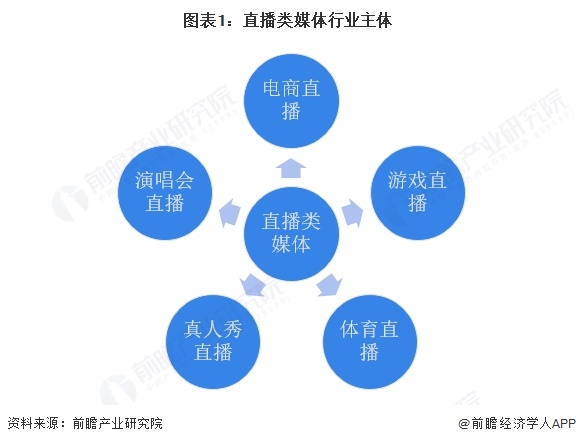
Core Insights - The Chinese live streaming industry has experienced explosive growth since 2016, with significant increases in both platforms and audience numbers, establishing itself as a key component of the internet culture market [1] - As of December 2024, the number of live streaming users in China reached 833 million, representing a year-on-year increase of 17.37 million users, or 2.13%, accounting for 75.2% of the total internet user base [3] - E-commerce live streaming leads the market, with 597 million users as of June 2024, making up 54.7% of internet users, and contributing significantly to consumer growth [4] - The live streaming market in China is projected to reach 212.64 billion yuan in 2024, reflecting a 1.5% increase from 2023, showcasing resilience in a complex environment [5] - The growth of the live streaming industry is driven by technological innovation and deepening market segmentation, with platforms like Douyin and Kuaishou exploring generative AI to enhance content creation and user experience [8] Industry Segmentation - The live streaming media industry in China can be categorized into five main types: e-commerce live streaming, sports live streaming, game live streaming, reality show live streaming, and concert live streaming [1] - E-commerce live streaming is the core driver of consumption growth, while sports live streaming benefits from stable growth due to the popularity of event IPs [4] - Game live streaming continues to penetrate the market, supported by the maturation of the esports industry, while reality shows and concert live streaming expand their audience through a hybrid online and offline model [4]

前瞻全球产业早报:何小鹏预期人形机器人售价或接近汽车
Qian Zhan Wang· 2025-11-19 10:54
Group 1 - Alibaba's newly launched AI application, Qianwen App, quickly reached the fifth position in the Apple App Store free app rankings within a day of its public release, surpassing DeepSeek [2] - The launch of Qianwen marks Alibaba's strong entry into the AI to C market, with an international version of the app expected to be released soon [2] - Quark App has fully integrated the Qianwen dialogue assistant, positioning itself as an AI browser and planning a significant upgrade for its PC version [4] Group 2 - Xiaopeng He anticipates that the cost of humanoid robots may approach that of cars, potentially dropping to the range of 100,000 to 200,000 yuan, similar to mainstream automotive prices [3] - Zebra has launched the world's first AI foreign teacher one-on-one product, "Zebra Speaking," aimed at addressing the inconsistencies in traditional foreign teacher quality [3] Group 3 - The construction of China's first "Hualong One" nuclear power plant, which utilizes cooling towers, has officially begun, marking a significant milestone in the country's third-generation nuclear technology [3] - BMW has officially launched its self-developed AI platform, GAIA, in China, indicating a major step in the automotive industry's AI integration [6] Group 4 - JD.com has launched an independent app for its food delivery service, introducing the "Seven Fresh Coffee" brand [6] - Xibei has implemented a salary increase for frontline employees in response to negative publicity, providing an average raise of 500 yuan per person per month since September [6][7] Group 5 - Yuanqi Forest's founder announced a strategic adjustment, separating its dairy brand, Beihai Pasture, into an independent operation to focus resources on core beverage categories [7] - The Kimi K2 Thinking model has been integrated into the AI search application Perplexity, becoming the only domestic model to be included [8] Group 6 - Apple's iPhone 17 series has driven a 37% year-on-year increase in sales in China for October, achieving a market share of 25%, the highest since 2022 [9] - Global OLED display shipments are projected to grow by 65% year-on-year in Q3 2025, with a total shipment of approximately 644,000 units [9] Group 7 - Dubai Air has signed a memorandum of understanding to order 150 Airbus A321neo aircraft [10] - Honda plans to gradually resume normal operations at its North American assembly plants starting next week, indicating a recovery from semiconductor shortages [11] Group 8 - Elon Musk's xAI has released the latest version of its chatbot, Grok 4.1, which features significant improvements in speed and quality [12] - Jeff Bezos will co-lead a new AI startup focused on developing AI technologies for computer, automotive, and aerospace engineering, marking his first operational role since leaving Amazon [13] Group 9 - Arm has announced a collaboration with NVIDIA to enhance the development of custom chips using its technology [14] - GlobalFoundries has acquired Advanced Micro Foundry, a microelectronics chip manufacturer based in Singapore [14]


比没有机场还炸裂!中国最猛万亿城市,竟没有一条地铁
Qian Zhan Wang· 2025-11-19 10:46
Core Insights - The economic performance of the 27 trillion-yuan cities in China has been strong, with most cities either surpassing or matching the national growth rate of 5.2% [1][2] - Yantai, a city without a subway, surprisingly topped the GDP growth rate among these cities in the first three quarters of 2025, achieving a growth rate of 6.4% [1][6] Economic Performance - The 27 trillion-yuan cities contribute 40.9% of the national economic total while occupying only 2.8% of the land area and housing 18.5% of the population [2] - Among these cities, 19 have growth rates higher than or equal to the national average, while 8 cities are slightly below it [2] - Yantai's industrial sector has shown remarkable growth, with a significant increase in industrial added value, which reached 3412.31 billion yuan, growing at 8.8%, surpassing the national average by 3.9 percentage points [9][21] Yantai's Industrial Strength - Yantai's industrial growth is driven by its strong second industry, with a notable 13.9% increase in industrial added value [9][21] - The city has successfully transformed its industrial structure, focusing on large projects and high-tech industries, particularly in the green petrochemical sector [10][16] - Yantai's top ten key industries have shown positive growth, with the chemical raw materials and chemical products manufacturing sector growing by 44.5% [9][21] Historical Context - Yantai has a rich industrial history, having established a diverse industrial system since the late 19th century [11][12] - The city faced challenges in the late 2000s due to reliance on traditional industries, but has since adapted and restructured its economy [12][15] Future Prospects - Yantai aims to enhance its industrial capabilities by focusing on high-end chemical, automotive, clean energy, and aerospace industries, as outlined in the recent provincial development plan [21][30] - The city is positioned to leverage its unique coastal location for the burgeoning commercial aerospace industry, with the establishment of the Dongfang Aerospace Port [24][27] - Yantai's strategy includes building a complete aerospace industry ecosystem, enhancing collaboration with regional partners, and attracting top talent [34][36]


机器人里的“你”还是你吗?马斯克:借助脑机接口技术,20年内人类意识有望上传至机器人实现数字永生【附脑机接口行业前景分析】
Qian Zhan Wang· 2025-11-19 10:35
Core Insights - Brain-computer interface (BCI) technology is seen as a revolutionary field that could enable paralyzed individuals to walk again, restore vision for the visually impaired, and treat various neurological diseases, offering hope to many patients [2][6] - Elon Musk predicts that within 20 years, Neuralink's technology could allow humans to create a "snapshot" of their minds and upload it to Tesla's humanoid robot, Optimus, potentially achieving a form of digital immortality [2] - The global BCI industry is rapidly developing, with major countries implementing policies to seize leadership in this emerging technology [3][6] Industry Development - The U.S. has introduced the "Neural Engineering System Design Program," Japan has launched the "Brain/Heart Function Utilization Technology Promotion Strategy," and the EU has initiated the "Human Brain Project" [3] - China is also prioritizing BCI development, with a national policy aiming for key technological breakthroughs by 2027 and the cultivation of 2-3 global leading companies by 2030 [6] - The BCI industry in China has established a comprehensive supply chain, with the medical field currently accounting for 56% of downstream applications [6][8] Clinical Progress - Clinical advancements are evident, with Shanghai Huashan Hospital completing its first BCI implantation surgery, and several products from Aipeng Medical already generating sales [8] - China has conducted 30 clinical trials for BCIs, surpassing Neuralink's 7 trials, indicating a competitive edge in clinical applications [8] Market Potential - The BCI technology is expected to create a trillion-dollar market, driving growth across materials, chips, and medical devices, and becoming a significant new productive force [8] - The global BCI market is projected to reach $7.63 billion by 2029, although predictions vary due to ethical and social acceptance challenges [9]


雷军吐槽涨价实在太多了!中芯国际赵海军:存储芯片产能紧张逼得手机厂商不敢下单
Qian Zhan Wang· 2025-11-19 07:38
Core Insights - The global storage chip market is expected to experience a price surge starting in the second half of 2025, driven by increased demand for AI computing power, creating a challenging situation for the smartphone industry [2] - Major smartphone manufacturers like Xiaomi, OPPO, and vivo are facing supply chain pressures, with upstream suppliers (Micron, Samsung, SK Hynix) raising prices by nearly 50%, forcing manufacturers to make difficult choices between accepting price hikes or risking supply shortages [2][3] - The storage chip industry is characterized by high technical and financial barriers, with significant requirements for R&D capabilities and capital investment, leading to a market dominated by a few key players [3][6] Industry Dynamics - Xiaomi has already begun to feel the impact of rising costs, with the price of its Redmi K90 standard version increasing by 300 yuan to 2599 yuan compared to the previous generation K80 [3] - The storage chip market is highly concentrated, with Samsung holding a 43.03% share in the DRAM segment and 34% in the NAND segment, followed by SK Hynix and Micron [6] - Morgan Stanley has indicated that upstream manufacturers like SK Hynix and Samsung will benefit from increased profit margins due to their strong pricing power, while downstream sectors such as PCs and smartphones will face significant cost pressures [7]




雷军吐槽涨价实在太多了!中芯国际赵海军:存储芯片产能紧张逼得手机厂商不敢下单【附全球存储芯片行业市场分析】
Qian Zhan Wang· 2025-11-19 06:51
Core Viewpoint - The global storage chip price surge, driven by AI computing demand, is pushing the smartphone industry into a dilemma, with manufacturers facing supply chain pressures and rising costs [2][9]. Group 1: Industry Overview - Starting in the second half of 2025, a significant price increase in global storage chips is expected, primarily due to the surge in AI computing demand [2]. - Major smartphone manufacturers like Xiaomi, OPPO, and vivo are experiencing inventory levels below the two-month safety line, with some DRAM stocks even less than three weeks [2]. - Upstream suppliers such as Micron, Samsung, and SK Hynix are reportedly increasing prices by nearly 50%, forcing manufacturers to make tough decisions between accepting price hikes or risking supply shortages [2]. Group 2: Company Responses - Xiaomi has already felt the impact of rising costs, with the Redmi K90 standard version priced at 2599 yuan, a 300 yuan increase from the previous K80 model [3]. - Xiaomi executives have publicly warned about the storage cost crisis, with forecasts indicating that storage costs will continue to rise significantly in the coming year [3][9]. - The storage chip industry is characterized by high technical and capital intensity, leading to a market dominated by major players like Samsung, SK Hynix, and Micron [3]. Group 3: Market Dynamics - The global storage chip market is highly concentrated, with Samsung holding a 43.03% share in the DRAM sector and 34% in NAND [7]. - Morgan Stanley highlights that upstream manufacturers like SK Hynix and Samsung will benefit from profit margin expansion due to their strong pricing power, while downstream sectors, including PCs and smartphones, will face severe cost pressures [9]. - The ongoing price surge has forced smartphone manufacturers into a dilemma of maintaining supply or protecting profit margins, with Xiaomi's price adjustment reflecting the collective challenges faced by the industry [9].

打破欧美垄断!中国车型成印度汽车研发新标杆,就连商用车制造商也开始关注中国技术【附新能源汽车行业市场分析】
Qian Zhan Wang· 2025-11-19 03:31
Core Insights - Chinese vehicles are becoming the benchmark for automotive R&D in India, surpassing European, Japanese, and American models in terms of disassembly and analysis [2] - The rapid development of Chinese automotive technology, particularly in electric vehicles, is establishing a new standard for the global automotive industry [2][5] Group 1: Market Position and Trends - China has become the largest producer and market for new energy vehicles (NEVs), with a market share of 24.4% in 2022, expected to grow further by 2025 [3] - Indian automotive companies are increasingly using Chinese models for benchmarking, indicating a shift in competitive standards [2] Group 2: Technological Advancements - Chinese automakers have made significant advancements in core technologies such as batteries, electric drive, and electric control, establishing a complete automotive supply chain [5][10] - The focus on consumer-centric design and user experience is a key factor in the success of Chinese vehicles [2] Group 3: Investment in R&D - Chinese NEV companies are investing unprecedented amounts in R&D, with total investments reaching 312.2 billion yuan in 2024, led by BYD with 54.2 billion yuan [8] - Xiaomi plans to invest 100 billion yuan over five years, with 30 billion yuan allocated for 2024 alone [9] Group 4: Industry Dependency - Indian electric vehicle manufacturers, despite promoting local production, still rely on Chinese suppliers for critical components such as batteries and electric motors [7]

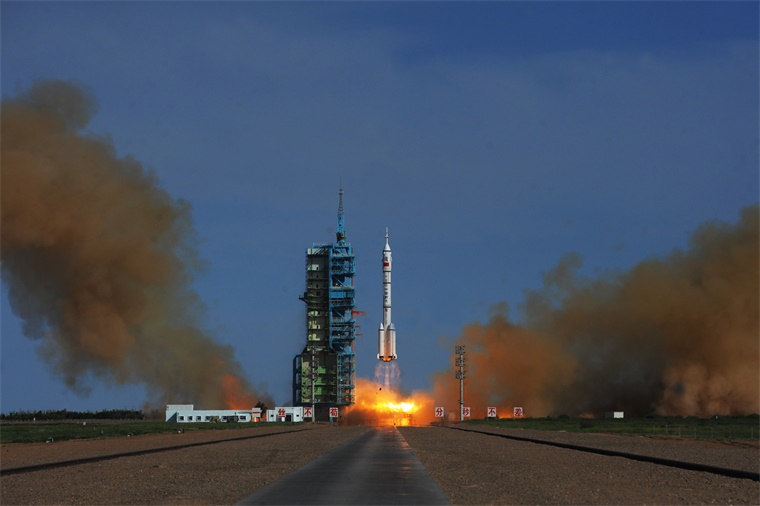
可重复使用50次!星河动力苍穹-50发动机变推力试车成功,解锁火箭垂直回收关键技术【附商业航天行业市场分析】
Qian Zhan Wang· 2025-11-19 03:28
Core Insights - The successful high-precision variable thrust test of the CQ-50 engine marks a significant advancement in China's private aerospace sector, particularly in the core technology of vertical recovery for liquid rockets [2][5] - The engine's ability to operate at a thrust limit of 32% of its rated power and achieve a rapid response time of under 0.5 seconds demonstrates its stability and potential for reusable rocket applications [2][5] Company Overview - Beijing Xinghe Power Aerospace Technology Co., Ltd. was established in February 2018 with a registered capital of approximately 432.87 million RMB, focusing on low-cost commercial launch vehicle development and launch services [3] - Within seven years, the company has become a leading player in China's private rocket sector, completing 21 commercial launches and placing 85 satellites into orbit, capturing a market share of 15% [3] Technological Advancements - The CQ-50 engine features a thrust-to-weight ratio greater than 120, a swing capability of ±6°, and a design life of 50 reuses, with a combustion efficiency exceeding 96% [2][5] - The use of metal 3D printing technology for key components has significantly improved production efficiency and reduced costs to one-third of traditional methods [5] Industry Context - Since 2016, China's aerospace sector has entered a phase of rapid innovation, with significant advancements in space infrastructure and satellite systems [7] - In 2023, China's commercial space activities saw a 29% year-on-year increase in the number of commercial satellites launched, with 141 satellites launched and 23 commercial launches conducted [11] Market Dynamics - The commercial launch sector is experiencing accelerated growth, with government support and local policies fostering innovation and collaboration across related fields [14] - Experts predict that with ongoing technological breakthroughs and capital support, China's commercial aerospace industry is poised to mature by the end of the 14th Five-Year Plan, paving the way for a new phase in space economy development [14]
前瞻全球产业早报:阿里千问App全面对标ChatGPT
Qian Zhan Wang· 2025-11-18 11:08
Group 1 - Alibaba officially launched the "Qianwen" project to enter the AI to C market, with the Qianwen App now in public beta, aiming to compete with ChatGPT [2] - Apple plans to change its iPhone release strategy starting in 2026, moving to two launches per year instead of one, with flagship models in September and entry-level models in spring [3] - Foton Motor announced that its jointly developed semi-solid-state batteries have been mass-produced and are performing well in the market [4] Group 2 - Xpeng Motors expects fourth-quarter deliveries to be between 125,000 and 132,000 units, representing an annual increase of approximately 36.6% to 44.3% [6] - Yum China aims for KFC's operating profit to exceed 10 billion RMB by 2028, with plans to increase the number of stores by about one-third to over 17,000 [6] - Zhiyuan Robotics plans to open-source its self-developed robot operating system "Lingqu OS" by the end of this year [7] Group 3 - Momenta and BMW announced the development of a new generation of intelligent driving assistance solutions for the Chinese market, set to be first implemented in the domestic BMW iX3 [8] - Huawei will hold a product launch event on November 25, where it will unveil the Mate 80 series and other new products [9] - Taobao reported significant growth in its Double 11 overseas sales, with dozens of brands achieving over 10 million in transactions [10] Group 4 - Google committed to investing $2.25 million to support the modernization of public data systems in Africa for AI readiness [11] - A McKinsey report indicated that nearly three-quarters of fashion industry executives expect to raise prices next year due to rising tariffs and costs, a significant increase from about half a year ago [12] - Indonesia plans to impose an export tax of 7.5% to 15% on gold products starting next year [13] Group 5 - LG Energy plans to start producing lithium iron phosphate (LFP) batteries in South Korea by 2027, with an initial production capacity of 1 GWh [14] - Samsung announced a total investment of 450 trillion KRW in South Korea over the next five years, focusing on R&D and semiconductor expansion [15] - Pobeda Airlines in Russia has become the first airline to deploy humanoid robots as cabin crew members, showcasing the potential for human-robot collaboration [16]
重磅!2025年中国及31省市玻璃纤维行业政策汇总及解读(全) 被列入鼓励性行业
Qian Zhan Wang· 2025-11-17 06:09
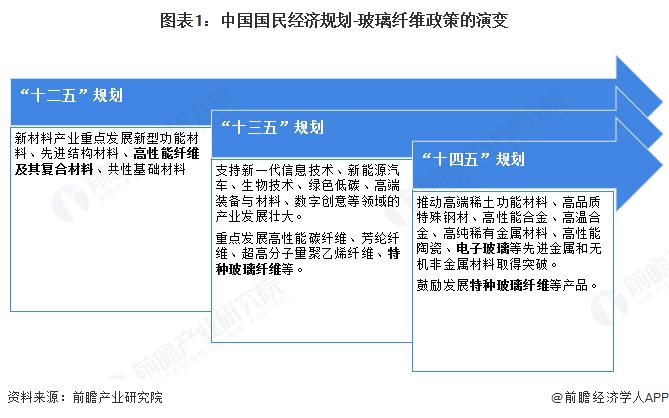
Core Viewpoint - The glass fiber industry in China is experiencing strong policy support at both national and provincial levels, with a focus on high-performance and specialty glass fibers, which are crucial for various applications in construction, energy, and transportation [1][2]. National Policy Summary - Since 2015, the glass fiber industry has been included in several key national policy documents, emphasizing its importance as a strategic emerging industry [1][2]. - The "14th Five-Year Plan" outlines specific goals for the glass fiber industry, including innovation-driven development and supply-side structural reforms [1][2]. - Key policies include the "Green Finance Support Project Directory" and the "Guidance on Promoting the Recycling of Retired Wind Power and Photovoltaic Equipment," which support the glass fiber sector [2][3]. Provincial Policy Summary - Various provinces have incorporated glass fiber into their "14th Five-Year" plans, setting development targets and focusing on specific products [9][10]. - For example, Chongqing aims to achieve a total industry scale of over 50 billion yuan by 2027, with glass fiber and composite materials accounting for 20% of national production [10]. - Provinces like Shaanxi and Inner Mongolia are focusing on high-silicon glass fibers and high-performance fibers, respectively, to enhance their industrial capabilities [8][10]. Industry Development Goals - The glass fiber industry is expected to see significant growth, with specific targets for production capacities, such as 80,000 tons/year for alkali-free glass fiber [6][7]. - The industry is encouraged to develop high-performance and specialty glass fibers, including ultra-fine and low-dielectric fibers, to meet emerging market demands [7][8]. - The focus on environmental sustainability and energy efficiency is evident in policies that promote cleaner production and resource utilization [5][6].