Di Yi Cai Jing Zi Xun

Search documents
倒计时一天丨2025CSR盛典暨第一财经·善商业论坛即将开启
Di Yi Cai Jing Zi Xun· 2025-12-10 00:19
Background - The global climate crisis, tightening regulatory policies, and the mainstreaming of ESG investment have transformed corporate sustainability from an "optional" to a "mandatory" aspect [1] - Companies face uncertainties in the external environment and need to drive internal strategic restructuring, embedding responsibility deeply into their business models [1] Challenges - Companies are experiencing a "triple dilemma": - Environmental: Tension between carbon neutrality and short-term growth [1] - Social: Difficulty in balancing the demands of multiple stakeholders [1] - Governance: Lack of unified ESG data and standards exacerbates "greenwashing" risks [1] Forum Objectives - The forum aims to redefine "sustainable competitiveness" beyond traditional CSR logic [1] - It observes that leading companies are undergoing three key transformations: - Shifting from compliance to value creation, turning ESG challenges into innovation opportunities [1] - Advancing from isolated actions to systemic change, building resilience across the entire industry chain [1] - Transitioning from external drivers to intrinsic motivation, embedding sustainability into corporate strategy [1] Collaboration - The forum will gather representatives from regulation, enterprises, academia, and the investment community to discuss how to create a resilient system that integrates "business-environment-society" [1] - The goal is to promote the co-evolution of corporate value and social value, contributing to sustainable development solutions in China [1]
美股窄幅震荡静待美联储决议,就业数据新添不确定性,白银创历史新高
Di Yi Cai Jing Zi Xun· 2025-12-09 23:53
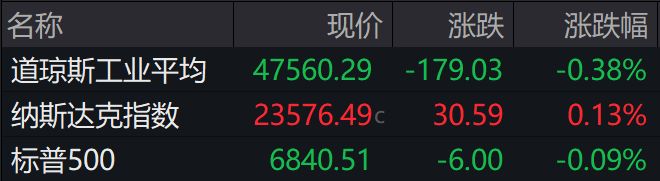
Market Overview - The three major U.S. stock indices showed mixed performance, with the S&P 500 slightly down by 0.09% to 6840.51 points, the Nasdaq up by 0.13% to 23576.49 points, and the Dow Jones down by 179.03 points to 47560.29 points, influenced by JPMorgan's higher expense guidance for 2026 [1] - The Russell 2000 index, driven by interest rate expectations, reached a new all-time high during the session, closing up 0.21% at 2526.24 points [2] Stock Performance - Large-cap tech stocks exhibited mixed results, with Microsoft up 0.20%, Amazon up 0.45%, Google A up 1.07%, and Tesla up 1.27%. In contrast, Apple fell by 0.26%, Nvidia by 0.33%, and Meta by 1.48% [3] - The Nasdaq China Golden Dragon Index declined by 1.37%, with most popular Chinese stocks retreating, including Baidu down over 4%, and Xpeng, Li Auto, and Beike down over 3% [4] Economic Indicators - The CME FedWatch Tool indicated a 90% probability of a 25 basis point rate cut in the upcoming Federal Reserve meeting, significantly up from less than 67% a month ago. Analysts believe the recent strong rebound in small-cap stocks reflects market bets on a more accommodative financial environment [5] - The latest October JOLTS report revealed job openings increased to 7.67 million, exceeding market expectations of 7.15 million, while hiring activity weakened, with employment numbers dropping to 5.149 million and layoffs increasing. The September revised figures showed job openings at 7.658 million and employment at 5.367 million [5] Labor Market Dynamics - The labor market is described as being in a "no hiring, no firing" state, with declining labor supply, reduced immigration, and the application of artificial intelligence suppressing demand for entry-level positions. This structural change is a core reason for the internal disagreements within the Federal Reserve [6] - Following the JOLTS data, U.S. Treasury yields rebounded after initially dipping, with the 10-year yield rising to 4.186% and the 2-year yield to 3.611%, marking the fourth consecutive day of increases [6] Yield Curve Insights - Analysts noted that the flattening of the yield curve reflects market concerns about economic momentum and a higher pricing of "hawkish rate cuts" scenarios [7] Commodity Performance - In commodities, international oil prices fell, with light crude oil futures for January 2026 down by $0.63 to $58.25 per barrel, a decline of 1.07% [8] - In precious metals, spot gold rose by 0.5% to $4208.83 per ounce, while February futures gold increased by 0.4% to $4236.20. Spot silver surged by 4.2% to $60.59 per ounce, reaching a historical high [9]
盘前必读丨现货白银突破60美元再创历史新高;海光信息终止吸收合并中科曙光
Di Yi Cai Jing Zi Xun· 2025-12-09 23:21
【财经日历】 中国11月CPI、PPI 2025中国铂族金属市场年会(三亚) | 名称 | 现价 | 涨跌 | 涨跌幅 | | --- | --- | --- | --- | | 道琼斯工业平均 | 47560.29 -179.03 | | -0.38% | | 纳斯达克指数 | 23576.49c | 30.59 | 0.13% | | 标普500 | 6840.51 | -6.00 | -0.09% | 加拿大央行公布利率决议 EIA公布月度短期能源展望报告 当地时间周二,美股三大指数涨跌互现,截至收盘,标普500指数微跌0.09%,纳指涨0.13%,道指跌 0.38%。 小盘股在利率预期推动下保持韧性,罗素2000指数盘中再创历史新高,最终收涨0.21%报2526.24点。 大型科技股走势分化。微软上涨0.20%,亚马逊上涨0.45%,谷歌A上涨1.07%,特斯拉涨1.29%;苹果 下跌0.26%,英伟达下跌0.31%,Meta走弱1.48%。 纳斯达克中国金龙指数收跌1.37%。热门中概股多数回落,百度跌超4%,小鹏、理想、贝壳跌逾3%。 大宗商品方面,国际油价下跌,纽约商品交易所2026年1月交货的 ...


浙金中心“暂停营业”现场直击
Di Yi Cai Jing Zi Xun· 2025-12-09 15:57
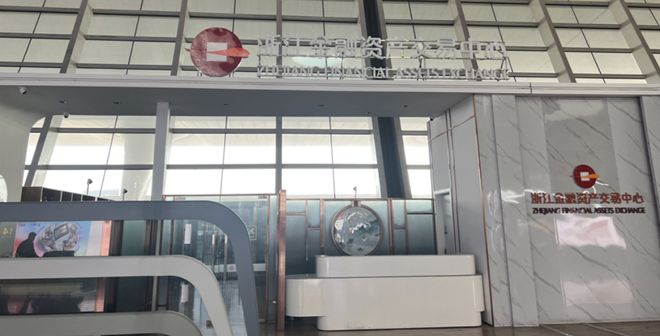
2025.12.09 本文字数:1458,阅读时长大约3分钟 作者 |第一财经 陈君君 近日,浙江金融资产交易中心(下称"浙金中心")相关产品密集出现兑付问题后,投资人的线下维权陆 续展开。12月9日,第一财经记者连续走访杭州与浙金中心办公相关的地点,发现东站服务点已连续多 日关门;而总部所在大楼虽仍在运作,但警力与安保明显加强。同时,距离总部约4公里的章家坝运河 公园被设为临时维权登记点,连续多日均有大批投资者前往登记。 东站服务点:前台空无一人,关门多日无人接待 12月9日,第一财经记者首先来到位于杭州东站候车大厅内的"浙江金融资产交易中心"服务点。现场玻 璃门紧闭,前台无人值守。门上张贴的营业时间仍显示"周一至周日 8:00-20:00",但显然服务点并未按 照公告正常开放。 多位东站服务台工作人员告诉记者,该服务点此前一直保持运营状态,"上周还开着",但从最近三四天 开始未再营业。一名值班站长表示:"可能是上周六关的,我们没有收到任何通知,是旅客问了之后才 发现已经关了。" 工作人员同时强调,并不清楚该网点是否为临时调整或永久停业,也没有来自运营方的正式说明。 总部所在地:安保明显加强,前台公司标识已 ...
“祥源系”3家上市公司股价狂泻
Di Yi Cai Jing Zi Xun· 2025-12-09 15:57
Core Viewpoint - The "Xiangyuan System" default event is causing significant stock price declines for its three listed companies, leading to a substantial market value loss of approximately 3.2 billion yuan over two trading days [2][3]. Group 1: Stock Performance - On December 9, Xiangyuan Cultural Tourism (600576.SH) fell by 7.51%, Haichang Ocean Park (02255.HK) dropped by 12%, and Jiaojian Co. (603815.SH) hit the daily limit down [2]. - The market capitalization of the three companies has evaporated by 3.2 billion yuan over two trading days due to the stock price declines [2][3]. - Jiaojian Co. reported a closing price of 9.78 yuan per share on December 9, with a market value of 60.53 billion yuan, down 1.424 billion yuan from December 7 [4]. - Xiangyuan Cultural Tourism's stock price fell by 20.67% from December 4 to 9, with a closing price of 5.91 yuan per share and a market value of 62.32 billion yuan, down 759 million yuan from December 7 [4]. - Haichang Ocean Park's stock price dropped 36.23% from December 4 to 9, closing at 0.44 HKD per share, with a market value of 58.14 billion HKD, down approximately 1.057 billion yuan from December 7 [4]. Group 2: Default Event Details - The rumors of the "Xiangyuan System" default began in late November, with reports of overdue products surfacing around December 4 [3]. - The financial products in question were traded on the Zhejiang Financial Asset Trading Center, with a total trading scale exceeding 10 billion yuan [5]. - On December 8, meetings were held between representatives from the Zhejiang provincial government and investors, where it was revealed that the company had been using a "borrow new to repay old" model, leading to a cash flow crisis [5][6]. Group 3: Financial Position of Xiangyuan Holdings - As of the end of Q3, Xiangyuan Holdings held 2.74 billion shares of Jiaojian Co., with 2.29 billion shares pledged, leaving a market value of approximately 442 million yuan for the unpledged shares [7]. - The direct holdings of Yu Faxiang in Jiaojian Co. amounted to 15.73 million shares, with a market value of about 154 million yuan [7]. - Xiangyuan Holdings had total assets of 599.78 billion yuan and equity of 215.90 billion yuan as of the end of 2024, with a net profit of 5.75 billion yuan [10].



全球最大的冰淇淋公司上市了
Di Yi Cai Jing Zi Xun· 2025-12-09 15:18
Core Viewpoint - The company, Dream Ice Cream, has officially announced its listing in Amsterdam, London, and New York, with a total share capital of 612 million shares. The company was previously part of Unilever and is set to operate independently starting July 2025 [2]. Group 1: Company Overview - Dream Ice Cream is the largest ice cream company globally, with projected revenue of €7.9 billion in 2024, capturing a 21% market share. Competitor Froneri holds an 11% market share, while eight other companies, including Mengniu, Yili, Nestlé, and Mars, collectively account for 12% [2]. - The Chinese market is one of Dream Ice Cream's top ten core markets and ranks second in retail sales for 2024, while other core markets hold the first position in market share [2]. Group 2: Market Dynamics - Despite Dream Ice Cream's strong global position and significant share in China, the overall ice cream market is facing challenges with slowing growth. The average price per 100 grams of ice cream has decreased from ¥3.94 in 2023 to ¥3.65 in the first eleven months of this year [3]. - Analysts suggest that Dream Ice Cream, as a foreign brand, has a higher overall gross margin and will benefit from brand, scale, and fan effects, as well as a complete supply chain after its separation from Unilever [3][4].

美股开盘涨跌互现,纳斯达克中国金龙指数跌超1%
Di Yi Cai Jing Zi Xun· 2025-12-09 15:05
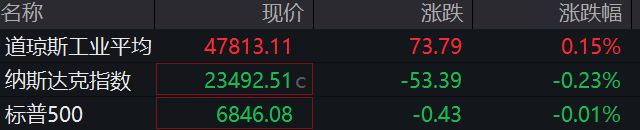
Market Overview - On December 9, U.S. stock indices opened mixed, with the Dow Jones Industrial Average up by 0.15%, the S&P 500 down by 0.01%, and the Nasdaq Composite down by 0.23% [1]. Index Performance - Dow Jones Industrial Average is currently at 47,813.11, up by 73.79 points, reflecting a 0.15% increase [2]. - Nasdaq Index stands at 23,492.51, down by 53.39 points, showing a decrease of 0.23% [2]. - S&P 500 is at 6,846.08, down by 0.43 points, indicating a slight decline of 0.01% [2]. Chinese Stocks Performance - Most popular Chinese stocks experienced declines, with the Nasdaq China Golden Dragon Index down by 1.45% [2]. - Li Auto fell over 4%, while Bilibili, Baidu, and Xpeng Motors dropped over 3% [2]. - Alibaba and JD.com also saw declines of over 2% [2]. Nvidia Update - Nvidia shares decreased by 0.3%, but U.S. President Trump announced via social media that the government will allow Nvidia to sell H200 AI chips to China [2].


超30家A股公司花式回馈股东
Di Yi Cai Jing Zi Xun· 2025-12-09 14:52
Core Viewpoint - The trend of "physical dividends" is gaining momentum in the A-share market, with over 30 companies offering unique shareholder rewards that integrate their business and products in 2025 [2] Group 1: Overview of Physical Dividends - Companies are increasingly engaging in shareholder reward activities, with examples including tickets, food items, and discounts, reflecting a wave of "creative rewards" in the capital market [2][5] - The concept of "physical dividends" is popular among investors, who refer to these stocks as "wool stocks" that can be passed down through generations [2] - Experts warn that while this trend can strengthen shareholder relationships if aligned with long-term strategies, it risks becoming a short-term marketing gimmick if it deviates from core business [2] Group 2: Examples of Shareholder Rewards - Emei Mountain A (000888.SZ) offers tickets, cable cars, hotels, hot springs, skiing, and tea as rewards for shareholders holding over 500 shares [4] - Qianwei Central Kitchen (001215.SZ) provides product gift packages for shareholders holding 100 shares or more [4] - Other companies like Hainan Airlines (600221.SH) and Xiangxiang Cultural Tourism (600576.SH) offer various discounts and free access to attractions for all shareholders [4][5] Group 3: Industry Trends and Patterns - The consumer sector, particularly food and beverage, remains the primary driver of "creative rewards," with companies like Wufangzhai (603237.SH) giving out rice dumpling gift boxes [5] - Many companies have established regular "physical dividend" mechanisms, such as Xiangyuan Cultural Tourism (600576.SH), which has been rewarding shareholders for three consecutive years [6] - Continuous rewards are seen in companies like Zhongjing Food (300908.SZ), which provides mushroom sauce annually, and Jiahua Food (605300.SH), which has been giving coffee products for five years [7] Group 4: Strategic Implications - The trend of "physical dividends" represents a shift in investor relations management from a focus on financial returns to a more interactive value creation approach [8][9] - This strategy allows companies, especially small to mid-cap consumer firms, to reduce financial pressure while enhancing shareholder loyalty and market reach [10] - However, the sustainability of this model is questioned, as it relies heavily on the event's popularity and lacks fundamental support, which may lead to stock price volatility [10]




三十年股市激荡:从《股疯》的人性考验,到九方智投AI股票机的“认知铠甲”
Di Yi Cai Jing Zi Xun· 2025-12-09 11:03
Core Insights - The article reflects on the evolution of China's capital market, highlighting its growth to become the world's second-largest market with a total market value exceeding 100 trillion yuan and over 5,000 listed companies [1] - It emphasizes the ongoing challenge for ordinary investors to navigate information asymmetry and knowledge gaps, which remains relevant despite the passage of time [1][2] Group 1: Investment Education and Market Development - The proportion of residents' equity assets is only about 15%, indicating a significant potential for asset management and wealth management needs [3] - The regulatory framework is increasingly focused on investor education, aiming to cultivate a mature and rational investor base as a foundation for a transparent and resilient capital market [3] - The intersection of policy direction and market demand has led to the emergence of new solutions, with a shift from fragmented learning to systematic and intelligent education becoming essential [3] Group 2: Technological Integration in Investment - The integration of finance and technology is not just about efficiency but represents a profound revolution in investor cognition, exemplified by innovative products like the AI stock machine from Jiufang Zhitu [5] - The AI stock machine aims to address the challenges of information, knowledge, and cognitive gaps faced by investors, transforming previously exclusive research and data analysis capabilities into accessible services [5][7] - This product features a comprehensive ecosystem that includes hardware, software, content, and services, designed to enhance users' financial literacy and practical skills through various modules [7] Group 3: Future of Capital Markets - The emergence of tools like the AI stock machine signifies a response to the deep-seated rules of financial markets, contributing to the healthy development of capital markets and ensuring that investors can share in economic growth [9] - The article posits that technology, particularly AI, is becoming a crucial force in balancing market efficiency and fairness, fostering a more rational and robust capital market ecosystem [9]
盖茨和谭德塞齐聚阿布扎比金融周,19亿美元决战脊灰“最后一公里”
Di Yi Cai Jing Zi Xun· 2025-12-09 09:44
Group 1 - The conference "Investing in Humanity: United to End Polio" raised a total of $1.9 billion for polio eradication, with the Gates Foundation contributing $1.2 billion [4] - The global effort to eradicate polio has seen a 99.9% reduction in cases since 1988, with only 28 new cases reported this year, all in Afghanistan and Pakistan [3] - The CEO of the Gates Foundation expressed cautious optimism about achieving zero cases in the next one to two years, despite challenges in Afghanistan and Pakistan [3][5] Group 2 - The World Health Organization's Director-General highlighted the potential for polio to become the second human disease eradicated, emphasizing the importance of this achievement for future generations [3] - A report from the Gates Foundation indicated a concerning trend, predicting an increase in global child mortality rates for the first time this century, with an estimated 4.8 million children under five expected to die in 2024 [5]