
Di Yi Cai Jing Zi Xun

Search documents
史上最大的IPO要来了?
Di Yi Cai Jing Zi Xun· 2025-12-10 04:33
Group 1 - SpaceX is advancing its IPO plan aiming to raise over $30 billion with a target valuation of approximately $1.5 trillion, which is close to the valuation achieved by Saudi Aramco during its IPO in 2019 [2] - If successful, the fundraising will exceed Saudi Aramco's $29 billion, potentially making it the largest IPO in history [2] - The management and advisors of SpaceX are striving to complete the IPO between mid-2026 and late 2026, although the timeline may be adjusted due to market conditions [2] Group 2 - SpaceX expects revenues of about $15 billion in 2025, increasing to between $22 billion and $24 billion in 2026, primarily driven by its Starlink business [2] - Elon Musk stated that SpaceX has maintained positive cash flow for years and conducts regular stock buybacks to provide liquidity to employees and investors [2] - There are conflicting reports regarding the fundraising amount and valuation, with some sources indicating a potential IPO in the next year seeking over $25 billion and a valuation exceeding $1 trillion [3] Group 3 - SpaceX's valuation has seen rapid growth, doubling from $180 billion at the end of 2023 to approximately $400 billion in July 2023, based on internal share sales [3] - Compared to Tesla, SpaceX's valuation premium is significant, with Tesla's market cap nearing $1.5 trillion and last year's revenue around $98 billion, while SpaceX's target valuation is similar but with expected revenue only 15% of Tesla's [3]

经济治理,有效为矛、有为为盾
Di Yi Cai Jing Zi Xun· 2025-12-10 04:12
Core Viewpoint - The article emphasizes the importance of enhancing quality and efficiency in economic governance for the upcoming year, focusing on proactive fiscal and monetary policies to stimulate domestic demand and improve macroeconomic management [2][3]. Group 1: Economic Governance Strategy - The Central Political Bureau outlined eight key principles for economic governance in 2026, including prioritizing domestic demand, innovation, reform, and maintaining social stability [2]. - The shift from "promoting stability through progress" to "enhancing quality and efficiency" indicates a more dynamic and effective approach to policy-making, emphasizing the interaction between policy and market trends [2][3]. Group 2: Domestic Demand and Consumption - The core issue facing the Chinese economy is insufficient effective demand, particularly in consumer spending, which requires systemic reforms to broaden consumption capacity [3][4]. - Enhancing consumer purchasing power is essential for increasing consumption rates, necessitating reforms in income distribution and social welfare systems [4]. Group 3: Consumer Protection and Market Transparency - There is a pressing need to improve consumer rights protection laws and policies to foster a more consumer-friendly market environment [4][5]. - The introduction of collective litigation and clearer consumer rights is advocated to reduce information asymmetry in the market, thereby enhancing pricing power and risk management capabilities [5].

航司运一位旅客赚不过苹果卖一个手机壳
Di Yi Cai Jing Zi Xun· 2025-12-10 03:33
Core Insights - The International Air Transport Association (IATA) forecasts that global airlines will achieve a net profit of $41 billion in 2026, up from $39.5 billion in 2025, marking a historical high [2] - Total industry revenue is expected to reach $1.054 trillion in 2026, a 4.5% increase from $1.008 trillion in 2025, with passenger traffic projected to hit 5.2 billion, reflecting a 4.4% growth [2] - The average net profit per passenger is estimated at $7.90, lower than the historical peak of $8.50 in 2023, remaining unchanged from 2025 [2] Financial Performance - The IATA highlights that the airline industry contributes nearly 4% to global GDP and supports 87 million jobs, yet profit margins are extremely thin [2] - Fuel costs are projected to slightly decrease to $252 billion in 2026, down 0.3% from $253 billion in 2025, while non-fuel costs are expected to rise to $729 billion, a 5.8% increase from $689 billion in 2025 [2] - The increase in non-fuel costs is attributed to aging fleets, supply chain disruptions, and rising maintenance and leasing costs [2] Regional Insights - In the Asia-Pacific region, net profit is estimated at $6.6 billion in 2026, driven by increased tourism and a growing middle class in China and India [3] - However, the average profit per passenger in the Asia-Pacific region is only $3.20, the lowest among all regions, compared to $28.60 in the Middle East, $10.90 in Europe, $9.80 in North America, and $5.70 in Latin America [3] - The region is expected to achieve a record passenger load factor of 84.4% in 2026, despite challenges in international passenger recovery and overcapacity [4] Cargo Insights - The IATA anticipates that air cargo volume will reach 7.16 million tons in 2026, a 2.4% increase from 2025, defying many pessimistic forecasts [4] - Despite a slowdown in global trade, cargo yield is expected to remain stable, only slightly decreasing by 0.5%, and maintaining a level approximately 30% higher than pre-pandemic [4] - The demand for air cargo is bolstered by strong e-commerce and semiconductor transportation needs, as global trade flows adjust due to U.S. tariff policies [4]

摩尔线程,大涨
Di Yi Cai Jing Zi Xun· 2025-12-10 02:27
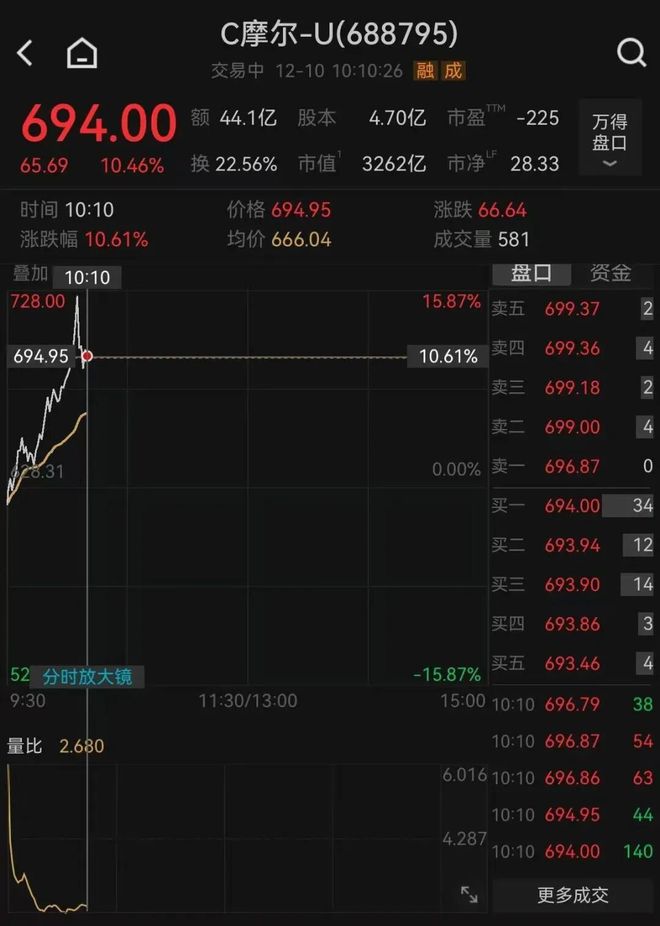
12月10日盘中,摩尔线程一度拉升涨超15%,站上700元大关,创上市新高。截至发稿,涨幅达 10.46%,报694元/股,成交额超44亿元。 编辑 | 钉钉 | G | C摩尔-U(688795) | | | | | --- | --- | --- | --- | --- | | | 交易中 12-10 10:10:26 融 成 | | | | | 694.00 | 额 44.1亿 股本 4.70亿 市盈 -225 | | 万得 营口 | | | 65.69 10.46% | 3262亿 市净 28.33 换 22.56% 市值 | | | | | 时间 10:10 | 价格 694.95 涨跌 66.64 | | | | | 涨跌幅 10.61% | 均价 666.04 成交量 581 | | | | | 叠加 10:10 | | 第二 | 负责 | | | 728.00 | | 15.87% 卖五 699.37 | | 2 | | 694.95 | 24 M 10.61% | | 699.36 | 4 | | | | | 699.18 | 2 | | | | | 699.00 | 4 | | | 0.0 ...
11月CPI、PPI数据出炉
Di Yi Cai Jing Zi Xun· 2025-12-10 01:55
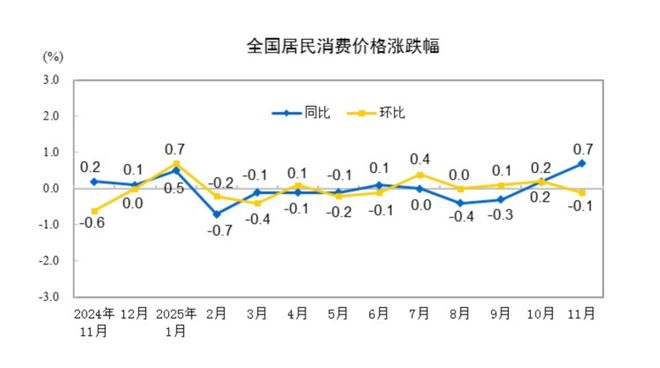
2025年11月份,全国工业生产者出厂价格同比下降2.2%,工业生产者购进价格同比下降2.5%;工业生 产者出厂价格和购进价格环比均上涨0.1%,涨幅均与上月相同。1—11月平均,工业生产者出厂价格比 上年同期下降2.7%,工业生产者购进价格下降3.1%。 编辑|钉钉 来源|国家统计局官网 12月10日,国家统计局发布的最新数据显示,2025年11月份,全国居民消费价格同比上涨0.7%。其 中,城市上涨0.7%,农村上涨0.4%;食品价格上涨0.2%,非食品价格上涨0.8%;消费品价格上涨 0.6%,服务价格上涨0.7%。1—11月平均,全国居民消费价格与上年同期持平。 11月份,全国居民消费价格环比下降0.1%。其中,城市下降0.1%,农村持平;食品价格上涨0.5%,非 食品价格下降0.2%;消费品价格上涨0.1%,服务价格下降0.4%。 ...
A股三大指数集体低开,中科曙光竞价跌停
Di Yi Cai Jing Zi Xun· 2025-12-10 01:49
2025.12.10 本文字数:460,阅读时长大约1分钟 作者 |一财阿驴 09:25 A股开盘丨三大指数集体低开 沪指低开0.21%,深成指低开0.20%,创业板指低开0.26%。 | 代码 | 名称 | 两日图 | 现价 | 涨跌 | 涨跌幅 | | --- | --- | --- | --- | --- | --- | | 000001 | 上证指数 | non in | 3901.13 | -8.39 | -0.21% | | 399001 | 深证成指 | m | 13251.27 | -26.10 | -0.20% | | 399006 | 创业板指 | M | 3201.38 | -8.22 | -0.26% | 盘面上,算力硬件概念股走弱,零售股走强,福建本地股持续发酵。 个股方面,中科曙光跌停,海光信息跌逾3%,消息面上,12月9日晚间,海光信息与中科曙光同步发布 公告,宣布终止此前筹划的重大资产重组事项。 | R | 中科曙光 603019 | 计算机设备 -0.52% નેત્રે | | | 同行对比 | | --- | --- | --- | --- | --- | --- | | ...



港股科网股走势分化
Di Yi Cai Jing Zi Xun· 2025-12-10 01:40
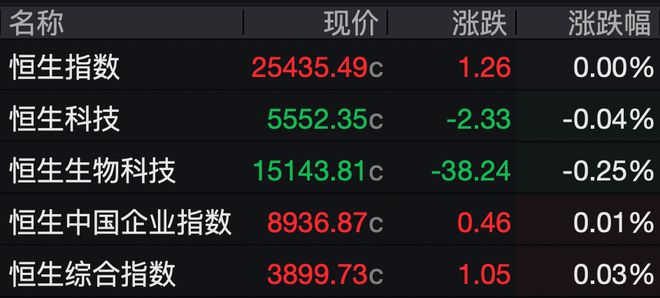
12月10日,恒生指数开盘微涨,恒生科技指数跌0.04%。 | 名称 | 现价 | 涨跌 | 涨跌幅 | | --- | --- | --- | --- | | 恒生指数 | 25435.49c | 1.26 | 0.00% | | 恒生科技 | 5552.35c | -2.33 | -0.04% | | 恒生生物科技 | 15143.81c | -38.24 | -0.25% | | 恒生中国企业指数 | 8936.87 c | 0.46 | 0.01% | | 恒生综合指数 | 3899.73c | 1.05 | 0.03% | | 比亚迪股份 | 97.050 | -0.97% | | --- | --- | --- | | 1211.HK | | | | 金山软件 | 28.980 | -0.89% | | 3888.HK | | | | 腾讯音乐-SW | 72.000 | -0.76% | | 1698.HK | | | | 京东集团-SW | 114.300 | -0.52% | | 9618.HK | | | | 零跑汽车 | 49.940 | -0.32% | | 9863.HK | | | ...
滚动更新丨A股三大指数集体低开,中科曙光竞价跌停
Di Yi Cai Jing Zi Xun· 2025-12-10 01:36
盘面上,算力硬件概念股走弱,零售股走强,福建本地股持续发酵。 个股方面,中科曙光跌停,海光信息跌逾3%,消息面上,12月9日晚间,海光信息与中科曙光同步发布 公告,宣布终止此前筹划的重大资产重组事项。 | R | 中科曙光 603019 | 卷 计算机设备 -0.52% | | | 同行对比 | | --- | --- | --- | --- | --- | --- | | | 90. 12 -10.01 -10.00% 陆 | 资金分析(万元) | | | ? 排名 | | 委比 | ग्रें | 王力流入: 服 0.0 | | | | | 5 | 90.16 | 18 | | | | | 4 | 90.15 | 主力流出: 89 | 50% | 资金 古北 | 50% | | | | 0.0 | | | | | 3 | 90.14 | 16 | | | | | ﺍﻟﻤ 2 | 90.13 | 主力挣流入 483 | | | | | | | 0.0 | | | | | | 90.12 | 27362 | | | | | 3 | | 浄特大单 | | 0 0 | | | | | 浄大单 | | | | | ...

倒计时一天丨2025CSR盛典暨第一财经·善商业论坛即将开启
Di Yi Cai Jing Zi Xun· 2025-12-10 00:19
Background - The global climate crisis, tightening regulatory policies, and the mainstreaming of ESG investment have transformed corporate sustainability from an "optional" to a "mandatory" aspect [1] - Companies face uncertainties in the external environment and need to drive internal strategic restructuring, embedding responsibility deeply into their business models [1] Challenges - Companies are experiencing a "triple dilemma": - Environmental: Tension between carbon neutrality and short-term growth [1] - Social: Difficulty in balancing the demands of multiple stakeholders [1] - Governance: Lack of unified ESG data and standards exacerbates "greenwashing" risks [1] Forum Objectives - The forum aims to redefine "sustainable competitiveness" beyond traditional CSR logic [1] - It observes that leading companies are undergoing three key transformations: - Shifting from compliance to value creation, turning ESG challenges into innovation opportunities [1] - Advancing from isolated actions to systemic change, building resilience across the entire industry chain [1] - Transitioning from external drivers to intrinsic motivation, embedding sustainability into corporate strategy [1] Collaboration - The forum will gather representatives from regulation, enterprises, academia, and the investment community to discuss how to create a resilient system that integrates "business-environment-society" [1] - The goal is to promote the co-evolution of corporate value and social value, contributing to sustainable development solutions in China [1]
美股窄幅震荡静待美联储决议,就业数据新添不确定性,白银创历史新高
Di Yi Cai Jing Zi Xun· 2025-12-09 23:53
Market Overview - The three major U.S. stock indices showed mixed performance, with the S&P 500 slightly down by 0.09% to 6840.51 points, the Nasdaq up by 0.13% to 23576.49 points, and the Dow Jones down by 179.03 points to 47560.29 points, influenced by JPMorgan's higher expense guidance for 2026 [1] - The Russell 2000 index, driven by interest rate expectations, reached a new all-time high during the session, closing up 0.21% at 2526.24 points [2] Stock Performance - Large-cap tech stocks exhibited mixed results, with Microsoft up 0.20%, Amazon up 0.45%, Google A up 1.07%, and Tesla up 1.27%. In contrast, Apple fell by 0.26%, Nvidia by 0.33%, and Meta by 1.48% [3] - The Nasdaq China Golden Dragon Index declined by 1.37%, with most popular Chinese stocks retreating, including Baidu down over 4%, and Xpeng, Li Auto, and Beike down over 3% [4] Economic Indicators - The CME FedWatch Tool indicated a 90% probability of a 25 basis point rate cut in the upcoming Federal Reserve meeting, significantly up from less than 67% a month ago. Analysts believe the recent strong rebound in small-cap stocks reflects market bets on a more accommodative financial environment [5] - The latest October JOLTS report revealed job openings increased to 7.67 million, exceeding market expectations of 7.15 million, while hiring activity weakened, with employment numbers dropping to 5.149 million and layoffs increasing. The September revised figures showed job openings at 7.658 million and employment at 5.367 million [5] Labor Market Dynamics - The labor market is described as being in a "no hiring, no firing" state, with declining labor supply, reduced immigration, and the application of artificial intelligence suppressing demand for entry-level positions. This structural change is a core reason for the internal disagreements within the Federal Reserve [6] - Following the JOLTS data, U.S. Treasury yields rebounded after initially dipping, with the 10-year yield rising to 4.186% and the 2-year yield to 3.611%, marking the fourth consecutive day of increases [6] Yield Curve Insights - Analysts noted that the flattening of the yield curve reflects market concerns about economic momentum and a higher pricing of "hawkish rate cuts" scenarios [7] Commodity Performance - In commodities, international oil prices fell, with light crude oil futures for January 2026 down by $0.63 to $58.25 per barrel, a decline of 1.07% [8] - In precious metals, spot gold rose by 0.5% to $4208.83 per ounce, while February futures gold increased by 0.4% to $4236.20. Spot silver surged by 4.2% to $60.59 per ounce, reaching a historical high [9]