
Zhong Guo Huan Jing Bao

Search documents
钟寰平:践行“两山”理念建设美丽中国
Zhong Guo Huan Jing Bao· 2025-08-15 01:57
Core Viewpoint - The article emphasizes the importance of ecological civilization and the "Two Mountains" theory, highlighting the need for a green and low-carbon development path to achieve a beautiful China [1][2][4]. Group 1: Achievements in Ecological Civilization - In 2024, the average PM2.5 concentration in cities reached 29.3 micrograms per cubic meter, and the proportion of surface water with good quality exceeded 90% for the first time [2]. - During the first four years of the 14th Five-Year Plan, energy consumption per unit of GDP decreased by 11.6%, equivalent to a reduction of 1.1 billion tons of carbon dioxide emissions [2]. - Since 2017, 572 ecological civilization demonstration zones and 240 "Green Water and Green Mountains are Golden Mountains and Silver Mountains" practice innovation bases have been established [2]. Group 2: Challenges and Future Directions - The current phase of ecological civilization construction is marked by significant pressures and challenges, necessitating a commitment to green and low-carbon transformation [2][3]. - The "15th Five-Year Plan" period is crucial for achieving fundamental improvements in ecological environments, requiring adherence to Xi Jinping's ecological civilization thought and the "Two Mountains" concept [2]. - Continuous efforts are needed in pollution prevention and control, emphasizing the importance of precise, scientific, and legal approaches to environmental protection [3]. Group 3: Strategies for Green Development - Green and low-carbon development is identified as a fundamental solution to ecological issues, with a focus on carbon peak and carbon neutrality initiatives [3]. - There is a need for innovative pathways to transform ecological resources into assets, ensuring that ecological advantages translate into developmental benefits [3]. - The article calls for tailored approaches to ecological transformation based on regional characteristics, promoting the integration of ecological values into economic development [3].
生态日特约理论文章|中国社科院黄承梁:“两山”理念科学真理的味道特别甜
Zhong Guo Huan Jing Bao· 2025-08-14 23:03
Group 1 - The "Two Mountains" concept emphasizes the intrinsic value of nature as a crucial component of economic and social development, asserting that "green water and lush mountains" are equivalent to "gold and silver mountains" [3] - It breaks the traditional view that separates ecological resources from economic development, promoting the idea that they can mutually enhance each other [3][4] - The concept challenges the "Environmental Kuznets Curve" theory, advocating for the synergy between economic growth and ecological protection, suggesting that safeguarding the environment can protect productivity [3][4] Group 2 - The "Two Mountains" concept has led to significant historical achievements in China's ecological civilization, driving the green transformation of the economy and the upgrade of green industries [5][9] - In the first half of the year, China's GDP grew by 5.3%, with notable increases in the production of new energy vehicles by 36.2% and green economy loans by 25.5%, indicating a shift towards sustainable growth [5][8] - The concept has fostered a new economic logic for green industries, transforming ecological constraints into internal growth drivers, thereby reshaping the global green industry landscape [7][8] Group 3 - The "Two Mountains" concept has global significance, contributing to a new path for ecological civilization and promoting a paradigm shift towards harmonious coexistence between humanity and nature [7][9] - China's photovoltaic industry leads globally, with over 80% of the world's polysilicon and wafer production, demonstrating the effectiveness of the "Two Mountains" policy in driving green industrialization [8] - The concept has facilitated international cooperation in green development, exemplified by projects in Ethiopia and Indonesia, showcasing China's commitment to global ecological governance [8][9]
扬州环境监测中心:让“绿扬清源”党建品牌力量在工作中得以彰显
Zhong Guo Huan Jing Bao· 2025-08-14 05:46
Group 1 - The core concept of "Green Yangqing Source" emphasizes the commitment to ecological protection and precise monitoring to ensure a clean environment in Yangzhou [1] - The Yangzhou Monitoring Center Party Committee promotes the integration of party building with business operations through various initiatives, including establishing demonstration posts for party members and launching emergency response teams [1] - The party committee recognizes the importance of a strong party building foundation, which includes well-organized activity spaces and regular organizational life practices to foster a robust party atmosphere [1] Group 2 - The Yangzhou Monitoring Center focuses on cultivating a positive organizational culture, emphasizing four key qualities: integrity, dedication, innovation, and a love for reading [2] - The center's approach to integrating party building with business operations includes three key principles: emphasizing party spirit, adhering to regulations, and maintaining moral integrity [3] - Party members are encouraged to uphold their ideals and beliefs, strictly follow laws and regulations, and act with a sense of responsibility towards the public in their work [3]
临沂推进高水平保护和高质量发展互促共进
Zhong Guo Huan Jing Bao· 2025-08-14 01:40
Core Viewpoint - The Linyi Ecological Environment Bureau is committed to promoting high-level ecological protection and high-quality green development through the integration of party building, pollution prevention, and low-carbon initiatives [2][13]. Group 1: Party Building and Governance - The bureau has integrated party building with its operations, enhancing its brand and fostering collaboration through learning and development initiatives [3][14]. - A responsibility system has been established to address issues arising in operations, leading to the implementation of 22 projects that improve overall work quality [3][14]. - The bureau has identified six areas of integrity risk and developed targeted prevention measures to promote a clean political environment [3][14]. Group 2: Pollution Prevention and Environmental Improvement - The bureau is actively engaged in pollution prevention, focusing on air quality improvement with a comprehensive index of 4.26 in 2024, reflecting a 4.7% year-on-year improvement [4][15]. - Water quality initiatives include the identification of 21 key monitoring points, with a target of achieving an 82.4% good rate for national control sections by 2024 [4][15]. - Soil pollution prevention measures are being implemented, with a focus on creating "waste-free" areas and ensuring 100% safety utilization of key construction land [4][15]. Group 3: Economic Development and Green Initiatives - The bureau is fostering green development by promoting the environmental protection industry, with five circular economy parks and 20 environmental projects initiated [5][16]. - Financial efforts include securing 116.78 billion yuan in policy loans and 3.97 billion yuan in central and provincial pollution prevention funds [5][16]. - The bureau has enhanced enterprise services, with 4.9 million companies included in environmental credit evaluations, and has conducted over 50 outreach activities to promote compliance [5][16]. Group 4: Community Engagement and Public Satisfaction - The bureau has conducted 26 special enforcement actions and resolved 860 issues through supervision and assistance, achieving a 100% completion rate for complaints [7][17]. - Community engagement efforts include responding to 5,363 public complaints with a satisfaction rate of 95.3%, demonstrating a commitment to addressing public environmental concerns [7][17]. - Initiatives to promote ecological awareness and participation among citizens have been implemented, fostering a culture of environmental stewardship [10][11]. Group 5: Future Goals and Strategic Planning - The bureau aims to complete all tasks outlined in the "14th Five-Year Plan" by 2025, focusing on both immediate and long-term environmental goals [18][20]. - Key strategies include enhancing air quality through six major initiatives and addressing water quality issues by completing specific tasks related to pollution reduction [20][21]. - The bureau is committed to maintaining environmental safety by strengthening solid waste and soil pollution controls, ensuring a comprehensive approach to ecological protection [21].

重庆绿色发展为何“渝”众不同?
Zhong Guo Huan Jing Bao· 2025-08-14 01:40
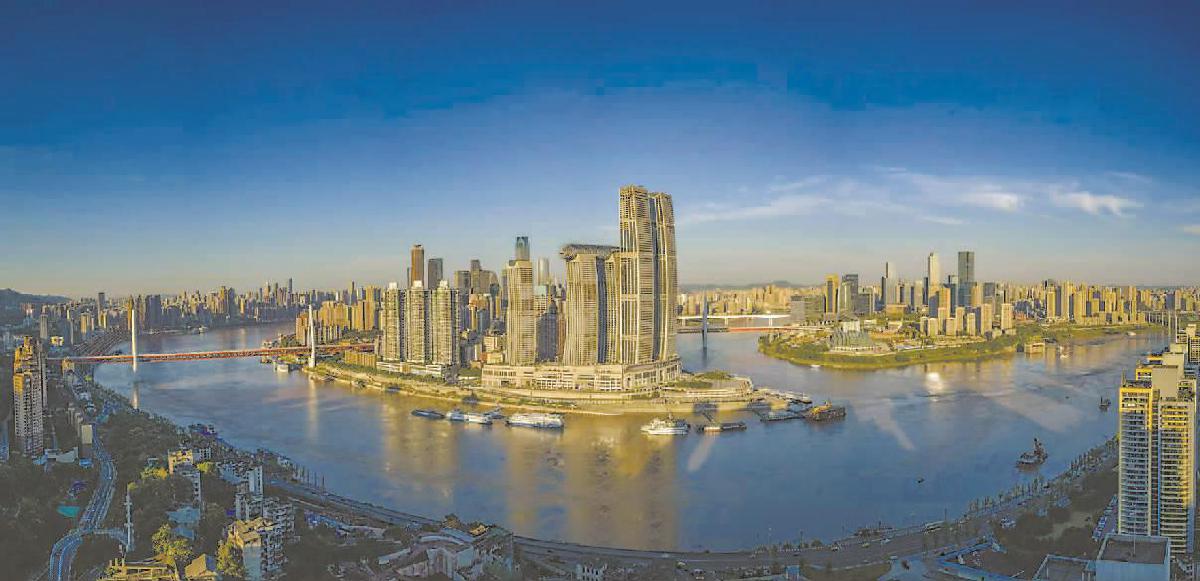
Core Viewpoint - The article emphasizes the importance of ecological protection and the transformation of ecological advantages into developmental benefits in Chongqing, highlighting various successful practices in ecological civilization construction [1][8]. Group 1: Ecological Wealth Generation - Fengjie County has shifted from a coal-dependent economy to developing the citrus industry, with Fengjie navel oranges achieving a brand value of 38.17 billion yuan in 2024, ranking 20th nationally [2][3]. - The county has invested 293 million yuan in infrastructure and implemented a brand management strategy, resulting in over 50 star-rated orange farms and benefiting more than 50,000 residents [2][3]. - The establishment of a "farmer technology follow-up" system has trained 32,000 farmers annually, and the average income for orange farmers exceeds 100,000 yuan [3]. Group 2: Mining Transformation - The restoration of the Cuoluo Mountain area, previously a mining site, has led to the creation of a national park with an investment of 342 million yuan, achieving a 70% ecological restoration rate [4][5]. - The project has improved living conditions for over 720 households and increased biodiversity in the area [4]. - Cuoluo Mountain Park has become a model for integrating ecological restoration with tourism, recognized by the United Nations [5]. Group 3: Digital Empowerment in Water Management - The "Bayu Water Management" initiative in Chongqing utilizes a data-driven approach to enhance water quality management, achieving a 100% good water quality rate at 74 national control sections [7][8]. - The initiative has established a comprehensive online coordination system, significantly improving the efficiency of pollution source management [7]. - The successful model has been recognized nationally and included in the "China Electronic Government Yearbook" [8]. Group 4: Pollution Control and Rural Development - Dazhu District has made significant progress in rural pollution control, achieving a 94.8% rate in rural sewage treatment by June 2025 [10]. - The district has implemented waste management strategies, including the establishment of 160 waste classification demonstration villages [10][11]. - Agricultural development initiatives have led to a 91.58% resource utilization rate for livestock waste, contributing to the district's economic vitality [11]. Group 5: Urban Water Quality Improvement - Tongliang District has successfully improved the water quality of the Xiao'an River, achieving a stable III class rating after comprehensive pollution control measures [15][16]. - The district has constructed 357 kilometers of new and upgraded sewage pipelines, enhancing the overall sewage treatment capacity [13][15]. - Collaborative agreements with neighboring areas have strengthened regional water quality management efforts [16]. Group 6: Air Quality Enhancement - Jiangbei District has undertaken significant oil depot renovations, reducing VOC emissions by over 400 tons annually through advanced sealing technologies [17][18]. - The transformation of three major oil depots has set a benchmark for industrial pollution control in the region [17][18]. - The district's approach combines policy support, technical guidance, and comprehensive oversight to promote green development [18]. Group 7: Industrial Wastewater Management - Fengdu County has established a "zero direct discharge" zone in its industrial park, significantly improving local water quality [19][20]. - The county's approach includes a comprehensive assessment of wastewater sources and the implementation of targeted remediation plans [19][20]. - The water treatment facility in the area has maintained stable compliance with discharge standards for three consecutive years [20]. Group 8: Comprehensive Environmental Governance - Liangping District has adopted a multi-faceted approach to improve air and water quality, focusing on PM2.5 and ozone control [21][22]. - The district has implemented a "seven-in-one" collaborative strategy for ecological protection and pollution control across administrative boundaries [22][23]. - Efforts to enhance biodiversity and promote green economic activities are underway, aiming for effective ecological value transformation [23].
湖州在“两山”实践中焕然一新
Zhong Guo Huan Jing Bao· 2025-08-14 01:40
Core Viewpoint - Huzhou, a city in Zhejiang Province, exemplifies the integration of ecological preservation and high-quality economic development, showcasing a successful model of green development and ecological civilization [2][19]. Group 1: Ecological Achievements - Huzhou is recognized as the birthplace of the "Lucid Waters and Lush Mountains are Invaluable Assets" concept and has been designated as the first city-level ecological civilization pilot zone in China [2][19]. - The city has achieved full coverage of national ecological county and district standards, and it is a national pilot city for the realization of ecological product value [2][19]. - The ecological environment has improved significantly, with water quality in the Taihu Lake area maintaining a stable level of II to III class, and the city has been recognized as a global ecological civilization international cooperation demonstration zone [9][11]. Group 2: Economic Transformation - Huzhou has developed a comprehensive approach to integrate economic construction with ecological civilization, leading to a significant increase in industrial output value from 239.9 billion to 1,336.3 billion from 2005 to 2024 [20]. - The city has successfully completed 70 cases of water ecological product value transformation, generating approximately 6.3 billion in transaction value and creating over 4,000 jobs [11][20]. - Innovative projects, such as the "air logistics corridor," have reduced carbon emissions by approximately 10,000 tons annually and lowered transportation costs by 135 million [18][20]. Group 3: Community and Talent Development - Huzhou has initiated programs to attract young talents back to rural areas, resulting in the cultivation of 8,515 agricultural entrepreneurs who significantly contribute to local economies [26][27]. - The "Ecological ID" system encourages community participation in ecological practices, allowing citizens to earn rewards for sustainable behaviors, thus promoting a culture of environmental responsibility [28][30]. - The city has launched a series of initiatives to enhance public engagement in ecological civilization, fostering a sense of shared responsibility among residents [27][28].

编制排放标准修改单,用好调查研究这个传家宝
Zhong Guo Huan Jing Bao· 2025-08-14 00:19
Group 1 - The revised emission standards for air pollutants in the steel industry (DB37/990—2019) have been officially implemented, reflecting a shift in work style by the drafting team to better address the concerns of enterprises [1] - The drafting team conducted extensive research to understand the challenges faced by steel companies, leading to a more responsive standard modification process that aims to provide significant support to enterprises [1] - The team recognized that the existing regulations did not align with the actual production conditions and environmental management needs of the steel industry, prompting necessary adjustments to the standards [1] Group 2 - To address the challenges in the steel industry, the drafting team has incorporated advanced process technologies and equipment into the revised standards, enhancing the definition of heat treatment furnaces and clarifying operational principles [2] - Feedback from industry representatives indicated that the modifications would improve production efficiency, optimize industrial structure, and enhance regional competitiveness [2] - Following the release of the revised standards, the drafting team has actively engaged in communication to ensure accurate dissemination of information, thereby increasing enterprise recognition and supporting the green and high-quality development of the industry [2]
新疆布尔津县:生态修复与价值变现相得益彰 | “两山”转化记
Zhong Guo Huan Jing Bao· 2025-08-14 00:08
Core Viewpoint - The transformation of the livestock industry in the Altay region of Xinjiang is crucial for ecological restoration and economic development, balancing environmental protection with the livelihoods of local herders [4][5][9]. Group 1: Ecological and Economic Initiatives - The Buerjin County has implemented various ecological protection projects, including returning pastures to grassland, resting and banning grazing, and developing grassland carbon sinks, leading to a green development path [4][5]. - The county has a total of 10.15 million acres of natural grassland, with 8.2 million acres available for development, which is essential for sustainable livestock farming [5]. - The government has adopted measures such as balancing livestock and grassland, reducing livestock numbers, and providing ecological rewards to protect and restore the environment [6][9]. Group 2: Livestock Industry Transformation - The county has shifted from traditional livestock farming to a new model of "warm-season grazing and cold-season feeding," improving the economic situation of herders [6][9]. - In 2022, Buerjin County was included in the national pilot program for grassland livestock industry transformation, and in 2023, it was recognized as one of the 15 demonstration counties for this transformation [6][9]. Group 3: Carbon Sink Development - The Xinjiang Development and Reform Commission secured 215 million yuan in central budget investment to support livestock industry transformation projects in Buerjin County and four other counties [10]. - Buerjin County has initiated carbon sink development, converting ecological value into economic benefits, with the first carbon trading project generating 67,000 tons of carbon credits and revenue of 19.765 million yuan [10]. - The VCS carbon sink project is expected to produce approximately 8 million tons of carbon credits over a 40-year period, with a static total revenue of about 280 million yuan [10].

闻令而动!江西省生态环境应急调查中心党员干部冲在最前面
Zhong Guo Huan Jing Bao· 2025-08-13 23:12
Core Viewpoint - The emergency response efforts in Jiangxi Province have demonstrated a commitment to rapid and effective environmental incident management, showcasing the proactive role of party members in addressing environmental risks and ensuring ecological safety [1][2][3]. Group 1: Emergency Response Actions - On May 20, 2023, a tailings leak incident was reported, and the emergency response team arrived within two hours, completing the necessary measures within 17 hours to ensure compliance [1]. - In a separate incident on November 28, 2024, a tailings leak was controlled through immediate action, including source blocking and pollutant treatment, highlighting the urgency and effectiveness of the response [2]. - The emergency response center managed 48 incidents in 2024, successfully preventing 30 secondary environmental events through timely reporting and intervention [3]. Group 2: Systematic Management and Improvement - The emergency response center has implemented several mechanisms, including emergency operation protocols and risk assessment meetings, to enhance their response capabilities [4]. - A review meeting was held to analyze the response to a previous tailings leak, aiming to convert lessons learned into actionable improvements for future incidents [4]. - Continuous training and simulation exercises are conducted to refine response strategies and enhance the skills of party members in emergency situations [4]. Group 3: Interdepartmental Collaboration - The emergency response center has established a multi-level collaboration mechanism with various departments, improving information sharing and initial response actions [5]. - In a chemical fire incident in October 2024, the rapid coordination between the fire rescue and environmental departments led to effective pollution control within 20 minutes [6]. Group 4: Community Engagement and Service - The emergency response center emphasizes a proactive service approach, with personnel responding promptly to pollution reports, demonstrating dedication to community safety [7]. - The center promotes a culture of accountability and efficiency among its members, ensuring that theoretical knowledge is applied effectively in practical situations [7]. Group 5: Technological Integration - The emergency response team has adopted advanced geographic information technologies, such as ArcGIS, to enhance situational awareness and operational planning during environmental incidents [8]. - The integration of technology with emergency response efforts has improved the effectiveness of pollution management and response strategies [8].
河北加快建立现代化生态环境监测体系到2030年,天空地海一体化生态环境监测网络日趋完善
Zhong Guo Huan Jing Bao· 2025-08-13 08:28
Core Viewpoint - The implementation plan for accelerating the establishment of a modern ecological environment monitoring system in Hebei Province aims for significant advancements in ecological monitoring by 2030, focusing on a comprehensive monitoring network and improved management systems to support environmental quality improvements and pollution control [2][3]. Group 1: Monitoring Network Optimization - Hebei Province will enhance the functionality of its monitoring network, creating an integrated ecological environment monitoring network that covers local rivers and living environments to objectively assess the effectiveness of ecological construction [2]. - The plan includes a smart transformation of the provincial air quality monitoring stations by 2030, with pilot projects starting in 2026 [3]. Group 2: Automation and Intelligent Analysis - By 2029, the province aims to complete the smart transformation of provincial surface water quality monitoring stations, with a focus on automated monitoring [3]. - The establishment of intelligent unmanned laboratories for ecological monitoring is set to begin in 2025, with the goal of achieving operational status by the end of 2026 [3]. Group 3: Air Quality Improvement Support - The plan outlines the establishment of a collaborative monitoring network for air quality and particulate matter by 2026, with a forecast capability for air quality indices exceeding 80% accuracy by 2029 [3]. - There will be a coordinated effort to enhance water ecological monitoring capabilities across the province [3]. Group 4: Biodiversity Protection - The plan includes initiatives for automatic fish monitoring in the Baiyangdian watershed starting in 2025, with further developments in aquatic biodiversity assessment and laboratory establishment by 2027 [4]. - By 2029, the goal is to create a comprehensive biological species database for key ecosystems in the province [4].