Jing Ji Wang

Search documents
1688启动AI抢跑计划 产业带开启智能化转型新征程
Jing Ji Wang· 2026-01-14 08:38
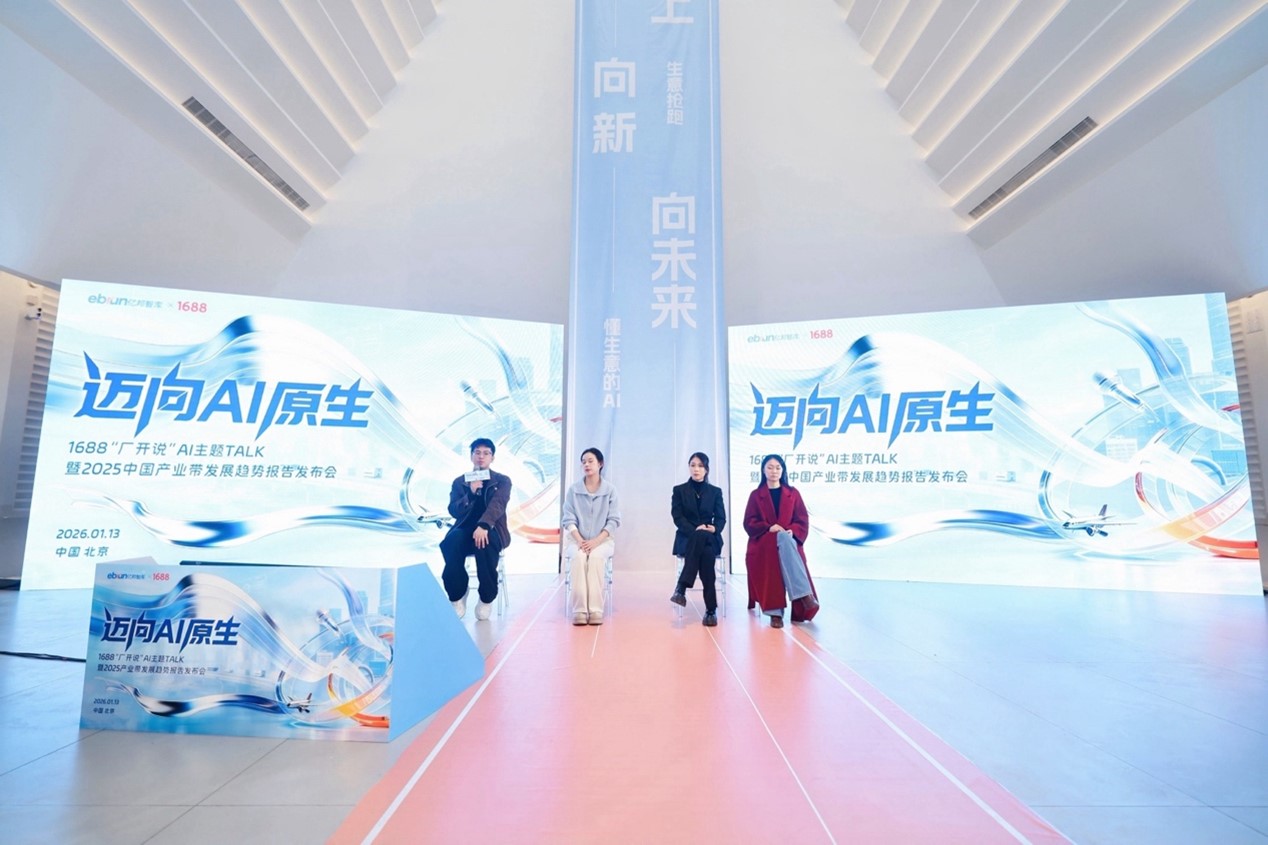
Group 1 - Alibaba's 1688 platform launched the "AI Acceleration: Business Sprint Plan" to help merchants embrace AI technology for business growth, offering guarantees for visitor traffic, inquiries, and orders, with a marketing incentive of 6,688 yuan for unmet targets by December 31, 2026 [1] - Over 290,000 merchants are using AI tools daily on the 1688 platform, indicating a significant shift towards AI adoption among over 1 million merchants by December 30, 2025 [2] - The younger generation of factory successors is adopting a three-step strategy of entering e-commerce, joining the 1688 platform, and fully embracing AI, leading to substantial sales increases for various factories [4] Group 2 - The role of AI is evolving from a cost-reduction tool to a central intelligence hub that reshapes business logic, as highlighted in the "2025 China Industrial Belt Development Trend Report" [5] - The report outlines three action guidelines for merchants: fully embrace AI, solidify operational foundations, and leverage dual circulation to seize new opportunities [7] - The industrial belt is undergoing a historic transition from digitization to intelligence, with AI2B reshaping operational logic and addressing core challenges in the B2B sector [8] Group 3 - The report identifies five development directions for the industrial belt, including a focus on real economy, digital trade, and the integration of large, medium, and small enterprises [8] - Regional development shows a pattern where eastern regions lead in digitalization, central regions experience rapid growth, and western regions expand their digital coverage [9] - The emergence of trends such as dual-directional transformation and the shift of factories from OEMs to brand owners is noted, with AI2B becoming a new digital infrastructure for industrial upgrades [9]


腾讯微保发布2025理赔服务年度报告:经平台理赔额累计84亿元
Jing Ji Wang· 2026-01-14 08:24
Core Insights - Tencent's insurance platform, WeChat Insurance, reported a cumulative claim amount of 8.4 billion yuan and over 25.76 million claims processed by the end of 2025 [1] - The introduction of the "Commercial Insurance Direct Payment" service allows for simultaneous settlement of medical insurance and commercial insurance claims at designated hospitals, significantly reducing the claim processing time to seconds [1] - The "WeChat Quick Claim" service has expanded to over 12,000 public hospitals, with a commitment to process outpatient claims within one day and inpatient claims within three days [2] Group 1 - The cumulative number of claims processed by Tencent WeChat Insurance reached 25.76 million, serving over 10.9 million individuals by December 31, 2025 [1] - The "Commercial Insurance Direct Payment" service was launched in collaboration with WeChat Pay, allowing for a streamlined claims process at the time of discharge from hospitals [1] - The new claims process eliminates the need for patients to pay upfront or submit paper documents, enhancing user experience [1] Group 2 - The "WeChat Quick Claim" service has been upgraded to ensure faster claim processing times, with specific commitments for different types of insurance products [2] - There was a significant increase in claims for allergic rhinitis among the youth, with a year-on-year growth of 176.4%, indicating a rising health concern [2] - The report highlighted an increase in claims related to liver disease and hypertension among middle-aged individuals, and a 39.4% rise in cancer claims among the elderly, emphasizing the importance of regular health screenings [2]

热点追踪丨选了“最低票价”反而多花钱?
Jing Ji Wang· 2026-01-14 03:04
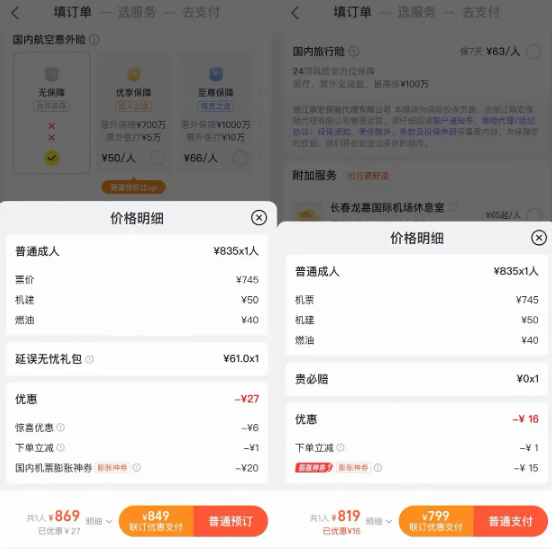
Core Viewpoint - The article highlights the deceptive practices of online travel platforms that advertise "lowest prices" but often lead to higher final costs due to hidden fees and bundled services, misleading consumers and complicating their purchasing decisions [1][2]. Group 1: Pricing Strategies - Some platforms use "price inducement" strategies to attract users, displaying a low initial price that later increases due to additional fees, such as a 61 yuan delay package, resulting in a final payment of 869 yuan instead of the expected lower price [1]. - Consumers may find that a seemingly higher-priced option, when stripped of hidden fees, can actually be cheaper, as demonstrated by a comparison where a 709 yuan ticket resulted in a final cost of 819 yuan, 50 yuan less than the "lowest price" option [1]. Group 2: Consumer Rights and Regulatory Issues - The practice of bundling services without clear consent has been criticized, with previous regulations like the E-commerce Law of 2019 aiming to protect consumer rights by requiring explicit consent for bundled services [3][4]. - Despite regulatory efforts, new forms of hidden pricing traps have emerged, complicating consumer protection and making it difficult for consumers to assert their rights due to high costs and low returns on pursuing claims [4]. Group 3: Recommendations for Platforms and Regulators - Platforms are urged to abandon short-sighted profit strategies based on consumer deception and instead focus on transparent pricing and quality service to build consumer trust [6]. - Regulatory bodies should refine standards for identifying and addressing new deceptive practices, enforce penalties on frequently complained platforms, and provide consumers with rights such as a seven-day return policy for bundled products [6].
与特朗普硬刚,美联储守护独立性
Jing Ji Wang· 2026-01-14 02:24
Core Viewpoint - The ongoing criminal investigation against Federal Reserve Chairman Jerome Powell by the U.S. Department of Justice has raised significant concerns about the independence of the Federal Reserve and the potential for a "sell America" trade to resurface in the market [1][8]. Group 1: Investigation Background - The investigation appears to center around the renovation project of the Federal Reserve's office building, but it is fundamentally rooted in the long-standing monetary policy disagreements between President Trump and Powell [2]. - On January 9, 2026, the DOJ issued a subpoena to the Federal Reserve, threatening criminal charges against Powell related to his testimony before the Senate Banking Committee regarding the renovation project, which saw its budget increase from approximately $1.9 billion to nearly $2.5 billion [2]. - Powell has publicly stated that the criminal investigation is a "pretext" to undermine the Federal Reserve's independence in setting interest rates, asserting that the government’s threats are due to the Fed's commitment to public interest rather than presidential wishes [2]. Group 2: Support for Powell - Powell received collective support from former Federal Reserve officials, including Janet Yellen, Ben Bernanke, and Alan Greenspan, who condemned the DOJ's actions as an unprecedented attempt to undermine central bank independence [3]. - Yellen expressed concern about the chilling effect this investigation could have on Powell's potential successors and was surprised by the market's muted reaction to the news [3]. - Jonathan Kantner, a former DOJ official, warned that if political motives erode the threshold for conviction, it could undermine global confidence in the rule of law in the U.S. [3]. Group 3: Federal Reserve's Response - In response to political pressure, Federal Reserve officials have chosen to assert their independence by signaling a clear stance on monetary policy [5]. - Powell emphasized that the core issue is whether the Federal Reserve can set interest rate policies based on evidence and economic conditions or if it will be swayed by political pressures [6]. - John Williams stated that current monetary policy is neutral regarding employment and inflation targets, indicating no need for interest rate cuts in the short term [7]. Group 4: Market Implications - Analysts suggest that a loss of independence for the Federal Reserve could trigger a threefold crisis: decreased investor confidence in U.S. dollar assets, rising long-term borrowing costs, and accelerated global de-dollarization [8]. - Gary Tan from Allspring Global Investments noted that any developments questioning the Fed's independence would increase uncertainty in U.S. monetary policy, potentially leading to a trend of reducing dollar holdings and increasing interest in traditional safe-haven assets like gold [8]. - The Bloomberg Dollar Index fell by 0.2% on January 12, while the yield on 10-year U.S. Treasury bonds rose, and gold prices reached a historic high, indicating market reactions to the investigation [8].
解码2026“国补”新政
Jing Ji Wang· 2026-01-14 02:24
Group 1: National Subsidy Policy - The new "National Subsidy" policy, with an initial funding of 62.5 billion yuan, aims to boost consumption upgrades and improve livelihoods by focusing on large-scale equipment updates and trade-in programs for consumer goods [2][4] - The 2026 subsidy rules have been optimized compared to 2025, with specific adjustments for automobiles and home appliances, including a 15% subsidy for energy-efficient products and a cap of 1,500 yuan per item [2][7] - The inclusion of smart glasses in the subsidy program reflects the government's support for the smart wearable industry and aligns with the trend of consumption upgrades [3][4] Group 2: Smart Glasses Market - Smart glasses are transitioning from niche products to practical tools for various scenarios, including education, workplace efficiency, and fitness monitoring, which is attracting attention from major tech companies [5][6] - The domestic retail market for smart glasses is expected to recover significantly this year, with companies like VITURE expanding their presence in key urban areas [3][6] - The smart glasses segment is projected to experience substantial growth, with the global AI glasses market expected to reach 6.653 billion yuan in 2025 and 18.209 billion yuan in 2026 [5] Group 3: Home Appliances and Environmental Focus - The 2026 subsidy policy emphasizes energy-efficient home appliances, with a focus on products meeting level 1 energy or water efficiency standards, which is expected to enhance the market share of green products [7][8] - The policy changes are anticipated to accelerate the elimination of outdated production capacities and drive companies to invest more in R&D for high-end, eco-friendly products [7][8] - The shift towards level 1 energy-efficient products is expected to significantly reduce carbon emissions, reinforcing the social value of green consumption [8] Group 4: Market Dynamics and Consumer Behavior - The adjustment in subsidy policies is likely to lead to a decline in sales for lower-efficiency products while promoting higher-efficiency alternatives, thus influencing consumer purchasing behavior [9][10] - The smart consumer electronics sector is experiencing high growth, with online retail sales of smart wearables increasing by 23.1% from January to October 2025, indicating a strong demand for intelligent and experiential products [10]

外交部:正密切关注伊朗局势发展
Jing Ji Wang· 2026-01-14 02:24
Group 1 - The core viewpoint of the article is that China firmly opposes the trade tariffs imposed by the U.S. on countries engaging in business with Iran, emphasizing that there are no winners in a trade war and that China will protect its legitimate rights and interests [2] - China is closely monitoring the situation in Iran and is prepared to take necessary measures to ensure the safety of its citizens traveling there [3] - China supports the stability of Iran and opposes foreign interference in its internal affairs, as well as the use or threat of military force in international relations, advocating for actions that promote peace and stability in the Middle East [4]
万亿产业,迎利好
Jing Ji Wang· 2026-01-14 02:24
Core Insights - The Ministry of Industry and Information Technology (MIIT) has issued the "Action Plan for Promoting High-Quality Development of Industrial Internet Platforms (2026-2028)" aiming for significant advancements in industrial internet platforms by 2028 [1][2] Group 1: Action Plan Goals - By 2028, the plan aims to establish over 450 influential industrial internet platforms, enhance resource connectivity, and achieve a device connection count exceeding 120 million [2] - The platform penetration rate is targeted to reach over 55%, creating a new generation of industrial internet ecosystem characterized by ubiquitous connectivity and deep collaboration [2] Group 2: Development Measures - The plan emphasizes the development of specialized platforms for simulation design, equipment operation, and safety management, enhancing the supply of digital products and services [2] - It encourages the cultivation of industry-specific platforms to improve digital solutions and promote internal digital integration within enterprises [2] Group 3: Data and AI Integration - The action plan promotes the integration of artificial intelligence (AI) into industrial internet platforms, focusing on enhancing AI literacy and skills across the workforce [4] - It supports the development of intelligent industrial agents capable of self-decision-making and execution in high-value industrial scenarios [4] Group 4: Application and Collaboration - The plan encourages collaboration between platform enterprises and industrial companies to build common data sets and explore new business models such as data brokerage [3] - It aims to enhance the application of AI in various industrial processes, including production control and risk identification [4] Group 5: Support for Enterprises - Large enterprises are encouraged to deepen platform applications to improve resource connectivity and collaboration across departments and regions [6] - Support for small and medium-sized enterprises (SMEs) includes digital transformation of equipment and access to cloud-based software and industrial applications [6] Group 6: Investment Opportunities - The recent initiatives are seen as crucial for integrating the real economy with the digital economy, with a focus on data-driven decision-making and AI-enabled knowledge management [7] - Investment prospects include advancements in industrial network integration, increased intelligence of industrial internet platforms, and specialized services in industrial data and models [7]
中国石油如期达成阶段性战略目标 圆满实现“十四五”收官
Jing Ji Wang· 2026-01-13 10:20
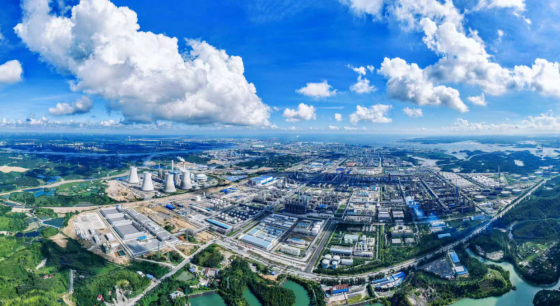
Core Viewpoint - In 2025, China National Petroleum Corporation (CNPC) aims to achieve its strategic goals by implementing four major initiatives, ensuring high-quality energy supply, and enhancing its market competitiveness as it marks the end of the 14th Five-Year Plan and the 75th anniversary of its establishment [1][4]. Group 1: Oil and Gas Production - In 2025, CNPC will focus on efficient exploration and effective development, achieving a rebound in domestic oil and gas SEC reserve replacement rates, with stable crude oil production and rapid growth in natural gas output [2][18]. - The Longqing Oilfield's annual oil and gas equivalent production surpassed 60 million tons, marking the sixth consecutive year of stable production since it became China's first large-scale oil and gas field of this size in 2020 [1][2]. - The Southwest Oil and Gas Field has established a production capacity of 50 billion cubic meters of gas per year, while the Daqi Gas Field has achieved a daily gas production of over 10 million cubic meters [2]. Group 2: Refining and Chemical Production - The completion of key refining and chemical projects has led to a significant increase in ethylene production capacity, with the Guangxi Petrochemical project achieving a historic breakthrough of 10 million tons per year [4][5]. - The company has seen record production in specialty products such as paraxylene and asphalt, with new materials production increasing by over 60% year-on-year [5]. - The company has successfully implemented a "reduce oil and increase specialty" strategy, leading to a dominant market share in five categories of specialty products [5]. Group 3: Renewable Energy Development - In 2025, CNPC achieved a milestone in clean energy development with the successful integration of a 1.3 million kilowatt photovoltaic project, contributing to a 7% share of domestic energy supply from renewable sources [6][7]. - The company has made significant advancements in geothermal, hydrogen, and clean electricity sectors, with clean energy generation exceeding 20 billion kilowatt-hours for the year [7]. Group 4: Deep Earth Exploration - The successful drilling of the Taka-1 well, reaching a depth of 10,910 meters, set multiple world records and marked a significant milestone in deep earth exploration [12]. - CNPC has established itself as the largest producer of ultra-deep oil and gas in China, with over 60 ultra-deep wells drilled in 2025 and record production from the Bozi-Dabei gas field [12][18]. Group 5: International Expansion - CNPC successfully won bids for nine deep-sea exploration blocks in Brazil, marking a new expansion in the deep-sea exploration sector [15][16]. - The company has achieved stable growth in overseas oil and gas equity production, exceeding 10 million tons [15]. Group 6: Technological Innovation and Digital Transformation - The launch of the Kunlun Big Model signifies a major step in CNPC's digital transformation, supporting multiple languages and enhancing operational efficiency [8]. - The company has made significant progress in digitalization, with a platform economy scale exceeding 500 billion yuan and the establishment of several digital transformation pilot projects [8].

eBay林文奎:跨境电商是一场“走得远”的价值远征
Jing Ji Wang· 2026-01-13 10:08
Core Insights - The article discusses the evolution of cross-border e-commerce in China, highlighting its transformation from a nascent industry to a significant growth driver for foreign trade, with eBay playing a pivotal role in this journey [1][2][3]. Historical Development - Cross-border e-commerce in China began in 1999, with early transactions relying on email communication and postal services, leading to long order fulfillment cycles [1]. - eBay's investment in the local C2C platform, eBay's strategic shift towards cross-border trade in 2006, and the digitalization of global trade around 2010 marked significant milestones in the industry's development [2][3]. Supply Chain Activation - The demand for faster delivery from overseas users led eBay to promote the use of overseas warehouses starting in 2014, significantly reducing logistics time from months to 3-5 days [4][5]. - This shift allowed for a broader range of products, including larger items like home goods and auto parts, to be sold internationally [5][6]. Industry Transformation - The activation of local industrial clusters, such as auto parts in Changzhou and furniture in Foshan, has shifted the focus of competition towards supply chain management and inventory turnover [6]. - eBay's data-driven approach has enabled factories to adapt to market demands, transitioning from a production-based model to a market-responsive one [6]. Talent Development - eBay launched the "eYouth" program in 2018 to address the talent gap in the rapidly growing industry, training over 20,000 professionals in cross-border e-commerce [6]. Market Focus and Strategy - The auto parts category has emerged as a key growth engine for Chinese sellers, transitioning from rough operations to refined brand-led strategies [7][9]. - eBay aims to support high-quality enterprises through the "元石·motors" club, providing resources for market analysis, compliance, and incentives [9][10]. Compliance and Challenges - Increasing regulatory barriers in the European market necessitate a focus on compliance as a core competitive advantage for sellers [10]. - eBay has introduced support programs to help sellers navigate these challenges, including compliance tools and operational incentives [10]. Future Outlook - eBay plans to focus on the dual-core markets of Europe and the U.S., emphasizing high-potential categories and leveraging technology to enhance operational efficiency [12][14]. - The integration of AI technology is expected to transform operations and improve buyer-seller interactions, positioning eBay for future growth [12][14].


2026泛娱乐直播新趋势:499家国有院团入驻抖音,专业力量共建直播生态
Jing Ji Wang· 2026-01-13 10:07
Core Insights - The rapid development of live streaming is reshaping the cultural consumption market and enabling state-owned art troupes to break through traditional communication boundaries [1][2] - The "Yibo Plan: Douyin Live Art Troupe Special" has successfully facilitated the online performance of 499 state-owned art troupes, with over 81.9 million live broadcasts conducted [2][5] - Live streaming has become an essential performance venue for art troupes, providing new audiences and revenue streams while enhancing cultural supply [2][5] Group 1 - As of January 7, 2023, 499 state-owned art troupes and 6,183 actors have joined Douyin, with a total of over 81.9 million live broadcasts [1][2] - The average daily live broadcasts amount to approximately 830, indicating a significant engagement in online performances [2] - The initiative aims to assist art troupes in developing online business models and expanding their digital presence [2][5] Group 2 - The Central Opera House has adapted its performances for Douyin, achieving a peak viewership of 30,000 for a single live broadcast [3] - The online live streaming is seen as a "frontline position" and "audience reservoir," effectively reaching potential viewers who may later attend live performances [5][6] - The "Yibo Plan" is transforming the content production logic in the industry, with a focus on integrating online and offline creative processes [6][7] Group 3 - Douyin provides comprehensive support for art troupes, including tailored strategies for account management, artist promotion, and financial incentives [12] - The initiative includes a "New Star Promotion Plan" for young actors and a "Master Aesthetic Workshop" for established artists to translate their expertise into contemporary language [12] - Over 20 state-owned troupes are expanding into group broadcasting formats, enhancing their digital engagement and audience reach [6][12]