Hu Xiu

Search documents
十个吴邪,与徐磊的十年复仇
Hu Xiu· 2025-09-26 13:10
Core Viewpoint - The article discusses the evolution of the "Tomb Raider" IP over the past decade, highlighting the challenges and transformations it has undergone in the film and television adaptations, particularly focusing on the latest release "Wu Xie Private Notes" as a culmination of the author's long-standing efforts to reclaim the narrative [2][6][24]. Group 1: Evolution of the "Tomb Raider" IP - The journey from the first season of "Tomb Raider Notes" in 2015 to "Wu Xie Private Notes" in 2025 has seen ten different portrayals of the character Wu Xie, reflecting the frequent adaptations and attempts to capture the essence of the original work [3][6]. - The initial success of "Tomb Raider Notes" in 2015 marked a significant moment in the Chinese streaming industry, leading to a surge in user engagement and the establishment of a paid subscription model for long-form video content [7][9]. - Despite high investments, such as the 5 million per episode for "Tomb Raider Notes," the adaptations have often failed to meet audience expectations, leading to criticism over the quality of special effects and fidelity to the source material [9][10]. Group 2: Challenges and Critiques of Adaptations - The adaptations have been criticized for prioritizing fan service and star power over narrative integrity, resulting in a disconnect with both original fans and new viewers [13][14]. - The "abandonment era" from 2017 to 2021 saw a decline in investment and a shift away from top-tier talent, leading to a perception of lower quality in adaptations [18][19]. - Recent adaptations, such as "Ultimate Notes," have shown that a lower budget and less expectation can lead to a more faithful representation of the original material, suggesting a potential path forward for the franchise [21][22]. Group 3: Current Trends and Future Directions - The shift towards more mature themes in adaptations reflects a broader trend in the industry, moving from youthful adventures to explorations of inner struggles and complexities of adult life [24][29]. - The latest casting choices for "Wu Xie Private Notes" indicate a mix of confidence and uncertainty, as the production aims to balance nostalgia with contemporary storytelling [30]. - The article suggests that the success of future adaptations may hinge on the ability to innovate while respecting the original narrative, as demonstrated by the positive reception of "Ultimate Notes" despite the absence of the original author [28][30].

我们离失去“睡觉自由”,还有多远?
Hu Xiu· 2025-09-26 13:03
想象一下不用睡觉,24小时精力满格,是不是很爽?在这个全天候高速运转的社会,我们是否还拥 有"休息"的权利?如果人类不再需要睡觉,世界会变成什么样? ...
小米求变
Hu Xiu· 2025-09-26 12:44
Core Viewpoint - Xiaomi is undergoing significant changes, particularly in its mobile phone business, as it aims to compete directly with Apple and redefine its product strategy [1][2]. Group 1: Strategic Shifts - Xiaomi is currently in a phase of aggressive self-assessment and transformation, particularly in its flagship mobile phone segment [2]. - The launch of the Xiaomi 17 series signifies a shift towards higher-end products, with a clear intention to "fully benchmark against iPhone" [2][3]. - Over the past four years, Xiaomi has successfully established a strong presence in the "small-screen flagship" category, achieving a market share of 24.7% in the 4000-5000 yuan price range in Q2, up from 11.4% in 2021 [3]. Group 2: Product Development and Features - Despite the success of the flagship series, the average selling price (ASP) of Xiaomi phones has slightly declined in the first half of the year, indicating a need for strategic adjustments to attract new users [4]. - The introduction of a "back screen" feature in the Xiaomi 17 Pro aims to appeal to a broader audience, although it may not resonate with the core "Mi Fan" community [6][9]. - The design of the Xiaomi 17 series is noted for its maturity, with the back screen being a potential avenue for personalized expression, leveraging advancements in technology [7][9]. Group 3: Chip Development - The Xiaomi 17 series does not feature the self-developed "Xuanjie O1" chip, opting instead for Qualcomm's latest Snapdragon 8 Gen 5, which reflects the current limitations in chip production capacity [9]. - CEO Lei Jun emphasized the company's commitment to self-developed chips, stating that it will take at least ten years and an investment of 50 billion yuan to achieve this goal [9]. - The performance of the Xuanjie O1 chip has exceeded expectations, showcasing significant improvements and enhancing Xiaomi's position in the industry [10][12].


上网差评预制菜不好吃,会被判刑或赔偿吗?(上)
Hu Xiu· 2025-09-26 12:31
Core Viewpoint - The article discusses the legal risks associated with criticizing pre-prepared food products, questioning whether businesses can successfully sue consumers for negative reviews and what the potential consequences of such actions might be [1] Group 1: Legal Risks - There is a looming legal risk for consumers who publicly criticize businesses, raising concerns about potential lawsuits for defamation [1] - The article explores the possibility of consumers facing legal repercussions, including the need to apologize, pay damages, or even face imprisonment for expressing negative opinions [1] Group 2: Consumer Behavior - The discussion emphasizes the importance of understanding the legal boundaries when expressing dissatisfaction with products and services [1] - It highlights the need for consumers to be aware of the potential consequences of their online comments regarding businesses [1]
易烊千玺票房锦鲤,肖央邓超无人问津?
Hu Xiu· 2025-09-26 12:31
Core Insights - Yi Yang Qianxi is highlighted as a box office success, with a profitability success rate of 75% for his new films, indicating strong market appeal and audience engagement [1] - In contrast, actors Xiao Yang and Deng Chao are experiencing poor box office performance, described as a roller coaster, suggesting volatility in their marketability [1] - The overall film industry is focusing on cost reduction, implying a shift in strategy that may affect the selection process for leading actors in future projects [1]
高德地图:职业带路人,不职业
Hu Xiu· 2025-09-26 11:47
Core Viewpoint - The article discusses the evolution of Gaode Map from a simple navigation tool to a comprehensive service platform offering 36 additional features, raising questions about its original intent and user experience [1][5][21]. Group 1: Company Evolution - Gaode Map was initially a straightforward navigation tool, named after a shell company of one of its founders [4][3]. - The company has undergone significant changes since Alibaba's acquisition, including a complete exit from the O2O market and a focus on core navigation services [8][10]. - Over the years, Gaode has expanded its services, including the launch of "Gaode Guide" for local dining and travel, and the integration of various local life services [10][12][13]. Group 2: User Experience and Perception - Users express concerns about the overwhelming number of services offered by Gaode, leading to a perception of pressure when using the app [45][51]. - The introduction of features like the "Street Ranking" has raised questions about the relevance and quality of recommendations, as seen in the case of the "Fujiwara Tofu Shop" [31][32][41]. - The article emphasizes the importance of maintaining a boundary between service and promotion, suggesting that excessive features may detract from the core navigation experience [30][58]. Group 3: Market Position and Competition - Gaode Map's extensive service offerings surpass those of competitors like Baidu Map and Tencent Map, which have fewer additional services [46]. - The article highlights the potential risks of overextending services, suggesting that a focus on core navigation could enhance user satisfaction and loyalty [58].

跳出 “安逸” 标签:小镇青年在困境里找出路
Hu Xiu· 2025-09-26 11:28
Core Viewpoint - The article highlights the struggles of young individuals in a small town, emphasizing their challenges in finding stable employment and the impact of economic conditions on their lives [1][3][60]. Employment Path - The story of Dawei illustrates the difficulties faced by young graduates in small towns, where limited job opportunities and lack of connections hinder their career prospects [4][5]. - Dawei initially pursued civil service exams as a potential escape from unemployment but faced repeated failures, leading to a sense of hopelessness [15][16]. - Zhang Zhao, another character, also experienced job instability, transitioning from a professional role to teaching and then attempting to run an online store, only to face setbacks due to the pandemic [22][29][30]. - Tian Bei, who had a stable job in an insurance company, faced layoffs due to market downturns, highlighting the precarious nature of employment even in established firms [32][34][50]. Life Challenges - The article discusses the emotional toll of unemployment and job instability on young individuals, including feelings of inadequacy and societal pressure to secure stable jobs [20][38][41]. - The characters express a desire for stability and a better quality of life, but the reality of their situations often leads to frustration and despair [35][77]. - The societal expectations in small towns create additional pressure, as individuals are often judged based on their employment status and financial stability [40][41][42]. Future Prospects - The narrative concludes with a sense of uncertainty regarding the future, as characters like Dawei contemplate moving to larger cities for better opportunities, while others remain trapped in their current situations [62][69]. - The article suggests that despite the challenges, there is a glimmer of hope as these young individuals continue to seek new paths and adapt to their circumstances [81].
在猪周期里躲牛市?
Hu Xiu· 2025-09-26 11:26
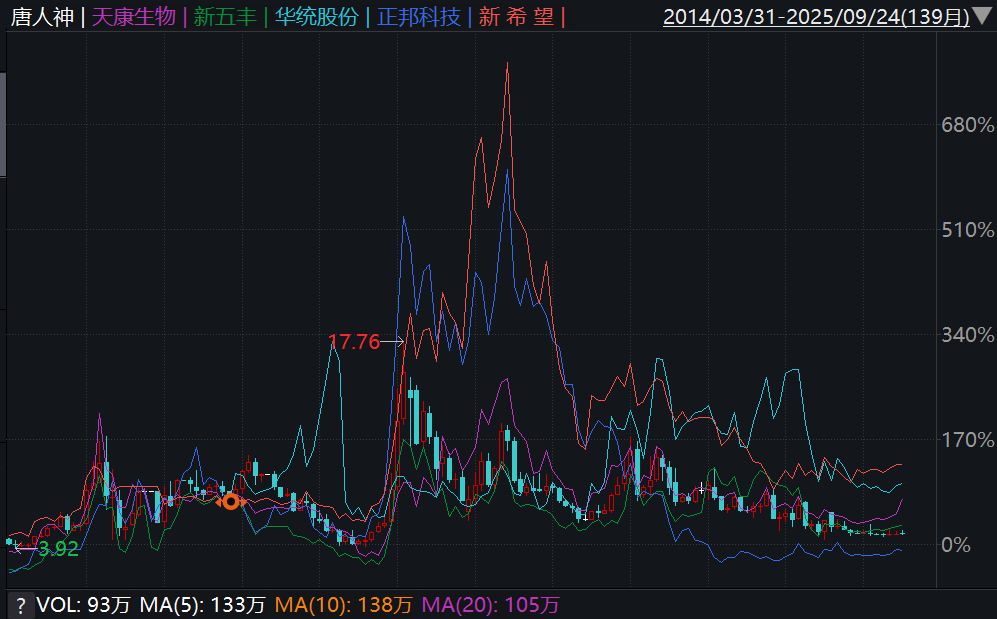
Core Viewpoint - The performance of pork companies in the first half of 2025 appears strong, with significant profit increases, yet the capital market remains skeptical, leading to many pork stocks languishing at low levels and some becoming "zombie stocks" unable to benefit from market uptrends [1][3]. Group 1: Financial Performance - Major pork companies reported impressive profits: Muyuan Foods achieved a net profit of 10.53 billion yuan, a year-on-year increase of 1169.77%; Wens Foodstuff Group reported a net profit of 3.475 billion yuan, up 159.12%; New Hope recorded a net profit of 754.9 million yuan, a 162% increase; and Dekang Agriculture and Animal Husbandry posted a net profit of 1.292 billion yuan [1]. - The profits are primarily driven by cost reductions rather than price increases or scale expansions, as raw material prices like corn and soybean meal have declined, coupled with improved production efficiency [3][4]. Group 2: Industry Challenges - The industry faces a significant overcapacity issue, with the number of breeding sows still at 40.42 million as of July 2025, exceeding the normal holding capacity [3]. - The market has not yet seen a supply-demand gap due to prolonged profitability since May 2024, with larger scale farms dominating the market, which hinders natural capacity reduction [4][5]. Group 3: Policy and Regulation - The Ministry of Agriculture and Rural Affairs and the National Development and Reform Commission have mandated that 25 leading pork companies reduce their breeding sows by 1 million by January 2026, with penalties for non-compliance [3][5]. - The policy's effectiveness may be limited due to structural differences in the industry, where large companies comply while smaller farms may not, potentially undermining the intended impact of the regulations [5][7]. Group 4: Market Dynamics - The industry has been in a profitable cycle since May 2024, but as of September 2025, the self-breeding model has begun to incur losses, with an average loss of 24.44 yuan per pig [11]. - The average price of pigs has dropped to approximately 12.6 yuan/kg, while the average cost is around 12.8 yuan/kg, indicating that further price declines are necessary for significant capacity reduction [11][14]. Group 5: Future Outlook - Even if production capacity decreases, overall supply may not decline due to increased production efficiency, which has risen significantly from 15.3 in January 2021 to 20.8 in January 2025 [13]. - The expectation for a reversal in the pork cycle should be tempered, as the industry is transitioning to a "micro-profit norm," shifting investment logic from "betting on cycles" to "selecting stocks" [16][17].
“每瓶只赚10块钱”,补剂行业的水,到底有多深?
Hu Xiu· 2025-09-26 11:15
Core Viewpoint - The supplement industry is identified as a highly profitable sector, with commissions significantly higher than other industries, prompting entrepreneurs like Zhu Xiaomu to explore opportunities within it [1] Group 1: Industry Insights - The supplement industry has been historically stigmatized, yet there is a growing trend of individuals consuming supplements, indicating a shift in public perception [1] - Zhu Xiaomu's approach involves transparency in pricing, aiming to build trust by only marking up the price of supplements by 10 yuan per bottle [1] - The article raises questions about whether low pricing and transparency can genuinely foster trust in an industry often viewed with skepticism [1] Group 2: Entrepreneurial Journey - Zhu Xiaomu has a background in entrepreneurship, having launched multiple ventures and participated in live-streaming sales with notable figures like Luo Yonghao [1] - His strategy includes sourcing from factories worldwide and utilizing social media for crowdfunding, reflecting a modern approach to business in the supplement sector [1] - The article speculates on the potential success of Zhu Xiaomu's venture in a market characterized by high commissions and profit margins [1]
快时尚巨头,为何扎堆做美妆?
Hu Xiu· 2025-09-26 10:29
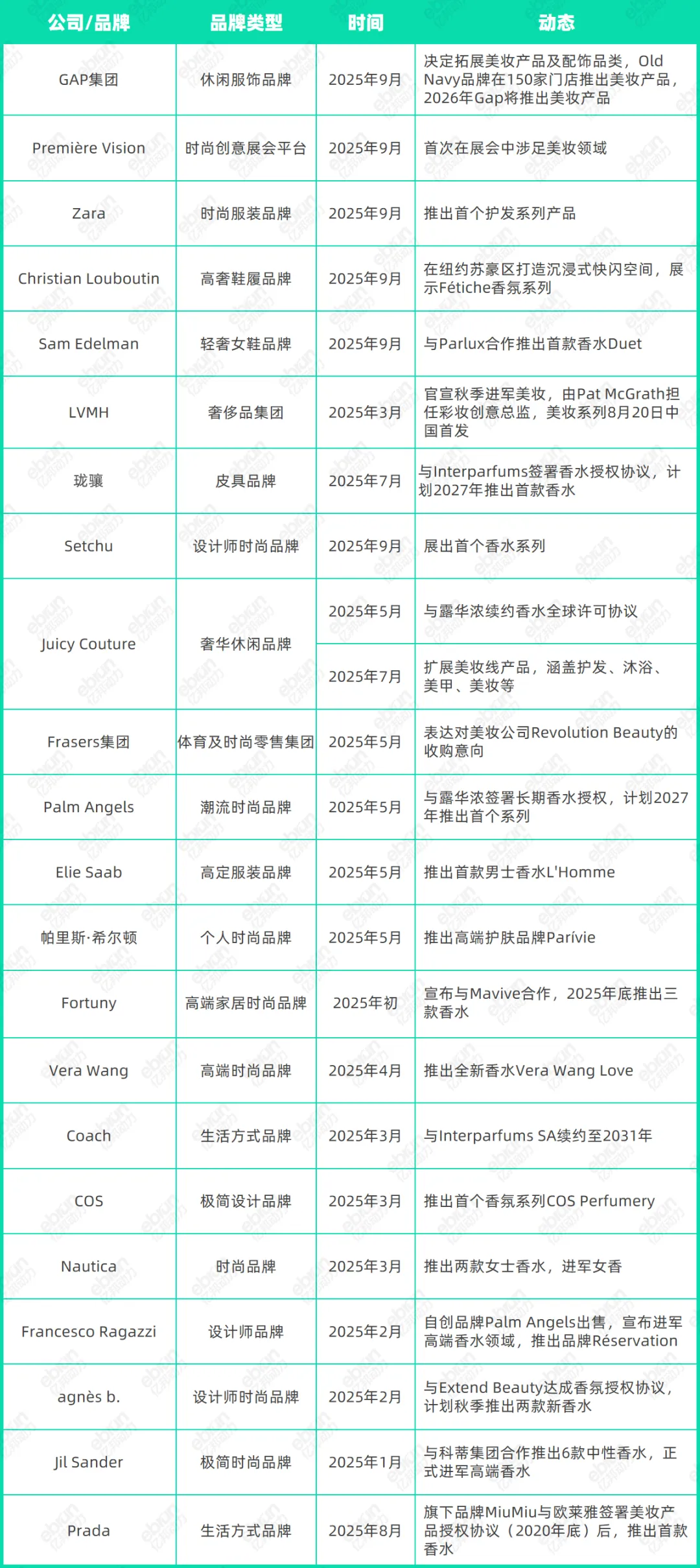
Core Viewpoint - The fashion industry is increasingly venturing into the beauty sector as a response to declining sales, with several major brands launching beauty products to explore new growth opportunities [3][10][46]. Group 1: Fashion Brands Entering Beauty - In September 2025, major fashion brands like Gap, Zara, and H&M announced significant moves into the beauty industry, indicating a trend among fashion companies to diversify their product offerings [5][16]. - Gap Group plans to launch beauty products in 150 Old Navy stores, with some featuring beauty consultants, aiming to leverage its financial stability for growth [12][10]. - Zara has introduced its first hair care line, including shampoo and conditioner, marking its entry into the hair care segment after previously launching cosmetics and fragrances [15][14]. Group 2: Performance of Fashion Brands - Gap Group reported a 4.85% increase in net sales for Q2 2024, ending a three-year decline, but the growth rate has slowed significantly compared to previous years [7][10]. - Zara's parent company, Inditex, experienced a modest 1.6% sales growth in H1 2025, with Zara itself showing the slowest growth in five years at 0.9% [13][14]. - H&M's net sales fell by 1.87% in the same period, with a notable decline in net profit, indicating a downward trend for the brand [16][17]. Group 3: LVMH's Beauty Strategy - LVMH launched its own beauty brand in 2025, with a focus on luxury makeup products, including 55 lipstick shades, aiming to enhance its beauty segment's profitability [32][33]. - Despite the launch, LVMH's overall sales and profits saw significant declines in H1 2025, with a 4.48% drop in net sales and a 21.59% decrease in net profit [34][35]. - The beauty segment's operating profit margin remains lower than the group's average, highlighting challenges in achieving profitability through self-created beauty brands [39][40]. Group 4: Designer Brands and Fragrance - Designer brands are increasingly entering the fragrance market, with several launching new perfume lines in collaboration with established fragrance companies [20][22]. - The trend reflects a broader strategy among fashion brands to transform into lifestyle brands, leveraging their design expertise while outsourcing production and distribution to fragrance giants [22][24]. - Notably, Christian Louboutin's fragrance line, managed by Puig, has faced challenges, with its makeup segment experiencing a decline in sales [30][28]. Group 5: Market Outlook and Challenges - The collective move into beauty by fashion brands raises questions about the sustainability of this strategy amid economic downturns [46]. - The beauty market's appeal remains strong, but the success of these ventures will depend on the brands' ability to adapt and innovate in a competitive landscape [46].