Hu Xiu

Search documents
网吧还没死,还越活越好了?
Hu Xiu· 2025-10-14 03:30
Core Insights - The article highlights the transformation of internet cafes into popular venues for young people during the National Day holiday, serving as a secret base for overnight stays [1] - Modern internet cafes are described as compact yet fully equipped, offering a more affordable alternative to hotels, despite higher prices compared to traditional internet cafes [1] - The new internet cafes attract not only esports enthusiasts but also nostalgic individuals from the 80s and middle-aged people seeking an escape from reality, indicating a broadening customer base [1] Industry Trends - The rise in popularity of internet cafes reflects changing consumer preferences, with a shift towards more versatile and affordable leisure options [1] - The appeal of internet cafes as a relaxation space suggests a potential growth opportunity in the leisure and entertainment sector, particularly among younger demographics [1] - The trend indicates a possible resurgence of internet cafes as social hubs, catering to diverse age groups and interests, which could influence future business models in the industry [1]
3900点得而复失,后市机会与风险谁更强?
Hu Xiu· 2025-10-14 03:24
国庆长假后首个交易日,A股市场迎来了一场令人振奋的突破,时隔10年重回3900点,不过这股高兴劲 儿还没过,市场就因中美博弈的加剧出现了快速下跌,现在大家最关心的是接下来再站上3900点的机会 大,还是博弈升级的风险大?我们总结梳理了市场逻辑和机构观点,本期就来和各位好好捋捋。 ...
OpenAI自研芯片来了
Hu Xiu· 2025-10-14 03:18
Core Insights - OpenAI has developed a custom AI chip with the involvement of its GPT model, marking a significant step in its computational capabilities and strategy [1][2] - The collaboration with Broadcom aims to deploy a massive 10GW computing system starting in the second half of 2026, enhancing OpenAI's total computational capacity to 26GW [1][4] Group 1: AI Chip Development - OpenAI's CEO, Sam Altman, described the current AI infrastructure project as the largest industrial project in human history, emphasizing the integration of AI in chip design [2] - The partnership with Broadcom involves not just chip procurement but also deep collaboration in design, including server racks and networking equipment [2] - AI has been utilized in the chip design process, significantly reducing development time and chip area, showcasing the potential for rapid iteration and innovation in semiconductor design [2][4] Group 2: Strategic Intent and Capacity Growth - The addition of 10GW is part of OpenAI's strategy for vertical integration, aiming to control all aspects of the technology stack from chip design to user interaction [3][4] - OpenAI's computational capacity has grown dramatically from an initial 2MW to an expected 30GW, which is more than double the peak electricity demand of New York City in summer [4] - The company aims to eliminate computational scarcity, enabling users to have powerful AI capabilities at their disposal [5] Group 3: Future Projections and Industry Impact - Altman highlighted the potential for future models like GPT-6 to significantly enhance performance, leading to exponential growth in demand for AI capabilities [5] - The evolution of computing architecture is being driven by the need for more efficient and powerful systems, with innovations such as 3D stacking and optical integration being explored [6] - OpenAI's ambitious goal includes achieving 250GW of computational power by 2033, which could require over $10 trillion in investment [6][7]

2亿长焦到底有多出片?带着vivo X300 Pro环游世界
Hu Xiu· 2025-10-14 03:04
Core Viewpoint - The article discusses the capabilities of the vivo X300 Pro camera kit, particularly its 200 million long-focus lens, and its potential to produce high-quality images while traveling the world without leaving home [1] Group 1 - The vivo X300 Pro is equipped with advanced technology and creative features designed for photography enthusiasts [1] - The 200 million long-focus lens is highlighted as a key component that can enhance the photography experience [1] - The article emphasizes the combination of technology and creativity in achieving impressive photographic results [1]
这些辍学的00后,凭啥改写30岁以下创富榜?
Hu Xiu· 2025-10-14 02:58
Core Insights - The emergence of a new wave of entrepreneurship among the post-2000 generation, particularly in the AI 2.0 sector, is highlighted, with one-third of the applicants for the "Top 20 AI Leaders Under 30" being from this demographic [1] - Many of these young founders are school dropouts, indicating a shift in traditional educational paths towards entrepreneurship in the tech industry [1][2] Group 1: Entrepreneurial Landscape - A significant number of post-2000 founders are involved in AI-related fields such as AI automation, AI programming assistants, and AI recruitment [1][2] - Notable examples include Jessica Wu and Neil Deshmukh from Sola Solutions, both MIT dropouts focusing on AI enterprise process automation [2] - The trend shows that many of these founders are not conventional "good students," with some openly discussing their controversial projects, such as AI tools for cheating [2][3] Group 2: Motivations and Challenges - The launch of ChatGPT and the subsequent opening of its API have inspired many young entrepreneurs to create innovative applications, leading to a surge in AI-related projects [3] - The acceptance of failure is notably high among these young entrepreneurs, who often pivot their products multiple times in response to rapid technological changes [4] - Initial funding challenges are common, with many applicants facing rejections or last-minute changes to investment agreements, although this is gradually improving [5] Group 3: Educational Implications - The article raises questions about the future of education in light of AI advancements, suggesting a need for a curriculum that fosters collaborative, entrepreneurial, and interdisciplinary thinking [6] - The focus is on preparing individuals who not only understand AI technology but also have a global perspective, as AI products are designed for a worldwide market [6] Group 4: Entrepreneurial Spirit - The passion differentiating entrepreneurs from employees is emphasized, with quotes from notable figures highlighting the importance of enthusiasm in entrepreneurship [7] - A sentiment expressed by young entrepreneurs reflects a belief that stability may lead to obsolescence in a rapidly changing society, reinforcing their commitment to innovation [8]


马斯克二代星舰最后一飞成功了
Hu Xiu· 2025-10-14 02:53
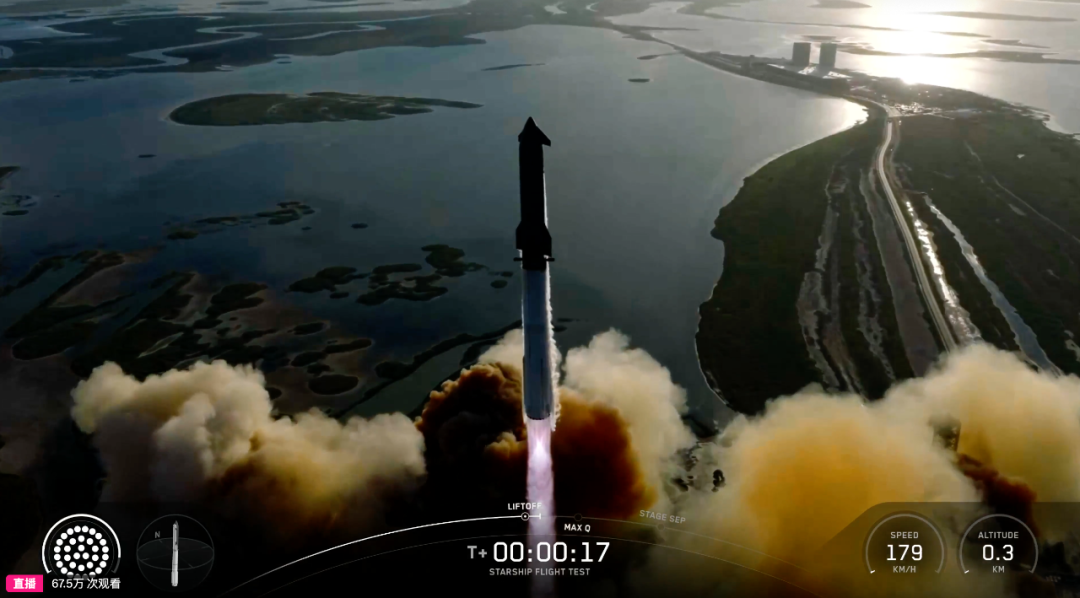
Core Points - The successful completion of the Starship's 11th flight marks a transition from the V2 version to the V3 version, which is crucial for future Mars landing missions [3][54]. - The mission involved the Super Heavy booster B15-2 and Starship S38, with a focus on testing new landing engine configurations for future heavy boosters [7][10]. Group 1: Mission Overview - The mission utilized Super Heavy booster B15-2, which previously succeeded in flight and recovery tests [8]. - The booster was equipped with 24 Raptor engines that had completed flight verification in earlier missions [8]. - The Starship successfully deployed 8 Starlink simulators, each weighing approximately 2000 kg, totaling around 16000 kg in payload [23][24]. Group 2: Technical Innovations - The mission tested a new landing engine configuration, switching from 3 to 5 engines for improved redundancy and landing safety [20]. - The deployment of the simulators was smooth, with each deployment taking about 1 minute [25]. - A new material called "Crunch Wrap" was used to protect the heat shield tiles, preventing high-temperature plasma from penetrating the gaps [40][41]. Group 3: Iterative Development Philosophy - The mission aimed to collect data for future return-to-launch-site landings, employing a complex re-entry profile [47]. - The Starship executed a "dynamic tilt maneuver" during its descent to simulate landing corrections [49][51]. - The strategy of "flying while modifying" allows for rapid testing and validation of technologies, which is a hallmark of the company's innovative approach [56][57].
霸王茶姬——撑起中国茶文化传播新范式
Hu Xiu· 2025-10-14 02:31
Core Viewpoint - The company Bawang Chaji is shifting its focus from competing on price and promotions to emphasizing cultural heritage by opening a tea culture museum and launching the world's largest store, the Bawang Chaji Super Tea Warehouse in Hong Kong, indicating a strategic move towards brand differentiation and cultural engagement [1] Group 1 - Bawang Chaji is moving away from traditional competition strategies like price wars and subsidies, instead opting to promote tea culture [1] - The opening of the Super Tea Warehouse in Hong Kong is a significant development, suggesting the company's ambition to expand its brand presence and influence [1] - The strategic direction raises questions about whether the company aims to increase tea sales or is pursuing a larger, more comprehensive business strategy [1]
“跳下悬崖造飞机”的狠人,用一个未来的故事打动苹果代工厂
Hu Xiu· 2025-10-14 02:25
Core Insights - The article discusses the journey of a startup, Future Intelligence, which aims to redefine AI headphones by integrating AI into hardware design from the outset, rather than as an afterthought [1][10][12] - The company has recently completed a new round of financing led by Ant Group, indicating a doubling in valuation and a shift in investor interest towards application-focused AI companies [7][36] - The CEO emphasizes the importance of balancing hardware development with AI integration, highlighting the challenges of supply chain management and market competition in the headphone industry [9][37] Company Development - Future Intelligence was founded in 2022 during a time when venture capital was primarily focused on large AI models, leading to initial difficulties in securing investment [8][26] - The company pivoted towards a more application-oriented approach in late 2023, aligning with a broader industry trend that favored practical AI applications over theoretical models [36] - The CEO's experience in the industry and previous failures in headphone development informed the company's strategy to focus on a specific market niche, particularly in office environments [12][19] Product Strategy - The company has iteratively refined its product offerings, initially focusing on basic recording and transcription features before expanding to include translation and summarization capabilities [40][42] - The integration of large language models has significantly enhanced the product's functionality, allowing for more sophisticated data processing and user interaction [42][60] - Future Intelligence aims to create a seamless user experience by ensuring that hardware design incorporates AI capabilities from the beginning, rather than retrofitting them later [10][48] Market Positioning - The company positions itself as a provider of integrated AI office assistant services, distinguishing itself from traditional hardware manufacturers by focusing on software and hardware synergy [55][56] - Future Intelligence recognizes the competitive landscape, noting that while large tech companies may explore AI hardware, their focus remains on broader consumer needs rather than niche applications [49][51] - The company has established a balanced online and offline sales strategy, leveraging e-commerce platforms for rapid market penetration while gradually expanding its physical presence [53][54]

商业航天的风口,山东不愿再错过
Hu Xiu· 2025-10-14 02:18
Core Viewpoint - Shandong Province, traditionally an industrial hub, is now making significant strides in the commercial aerospace sector, aiming to establish a robust industry by 2027 with a projected scale of 50 billion yuan [5][24][31]. Group 1: Commercial Aerospace Development - The launch of the "Yinli No. 1" rocket marks Shandong's second expedition in commercial aerospace, showcasing its capabilities as a non-traditional aerospace province [2][3]. - The provincial government has set ambitious goals, including the production of 100 rockets and 150 commercial satellites annually by 2027, with a target industry scale of 50 billion yuan [5][24]. - The commercial aerospace sector is recognized as a strategic emerging industry in China, with expectations for rapid growth and maturity by the end of the 14th Five-Year Plan [4][8]. Group 2: Industry Structure and Market Potential - The commercial aerospace industry encompasses various segments, including rocket manufacturing, satellite applications, and space tourism, with a significant market potential estimated to grow from 1 trillion yuan in 2020 to approximately 2.3 trillion yuan by 2024, reflecting a compound annual growth rate of 22.9% [6][8]. - The industry is supported by a comprehensive ecosystem that includes manufacturing, launching, and satellite operations, enhancing efficiency and reducing costs [21][23]. Group 3: Regional Collaboration and Infrastructure - Shandong aims to create a collaborative industrial structure, with Yantai as the core area for commercial aerospace development, supported by Jinan and Qingdao focusing on satellite manufacturing and applications [34][35]. - The establishment of the Dongfang Aerospace Port has positioned Shandong as a unique player in the commercial aerospace landscape, facilitating efficient launch capabilities and attracting significant investment [18][19][24]. Group 4: Challenges and Competitive Landscape - Despite its ambitions, Shandong faces challenges in scaling its commercial aerospace industry compared to traditional aerospace provinces like Beijing and Guangdong, which have established larger market sizes [32][33]. - The competition for satellite launch frequency and resources is intensifying, necessitating Shandong to enhance its launch capabilities and infrastructure to meet growing demand [12][14][13].

不跟土狗谈恋爱,咋成了老外找对象的第一法则?
Hu Xiu· 2025-10-14 02:12
Core Viewpoint - The concept of "Swag Gap" has emerged as a new standard in dating, emphasizing the importance of fashion compatibility between partners, with a strong sentiment against dating those perceived as lacking style [3][12][14]. Group 1: Definition and Popularity - "Swag Gap" translates to "fashion gap," reflecting a cultural shift where fashion sense is now a criterion for romantic relationships, akin to traditional standards of social compatibility [3][12]. - The term gained traction on TikTok, with videos discussing the implications of fashion differences in relationships, leading to widespread discussions and support among users [4][12]. Group 2: Supporters' Arguments - Proponents argue that significant fashion differences can lead to insecurity and jealousy, ultimately harming the relationship [14][19]. - Supporters believe that avoiding partners with a "Swag Gap" is a way to prevent future conflicts and maintain a balanced dynamic in the relationship [14][19]. Group 3: Opponents' Perspectives - Critics argue that fashion should not be a basis for social or romantic discrimination, emphasizing that everyone has unique qualities that should not be judged solely on appearance [16][19]. - Some individuals express that their partners' style differences do not affect their relationships, highlighting the subjective nature of fashion [16][19]. Group 4: Societal Implications - The "Swag Gap" phenomenon reflects broader societal issues, including class distinctions and the perception of power dynamics in relationships, where fashion serves as a marker of social status [25][36]. - The trend has been linked to economic anxieties among younger generations, who increasingly prioritize financial compatibility in relationships, suggesting that aesthetic preferences may also be influenced by economic factors [38][41].