Xin Lang Ke Ji

Search documents
美图吴欣鸿:鼓励员工内部创业,给1000万「风投」
Xin Lang Ke Ji· 2025-12-11 09:27
吴欣鸿介绍,美图单个AI创新工作室人数不超过10人,更偏向全能型人才,以半年为时限,充分授权 员工进行产品开发,公司会像风险投资一样给到1000万元的基础预算,并视项目实际需要酌情加大投 入;同时,公司提供整个中后台能力供项目团队调用,团队自主负责产品的定义、美学的把握、整个项 目和工程的管理等;此外,团队成员可获得对应的分红激励。 吴欣鸿透露,为应对AI时代的挑战,美图主动进行组织变革,希望2000多人的团队可以变成一个个小 组织,"未来我们最激烈的竞争不一定是跟大厂,反倒是跟一些新锐的创业团队,所以得提前以他们的 效率为标准去尽量对齐。" 吴欣鸿认为,当下美图需要提升组织效率和能力,"效率是对标敏捷的创业公司,能力是让每个人都能 成为超级个体。"为此,美图对标当下AI创业团队,内部推出了AI创新工作室机制。 12月11日,近日,美图公司CEO吴欣鸿在媒体对话中透露,美图正从中型公司重回创业团队,打造AI 创新工作室进行内部"赛马",每个工作室不超过10人,可申请1000万元基础资金,以半年为期进行产品 创新。 ...

抖音电商发布全新营销产品「千川・乘方」
Xin Lang Ke Ji· 2025-12-11 08:10
Core Insights - Douyin E-commerce launched a new marketing product "Qianchuan·Chengfang" that leverages AI technology to create a comprehensive intelligent marketing system [1] - The product focuses on three main capabilities: strategy management, dynamic intelligent services, and precise recommendations, aiming to enhance business growth for merchants [1] - Douyin E-commerce introduced two initiatives to support merchants: a reduction in technical service fees to 0.6% for all orders using "Qianchuan·Chengfang" and a 10 billion yuan coupon subsidy plan to improve conversion efficiency [1] Group 1 - The new marketing product "Qianchuan·Chengfang" is designed to streamline the entire business operation process for merchants [1] - The product aims to provide a more certain path for business growth through cost control and intelligent operations [1] - The technical service fee reduction and coupon subsidy plan are intended to create more stable operating income for merchants [1]
携程黑钻会员订机票遭无故取消,价格跳涨近3倍
Xin Lang Ke Ji· 2025-12-11 07:57
Group 1 - The core issue highlighted is the potential practice of "big data price discrimination" or a technical glitch on the Ctrip platform, which may infringe on consumer rights [1] - A user reported that after attempting to purchase a business class ticket from Shanghai to Xishuangbanna for ¥3804, the order was inexplicably canceled, and the price surged to ¥10424 [1] - The same user successfully purchased the ticket at the original price of ¥3804 through the official app of the airline, indicating a discrepancy in pricing on different platforms [1]


京东34.73亿港元购香港办公楼50%权益,称将用于自用
Xin Lang Ke Ji· 2025-12-11 01:05
【#京东回应34.73亿港元买楼##京东34.73亿港元买楼#】继阿里之后,京东也在加速布局中国香港市 场。 丽新国际与丽新发展联合公布,丽新发展向独立第三方Jasmine Investment Development IV,全数出售位 于香港干诺道中3号一幢27层高办公大楼之特定部份50%权益,估计代价约34.73亿港元,卖方为一家投 资控股控股公司。 经记者核实,该收购方实为京东控股的投资主体。对此,京东方面相关人士明确向《科创板日报》表 示,此次收购目的为自用,同时强调"京东始终看好在香港的发展,将围绕供应链持续投资,推动零 售、物流、技术研发等业务融入香港、服务香港。" 工信部信息通信经济专家委员会委员盘和林向《科创板日报》记者分析称,今年双十一期间,京东保持 增长且增速优于竞争对手,海外布局带动的销量提升是关键因素,这为京东注入了更强的出海信心。 他指出,香港是多数互联网企业出海的首选站,对京东而言,出海后需构建连接国内与海外的供应链体 系,而香港能有效拉近其与重点关注的东南亚市场的距离,设立海外驻点成为必然需求,此次购楼正是 这一战略的具体落地。(智通财经) ...

春晚抢天价广告位?宇树、智元被曝席位之争,投资人开始焦虑了
Xin Lang Ke Ji· 2025-12-11 00:35
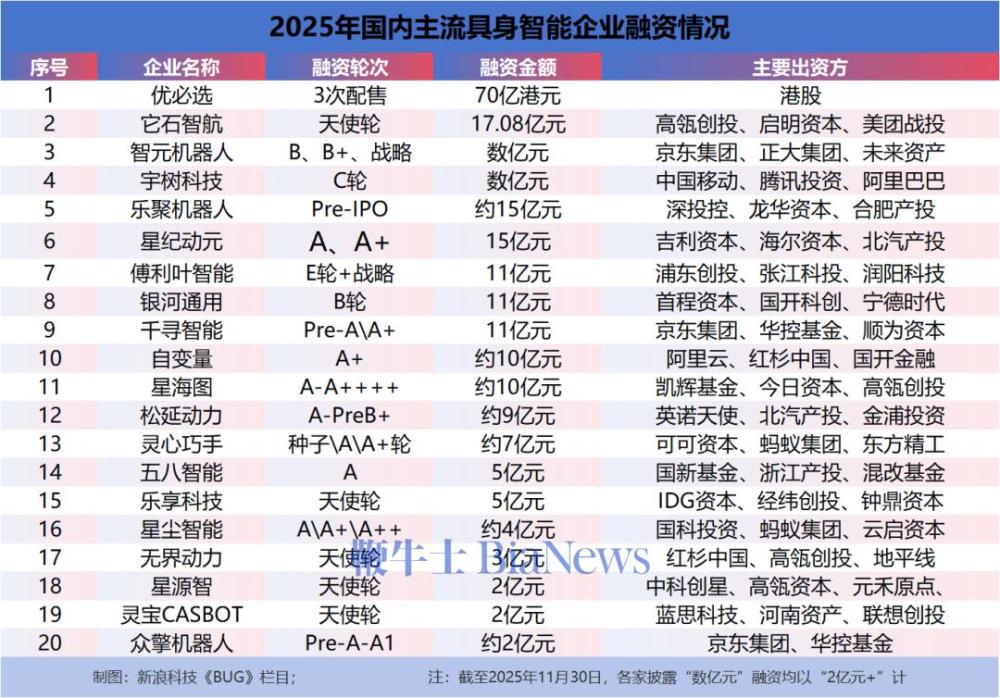
"目前存在的这些公司80%很可能会被淘汰掉" 浙江省机器人协会会长俞晴告诉《BUG》栏目:"现在的人形机器人,多数还是操控式的,一个机器人背后起码有两三个人,完全是增加了 成本,却没达到使用的效率。 产品的企业中,累计融资额也已超过200亿元。 投资过多家机器人独角兽的投资人对《BUG》栏目直言:"目前市场上的人形机器人企业太多,我们都不投新项目了" 。另有投资人同样悲 大量热钱涌入的同时,投资人开始变得担忧。 观, 。 " 整整一年,全是亿元融资 部企业的估值已达到数百亿级别。 根据媒体报道,宇树科技 和智元机器人正高价争抢今年春晚赞助席位。其中,智元开价6000万元,而宇树开出的报价则高达1亿元。目 前,智元方面已回应称"不是真的" ,但宇树方面并未表态。 质疑声随踵而至:"行业泡沫这么大?花钱如流水?" 据相关数据显示,今年以来,国内与机器人产业链相关的投融资合计金额已超过800亿元,另据《BUG》栏目统计,今年有公开发布过机器 据IT桔子数据显示,2025年,国内与机器人产业链相关的投融资事件已多达557条,合计融资金额超839.52亿元。其中,智元、宇树等头 另据《BUG》栏目统计,截至今年11月3 ...
支持本地大模型部署,铭凡与AMD合作发布迷你AI工作站与AI NAS旗舰产品
Xin Lang Ke Ji· 2025-12-10 09:24
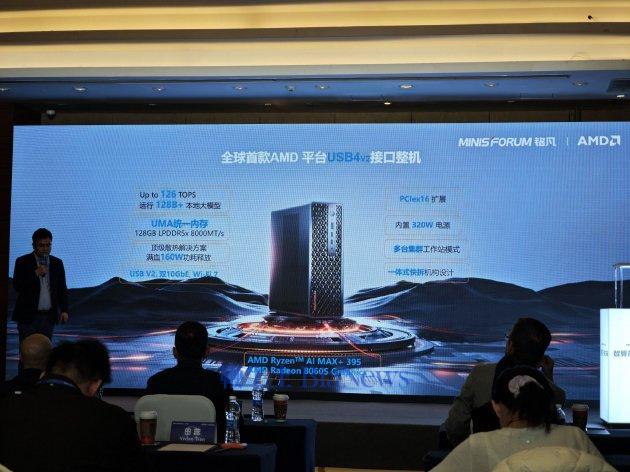
12月10日,迷你计算机品牌 MINISFORUM 铭凡与半导体品牌 AMD 今日于北京联合举办"智算 前沿・焕芯未来" 迷你 AI 工作站 & AI NAS 产品体验会"。 作为双方合作的一项重要举措,本次体验活动重点演示两款全新旗舰级 AI 计算产品:AI 迷你工 作站MS-S1 MAX 与AI NAS N5 Pro,并探讨 AI 创新对企业及个人带来的广泛影响。 发布会现场新品介绍 本次体验会汇聚 40 余位行业精英、媒体代表及合作伙伴,MINISFORUM 铭凡董事长姜瑞静 (Roy Jiang)、AMD 大中华区市场营销副总裁纪朝晖(Jovi Chi)、大中华区新兴业务部总监 李明宇(Tim Li)等双方核心高管出席。 活动现场,双方共同探讨 AI 技术发展趋势,详解MINISFORUM铭凡AMD AI产品线创新优势, 通过真机体验、集群演示等沉浸式环节,展现新一代 AI 硬件如何重新定义算力边界,为企业与 个人用户提供高性能、灵活部署、安全可靠的智能计算解决方案。 MINISFORUM 铭凡董事长 姜瑞静 表示:"我们的愿景是加速推动智能计算的普及化,让每个人 都能受益。MINISFORUM铭凡 ...

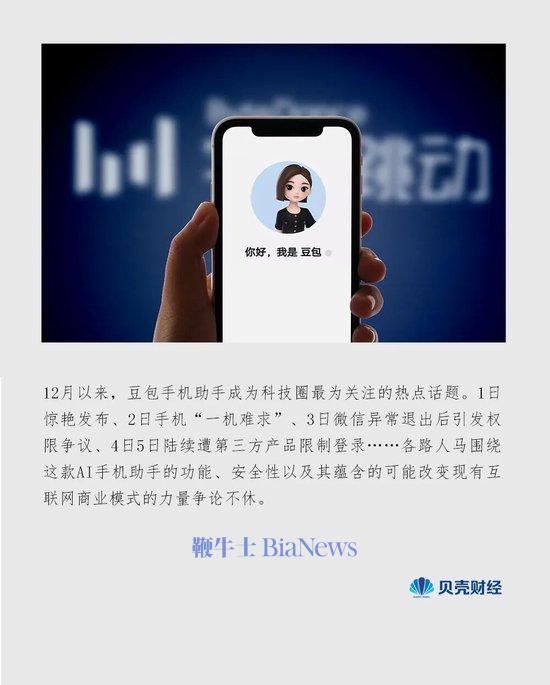
豆包手机遭「五大派」围剿,实测23款主流App,哪些「使不动」?
Xin Lang Ke Ji· 2025-12-10 07:25
Core Insights - The launch of Doubao mobile assistant has sparked significant attention in the tech industry, with discussions surrounding its functionality, security, and potential to disrupt existing internet business models [3][4][6] - Following initial excitement, the assistant faced restrictions from major apps, limiting its capabilities and raising concerns about its usability [4][6][19] - Despite challenges, the assistant demonstrated practical AI capabilities, effectively handling tasks and user preferences [8][11][19] App Functionality and Restrictions - Out of 23 tested apps, 8 faced restrictions, with 15 remaining fully operational through AI commands [3][4] - Major apps like WeChat, Alipay, and Meituan were either completely inaccessible or limited in functionality, while others like QQ and JD remained unaffected [4][6] - The restrictions stemmed from concerns over security and compliance with app-specific risk control mechanisms [4][24] AI Assistant Experience - The Doubao mobile assistant showcased a high level of adaptability, successfully navigating various tasks and user requests [8][11][19] - It effectively closed ads and navigated app interfaces, providing a seamless user experience [8][11] - The assistant's ability to handle unexpected challenges and execute complex tasks demonstrated its advanced capabilities [13][19] Technical Aspects - The assistant's smooth operation is attributed to its system-level permissions and advanced model capabilities, allowing it to perform tasks in the background [21][22] - The use of INJECT_EVENTS permission enables the assistant to simulate user actions without interrupting the user experience [21][24] - The underlying technology is based on a proprietary model optimized for mobile use, enhancing its performance [22][24] Industry Implications - The emergence of AI assistants like Doubao poses a threat to traditional app business models, potentially undermining their advertising revenue [26][27] - Major apps are likely to resist the integration of such assistants due to concerns over user engagement and revenue loss [27][28] - The future of AI assistants will depend on establishing a cooperative ecosystem that balances user needs with app developers' interests [28]
腾讯混元大模型更名Tencent HY,简化品牌加速国际化
Xin Lang Ke Ji· 2025-12-10 04:06
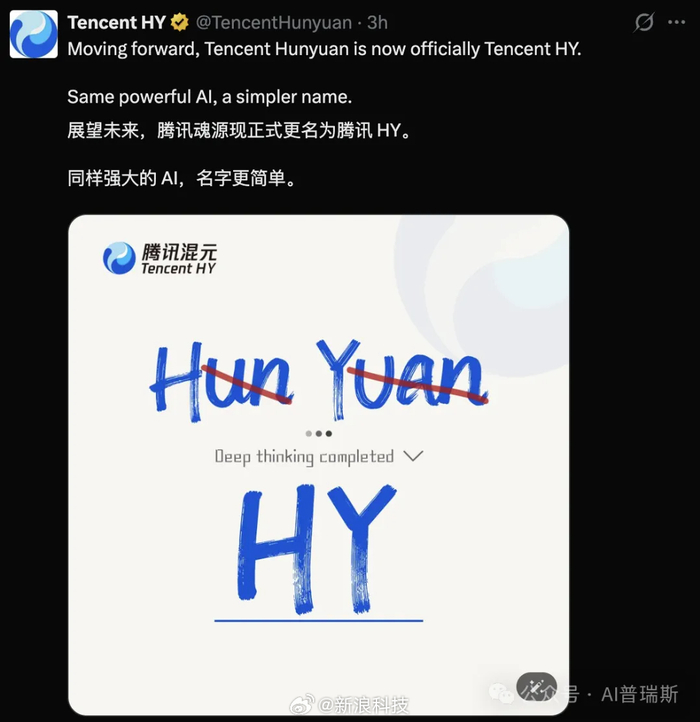
【#腾讯大模型改名##腾讯混元海外版名称简化#】腾讯宣布将其大模型品牌"混元(Tencent Hunyuan)"更名为更简化的 "Tencent HY"。 这是一次"名字更短、传播更快"的品牌优化。HY的两字母结构与当前国际大模型的主流命名方式趋 同,具备短、轻、易扩展的特性。 像OpenAI的GPT-4o、谷歌的Gemini 3 Pro等命名都指向一个共同趋势:在大模型迭代极快的周期下,突 出数字化的代际演进,往往比强调语义本身更能让用户直接感知模型的能力升级。 清晰的代际编号不仅便于产品矩阵管理,也方便开发者追踪技术版本、判断性能变化和选择适配的部署 方案。 在这样的行业语境中,HY作为基础名称,未来可以通过类似"HY-1、HY-2"或"HY-Pro、HY-Max"这样 的结构自然展开,使技术迭代的节奏更容易被用户捕捉,而腾讯也正是这样做的。 名称越轻、越结构化,就越适合作为长期的模型体系入口,而不是被一次性产品叠加所稀释。 过去一年中,混元既是模型、也是产品品牌,同时承担API端、企业端、消费端多重角色,名称本身带 有一定文化气质,删繁就简使用简写的"HY",保留文化含义之余,中国人看得懂,让外国人记得 ...

北汽董事长称余承东为地表最强产品经理,享界S9T销量印证天赋
Xin Lang Ke Ji· 2025-12-10 02:37
这已经不是张建勇第一次说这样的话,在享界S9T发布会时,他就在现场表示,"余总出品,必属精 品"。(快科技) 但只有余承东坚持要做,他说不仅要生活,还要有诗与远方。余总后面给我打了电话,我也支持了余承 东的选择,决定造一台旅行车。 没想到赌对了,基本上现在享界S9T单月的销量,卖出了其他传统旅行车一年的量。 【#余承东被称地表最强产品经理#,北汽董事长:不是吹嘘他是有天赋的】近日北汽董事长公开表示, 余承东是地表最强产品经理。在昨天鸿蒙智行大会上,北汽董事长直言,"余总是地表最强产品经理, 不是吹嘘他是有天赋的。" 张建勇称,享界在研发S9T之前,华为、北汽双方团队迅速达成了一致意见,都否决了两次,认为旅行 车是一个小众市场。 ...


仅运营3个月!小红书关停「最短命」项目,商家斥责「交钱后没人管」
Xin Lang Ke Ji· 2025-12-10 00:56
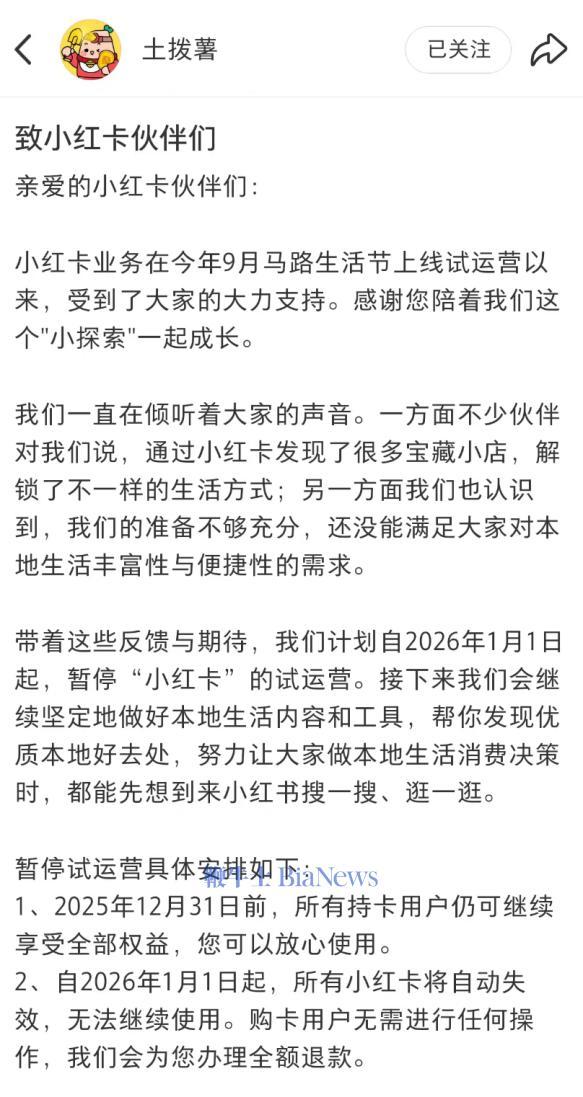
Core Insights - Xiaohongshu's "Xiaohong Card" project will be suspended from January 1, 2026, after only three months of trial operation, indicating a significant setback in its local lifestyle services initiative [1][7] - The company cited insufficient preparation and failure to meet user and merchant expectations as reasons for the suspension, highlighting widespread dissatisfaction among both users and merchants [2][5] Group 1: Project Overview - The "Xiaohong Card" was launched in September 2025 in Shanghai, Hangzhou, and Guangzhou, aimed at providing discounts for users at selected stores for an annual fee of 168 yuan [1][4] - Users reported poor experiences, including lack of communication regarding card benefits and expiration, leading to dissatisfaction and loss of rights [4][2] Group 2: Merchant Feedback - Merchants expressed frustration over the lack of service and support after paying for certification to become part of the program, with complaints about unfulfilled promises and inadequate follow-up [2][5] - A specific case highlighted a merchant's experience of paying nearly 600 yuan for certification but receiving no support or training, leading to significant disappointment [4][5] Group 3: Market Analysis - Analysts suggest that the rapid failure of the "Xiaohong Card" reflects a misjudgment by Xiaohongshu regarding the local lifestyle market, where convenience and cost-effectiveness are crucial [7][12] - The company's attempt to implement a high-threshold membership model contrasts with competitors like Meituan and Douyin, which offer free options and a wider selection, indicating a potential misalignment with consumer preferences [7][12] Group 4: Broader Business Challenges - The suspension of the "Xiaohong Card" is part of a broader trend of Xiaohongshu facing challenges in its commercialization efforts, including the recent shutdown of its self-operated e-commerce platforms [8][10] - Industry experts note that Xiaohongshu's attempts to integrate e-commerce with social media have not translated into sustainable revenue, as users often prefer to purchase from established platforms like Taobao and JD after being influenced by Xiaohongshu [10][12]