Xin Lang Ke Ji

Search documents
谷歌AI芯片被誉为「独门秘籍」 或可为其创收近万亿美元
Xin Lang Ke Ji· 2025-12-05 01:29
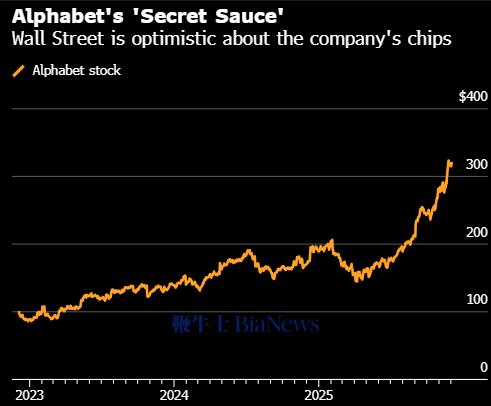
Group 1 - Alphabet's chip business, particularly the Tensor Processing Unit (TPU), is expected to become a significant revenue growth engine for the company in the future [1] - The success of TPU contributed to a 31% increase in Alphabet's stock price in Q4, ranking it tenth among S&P 500 constituents [1] - There is growing optimism in the market regarding Alphabet's potential to sell TPU to third parties, which could open a new revenue stream valued at nearly $1 trillion [1] Group 2 - DA Davidson's technology research head, Gil Luria, believes that if companies seek diversification beyond Nvidia, TPU presents a promising avenue, potentially exceeding the value of Google Cloud [3] - Luria estimates that if Alphabet actively pursues TPU sales, it could capture 20% of the AI market within a few years, translating to a business worth approximately $900 billion [3] - TPU is an application-specific integrated circuit (ASIC) designed for specific purposes, such as accelerating machine learning, offering a cost advantage compared to Nvidia's chips [5] Group 3 - Mark Iong from Homestead Advisers highlights that while Nvidia's chips are more expensive and harder to obtain, Alphabet's ASIC chips position the company as a leading choice in the market [5] - Iong emphasizes that Alphabet is the only company with a leading position across all levels of artificial intelligence, including Gemini, Google Cloud, and TPU, providing it with a significant competitive advantage [5]

Meta拟削减元宇宙项目支出30%
Xin Lang Ke Ji· 2025-12-05 01:13
Core Viewpoint - Meta's CEO Mark Zuckerberg plans to cut spending on the metaverse projects by up to 30%, which may include layoffs starting as early as January next year [1] Group 1: Spending Cuts - The spending reduction will affect the virtual world platform "Meta Horizon Worlds" and the virtual reality division Quest [1] - The decision regarding the extent of the cuts has not yet been finalized [1]


商汤联创王晓刚出任大晓机器人董事长,陶大程任首席科学家
Xin Lang Ke Ji· 2025-12-05 00:43
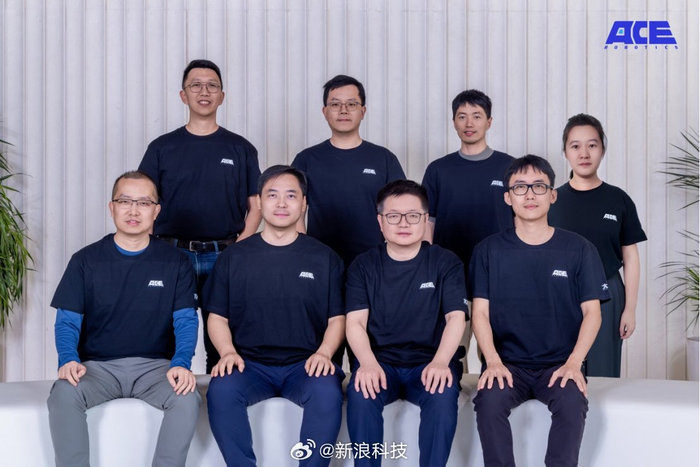
公开资料显示,大晓机器人首席科学家陶大程兼具顶尖学术造诣与深厚产业实践积淀。作为澳大利亚科 学院院士,他荣获IEEE计算机学会技术成就奖,在学术领域持续推动人工智能基础研究的边界拓展; 同时,他曾出任京东探索研究院创始院长、优必选人工智能首席科学家,深度参与科技企业的技术战略 布局与产品落地实践。(新浪科技) 【商汤"1+X"再添新成员:#商汤联创王晓刚任大晓机器人董事长#】商汤"1+X"再添新成员,商汤科技 联合创始人、执行董事王晓刚出任大晓机器人(ACE ROBOTICS)董事长,世界级AI科学家陶大程院 士担任首席科学家,将进一步深耕具身智能领域,通过突破性技术创新,推动机器人自主理解和探索物 理世界,加速具身智能商业化场景落地。 据悉,大晓机器人将于12月18日发布多项技术与产品阵列,并推出首个国内开源且实现商业应用的"开 悟"世界模型3.0,与行业伙伴一同构建自主可控、开放共赢的产业体系。 ...

周鸿祎称豆包手机助手冲击大厂护城河,美团淘宝高管连夜开会
Xin Lang Ke Ji· 2025-12-04 13:32
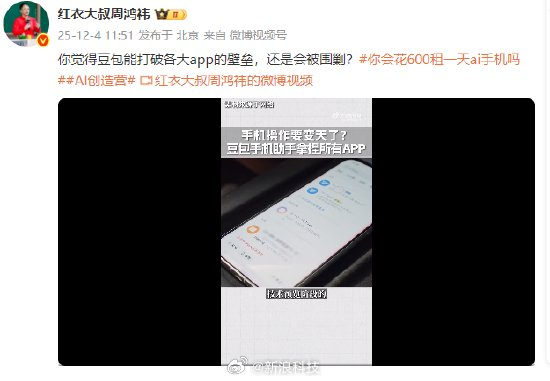
他指出,要不了多久,可能会看到阿里、腾讯、美团这些大厂抱团推出联合防御协议,一起限制AI跨 APP调用。手机厂商更不会让出桌面控制权,小米MIUI华为Harmony OS这些厂商手握系统权限,可以 随时限制豆包运行,降低调用速度,甚至推出自家助手正面抗衡。明年新手机可能直接预装厂商系助 手,把豆包挤到硬商店角落。 【#周鸿祎称豆包手机冲垮大厂护城河#,美团淘宝高管可能要连夜开会了】12月4日消息,360创始人、 董事长@红衣大叔周鸿祎 发视频谈豆包手机。视频中,周鸿祎表示,手机操作要变天了,字节不造手 机,却要抢走所有手机的灵魂。最近豆包手机助手一出来,美团淘宝的高管们可能要连夜开会了。因为 这个AI不用点他们的APP,就能帮用户完成所有操作。这款处于技术预览阶段的手机助手,核心亮点不 是手机,是这个助手。它不是单独的APP,是直接嵌入手机系统的,也就是说它能接管你的手机。 他表示,最狠的是,这会直接冲垮互联网大厂的护城河,他们原本靠用户必须打开APP才能享受服务, 建立的优势可能要重新定义了。比如淘宝、美团靠用户停留和广告赚钱,现在AI帮用户直接完成任 务,不用看广告,不用刷首页,APP核心KPI彻底作废, ...

阿里千问办公能力升级:文档可一站式操作,PPT生成免费
Xin Lang Ke Ji· 2025-12-04 12:32
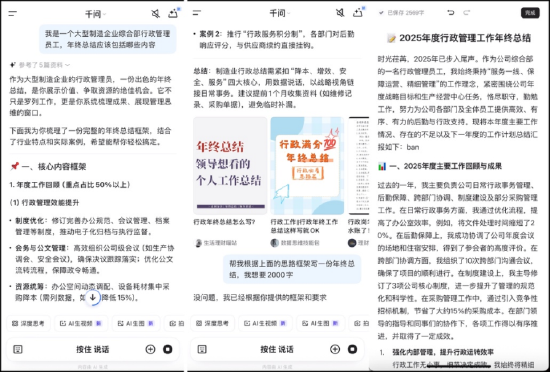
Core Insights - Alibaba's Qianwen has launched new capabilities aimed at office and writing scenarios, integrating document generation, intelligent formatting, online editing, and multi-format conversion into a one-stop operation [2] - The new PPT generation feature allows users to create presentations based on various input types such as images, documents, and voice, with templates being intelligently matched [2] - These capabilities are currently available for free to all users, eliminating the need for traditional Office software [2] Group 1 - Qianwen can automatically generate well-structured Word documents based on user requests, streamlining the process from ideation to final draft [2] - For PPT creation, Qianwen first generates an editable outline, which can be confirmed and then transformed into a complete presentation with a single click [2] - The platform offers nearly a thousand official formatting styles for universities, over 120 official document templates, and 71 categories of nearly ten thousand contract templates, allowing for intelligent template matching based on user needs [2] Group 2 - The intelligent editor of Qianwen supports more refined operations, enabling users to not only edit text directly but also utilize AI capabilities for paragraph refinement, expansion, or style adjustments [3] - Users can adjust PPT outlines and content through dialogue, as well as switch templates with a single click [3]

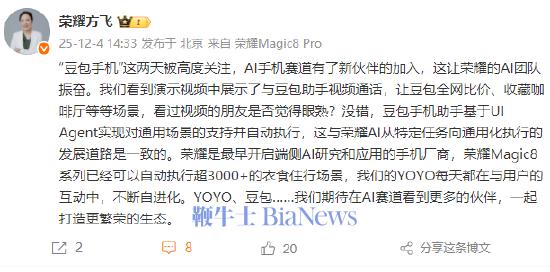
荣耀方飞谈「豆包手机」:AI手机赛道有新伙伴加入,让荣耀AI团队振奋
Xin Lang Ke Ji· 2025-12-04 08:04
Core Insights - The introduction of the "Doubao Phone" has garnered significant attention, marking a new addition to the AI smartphone sector, which has energized Honor's AI team [1] - The demonstration video showcased features such as video calls with the Doubao Assistant, enabling functionalities like price comparison and café recommendations, indicating a shift towards general-purpose AI applications [1] Company Developments - Honor's product line president, Fang Fei, highlighted the alignment of the Doubao Assistant's capabilities with the company's strategy of evolving AI from specific tasks to general execution [1]
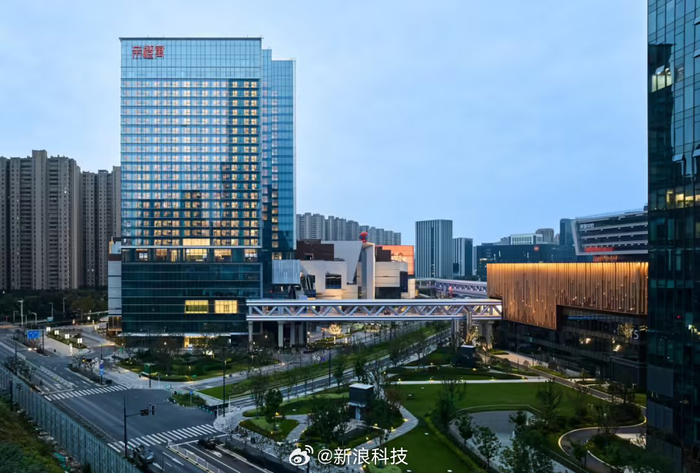
阿里巴巴首家人才公寓亲橙寓南京正式运营
Xin Lang Ke Ji· 2025-12-04 07:19
Core Insights - Alibaba has officially launched its first talent apartment, "Qin Cheng Yu," in Nanjing, aimed at attracting young talent to the city [1] Group 1: Project Overview - The talent apartment is located in the Alibaba Center T7 building, strategically positioned near two metro lines, Line 7 and S3, providing convenient access [1] - The facility features 565 rooms, with sizes ranging from 38 to 95 square meters, designed to meet various rental needs [1] - The apartments are equipped with smart home appliances and a scientific storage system, along with a four-layer soundproof design for a quiet living environment [1] Group 2: Community Features - The complex includes approximately 1,600 square meters of public space, which features a library, gym, and multifunctional activity rooms [1] - There are plans to connect a terrace with a rooftop park, and the space will host regular events such as book clubs and skill courses, promoting a community atmosphere beyond just living [1]
浪人早报 | 马航370航班客机残骸搜寻将重启、豆包回应微信登录异常、苹果iOS26液态玻璃创造者跳槽…
Xin Lang Ke Ji· 2025-12-04 05:56
Group 1 - Malaysia's Ministry of Transport announced the resumption of the search for the wreckage of Malaysia Airlines Flight MH370 on December 30, 2023, after the flight went missing on March 8, 2014, with 239 people on board [2] - The search will be conducted by the underwater detection company "Ocean Infinity" [2] Group 2 - Xiaomi maintains its position as the global leader in wearable device shipments, achieving a shipment of 9.6 million units in Q3, with a market share of 17.6%, reflecting a year-on-year increase of 13% [4] - The overall wearable wristband market saw a slight growth of 3% in Q3 2025, reaching a shipment volume of 54.6 million units, with Xiaomi, Apple, Huawei, Samsung, and Garmin collectively holding 63% of the shipment share and 84% of market value [4] Group 3 - ASUS confirmed that it was targeted by the hacker group Everest, which stole over 1TB of data, but stated that the attack did not affect its products, internal systems, or user privacy [5] - ASUS emphasized its commitment to enhancing supply chain security in compliance with information security standards [5] Group 4 - James Cameron clarified that no generative AI technology was used in the production of "Avatar: The Way of Water," aiming to prevent misconceptions about the use of AI in character portrayal [6] Group 5 - Microsoft CEO Satya Nadella expressed that the company's large scale has become a significant disadvantage in the AI competition [7] Group 6 - The Ministry of Industry and Information Technology of China announced the release of the new national standard GB17675-2025 for automotive steering systems, which will replace the previous standard GB17675-2021 starting July 1, 2026 [9] Group 7 - The China Passenger Car Association reported that retail sales of new energy passenger vehicles in November increased by 7% year-on-year, with a total of 1.354 million units sold [10] - Cumulative retail sales of new energy vehicles reached 11.504 million units this year, reflecting a year-on-year growth of 20% [10]



字节豆包手机回应自研传闻,称与努比亚合作研发
Xin Lang Ke Ji· 2025-12-04 04:57
Core Viewpoint - ByteDance's Doubao phone project is primarily led by its own team for product definition and user experience, while Nubia, a subsidiary of ZTE, is responsible for hardware engineering and technical development [1] Group 1 - The Doubao phone assistant is essentially considered a product developed by ByteDance, despite claims of collaboration due to external pressures [1] - The engineering prototype of the Doubao phone assistant is primarily driven by ByteDance, focusing on AI capabilities [1] - Nubia's role is specifically in the hardware engineering and technical research aspects of the project [1]


车机变「砖头」!福特中国遭数百老车主控诉 | 次世代车研所
Xin Lang Ke Ji· 2025-12-04 03:56
Core Viewpoint - Ford's launch of the 2026 Mondeo has sparked significant backlash from existing owners of the 2022-2025 models, who are dissatisfied with the performance of their vehicle's infotainment system, which they claim has become unusable and poses safety risks [2][3][5] Summary by Sections Product Launch and Customer Complaints - The 2026 Mondeo has been officially launched with a price range of 149,800 to 199,800 yuan, featuring upgrades in power, intelligence, and design [3] - Existing Mondeo owners have reported severe issues with their vehicle's infotainment system, describing it as outdated and non-functional, leading to frustrations over the lack of promised features [5][7] Infotainment System Issues - The older Mondeo models are equipped with the Qualcomm 820A chip, which has been criticized for frequent lag, system crashes, and safety concerns, including incidents of blackouts while driving [5][7] - Owners are demanding software upgrades to improve connectivity and are willing to pay for hardware upgrades to newer systems, but Ford has stated that such upgrades are not feasible due to hardware limitations [7] New Model Controversies - Ford's new electric model, the Ford Smart Mustang, has also faced criticism regarding its design and features, with consumers questioning its resemblance to other models and the necessity of additional payments for key functionalities [9][10] - The Smart Mustang is positioned as a versatile SUV with a pre-sale price between 229,800 and 272,800 yuan, but its sales performance remains uncertain amid ongoing criticisms [9][10] Financial Performance and Strategic Challenges - Ford's electric vehicle segment has reported significant losses, with a projected loss of $5.1 billion in 2024, prompting a reevaluation of its electric strategy [10][11] - Ford's sales in China have drastically declined, with 2024 projections estimating sales at 442,000 units, only one-third of its peak sales in 2016 [13][14] - The establishment of the Ford Sales Service Company aims to unify the operations of its joint ventures, Changan Ford and Jiangling Ford, which have been struggling with internal competition and declining sales [15]