投中网

Search documents
双城共话创新篇章 上实集团聚焦构建沪港协同生态
投中网· 2025-06-30 02:24
Core Viewpoint - The article highlights the ongoing efforts of Shanghai Shendi Group to enhance cross-border collaboration and innovation between Shanghai and Hong Kong, focusing on various sectors such as life sciences, environmental health, and smart cities [2][4][8]. Group 1: Innovation and Collaboration - The conference held simultaneously in Shanghai and Hong Kong showcased multiple innovative achievements in fields like life health and future industries [2]. - Notable figures from government, academia, and industry expressed support for Shanghai Shendi Group's role in fostering cross-border cooperation and innovation [4]. - The group has initiated several funds aimed at transforming research outcomes from Hong Kong and the Greater Bay Area into practical applications, including a biotechnology fund and a smart technology incubator [6]. Group 2: Investment and Development - Shanghai Shendi Group has launched various investment platforms, such as the Shanghai Biomedicine Fund and the Green Technology CVC Fund, to support innovative companies in the biomedicine and green technology sectors [6][10]. - The company aims to leverage its early-stage funds to accelerate the transformation of innovative results and contribute to the development of Hong Kong as a technology hub [8]. - The article mentions specific companies and their contributions to the biomedicine sector, showcasing the practical applications of investments made by Shanghai Shendi Group [10].


五个捞女,吃透全球男人的钱包
投中网· 2025-06-30 02:24
Core Viewpoint - The article discusses the rise and controversy surrounding the game "Emotional Anti-Fraud Simulator," which reflects real-life emotional manipulation and fraud in relationships, particularly focusing on the "scooping girl" phenomenon, and highlights the ethical dilemmas within the "emotional economy" [10][21][28]. Group 1: Game Overview and Performance - The game, originally named "Scoop Girl Game," was renamed to "Emotional Anti-Fraud Simulator" due to public backlash but still achieved significant success, selling over 680,000 copies within five days and generating approximately 34 million yuan in revenue [9][12]. - The game features real-life filming and acting, with a total interactive content duration of 7.8 hours, and aims to educate players on healthy relationship dynamics through its narrative [13][27]. Group 2: Social Reflection and Player Engagement - The game's narrative resonates with players as it mirrors real-life emotional scams, drawing parallels to actual cases and allowing players to reflect on their experiences [16][17]. - Players have expressed that the game serves as a "love anti-fraud guide," prompting discussions about rational perspectives on relationships, despite criticisms of reinforcing negative stereotypes about women [21][22]. Group 3: Controversy and Criticism - The portrayal of female characters as "scooping girls" has sparked debates about gender discrimination and the reinforcement of male victimhood in intimate relationships [22][23]. - Critics argue that the game oversimplifies complex emotional dynamics and risks moral judgment against women, while supporters believe it highlights the need for awareness in emotional manipulation [21][27]. Group 4: Industry Trends and Future Directions - The success of "Emotional Anti-Fraud Simulator" reflects a growing trend in interactive narrative games that blend emotional themes with gameplay, indicating a shift in the gaming industry towards more socially relevant content [28][46]. - Industry analysts suggest that future interactive games should leverage AI to enhance player engagement and narrative depth, moving beyond superficial themes to create more meaningful experiences [44][46].

鼎晖重仓了一个人形机器人“水下项目”
投中网· 2025-06-30 02:24
Core Viewpoint - The article highlights the emergence of Suzhou Tiejin Electromechanical Technology Co., Ltd. (Tiejin Technology) as a leading player in the micro and ultra-micro bearing industry, emphasizing its strategic importance in the humanoid robot sector and its recent significant financing round of nearly 200 million yuan led by Dinghui Investment [2][3][14]. Group 1: Company Overview - Tiejin Technology was founded in 2012 and has focused on micro and ultra-micro bearings, achieving a leading position in China's ultra-micro bearing industry without relying on large-scale external financing [2][4]. - The company specializes in bearings with an outer diameter of less than 26 mm, particularly those under 9 mm, with the smallest products having an outer diameter of 3 mm and an inner diameter of 1 mm [5][7]. Group 2: Technological Advancements - Tiejin Technology has developed proprietary production equipment and processes to overcome the high precision requirements of micro bearings, which have traditionally been dominated by major foreign manufacturers [7][8]. - The company has achieved significant milestones, including the mass production of MR52 ultra-micro bearings in 2015 and the recent production of hybrid ceramic bearings with an inner diameter of 1.5 mm in 2023 [9][10][11]. Group 3: Market Position and Growth Potential - Tiejin Technology maintains a high gross margin and net profit level, with annual revenue growth exceeding 30% due to strong demand for its products [14]. - The company’s production capacity is set to expand significantly, with the second-phase factory expected to reach an annual capacity of 900 million bearings, potentially tripling current revenue [14]. Group 4: Clientele and Industry Impact - Major clients include leading companies in emerging industries such as DJI, which is expected to double its procurement from Tiejin Technology in 2024, and other unicorns like Tuozhu Technology and Chasing Technology [15][17][18]. - Tiejin Technology is positioned to benefit from the growth of humanoid robots, with its products already validated by key players in the industry [21][23]. Group 5: Future Outlook - The humanoid robot sector represents a significant growth opportunity for Tiejin Technology, particularly in the development of dexterous hands, which require specialized ultra-micro bearings [22][23]. - The company’s ability to provide customized solutions and its willingness to collaborate with emerging tech firms give it a competitive edge over established foreign giants [23].
4个00后,三年干出700亿超级独角兽
投中网· 2025-06-29 03:07
Core Insights - The article discusses the concept of "selling shovels" in the investment world, highlighting that those who provide essential tools and services often profit more than the actual miners during gold rushes [2][3] - Anysphere, the developer of the AI programming tool Cursor, recently raised $900 million in funding, achieving a valuation of $9.9 billion, a 380% increase from its previous funding round [3][4] Funding and Valuation - Anysphere's recent funding round was led by Thrive Capital, with participation from A16z, Accel, and DST, marking a significant milestone for the company [3] - The company has seen rapid valuation growth, going from $4 billion in its A round to $26 billion in its B round, and now reaching $9.9 billion in its latest round [5][6] Company Background - Founded in 2022 by four MIT graduates, Anysphere has quickly gained traction in the AI industry despite its founders being relatively inexperienced [6][7] - The company has completed three funding rounds in less than a year, raising a total of $1.6 billion, which is considered remarkable for a startup of its age [7][8] Product and Market Position - Cursor aims to simplify programming for users with no coding experience, positioning itself as a crucial tool in the AI era [10][12] - The product has achieved significant milestones, including generating over $200 million in revenue and reaching an annual recurring revenue (ARR) of $500 million within a short time frame [8][16] Competitive Landscape - Cursor competes with several established AI programming tools, but aims to differentiate itself by offering a more comprehensive understanding of projects and a conversational interface [14][15] - The company’s unique selling proposition is its ability to automate complex programming tasks, thereby enhancing productivity for developers [14][15] Industry Trends - The article notes a high concentration of venture capital in the AI sector, with AI startups capturing 70% of investment in the U.S. and Canada [18][19] - The rise of AI has led to a decline in funding for other sectors, such as biotech, which has seen a 92% drop in investment since its peak in 2018 [19]

影响巴菲特一生的神作丨CV荐书
投中网· 2025-06-29 03:07
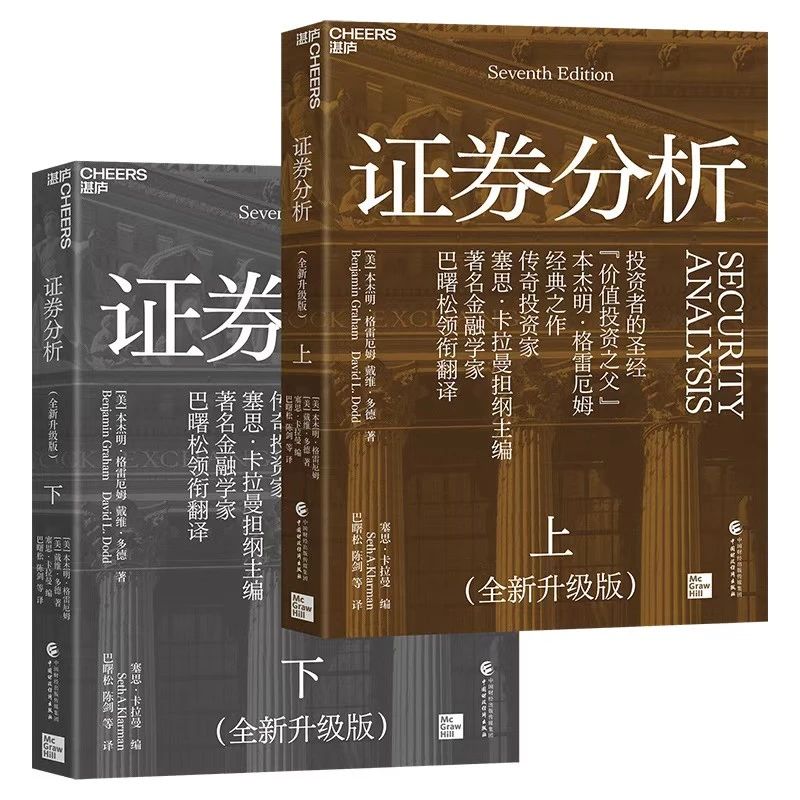
Core Viewpoint - The article emphasizes the enduring principles of value investing as articulated by Benjamin Graham and David Dodd, highlighting their relevance in today's investment landscape [1][3][4]. Group 1: Historical Context and Relevance - Benjamin Graham is recognized as the father of value investing, with his work "Security Analysis" being a foundational text for investors [1][3]. - "Security Analysis" has remained a bestseller for nearly 90 years, providing timeless wisdom that continues to guide investors [3][4]. - The latest edition of "Security Analysis" reflects on market changes and updates investment management practices while retaining core value investing principles [4][6]. Group 2: Investment Philosophy - Value investing is defined as purchasing securities at prices below their intrinsic value, often summarized as "buying a dollar for fifty cents" [18][19]. - The concept of margin of safety is crucial, allowing investors to mitigate risks associated with decision-making errors and market fluctuations [19][50]. - Investors are encouraged to maintain a long-term perspective, focusing on sustainable returns rather than short-term gains [45][51]. Group 3: Market Behavior and Investor Psychology - Market inefficiencies often lead to mispricing of securities, creating opportunities for value investors to capitalize on undervalued assets [12][22]. - Investor behavior is influenced by emotions, leading to irrational buying and selling, which can distort market prices [22][49]. - The article warns against the dangers of speculation, emphasizing the importance of distinguishing between investment and gambling [46][50]. Group 4: Valuation Techniques - Valuation is described as both an art and a science, requiring a combination of quantitative analysis and qualitative judgment [26][34]. - Various methods for assessing a company's value include discounted cash flow analysis, market multiples, and private market valuations [27][28]. - Investors must consider future cash flows and growth potential while being cautious of overpaying for growth [30][41]. Group 5: Management and Corporate Governance - The quality of a company's management is a significant factor in determining its long-term success and shareholder returns [32][33]. - Investors should evaluate management's alignment with shareholder interests and their ability to make sound capital allocation decisions [33][34]. - Engaging with underperforming companies may present opportunities for activist investors to drive change and unlock value [33].
又一家融到D轮的明星机器人要IPO了
投中网· 2025-06-29 03:07
Core Viewpoint - The article discusses the surge of robotics companies, particularly focusing on Stand Robot's IPO ambitions and the broader trend of robotics firms seeking to go public in Hong Kong's specialized technology sector. Group 1: Stand Robot's IPO Journey - Stand Robot submitted its prospectus to the Hong Kong Stock Exchange on June 23, 2025, aiming to become the "first industrial embodiment intelligent stock" [4] - The company is currently the fifth largest provider of industrial intelligent mobile robot solutions globally and the fourth in industrial embodiment intelligent robots by sales volume as of December 31, 2024 [4] - Stand Robot's founder, Wang Yongkun, has a background in robotics and aims to enhance production efficiency and reduce costs for enterprises through their SLAM technology [15][14] Group 2: Industry Trends and Other IPOs - Multiple robotics companies, including Woan Robot, XianGong Intelligent, and Yunji Technology, have also initiated IPO processes, indicating a growing trend in the industry [5][26] - The market for humanoid robots and automation equipment is expected to reach a scale of 100,000 to 200,000 units, supporting the growth of domestic manufacturers [28] - Stand Robot's revenue grew from 96.3 million yuan in 2022 to 162.2 million yuan in 2023, with a projected increase to 250.5 million yuan in 2024, reflecting a compound annual growth rate of 61.3% [30] Group 3: Investment and Financing - Stand Robot has completed four rounds of financing, achieving a valuation of 2.1 billion yuan [16] - The company has attracted significant investments from notable firms, including Xiaomi and Bohua Capital, which are essential for meeting the requirements for the specialized technology listing [24][22] - The robotics sector has seen a surge in investment, with companies like Yushun Technology completing substantial financing rounds, indicating a robust interest in the industry [31]

LP周报丨广东一个区,掏50亿做基金
投中网· 2025-06-28 03:40
Core Viewpoint - The article highlights the establishment of various investment funds in different regions, focusing on strategic emerging industries and technological advancements, which are expected to drive economic growth and innovation in those areas [4][6][12]. Fund Establishment - The Chancheng District of Foshan, Guangdong, has announced a "1+1" industrial fund system, comprising the Qihang Fund with a total scale of 2 billion yuan and the Linghang Fund with a total scale of 3 billion yuan, totaling 5 billion yuan [4][12]. - The Liuyang Economic Development Zone has launched a 3 billion yuan industrial investment mother fund, targeting strategic emerging industries such as electronic information and biomedicine [13]. - The Meishan Future Industry Fund has been initiated with a scale of 500 million yuan, focusing on low-altitude economy and new energy storage [18]. - The Zhengzhou Aviation Port has registered a 500 million yuan low-altitude economy fund, aimed at investing in related industries [20]. Investment Focus - The Qihang Fund will invest in advanced manufacturing, modern services, and technology innovation projects, while the Linghang Fund will focus on high-end precision manufacturing and new materials [6][12]. - The Yunhui Capital's new fund will concentrate on artificial intelligence and smart manufacturing, with a total scale of up to 1 billion yuan [9]. - The Bohao S Fund III has completed its fundraising, focusing on secondary market private equity investments, reflecting the growing demand for S fund transactions in China [10]. Regional Economic Development - Chancheng District has seen its GDP per capita exceed $25,000, indicating a shift towards a more developed economy [5]. - The establishment of these funds is expected to inject new vitality into the local economies, particularly in high-tech and emerging industries [6][12][18]. Industry Trends - The article notes a significant increase in investment in advanced manufacturing and high-tech industries, with growth rates of 56.9% and 210% respectively in early 2023 [6]. - The focus on low-altitude economy and biomedicine reflects a broader trend towards innovation and modernization in traditional industries [18][20].

中国“吃货”,又捧出一个明星IPO
投中网· 2025-06-28 03:40
Core Viewpoint - The article discusses the upcoming IPO of Banu International Holdings Limited, the parent company of Banu Hotpot, highlighting its unique positioning in the competitive hotpot industry and its high-end market strategy. Company Overview - Banu Hotpot originated from a small shop in Anyang, Henan, and has expanded nationally after 11 years of establishment, emphasizing high-quality offerings with an average spending of 142 yuan per customer, positioning itself as the "Hermès of hotpot" [3][14]. - The company has maintained a low level of external investment, with only Tomato Capital holding a 7.95% stake prior to the IPO [4][17]. Financial Performance - Banu's revenue for 2022 to 2024 is projected to be 14.33 billion yuan, 21.12 billion yuan, and 23.07 billion yuan respectively, with net profits turning positive in 2023 [14]. - The average customer spending in first-tier cities was significantly higher than competitors, with figures of 183 yuan, 179 yuan, and 165 yuan over the same period [14]. - The company has seen a substantial increase in customer volume, from 9.847 million in 2022 to 16.827 million in 2024 [14]. Market Position - Banu has achieved a 3.1% market share, making it the largest quality hotpot brand in China, and the third-largest overall behind Haidilao and Xiaobuxiang [15]. - The hotpot industry is highly competitive, with the top five brands holding only 8.1% of the market share, leading to increased pressure on brands to maintain pricing and quality [23]. Expansion Plans - Banu plans to use 65% of the funds raised from the IPO (approximately 2.5 billion HKD) for store expansion, with plans to open 52, 61, and 64 new restaurants from 2026 to 2028 [26][28]. - The company has a clear strategy to balance high-end pricing with scalability, as the average hotpot spending in China has decreased to 77.4 yuan, down 8.1% year-on-year [24][25]. Recent Developments - Banu's founder made headlines earlier this year with controversial remarks about high salaries and dining choices, which have impacted the brand's image [7]. - Prior to the IPO, Banu distributed dividends of 70 million yuan to shareholders, indicating a strong financial position [29].
“投资强人”蔡文胜又出手了
投中网· 2025-06-28 03:40
Core Viewpoint - Cai Wensheng, the founder of Meitu, is initiating a new round of capital expansion by acquiring a significant stake in China Financial Leasing, aiming to establish an asset management platform focused on investing in Hong Kong tech startups, particularly in AI, Internet 3.0, and digital asset financial products [4][6][32]. Group 1: Acquisition Details - On June 25, 2025, China Financial Leasing announced a major equity acquisition, with Cai Wensheng planning to purchase approximately 35% of the company at a price of HKD 0.38 per share, totaling around HKD 46 million [4][10]. - Prior to the acquisition, China Financial Leasing's stock had plummeted by 99.03% over the past five years, making the acquisition cost-effective for Cai Wensheng [11]. - Following the announcement, the stock price surged over 230% on the first trading day after resuming, closing at HKD 1.12 [9]. Group 2: Strategic Focus - The acquisition is part of Cai Wensheng's strategy to build an asset management platform targeting investments in Hong Kong's tech startups, with a focus on AI, Internet 3.0, and digital asset financial products [6][12]. - Cai Wensheng's recent activities include the purchase of a property in Hong Kong, renamed "CAI Building," which is intended to serve as an incubator for AI and Web3 startups [13][14]. Group 3: Market Context - The recent legislative developments in Hong Kong, including the introduction of the "Stablecoin Regulation," are expected to create a more favorable environment for Web3 and digital asset businesses, which aligns with Cai Wensheng's investment strategy [19][25]. - Major players in the market, such as Ant Group and JD Technology, are also making moves to establish a presence in the stablecoin space, indicating a growing interest in the Web3 ecosystem [22][23]. Group 4: Investment Evolution - Cai Wensheng's investment trajectory has shifted from being a "project hunter" to an "ecosystem builder," reflecting a broader strategy to integrate digital assets with AI technology and explore new growth opportunities [32][33]. - The establishment of "CAI Building" and its associated café is seen as a potential landmark project in the Web3 landscape, contributing to the development of Hong Kong's digital economy [34].

KKR干黄一个项目
投中网· 2025-06-27 06:31
Core Viewpoint - KKR's investment in Marelli Group, amounting to $11.6 billion (approximately 833 billion RMB), has resulted in a complete loss as the company filed for bankruptcy protection after failing to recover from operational challenges and high debt levels [1][12]. Group 1: Background of the Investment - KKR acquired the automotive parts supplier Marelli through two significant transactions, starting with the purchase of the non-core assets of Nissan's parts division, Calsonic Kansei, for about $4.5 billion in March 2017, marking the largest private equity acquisition in Japan at that time [2]. - Following this, KKR facilitated the acquisition of the Italian parts supplier Magneti Marelli from Fiat Chrysler for €6.2 billion, completed in May 2019, merging the two companies into Marelli [2]. Group 2: Investment Logic - The acquisitions were based on four main logics: 1. Both acquisitions were perceived as undervalued, with valuations around 7-8 times EBITDA, making them attractive opportunities [3]. 2. KKR anticipated a shift in the automotive industry towards electrification, intelligence, and lightweighting, believing that component manufacturers would gain more importance as OEMs outsourced R&D and manufacturing [4]. 3. The merger was expected to create synergies, combining Calsonic Kansei's strengths in Japan with Magneti Marelli's European presence, aiming to establish a global Tier-1 supplier with a comprehensive product range [5]. 4. KKR planned to enhance operational efficiency through a significant restructuring initiative, aiming to release $1-1.5 billion in synergies [6]. Group 3: Challenges and Downfall - Marelli faced severe operational challenges, including a significant debt burden of approximately $6 billion, which became unsustainable following the COVID-19 pandemic and subsequent supply chain disruptions [9][10]. - Despite KKR's attempts to restructure and inject additional capital, Marelli continued to struggle with losses, leading to a bankruptcy filing in June 2023, where KKR's equity was completely wiped out [10][12]. - Internal integration issues between the Japanese and Italian operations exacerbated Marelli's challenges, leading to operational inefficiencies and a failure to adapt to market changes [14][15]. Group 4: Lessons Learned - The case illustrates the risks associated with high leverage and the importance of effective post-merger integration, particularly in complex and capital-intensive industries like automotive manufacturing [16]. - Marelli's failure highlights how external shocks, such as the pandemic and trade tariffs, can amplify existing internal weaknesses, leading to a cascading failure [14][16].