投中网

Search documents
英伟达投了比尔·盖茨47亿
投中网· 2025-06-27 06:31
Core Viewpoint - The article discusses the emerging competition in the nuclear energy sector, particularly focusing on investments in nuclear fusion technology by major players in Silicon Valley and Chinese state-owned enterprises, indicating a significant shift towards nuclear energy as a solution to future energy demands driven by climate change and AI growth [4][13]. Investment Trends - Nvidia's venture capital arm NVentures invested $650 million in TerraPower, a nuclear technology company founded by Bill Gates, alongside other investors like HD Hyundai and Gates himself [4][6]. - China National Petroleum Corporation (CNPC) announced a capital increase of 3.275 billion yuan for Kunlun Capital to invest in controlled nuclear fusion projects, specifically targeting the China Fusion Energy Company [4][16]. Technological Developments - TerraPower is focusing on the Natrium reactor technology, which utilizes liquid sodium as a coolant and aims to complement renewable energy sources [6][8]. - The U.S. Department of Energy has provided $2 billion in funding to TerraPower, supporting its development of the Natrium reactor [7]. Market Dynamics - The number of nuclear fusion companies has surged, with 43 companies globally by the end of 2023, over half of which are based in the U.S. [12]. - Major investments in nuclear energy are being made by various tech leaders, including Google and Amazon, indicating a consensus among Silicon Valley investors on the importance of nuclear energy [11]. Future Outlook - TerraPower plans to build its first small modular reactor in Wyoming, aiming for commercial operation by fall 2030, with plans for further expansion [8]. - The article highlights the increasing urgency for nuclear energy as AI and other sectors drive up electricity demand, with predictions of a 25% increase in U.S. electricity demand from 2023 to 2030 [14]. Competitive Landscape - China is rapidly advancing in nuclear fusion technology, with significant investments from state-owned enterprises and private companies, indicating a dual approach to development [16][18]. - The article emphasizes the competitive nature of nuclear fusion development between the U.S. and China, suggesting that if the U.S. does not lead, China will take the initiative [15][18].




小米把中国汽车干懵了
投中网· 2025-06-27 06:31
Core Viewpoint - Xiaomi's YU7 has achieved remarkable initial sales, with over 200,000 pre-orders in just 3 minutes and approaching 300,000 in 1 hour, indicating strong consumer demand despite a cautious market environment [4][5][6]. Sales Performance - The YU7 recorded 198,000 pre-orders within the first 2 minutes, with 128,000 being non-refundable deposits, showcasing a lock-in rate exceeding 60% [4][5]. - The initial sales figures suggest that YU7 could surpass 300,000 pre-orders on its first day, with potential to reach 350,000 to 400,000 [5][6]. Market Context - The launch of YU7 contrasts with the more hyped release of SU7, as YU7's marketing was relatively low-key, resulting in lower live viewership numbers compared to SU7 [9][11]. - The pricing strategy for YU7 was deemed "middle-of-the-road," with a price range of 250,000 to 330,000 yuan, which did not generate significant surprise [11]. Product Features - YU7's design features a sleek, elongated appearance and improved interior luxury compared to its predecessor, SU7, appealing to younger consumers [12][19]. - Innovative features include a "sky screen" for enhanced visibility and comfort, as well as unique seating and interior design elements that differentiate it from competitors [16][18]. Consumer Demographics - The target demographic for YU7 includes younger consumers, particularly those under 35, who prioritize vehicle aesthetics, with 46.6% of this group valuing design [19]. Production Challenges - Despite the strong sales, Xiaomi faces production challenges, as initial YU7 units are being produced from existing SU7 capacity, which may not meet the high demand [21]. - The second production facility is expected to begin operations in July 2024, but there are concerns about meeting delivery timelines due to high order volumes [21][22]. Competitive Landscape - Competitors are likely to respond to YU7's success with strategic adjustments, including potential price cuts from brands like Tesla, which could impact YU7's market position [22][23].


佛山老钱,也去苏州投项目了
投中网· 2025-06-27 06:31
Core Viewpoint - Midea Group is actively expanding its investment strategy by establishing a new industry investment fund focused on hard technology, in collaboration with Suzhou Xiandao Industrial Investment [3][6][8]. Group 1: Fund Establishment and Collaboration - Midea Group has launched the "Meike Zhizhen Fund" with a total investment of 310 million yuan, focusing on high-growth projects in the Yangtze River Delta region, particularly in robotics, smart manufacturing, and new energy vehicles [6][8]. - The fund's capital structure includes significant contributions from local state-owned enterprises, with Suzhou Xiandao Industrial Investment contributing 37.1% [6][8]. - Midea's long-standing partnership with Suzhou includes previous investments and projects, indicating a strong collaborative foundation [7][8]. Group 2: Investment Strategy and Historical Context - Midea Group has over 20 years of experience in equity investment, transitioning from traditional home appliances to smart hardware and various frontier sectors [10][11]. - The company has made 60 investments, with 47 companies receiving funding, and has successfully led 14 IPOs [11]. - Midea's investment strategy includes direct investments and participation as a limited partner (LP) in multiple funds, showcasing its robust financial capabilities with over 320 billion yuan in cash [13][14]. Group 3: Focus Areas in Investment - Key investment areas for Midea include robotics, new energy vehicles, and integrated circuits, with significant investments made in these sectors over the past few years [15][16][17]. - Midea has established joint ventures and made strategic acquisitions in the robotics sector, including partnerships with Yaskawa Electric and the acquisition of KUKA [15]. - In the new energy vehicle sector, Midea has invested in core component companies and established its own automotive parts company [17].


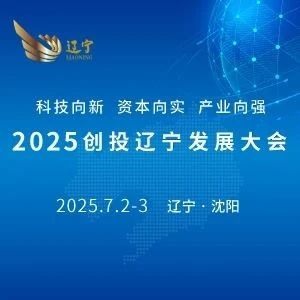
资本赋能,产业共振——2025创投辽宁发展大会即将盛大启幕
投中网· 2025-06-26 02:29
Core Viewpoint - Liaoning Province is focusing on technological innovation to develop strategic emerging industries and promote high-quality development, with the "2025 Venture Capital Liaoning Development Conference" set to take place on July 2-3, 2025, in Shenyang, aiming to create a platform for investment institutions and local industries to collaborate [1][12]. Group 1: Conference Overview - The conference will gather government leaders, experts from research institutions, well-known securities firms, top investment institutions, and pioneering tech companies to discuss topics such as venture capital empowering technological innovation and industrial development [3][12]. - The theme of the conference is "Technology Towards New, Capital Towards Reality, Industry Towards Strength," emphasizing the deep connection between enterprises and capital [12][13]. Group 2: Key Activities - A significant highlight will be the release of the "Top 30 Pioneer Enterprises in Liaoning's Technological Innovation" list, which will select companies based on their innovation capabilities, market competitiveness, growth speed, and investment value [5][12]. - The conference will feature three parallel roadshows focusing on high-end manufacturing and electronic information, new energy and low-altitude economy, and mergers and acquisitions, allowing for direct interaction between investors and projects [7][12]. Group 3: On-Site Visits - On July 3, the conference will organize visits to four cities (Shenyang, Dalian, Benxi, and Yingkou) to explore high-quality enterprises in sectors such as intelligent manufacturing, new energy, biomedicine, and new materials, facilitating face-to-face discussions between investors and local government representatives [9][12].
潮汕兄弟开4100家金店,刚刚IPO了
投中网· 2025-06-26 02:29
Core Viewpoint - The article discusses the successful IPO of Zhou Li Fu, a well-known jewelry brand in China, amidst a sustained interest in gold investments, highlighting the brand's rapid growth and strategic decisions that have contributed to its market position [2][14]. Company Overview - Zhou Li Fu was founded in 2002 by brothers Li Wei Peng and Li Wei Zhu, who transitioned from banking to the jewelry business, initially starting with a jewelry processing factory in Shenzhen [4]. - The brand was officially registered in 2004, capitalizing on the opening of gold import and export rights in China, and has since grown to hold a significant market share [4][9]. Financial Performance - Zhou Li Fu reported revenues of 57 billion RMB in 2024, with a net profit of approximately 7.06 billion RMB [10][8]. - The company has seen substantial revenue growth, with a 66% increase in 2023 compared to the previous year, driven by a surge in gold prices [10]. Market Position - Zhou Li Fu ranks among the top five jewelry brands in China, holding the fourth position from 2017 to 2023, and has a strong presence in southern China [9]. - The company operates over 4,100 stores, with a significant portion (over 96%) being franchise stores [9][10]. Strategic Initiatives - The brand implemented a "zero-risk franchise" model and focused on penetrating lower-tier cities, which has led to rapid expansion, reaching over 4,000 stores in a short period [5]. - Zhou Li Fu has adapted to market changes by shifting towards online sales, which accounted for 40% of total revenue in 2024, and has maintained a strong online presence [11][12]. Challenges and Future Outlook - Despite its growth, Zhou Li Fu faces challenges from established competitors like Chow Tai Fook and needs to balance brand premium and scale [15]. - The company has experienced a decline in new franchise openings and an increase in store closures due to market conditions, particularly in response to rising gold prices [11]. Industry Trends - The article notes a shift in consumer demographics, with younger consumers increasingly driving gold purchases, reflecting a broader trend in the jewelry market [16]. - The ongoing "gold IPO boom" in China is highlighted, with several companies planning to go public, indicating a robust interest in the gold sector [17].

听说有近8万家AI企业“悄悄死亡”
投中网· 2025-06-26 02:29
Core Viewpoint - The AI application market is undergoing a silent cleansing, with a significant number of companies exiting the market due to high operational costs and lack of sustainable business models [4][5][18]. Group 1: Market Dynamics - Since the launch of ChatGPT until July 2024, 78,612 newly registered AI companies in China have disappeared, accounting for 8.9% of the total new registrations during the same period [5]. - The AI application industry is experiencing a bifurcation, where only products that understand long-term operations can survive through cycles [7]. - The rapid expansion of applications like Quark and Doubao contrasts sharply with the mass exit of companies, indicating a market correction as capital enthusiasm wanes [6][7]. Group 2: AI Entrepreneurship Trends - The AI entrepreneurship wave is driven by a mix of genuine demand and market anxiety, with many companies rushing to enter the AI space without a clear understanding of user needs [9][13]. - The cost of using large models has significantly decreased, with models like GPT-3.5-turbo costing only $0.002 per 1,000 tokens in 2023, a 90% reduction compared to previous versions [10]. - The proliferation of AI applications has led to a situation where almost anyone can leverage large models for entrepreneurship, but many lack the necessary technical maturity [11][13]. Group 3: Challenges Faced by AI Products - Many AI products are failing due to unclear business models and a lack of paying user bases, leading to a cycle of high technical investment and weak revenue generation [22][23]. - The high degree of product homogeneity in the AI space has resulted in a lack of core competitiveness, with many products relying on third-party APIs rather than developing unique technologies [25][27]. - The intense competition in the AI market, exacerbated by the entry of major tech giants, has squeezed the survival space for smaller players, leading to price wars and unsustainable growth strategies [32][33]. Group 4: Strategies for Long-term Viability - Successful AI applications need to cover a broad range of market demands and lower usage barriers, ensuring a wide user base [37]. - Rich product functionality is essential, as single-function applications often struggle to attract a large user market [37][38]. - Advanced technology and diverse data sources are critical for building core competitiveness, allowing applications to create unique user value and maintain relevance in a crowded market [40][41]. Conclusion - The exit of 80,000 AI application companies does not negate the value of AI but highlights the need for products that solve real problems and create tangible value [43]. - The future of AI belongs to those who focus on practical solutions rather than chasing trends [44].

她卖掉湖人,赚了148倍
投中网· 2025-06-26 02:29
Core Viewpoint - The sale of the Los Angeles Lakers to Mark Walter for $10 billion marks a significant moment in sports history, making the Lakers the most expensive team ever sold, surpassing the previous record set by the Boston Celtics at $6.05 billion [5][9]. Group 1: Historical Context - The phrase "Beat LA" originated in the 1980s during the rivalry between the Boston Celtics and the Lakers, symbolizing the competitive spirit in the NBA [4][5]. - The Lakers, under the ownership of the Buss family, have a storied history, including 10 championship titles and significant cultural impact in the NBA [7][8]. Group 2: Financial Aspects of the Sale - The Lakers' valuation has increased dramatically, with the Buss family initially purchasing the team for $67.5 million in 1979, which would be approximately $290 million today when adjusted for inflation [7]. - The sale to Walter reflects the increasing financial pressures on the Buss family, as operational costs have risen significantly, with the team spending $1.5 billion on player salaries and luxury taxes since 2013 [11][12]. Group 3: New Ownership and Future Prospects - Mark Walter is a prominent sports investor with stakes in various sports franchises, including the Los Angeles Dodgers and Chelsea FC, indicating a strong potential for future success [13][17]. - Walter's background in asset management and understanding of the sports industry positions him well to lead the Lakers into a new era, potentially expanding their fan base and revenue streams [16][17].

国民汽水大窑,也要被卖了?
投中网· 2025-06-25 07:23
Core Viewpoint - KKR is reportedly close to acquiring an 85% stake in the Chinese beverage company Dayao, which would mark a significant move in KKR's investment strategy in the consumer sector in China [1][3]. Group 1: KKR's Investment Strategy - KKR, founded in 1976, is a pioneer in leveraged buyouts and manages over $664 billion in assets as of Q1 2025, reflecting a 15% year-over-year growth [3]. - The firm has been actively investing in Asia, with notable acquisitions in Japan and a history of investments in various sectors in China, including companies like Haier and ByteDance [3][8]. - KKR's expertise in post-investment management could help Dayao overcome challenges in expanding its market presence beyond regional boundaries [8][10]. Group 2: Dayao's Business Overview - Dayao, founded in the 1980s, has recently gained recognition after expanding beyond Inner Mongolia and establishing a significant presence in the restaurant channel, which accounts for over 85% of its sales [4][6]. - The company has diversified its product offerings into six categories, including carbonated drinks and fruit juices, and has adopted a unique packaging strategy to enhance brand visibility [6][7]. - Dayao's pricing strategy allows for high profit margins for distributors, making it an attractive partner for channel collaboration [7]. Group 3: Market Context and Challenges - The Chinese beverage market is dominated by international giants like Coca-Cola and Pepsi, which control approximately 95% of the market share, posing significant challenges for local brands like Dayao [8]. - The potential acquisition by KKR could be one of the largest foreign mergers in the Chinese beverage industry in recent years, highlighting the growing interest of international capital in the Chinese consumer market [8][10]. - Recent policy support from the Chinese government aims to boost consumer spending and facilitate financing for quality enterprises, which may further attract foreign investment [10].
经济大省“盯上”足球
投中网· 2025-06-25 07:23
Core Viewpoint - The article emphasizes the significant economic impact of football events on cities, highlighting how they can drive consumer spending and stimulate local economies through increased tourism and related activities [6][9][19]. Group 1: Economic Impact of Football Events - The "Su Super" league has seen a rise in attendance, with a record of 36,712 spectators for a match, indicating growing public interest [5]. - The tourism market in Jiangsu has experienced a 41% year-on-year increase in summer travel bookings, with dining orders from non-local consumers rising over 49% [7]. - Research indicates that sports events can generate substantial indirect economic benefits, with a ratio of 1:13 for direct to indirect spending [8]. Group 2: Case Studies and Examples - The "Village Super" event in Guizhou became a viral phenomenon, attracting over 600 million online viewers and significantly boosting local tourism, with a 73.94% increase in tourism revenue [11][12]. - In 2024, Guizhou's tourism numbers continued to rise, with 946.18 million visitors and a 28.64% increase in revenue, showcasing the long-term benefits of such events [12]. - The "Village Super" event also led to the creation of over 3,000 new jobs and increased local product sales, demonstrating the broader economic benefits of football events [19]. Group 3: Government and Local Initiatives - Jiangsu's government has actively promoted football events as a means to stimulate consumption, with plans to support major sports events financially [13][14]. - Local cities in Jiangsu have responded to the popularity of the "Su Super" league by offering free access to attractions and promoting tourism, resulting in significant increases in visitor numbers [15][16]. - The article notes that various provinces are now looking to replicate the success of football events to boost local economies, indicating a growing consensus on the economic potential of sports [19].

又一笔超1000倍回报的投资诞生了
投中网· 2025-06-25 07:23
Core Viewpoint - Meta's acquisition of Scale AI for $14.8 billion marks a significant move in the tech industry, reflecting the rising value of AI companies and the competitive landscape in AI development [5][15][18]. Group 1: Acquisition Details - Meta will acquire 49% of Scale AI, which will increase Scale AI's valuation from approximately $13.8 billion to $29 billion, effectively doubling its worth [5][3]. - This acquisition is Meta's second-largest deal after the $19 billion purchase of WhatsApp [5]. Group 2: Scale AI's Background and Growth - Scale AI, founded in 2016, specializes in data annotation and has become a key player in the AI industry, serving major clients like Google, Microsoft, and OpenAI [6][11]. - The company achieved an annual revenue of $750 million in 2023, marking a threefold increase year-over-year [12]. Group 3: Founder's Profile - Alexandr Wang, the 28-year-old founder of Scale AI, has a notable background, having dropped out of MIT to pursue his entrepreneurial ambitions [8][10]. - Wang's early investment from Y Combinator of $120,000 has yielded over 1,000 times returns, showcasing the potential of early-stage investments in successful startups [6][22]. Group 4: Strategic Importance for Meta - The acquisition is seen as a strategic move to alleviate Meta's "AI anxiety" and enhance its capabilities in AI development, particularly after facing challenges with its own AI models [15][16]. - By integrating Scale AI, Meta aims to reduce data contamination rates in training and shorten the training cycle for its next-generation AI models [17][18]. Group 5: Investor Returns - Early investors in Scale AI, including Y Combinator and Accel, are set to gain substantial returns from the acquisition, with Accel expected to receive over $2.5 billion [22][20]. - The investment landscape for Scale AI has attracted numerous high-profile venture capital firms, indicating strong confidence in its business model and growth potential [23].