投中网

Search documents
55个员工卖了65亿美元
投中网· 2025-06-03 06:36
Core Viewpoint - OpenAI is set to acquire AI hardware company io for nearly $6.5 billion, marking its largest acquisition to date, significantly higher than the previously rumored $500 million valuation [2][3]. Group 1: Acquisition Details - The acquisition of io, founded by former Apple Chief Design Officer Jony Ive, is expected to be completed soon, allowing early investors to exit [2][7]. - The valuation of io skyrocketed from an initial estimate of $500 million to $6.5 billion within a month, indicating OpenAI's strong commitment to this acquisition [2][3]. - If the deal goes through, it will surpass OpenAI's previous record acquisition of Windsurf at $3 billion [3]. Group 2: Company Background - io was established just a year ago and has already reached a valuation of $6.5 billion, largely due to the star power of its founding team [5]. - Jony Ive, who has a significant legacy at Apple, is known for designing iconic products like the iPhone and iPad, and his influence is expected to drive innovation at io [5][6]. - OpenAI's CEO Sam Altman has expressed admiration for Steve Jobs and has a close relationship with Ive, which has facilitated their collaboration on new product designs [6]. Group 3: Future Product Expectations - io's first product is anticipated to be a new type of AI device that aims to free users from traditional screen limitations, with a planned release in 2026 [9]. - Altman has described this upcoming product as a potential "third core device" for users, following the MacBook and iPhone, with a projected market value increase of up to $1 trillion [9]. Group 4: Strategic Industry Positioning - OpenAI has been actively expanding its hardware and AI application business, including restructuring its robotics department and acquiring teams from other tech companies [10]. - The competitive landscape is intensifying, with other major players like Google and Meta also venturing into hardware, indicating a trend where hardware support is crucial for the success of large AI models [11].


雷军看好的两兄弟,要IPO了
投中网· 2025-06-03 06:36
Core Viewpoint - The article highlights the growth and potential of Zhejing Electronics in the automotive HUD (Head-Up Display) market, emphasizing its journey from a small startup to a significant player in the industry, backed by substantial investments and partnerships with major automotive manufacturers [4][5][12]. Company Overview - Zhejing Electronics, founded by brothers Zhang Bo and Zhang Tao, has emerged as a key player in the HUD technology sector, challenging international giants like Bosch and Denso [4][7]. - The company has achieved a post-investment valuation exceeding 2.5 billion yuan [5]. Financial Performance - Zhejing Electronics reported a revenue increase from 214 million yuan in 2022 to 549 million yuan in 2023, marking a growth of 156%, and projected revenue of 578 million yuan in 2024, resulting in a compound annual growth rate (CAGR) of 64% [12]. - The company has seen a reduction in cumulative losses from 569 million yuan over three years, with losses decreasing from 256 million yuan in 2022 to 175 million yuan in 2023, and further to 138 million yuan in 2024 [12]. - Gross margin has improved from 22.6% to 27.3% during the same period, surpassing the industry average [12]. Product Development - Zhejing Electronics offers two main products: W-HUD (Windshield HUD) and AR-HUD (Augmented Reality HUD), with W-HUD contributing 82.7% of revenue and AR-HUD accounting for 10.9% [11][12]. - The company has successfully adapted to market demands, exemplified by its rapid development of AR-HUD technology, which enhances the driving experience [14]. Customer Base and Market Position - The customer base has diversified, with the share of the top five customers decreasing from 93.8% to 80.9%, indicating reduced dependency on major clients like NIO and Li Auto [13]. - Zhejing has secured orders from 22 major automotive manufacturers, including NIO, Li Auto, and Xiaomi, with a total delivery of over 1.5 million units [9]. Investment and Financing - The company has undergone multiple financing rounds, attracting significant investments from industry giants such as Geely, BYD, and Xiaomi's Shunwei Capital, with a post-investment valuation reaching 2.585 billion yuan [16][17]. - The funding will be utilized for technological upgrades and expanding production capacity, with plans to increase output by 300% following the completion of a new facility [17]. Industry Trends - The penetration rate of HUD technology in China has surged from 4.7% in 2020 to 13.9% in 2024, with projections indicating a market size of 12.7 million units by 2029 [17]. - The competitive landscape is intensifying, with major players like Huawei and Baidu entering the smart cockpit space, alongside established manufacturers like Huayang and Desay SV [17][18].

这支基金“国家队”收获296个IPO
投中网· 2025-06-03 06:36
Core Viewpoint - The article emphasizes the role of the State Investment Fund (国投系基金) in accelerating industrial cultivation through strategic investments in key emerging industries, showcasing its significant contributions to the development of various sectors such as integrated circuits, smart connected vehicles, and biomedicine [2][3][4]. Group 1: Investment Strategy and Achievements - The State Investment Fund has successfully invested in 1,175 projects, aiding 296 companies to go public, including 143 on the Sci-Tech Innovation Board, and has helped break through 323 key core technologies [2]. - The fund has a management scale exceeding 2.7 trillion yuan, with over 50 funds under management, including more than 10 national-level government investment funds [2][4]. - The fund's investments have led to the creation of 319 national-level "little giant" enterprises, demonstrating its effectiveness in nurturing innovative companies [2]. Group 2: Focus Areas and Sectoral Impact - The fund focuses on strategic emerging industries such as integrated circuits, smart connected vehicles, biomedicine, and biomanufacturing, contributing to the construction of a modern industrial system [8][10]. - In the integrated circuit sector, the fund has invested 27.8 billion yuan across 336 projects, supporting companies like Tsinghua Unigroup and Cambricon Technologies to address critical technology bottlenecks [8][9]. - In the smart connected vehicle sector, the fund has invested 29.8 billion yuan in leading companies like CATL and BYD, facilitating the development of a closed-loop ecosystem in electric vehicles [9][10]. Group 3: Support for Private Enterprises - The fund has adopted a "mother fund + direct investment" model, managing over 120 billion yuan, which has mobilized over 1 trillion yuan to support technological innovation and foster around 4,000 innovative technology enterprises [12][13]. - More than two-thirds of the fund's investments are directed towards private enterprises, creating a new pattern of collaboration between state-owned capital and the private economy [13][14]. - The fund provides not only financial support but also resources and advantages to enhance the operational capabilities of invested enterprises, thereby promoting their innovation and growth [13].





高瓴、五源一起投了个消费机器人丨投融周报
投中网· 2025-06-02 05:31
Key Points - The article highlights the recent trends in investment opportunities across various sectors, including new consumption, hard technology, and healthcare [1] - It provides a detailed overview of significant financing activities that occurred in the week from May 24 to May 30 [3] New Consumption Sector - LeXiang Technology, a domestic smart robotics company, announced the completion of a hundred million-level angel+ round financing, led by JinQiu Fund, with participation from existing shareholders [2][4] - DiGua Robotics, a subsidiary of Horizon Robotics, completed a $100 million Series A financing round, attracting numerous investment institutions [2][7] Hard Technology Sector - Guorui New Materials announced the completion of several hundred million yuan in Series B financing, with investments from multiple venture capital firms [2][11] - Chip source new materials completed Series C financing, exclusively funded by Xiaomi's equity investment fund [2][20] Healthcare Sector - Chenglian Technology, a digital oral healthcare company, successfully completed nearly 200 million yuan in B+ round financing, bringing its total financing to over 500 million yuan [2][27] - Shenzhen Yuru Cheng Dental Materials Co., Ltd. completed a new round of financing worth several tens of millions of yuan, led by Zijin Port Capital [2][29]

生物科技产业得救了
投中网· 2025-06-02 05:31
以下文章来源于氨基观察 ,作者氨基君 氨基观察 . 生命科学新时代的商业智库和价值灯塔 将投中网设为"星标⭐",第一时间收获最新推送 情绪彻底扭转 情绪彻底扭转了。 作者丨 郑晓 来源丨 氨基观察 好在,一年后的现在,生物科技产业得(de)救了。 资本开始重新繁荣。 持续上涨之后,港股市场再融资窗口已经打开,荣昌生物审时度势完成近8亿元融资;IPO市场变 得再度热闹,恒瑞医药在港股完成巨额募资,且二级市场火热,市值更是罕见地没有大幅折价,直 逼A股。 未盈利企业科创板上市也迎来转机。5月22日,中国证监会发行监管司司长严伯进在国新办发布会 上说,用好用足现有制度,更大力度支持优质未盈利科技企业上市,积极稳妥实施科创板第五套上 市标准,推动新的典型案例落地。 虽然看起来,"标准五"仍像是邀请制,但起码口子开始慢慢被撕开了。 种种迹象表明,在诸多有利因素的共振之下,中国生物科技产业的正循环又将加速,一切都在往更 好的方向前进。 目前来看,资本市场对中国生物科技产业的悲观情绪已经得到彻底扭转。 一个例证是,荣昌生物打破了港股市场配股下跌的"魔咒"。对于企业而言,配股通常意味着能够 改善现金流情况,有更充裕的空间加注 ...

张小泉,被一位85后捡漏
投中网· 2025-06-02 05:31
Core Viewpoint - The recent forced auction of Zhang Xiaoqin shares due to the debt crisis of its controlling shareholder has sparked significant discussion, highlighting the rapid decline of a 400-year-old brand that had only been publicly listed for less than four years [2][12]. Group 1: Company Background and History - Zhang Xiaoqin, a well-known brand in the knife and scissors industry, was acquired by the Zhang brothers in 2007, who transformed it from a struggling collective enterprise into a profitable company [4][5]. - The company saw a remarkable turnaround, with profits increasing tenfold by 2017, leading to a successful IPO in September 2021, where its stock price surged by 331.88% on the first day, achieving a market capitalization of 46 billion yuan [6][8]. Group 2: Recent Challenges and Decline - A significant incident in July 2022, where a customer broke a Zhang Xiaoqin knife while using it improperly, led to a public relations disaster, damaging the brand's reputation and resulting in a sharp decline in sales across major e-commerce platforms [8][9]. - The company's net profit fell by 46% in 2022 and continued to decline by 33% in 2023, as it struggled to maintain market share amidst rising competition and negative consumer perception [10][11]. Group 3: Debt Crisis and Ownership Change - By May 2024, Zhang Xiaoqin's controlling shareholders faced severe financial difficulties, with total overdue debts exceeding 59 billion yuan, leading to the forced auction of their shares [13][19]. - The auction resulted in the acquisition of 18% of Zhang Xiaoqin's shares by Wang Aoyan, a young entrepreneur, at a significantly discounted price, raising questions about the future direction of the company under new ownership [22][25]. Group 4: Future Prospects - The new ownership under Wang Aoyan presents both opportunities and challenges, as he aims to leverage his experience in the e-commerce sector to revitalize the brand [23][26]. - The future of Zhang Xiaoqin remains uncertain, with the potential for a turnaround dependent on effective brand management and market repositioning in a competitive landscape [26].

估值600多亿,马斯克的超级独角兽又融资了
投中网· 2025-06-01 03:40
Core Viewpoint - Neuralink, founded by Elon Musk, has successfully raised $600 million in funding, achieving a pre-money valuation of $9 billion, marking its status as a super unicorn after nine years of development [3][10]. Funding and Growth - Neuralink has raised over $1.2 billion in total funding since its inception in 2016, with significant contributions from various investors including Founders Fund, DFJ Growth, Google Ventures, and Vy Capital [3][8][10]. - The company completed its Series D funding round with $280 million led by Founders Fund, followed by an additional $43 million in a D round extension [10]. Technological Advancements - Neuralink has developed a brain-machine interface (BCI) device capable of implanting 1,024 electrode wires into the brain to collect signals, which can then be transmitted wirelessly to external devices [5][6]. - The company has conducted successful animal trials and has recently begun human clinical trials, with three patients already implanted with the device [4][6]. Market Potential - The global market for brain-machine interfaces in the medical field is projected to grow significantly, with estimates suggesting a potential market size increase from $40 billion in 2030 to $145 billion by 2040 [14]. Industry Landscape - The brain-machine interface sector in China is rapidly evolving, with numerous companies such as Qiangnao Technology, Zhiruan Medical, and others making notable advancements [12][13]. - Major investment firms like Sequoia China and Hillhouse Capital have entered the brain-machine interface space, indicating strong interest and potential for growth in this emerging field [11][13].

欺骗投资人8年,这家AI独角兽破产了
投中网· 2025-06-01 03:40
Core Viewpoint - The rise and fall of Builder.ai exemplifies how the narrative-driven investment culture can overshadow the truth, leading to significant financial losses and the eventual collapse of companies that lack genuine technological innovation [2][3][16]. Company Overview - Builder.ai was founded in 2016 by Sachin Dev Duggal, an engineer with a background from Imperial College London, and aimed to create an AI platform for low-code application development [5][6]. - The company initially marketed itself as a revolutionary AI-driven solution, claiming to automate code generation through a user-friendly interface [6][7]. Investment Journey - Builder.ai attracted significant investment, including a $29.5 million Series A round led by SoftBank in 2018, and a $195 million Series B round in 2022, which inflated its valuation to $1.6 billion by 2023 [7][8]. - The company falsely claimed partnerships with major firms like Nvidia and Microsoft to enhance its credibility and attract further investment [7][11]. Financial Misconduct - In March 2024, an internal audit revealed that Builder.ai had inflated its 2023 revenue by 20%-25%, leading to a drastic reduction in its 2024 revenue forecast from $220 million to $55 million [9][10]. - Following the resignation of Duggal due to financial fraud allegations, the company faced severe cash flow issues, culminating in its bankruptcy declaration in May 2025 [9][10]. Operational Issues - Builder.ai's operational model relied heavily on manual labor rather than genuine AI capabilities, with many tasks performed by low-cost engineers in India, contradicting its marketed image [11][12]. - The company reported a revenue of $210 million in 2023 but incurred a loss of $430 million, highlighting a flawed cost structure [11]. Regulatory and Market Implications - The case of Builder.ai reflects broader issues within the AI investment landscape, where a lack of regulatory oversight and the allure of narrative-driven investments can lead to significant market distortions [15][16]. - The incident serves as a cautionary tale about the risks associated with investing in companies that prioritize storytelling over substantive technological advancements [15][16].

吃不起的玉米蛋挞,到底谁在买?
投中网· 2025-06-01 03:40
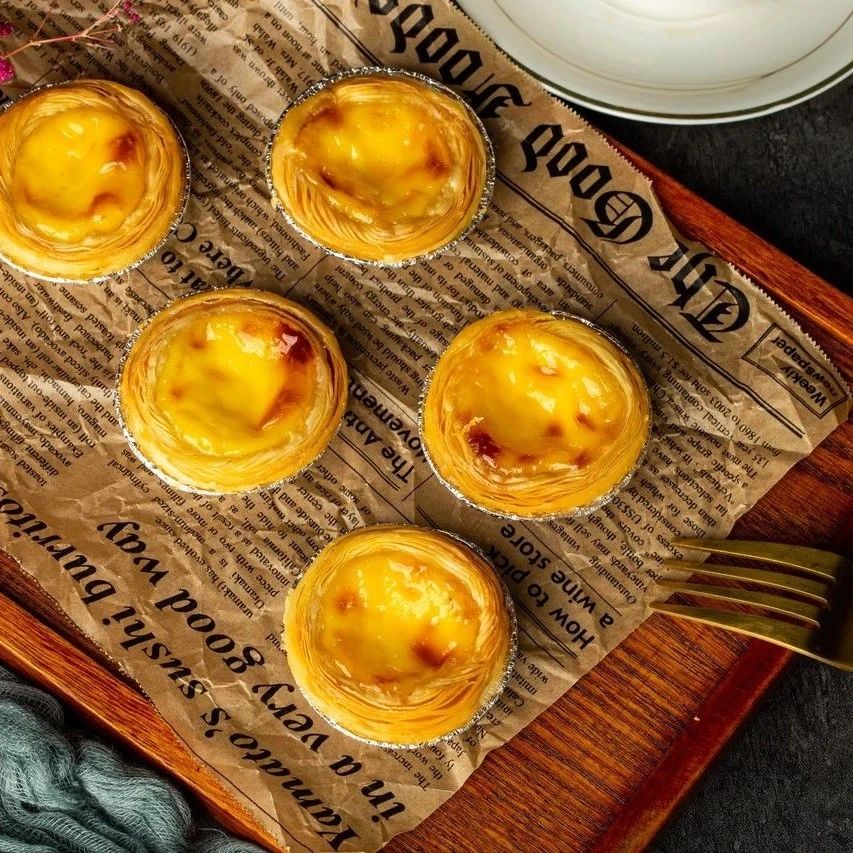
Core Viewpoint - The rising popularity and high prices of corn egg tarts have sparked consumer dissatisfaction and highlighted broader industry issues related to pricing and consumer perception [4][5][13]. Group 1: Price Discrepancies and Consumer Reactions - The price of corn egg tarts has reached as high as 48 yuan each, while the cost of corn at the production level is around 1 yuan per pound, leading to public outrage over perceived price gouging [4][5]. - The phenomenon of "bread assassins" has been noted in the baking industry, with high prices for various baked goods causing consumer frustration [5]. - Social media platforms have seen significant engagement with the corn egg tart topic, with 700 million views on Douyin and 67.15 million on Xiaohongshu, indicating a strong consumer interest and reaction [7][8]. Group 2: Market Dynamics and Trends - The corn egg tart has replaced previous baking trends, such as butter rice cakes, showcasing the cyclical nature of popular baked goods [7]. - Different pricing strategies exist among various vendors, with some offering corn egg tarts for as low as 8 yuan at chain bakeries, contrasting sharply with the high prices at trendy shops [9]. - The corn egg tart's rise can be attributed to consumer curiosity and the marketing strategies of businesses, which have capitalized on social media trends [11]. Group 3: Consumer Behavior and Perception - Many consumers exhibit a "follow the crowd" mentality, purchasing corn egg tarts due to social influence rather than personal preference, often leading to disappointment with the product quality [8][9]. - The perception of high prices has led to discussions about the value of ingredients and the actual cost of production, with estimates suggesting that the raw material cost for a corn egg tart is around 5-6 yuan [9][13]. - The debate surrounding the corn egg tart reflects broader concerns about the pricing strategies in the baking industry, where consumer sensitivity to price plays a significant role in purchasing decisions [16]. Group 4: Longevity of Baking Trends - The article discusses the transient nature of trendy baked goods, suggesting that while some may achieve lasting popularity, many will fade as consumer interest shifts [15][16]. - Successful long-term products often balance quality and affordability, moving away from the high prices associated with initial trends [17][18]. - The baking industry ultimately relies on efficient supply chain management and production processes to maintain competitive pricing and product availability [18].
一笔漂亮的退出:93亿卖始祖鸟股份
投中网· 2025-05-31 03:04
Core Viewpoint - FountainVest is seeking to sell half of its stake in Amer Sports for approximately $1.3 billion, marking a significant cash-out opportunity for the investor after a successful investment in the company [1][9]. Group 1: Company Background - Amer Sports, known as the "Rolls-Royce of sports goods," owns high-end brands such as Arc'teryx, Salomon, Wilson, and Atomic, and has gained popularity in China, being referred to as the "new social currency" alongside Lululemon [1][5]. - The company was originally founded in 1950 as a tobacco company and transitioned to the sports goods industry after acquiring a hockey equipment brand in 1974 [3][4]. - Amer Sports has undergone significant mergers and acquisitions, acquiring brands like Wilson and Atomic, and fully divested its tobacco business in 2004 [4][5]. Group 2: Financial Performance - In 2024, Amer Sports reported annual revenue of $5.183 billion, with Arc'teryx generating over $2 billion, making it a key asset for the company [5]. - The company experienced a compound annual growth rate of 20.4% from 2020 to 2022, following a strategic focus on core brands and divestitures of non-core assets [5][9]. - By 2025, Amer Sports reported a revenue of $1.473 billion in Q1, a 23% increase year-over-year, with net profit soaring over 25 times compared to the previous year [9]. Group 3: Investment and Market Activity - FountainVest's initial investment in Amer Sports was part of a consortium led by Anta Sports, which acquired the company for €4.6 billion in 2018, marking the largest outbound acquisition by Chinese capital that year [1][5]. - Following the IPO in 2024, Amer Sports' market capitalization reached $6.492 billion, and its stock price has significantly increased since its listing [5][9]. - FountainVest's recent decision to sell half of its stake not only allows for a profitable exit but also provides liquidity for further investments in the consumer sector, as the market for consumer goods is heating up [10][11].