投中网

Search documents
小朋友爱玩的“奥特蛋”,要IPO了
投中网· 2025-11-09 07:03
Core Viewpoint - The article highlights the success of companies leveraging the Ultraman IP, particularly Guangdong Jintian Animation Co., Ltd. (金添动漫), which has developed a profitable business model around Ultraman-themed products, generating significant revenue and market interest [7][9][10]. Company Overview - Guangdong Jintian Animation Co., Ltd. was established in 2011 and is recognized as China's largest IP fun food enterprise, having developed over 150 Ultraman-themed products since acquiring the IP rights in 2009 [7][12]. - The company reported sales revenue exceeding 1.2 billion yuan from Ultraman products over the past three years, with the Ultraman egg being a top-selling item priced at 7.5 yuan [7][12]. Financial Performance - From 2022 to 2024, the company's revenue grew from 596 million yuan to 877 million yuan, with net profit increasing from 36.71 million yuan to 130 million yuan, representing over 3.5 times growth [16]. - In the first half of 2025, revenue reached 444 million yuan with a net profit of 70.04 million yuan, driven by affordable products like the Ultraman egg, which sold over 70 million units [16][17]. Market Position and Strategy - As of mid-2025, Jintian Animation's IP fun food sales accounted for 99.5% of total revenue, with candy being the largest revenue source at 40.1% [17]. - The company is shifting its sales strategy from traditional distributors to direct retail, increasing direct sales from 3.5% to 43.2% of total revenue between 2022 and mid-2025 [18]. IP Dependency and Risk Management - The company faces risks associated with reliance on external IP licenses, with the Ultraman IP license expiring in 12 months. To mitigate this, Jintian Animation is diversifying its IP portfolio, increasing revenue from other IPs like My Little Pony [13][14]. Industry Trends - The article notes a trend of IP toy companies, including Jintian Animation, seeking IPOs in Hong Kong, driven by the emotional value and strong market demand for IP products among younger consumers [22][23]. - Successful IPs can create strong fan communities, leading to high user retention and profitability, as evidenced by Jintian Animation's higher gross margins compared to traditional snack brands [23]. IPO Plans - Jintian Animation is preparing for an IPO in Hong Kong, having previously delisted from the New Third Board in 2021 to streamline operations. The upcoming IPO is seen as a critical step in showcasing its growth strategy [24].


投资人大哥告诉我,他有“三不投”
投中网· 2025-11-09 07:03
Core Insights - The article discusses the significant achievements and ongoing questions surrounding China's innovative pharmaceuticals, highlighting a pivotal moment akin to the "Sputnik moment" for the U.S. in the 1950s, where China has surpassed the U.S. in overseas licensing deals for innovative drugs, reaching $51.9 billion in 2024 [3][4][7]. Group 1: Market Dynamics - In 2023, the total amount of outbound business development (BD) transactions for Chinese innovative drugs was $8.4 billion, which surged to $51.9 billion in 2024, marking a 65% year-on-year increase [7][10]. - The first half of 2025 has already seen licensing deals nearing $66 billion, indicating a robust growth trajectory in the sector [7][10]. - The current BD activity reflects a long-term accumulation of industry capabilities, showcasing the effectiveness of the ecosystem from research to clinical application [8][9]. Group 2: Investment Sentiment - Investors express optimism about the sustainability of the current BD boom, with many believing that the ongoing trends will continue to benefit the sector [9][10]. - The anticipated U.S. interest rate cuts and the "patent cliff" faced by major pharmaceutical companies are expected to create favorable conditions for Chinese biotech firms to provide valuable pipelines [10][11]. - The disparity in upfront payments for BD transactions between China and the U.S. remains significant, with Chinese deals being 5-6 times lower, raising questions about the perceived value of these transactions [10][11]. Group 3: Challenges and Opportunities - Despite the positive outlook, there are concerns regarding the sustainability of the current BD activity and whether it can maintain momentum in the face of market fluctuations [4][10]. - The article highlights the importance of clinical data in securing BD deals, with many companies struggling to balance funding needs with the demands of clinical development [15][18]. - The emergence of the "NewCo" model, where investment firms acquire undervalued pipelines to further develop and sell, is seen as a potential avenue for mitigating risks and enhancing cash flow for innovative drug companies [21][22]. Group 4: Future Prospects - The establishment of supportive ecosystems, such as the "Beijing Drug and Medical Device Innovation Service Station," aims to enhance registration and approval efficiencies for innovative drug companies [8][9]. - The article concludes that China's innovative pharmaceuticals are now positioned on a global competitive stage, with the potential for significant advancements in addressing patient needs [23].

卖了半个世纪“披萨”破产了
投中网· 2025-11-08 07:03
Core Viewpoint - The UK operations of Pizza Hut, referred to as the "King of Pizza," are facing severe operational crises, leading to the second bankruptcy management procedure within a year, resulting in the closure of 68 dine-in restaurants and 11 delivery points, which has caused the loss of 1,210 jobs [3][5][7]. Group 1: Bankruptcy Events - Pizza Hut UK has entered bankruptcy management procedures twice in less than a year, with the first instance occurring in January due to a funding crisis that left the company with liabilities of approximately £40 million [5][6]. - Directional Capital, a private equity firm, intervened during the first bankruptcy, acquiring the franchise rights and managing 139 stores with around 3,000 employees, but the situation did not improve significantly [6][7]. - The latest bankruptcy was triggered by a liquidation application from HMRC against the operating entity, DC London Pie, highlighting deeper structural issues within the business [6][7]. Group 2: Company History and Market Position - Pizza Hut has been a part of the UK market since 1973, once boasting over 700 locations and employing 14,000 people at its peak in 1999 [8][9]. - The brand's decline began around 2012, with significant competition from rivals like Domino's and Papa John's, which capitalized on the growing preference for delivery services [9]. - The COVID-19 pandemic further exacerbated the decline, forcing the closure of 29 locations and severely impacting dine-in operations [9]. Group 3: Industry Context - The UK casual dining sector is experiencing a broader crisis, with a 31.2% increase in businesses facing financial distress in the restaurant and bar industry [11]. - In the first half of the year, 209 pubs permanently closed, averaging 8 closures per week, indicating a significant trend in the industry [11]. - Factors contributing to this crisis include increased competition, inflation, rising energy costs, and changes in tax policies, which have collectively strained the traditional dining model [12][13].


LP周报丨86.75亿,内蒙古终于出手了
投中网· 2025-11-08 07:03
Core Insights - Inner Mongolia is quietly optimizing and upgrading its industrial layout, leveraging its unique resource endowments and industrial foundations to develop competitive advantages in emerging fields like energy and new materials [6][7] - The establishment of an 8.675 billion RMB guiding fund for key industries in Inner Mongolia aims to propel the development of these advantageous sectors [7][9] - Multiple new funds have been established across various regions, focusing on diverse sectors such as biotechnology, renewable energy, and advanced manufacturing, indicating a trend of increased investment activity in strategic emerging industries [10][11][12][13][15][22][25][27] Group 1: Inner Mongolia's Industrial Development - Inner Mongolia has significant coal, wind, and solar energy resources, ranking first in coal production and total installed power capacity in China, with a projected 135 million kW of new energy capacity by 2024 [6] - The region has proven mineral resources of 149 types, with key resources like rare earths and lithium, which are crucial for strategic emerging industries [6] Group 2: New Fund Establishments - The Inner Mongolia guiding fund for key industries has a total investment of 8.675 billion RMB, managed by Zhongcai Rongshang, which has extensive experience in managing government industry funds [7][9] - The Hangzhou Qingshanhu Science and Technology Investment Group has established a 5 billion RMB investment partnership focusing on high-end equipment and integrated circuits [10] - The Xiamen revitalization fund has been set up with a capital of 5 billion RMB to activate existing assets in the region [11] - A 5 billion RMB agricultural development fund has been established in Yichang, focusing on the agricultural industry chain [12] - The Chaoyang District has launched a 3 billion RMB investment fund targeting embodied intelligence, marking a significant step in developing future industries [13][14] - Chengdu's 50 billion RMB industrial development fund aims to support multiple industrial clusters, including electronics and new materials [15] Group 3: Sector-Specific Focus - The newly established 10 billion RMB marine health industry fund in Qingdao aims to develop a comprehensive marine health industry system [20] - The 10 billion RMB emerging industry fund in Wuhu will focus on new materials, renewable energy, and information technology [24] - The Guangzhou Baiyun District has launched a 100 billion RMB biomanufacturing fund to support the growth of the biomanufacturing sector [25][26] - The Henan Fuyuan Electric Equipment Investment Fund, with a total scale of 300 million RMB, will focus on new energy and smart power systems [27]

430亿,四川明星独角兽IPO了
投中网· 2025-11-08 07:03
Core Viewpoint - The article highlights the successful IPOs of companies led by Peking University alumni, particularly focusing on Minglue Technology and its founder Wu Minghui, showcasing the growth and investment journey of the company in the data intelligence sector [8][19]. Group 1: Company Overview - Minglue Technology officially listed on the Hong Kong Stock Exchange on November 3, with its stock price surging over 110% from the issue price of 141 HKD, resulting in a market capitalization exceeding 43 billion HKD [8]. - The company has evolved from its origins in advertising data analysis to a broader focus on AI and digital transformation, achieving over 4.7 billion CNY in revenue over three and a half years [13][14]. Group 2: Founder Background - Wu Minghui, a Peking University graduate, has a strong academic background in mathematics and computer science, which he leveraged to transition from academia to entrepreneurship [10][12]. - He co-founded Minglue Technology after recognizing the potential of data analytics and cloud computing, leading to significant growth and multiple rounds of funding [11][13]. Group 3: Investment Journey - Minglue Technology has successfully completed multiple funding rounds, including a recent F3 round that raised over 110 million USD, with a valuation reaching approximately 1.665 billion USD [17]. - Major investors include Tencent, Sequoia Capital, and various other venture capital firms, reflecting strong confidence in the company's business model and growth potential [14][16]. Group 4: Industry Impact - The article notes a trend of Peking University alumni establishing successful companies, with several others, such as Jinfang Pharmaceutical and Tudatong, also preparing for IPOs, indicating a robust entrepreneurial ecosystem [19][21]. - The emergence of these companies contributes significantly to the Chinese venture capital landscape, showcasing innovation across various sectors [21][22].

机器人,一周又融了好几十亿
投中网· 2025-11-07 06:46
Core Viewpoint - The investment landscape in the embodied intelligence robotics sector is heating up, with significant participation from state-owned enterprises (SOEs) and a focus on commercial viability and mass production capabilities [3][4][6]. Investment Trends - From October 20 to the present, four companies in the embodied intelligence sector have disclosed financing totaling over 2 billion yuan, covering the entire supply chain from core components to complete humanoid robots and platforms [3]. - SOEs are increasingly involved in the robotics sector, with notable investments such as the 500 million yuan strategic financing for "Wuba Intelligent" led by state-backed funds [5]. - Private enterprises are also seeing active participation from SOEs, with companies like Songyan Power and Leju Robotics securing significant funding rounds [7][10]. Market Dynamics - The industry is transitioning from technology validation to commercial validation, with many companies entering B and C funding rounds focused on proving revenue and profitability models [10]. - The price of humanoid robots is rapidly decreasing, with Songyan Power launching a humanoid robot priced at 9,998 yuan, indicating a shift towards affordability [10][11]. - Large orders are becoming more common, with companies like UBTECH securing substantial contracts, although some industry voices express skepticism about the sustainability of such demand [11][12]. Technological Development - The development of dexterous hands is crucial for the practical application of embodied intelligence, with companies like Lingxin Qiaoshou making significant advancements and achieving mass production [15][16]. - Lingxin Qiaoshou has established a complete product line and has successfully produced over a thousand units of its high-freedom dexterous hand, indicating strong market traction [16][17]. - The industry is still in its early stages, facing challenges related to technology maturity, application scenario matching, and cost control [17].

光伏新周期逻辑明牌了
投中网· 2025-11-07 06:46
Core Viewpoint - The photovoltaic industry has shown significant improvement in the third quarter of 2025, with many companies turning losses into profits, driven by a focus on "cost price" and the integration of AI in data centers, which will determine future valuations [6][27][28]. Industry Overview - The overall profitability in the photovoltaic industry has improved, with major players like GCL-Poly and Tongwei achieving significant profit recovery. The price of silicon materials has surged from 30,000 CNY/ton to 58,000 CNY/ton, leading to a substantial increase in profits for silicon material companies [8][9][10]. - The silicon wafer segment has also benefited from rising silicon prices, with companies like Hongyuan Green Energy and Shuangliang Energy achieving profitability due to inventory management and improved operational efficiency [13][14]. - Battery component manufacturers have seen mixed results, with some companies like LONGi and Jinko reporting improved performance, while others like JA Solar experienced declines [15]. - The inverter segment has shown strong growth, particularly for companies like Sungrow, which reported a net profit of 11.88 billion CNY, driven by the expanding energy storage market [17][18]. - The auxiliary materials sector faced challenges, particularly in the film industry, which is recovering from a downturn, while companies like Foster have increased their overseas market share significantly [20][21]. Key Segments - **Silicon Material**: GCL-Poly reported a profit of approximately 960 million CNY in Q3, a significant turnaround from a loss of 1.81 billion CNY in the same period last year. The average selling price of silicon materials increased by 37% from Q2 to Q3 [8][9][10]. - **Silicon Wafer**: Companies like Hongyuan Green Energy achieved a net profit of 500 million CNY in Q3, marking a significant improvement. The overall profitability in this segment is expected to continue [13][14]. - **Battery Components**: While some companies reported improved performance, the overall segment remains under pressure due to weak demand in overseas markets [15]. - **Inverters**: The inverter segment has seen strong growth, with major players benefiting from the expanding energy storage market, particularly in large-scale applications [17][18]. - **Auxiliary Materials**: The film industry is recovering from a challenging period, with companies like Foster increasing their overseas market share significantly [20][21]. - **Photovoltaic Equipment**: Equipment manufacturers are facing a decline in profits, but some are exploring overseas markets for growth opportunities [23][24]. Future Outlook - The photovoltaic industry is expected to continue its recovery, with a focus on cost management and technological advancements. The integration of AI and energy storage solutions will play a crucial role in shaping the industry's future [27][28][35].

10个月股价翻了13倍,投资人赚麻了
投中网· 2025-11-07 06:46
Core Viewpoint - The article highlights the remarkable performance of the energy storage company Haibo Sichuang, which has seen its stock price surge over 13 times since its IPO, reflecting the booming energy storage market in China and significant returns for early investors [3][5][12]. Company Performance - Haibo Sichuang's stock closed at 273.65 yuan per share, with a total market capitalization of 49.282 billion yuan and a dynamic P/E ratio of 51.5 times [3]. - The company achieved a revenue of 45.22 billion yuan in the first half of 2025, a year-on-year increase of 22.66%, and a net profit of 3.16 billion yuan, up 12.05% [7]. - The latest quarterly report showed revenues of approximately 79.13 billion yuan for the first three quarters, a 52.23% increase year-on-year, and a net profit of about 6.23 billion yuan, up 98.65% [7][17]. Investment Returns - Early investors in Haibo Sichuang, particularly those who participated in the seed round in 2012, have seen returns exceeding 1000 times their initial investment [9][12]. - Notable investors include Tencent Ventures and IDG Capital, with significant unrealized gains as they remain under a one-year lock-up period post-IPO [10][12]. Market Dynamics - The energy storage market in 2025 experienced a significant boom, driven by both domestic policy changes and increased overseas demand, leading to a surge in orders for Chinese battery storage companies [15][16]. - The Chinese energy storage sector is projected to see installed capacity reach over 180 million kilowatts by 2027, with direct investments estimated at around 250 billion yuan [16]. Industry Outlook - Other companies in the energy storage sector, such as Sunshine Power and Yiwei Lithium Energy, also reported substantial revenue growth in the third quarter, indicating a robust industry trend [17]. - The overall performance of the energy storage industry is expected to enhance the future capital market prospects for these companies, as they prepare for dual listings [17].

老登们的社交货币全崩了
投中网· 2025-11-07 06:46
Group 1: Market Overview - The Shanghai Composite Index is challenging the 4000-point mark, but the market remains highly differentiated, particularly in the traditional high-end consumption sector represented by liquor, which is in a prolonged stagnation phase [6][11]. - Despite limited market funds seemingly abandoning the shift from tech stocks to traditional consumer stocks, some investors are still betting on liquor stocks, believing in a potential recovery after significant negative news [7][11]. Group 2: Liquor Industry Performance - The liquor industry recently reported its worst third-quarter performance, with 18 listed companies achieving a total revenue of 317.66 billion yuan, a year-on-year decline of 5.84%, and a net profit of 122.69 billion yuan, down 6.88% [11][12]. - The third quarter saw a dramatic year-on-year revenue drop of 18.42% and a net profit decline of 22.03%, reversing the growth trend observed in the same period of the previous year [11][12]. - Even leading companies like Kweichow Moutai experienced a significant slowdown, with third-quarter revenue growth dropping to 0.56% and net profit growth to 0.48%, marking the lowest growth rates in recent years [12][14]. Group 3: Challenges in the Liquor Market - Kweichow Moutai's pricing issues are emblematic of broader operational challenges, with its flagship product's price falling below 1700 yuan, a significant drop from previous highs [14][15]. - The overall liquor market is facing a decline in sales volume, with a 20% drop during key festive periods, and high inventory levels leading to price inversions affecting half of the companies [16]. - The traditional distribution model is under strain as companies like Moutai shift towards direct sales and e-commerce, disrupting the established dealer network and altering market dynamics [16]. Group 4: Tea Industry Developments - In contrast to the liquor sector, the high-end tea industry has seen positive developments, with Baima Tea successfully listing on the Hong Kong Stock Exchange after multiple failed attempts, achieving an impressive 86.7% increase on its first trading day [18][19]. - Baima Tea's growth strategy focuses on brand enhancement, digitalization, and addressing industry pain points, although its franchise system has shown slight contraction [19]. - The high-end tea market heavily relies on the gift market, and the performance of tea companies is closely tied to their ability to navigate complex social and business relationships [20][22]. Group 5: Broader Consumer Trends - The liquor and tea industries are both attempting to connect with younger consumers, while traditional products like Pizhou Huang are struggling, with significant declines in revenue and profit [23][26]. - The market for high-end gifts and social currencies like liquor and traditional medicine is under pressure as societal dynamics shift, leading to a reevaluation of their long-term appeal [28][30].




刚刚,2025年全球自动驾驶领域最大IPO诞生
投中网· 2025-11-06 04:14
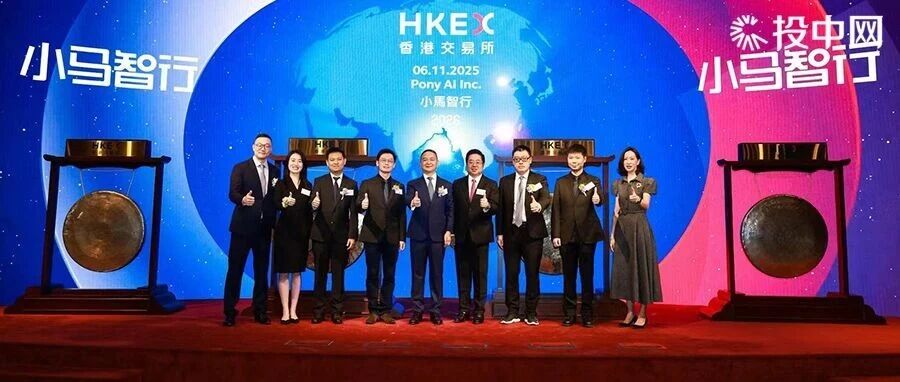
Core Viewpoint - The growth trajectory of Xiaoma Zhixing reflects the transition of China's autonomous driving industry from technological ideals to commercial reality, culminating in its significant IPO and operational advancements in Robotaxi services [2][3]. Group 1: Company Overview - Xiaoma Zhixing, founded in 2016 by Peng Jun and Lou Tiancheng, completed a record-breaking IPO on November 6, 2025, raising 7.7 billion HKD, marking the largest IPO in the global autonomous driving sector since 2025 [3][16]. - The company has developed a fleet of over 720 Robotaxis and is on the verge of achieving operational profitability per vehicle [10][12]. Group 2: Technological Development - Initially, Xiaoma Zhixing relied on vast amounts of human driving data to train its autonomous driving models, but shifted to a self-learning "world model" approach to achieve L4 autonomy [7][8]. - The world model generates 10 billion kilometers of simulation data weekly, enabling virtual drivers to improve their driving capabilities significantly [8][9]. Group 3: Market Potential - The global mobility market is projected to reach 4.5 trillion USD by 2025, with Robotaxi services expected to commercialize around 2026, and China anticipated to dominate this market by 2030 [15]. - Xiaoma Zhixing's revenue for Q2 2025 reached 154 million RMB, a 75.9% year-on-year increase, driven by a threefold surge in passenger fare income from Robotaxi services [13][14]. Group 4: Investment and Financial Backing - Xiaoma Zhixing has attracted significant investment, raising over 1.3 billion USD before its U.S. listing, with major investors including Toyota and Sequoia Capital [17][18]. - The company has received strong support from international investment firms, indicating confidence in its long-term growth potential [21][20]. Group 5: Future Outlook - The company aims to scale its Robotaxi fleet to over 1,000 vehicles by 2025-2026, with the launch of its seventh-generation Robotaxi expected to enhance operational efficiency and cost-effectiveness [11][12]. - Xiaoma Zhixing's strategic focus on expanding its global footprint includes establishing R&D centers in various countries, positioning itself for future growth in the autonomous driving market [14].