投中网

Search documents
抄底药企,红杉中国买下拜耳现金牛
投中网· 2025-11-06 04:14
Core Insights - Sequoia China has acquired Bayer's antibiotic Avelox business, with the transaction valued between €160 million and €260 million, approximately ¥1.32 billion to ¥2.15 billion [5][10] - The acquisition reflects a shift in investment strategies, emphasizing the importance of mergers and acquisitions (M&A) in the current investment landscape [6][19] - The investment in Avelox indicates a broader trend of focusing on mature products with established market demand, rather than solely on innovative drugs [10][19] Group 1: Acquisition Details - Bayer's Avelox, a broad-spectrum antibiotic, was developed in 1999 and became a significant product for the company, with global sales reaching €497 million in 2010 [9] - Despite facing competition from generics, Avelox maintained a 40% market share in China as of 2021, showcasing strong brand recognition [9][10] - The acquisition by Sequoia China is seen as a strategic move to tap into the stable cash flow generated by established products [10][19] Group 2: Market Trends - The M&A market has seen a surge, with 1,158, 1,276, and 1,277 transactions reported in the first three quarters of the year, indicating a robust activity level [16] - The total transaction amounts for the first three quarters were ¥54.168 billion, ¥31.193 billion, and ¥52.222 billion respectively, highlighting a stable financial environment for M&A [16] - A record number of private equity funds, 158, achieved exits through M&A, marking a significant shift in investment strategies post-IPO market slowdown [17] Group 3: Investment Strategy Evolution - Investment firms are increasingly moving away from traditional VC models, opting for direct control of non-core assets to mitigate risks [14][19] - The trend of divesting non-core pipelines among pharmaceutical companies is growing, allowing them to focus on core developments while providing liquidity [14] - Sequoia China's investment in Avelox is part of a broader strategy to leverage existing assets and market demand, reflecting a shift towards maximizing the value of established products [19]


IDG、哈勃、元禾,联手投了复旦知名教授邱锡鹏丨投中嘉川
投中网· 2025-11-06 04:14
Core Viewpoint - The article discusses the recent funding round for MOSS Intelligence, a company founded by renowned AI professor Qiu Xipeng, highlighting its advancements in speech AI technology and the significance of its latest product, MOSS-Speech, which marks a new phase in voice interaction technology [5][15]. Company Overview - MOSS Intelligence, established in November 2024 in Shanghai, aims to promote the industrialization of multimodal interaction and embodied intelligence, focusing on creating AI systems that better understand human interactions [7]. - The company has attracted top-tier investments from IDG Capital, Huawei Hubble, Yuanhe Holdings, and Xinglian Capital during its angel round [5]. Key Technology and Products - MOSS Intelligence specializes in the development of large speech models, with its latest release, MOSS-Speech, representing a significant advancement in AI voice interaction, allowing for direct voice-to-voice communication without text intermediaries [15][16]. - MOSS-Speech captures non-verbal signals such as tone, emotion, and laughter, making machine speech more natural and human-like [16]. Founder's Background - Qiu Xipeng, a professor at Fudan University and a prominent figure in the AI field, co-founded MOSS Intelligence. He is known for his influential work in natural language processing and deep learning, including the widely regarded textbook "Neural Networks and Deep Learning" [8][9]. - Qiu's team developed the open-source Chinese language model MOSS, which filled a significant gap in the Chinese AI landscape following the release of ChatGPT [9][10]. Leadership Team - The CEO of MOSS Intelligence, Li Shiming, is a graduate student of Qiu Xipeng and has made notable contributions to the field, including the development of SpeechGPT, a pioneering voice interaction model [14]. - Li has also led the creation of a cross-disciplinary collaboration platform, demonstrating a commitment to transforming cutting-edge technology into socially valuable products [14]. Future Aspirations - The company aims to develop a multimodal large model and content creation platform that rivals Google's Gemini Pro, with a focus on high-performance audio and video understanding and generation capabilities [15]. - Qiu Xipeng envisions MOSS as a foundational step towards achieving general artificial intelligence, suggesting that the realization of such technology may be within the next 5 to 10 years [16].

3900亿,孙正义重回首富宝座
投中网· 2025-11-06 04:14
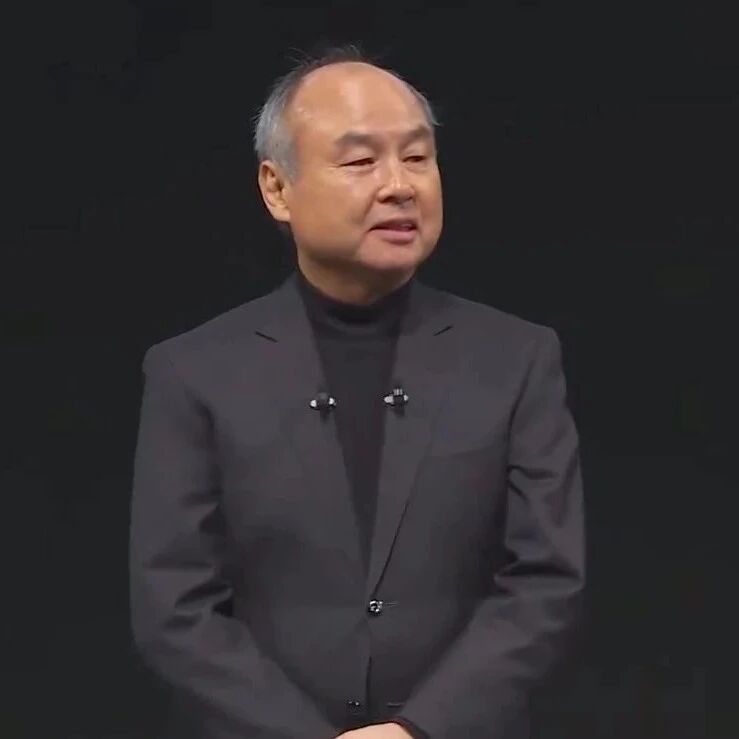
Core Viewpoint - Masayoshi Son, the founder of SoftBank Group, has made a remarkable comeback, with his personal wealth surging by 248% to $55.1 billion (approximately 392.8 billion RMB) as of October 2023, reclaiming the title of Japan's richest person [5][6]. Financial Performance - SoftBank Group reported strong financial results for the first quarter of the fiscal year 2025-2026, with revenue reaching 1.82 trillion yen, a year-on-year increase of 7%. Notably, the pre-tax profit soared to 689.94 billion yen, a staggering increase of 205.7% [9]. - The Vision Fund's investment income was 726.84 billion yen, with a pre-tax profit of 451.39 billion yen, marking a successful turnaround from previous losses [10]. Investment Strategy - Son's wealth increase is attributed to the significant rise in SoftBank's stock price, driven by strategic investments in AI and technology companies [7][11]. - In 2025, Son made substantial investments, including $30 billion in OpenAI, $5.375 billion to acquire ABB's robotics business, and $2 billion in Intel, while increasing holdings in Nvidia and TSMC [16]. AI Focus - Son's investment philosophy emphasizes identifying companies with the potential to become leaders in their fields and significantly impact the world. He aims for SoftBank to become the top platform company in the global AI sector over the next decade [20][25]. - The partnership with OpenAI is part of a broader initiative, including a $500 billion investment plan to build next-generation AI supercomputing infrastructure across the U.S. [18]. Historical Context - Son's journey has not been without challenges, including past investment failures like WeWork. However, his early investments in Alibaba and Yahoo have yielded significant returns, showcasing his ability to identify promising ventures [12][22]. Market Outlook - Despite initial successes in AI investments, concerns remain about the timing and sustainability of these investments, particularly regarding the high valuations of companies like OpenAI and Nvidia. Analysts warn of potential risks if the AI sector does not meet growth expectations [24].

黑石的IPO大年:套现2100亿
投中网· 2025-11-05 02:29
Core Viewpoint - The prolonged exit stagnation in the global private equity (PE) industry may finally be coming to an end, as evidenced by Blackstone's record investment exits and a resurgence in IPO activities [4][7][22]. Group 1: Blackstone's Performance - Blackstone reported a total of $30.6 billion (approximately 217.2 billion RMB) in investment exits for Q3 2025, marking the highest quarterly exit amount in five years [6]. - The company's distributable earnings surged by 48% year-over-year, exceeding analysts' average forecasts by 22% [6]. - Blackstone announced a quarterly dividend of $1.29 per share, reflecting its strong financial performance [6]. Group 2: IPO and M&A Activities - Blackstone has initiated several significant IPOs, including Cirsa, Knowledge Realty Trust, and Legence, with estimated returns exceeding €2 billion from Cirsa alone [10][11]. - The total scale of global IPOs in Q3 2025 doubled compared to the same period last year, indicating a revitalized market [9]. - Blackstone's exit strategy also included notable M&A transactions, such as the $7 billion sale of Hotwire, yielding over three times the initial investment [11]. Group 3: Future Outlook - Blackstone's IPO pipeline is robust, with multiple projects in preparation, potentially leading to the highest number of IPOs in its history [12]. - The company is actively investing across various sectors, particularly in AI infrastructure, data centers, and energy, anticipating a significant increase in demand for these areas [18][20]. - Blackstone's executives predict that 2026 will be a pivotal year for fundraising, investment, and exit activities, suggesting a strong recovery in the PE market [21][22].


登峰前沿·大家说|志算科技黄春江:让AI芯片走入千家万户的“芯”路历程
投中网· 2025-11-05 02:29
将投中网设为"星标⭐",第一时间收获最新推送 瞄准端侧AI芯片的蓝海。 来源丨 投中网 在攀登产业珠峰的征途上,创业者是孤独的勇士,亦是需要灯塔的航船。 一种声音,一份力量。「登峰前沿·大家说」系列专题,汇聚由浦东科创集团与投中信息联合发起 的" 浦东科创-海望登峰(二期)CEO特训营 "创业者的真实表达。聆听他们的创业独白,见证他们 的成长突破,一同亲历新一代产业领袖的思考与蜕变。 一颗高能效的端侧AI芯片,如何从实验室走向产业化?黄春江与他的志算科技正在书写这份答卷。 "在清华电子系的八年,为我打下了坚实的集成电路设计基础。"黄春江表示,这段求学经历不仅赋 予他专业知识,更培养了他严谨的科研态度。毕业后,他先后进入贝尔实验室和上海贝尔阿尔卡特, 从设计工程师成长为研发经理。 在贝尔实验室,他参与了宽带交换机的设计;在上海贝尔阿尔卡特,他带领团队成功研发了宽带接入 服务器及其核心芯片,并实现了量产。"这段经历让我积累了从研发管理到电子产品量产的全流程经 验。" 然而,黄春江并不满足于在外企的稳定工作。他选择离开,投身创业大潮,先后主持参与过科技部和 上海市科委的创新芯片项目。"我们研发的加密芯片、喷绘机数据 ...

2200亿,重庆迎来一个超级IPO
投中网· 2025-11-05 02:29
Core Viewpoint - The article highlights the successful IPO of the Chinese electric vehicle company "Seres" on the Hong Kong Stock Exchange, marking it as the first A+H listed new energy vehicle company of the year, with a market capitalization reaching 220 billion HKD at launch [2][10]. Company Development Journey - Seres originated from a small spring factory founded by Zhang Xinghai and his brothers in 1986 with an initial capital of 8,000 CNY, evolving into a significant player in the automotive industry [4]. - The company transitioned from parts manufacturing to complete vehicle production in 1996, forming a joint venture with Dongfeng Motor, which provided essential production qualifications [5][11]. - After rebranding to Seres, the company focused on the new energy vehicle market, establishing a research center in Silicon Valley and investing heavily in smart manufacturing [6]. Financial Performance - Following a partnership with Huawei in 2021, Seres experienced a dramatic increase in stock price, reaching a peak market capitalization of over 850 billion CNY by mid-2021 [7]. - The company's revenue surged from 35.8 billion CNY in 2023 to 145.1 billion CNY in 2024, marking a year-on-year growth of 305.5%, with a net profit of 5.9 billion CNY in 2024, a 342.72% increase [7][8]. Strategic Partnerships and Investments - Dongfeng Motor, as a significant shareholder with 18.88% ownership, realized a profit of 41.5 billion CNY from its investment in Seres, highlighting the long-term strategic collaboration between the two companies [10][11]. - The Chongqing local government supported Seres through substantial investments, including a record 2.176 billion HKD from the Chongqing Industrial Mother Fund, facilitating the company's fundraising efforts [14]. Market Position and Product Success - Seres' models, particularly the AITO series, have achieved significant sales milestones, with the AITO M9 becoming the best-selling model in the 500,000 CNY segment in 2024, and the M7 leading the 300,000 CNY category [8][9]. - The company has established itself as a leader in the high-end electric vehicle market, contrasting with the broader trend of price reductions in the new energy vehicle sector [7][8]. Local Government Support - The Chongqing government has played a crucial role in Seres' development by providing resources and policy support, helping the company to establish a comprehensive supply chain and enhance production capabilities [14][15]. - The establishment of the Two Rivers Intelligent Factory exemplifies the government's commitment to facilitating rapid production timelines, significantly reducing the average industry setup time [15].



重组、谋上市,OpenAI更自由了
投中网· 2025-11-05 02:29
Core Viewpoint - OpenAI is preparing for an initial public offering (IPO) with a potential valuation of $1 trillion, which could be the largest IPO in history. The company is considering submitting its listing application as early as the second half of 2026, with a preliminary fundraising target of at least $60 billion [5][20][18]. Group 1: Company Structure and Transformation - OpenAI has undergone a restructuring to transition from a purely non-profit organization to a dual-structure model that balances commercial and public interest goals. The non-profit entity will control the new public benefit corporation (PBC) that will manage the profit-generating activities [7][11][18]. - The restructuring allows OpenAI to eliminate profit caps, enabling a more traditional capital structure where employees, investors, and the non-profit can hold equity [11][17]. - The new structure aims to provide OpenAI with greater flexibility in fundraising and pursuing an IPO, while still adhering to its original mission [23][18]. Group 2: Financial Performance and Revenue Streams - OpenAI reported a revenue of approximately $4.3 billion for the first half of 2025, a 16% increase compared to the previous year, but also incurred a loss of $13.5 billion primarily due to high R&D costs [20][21]. - The company aims to achieve a full-year revenue target of $13 billion and a cash burn target of $8.5 billion for the year [20]. - OpenAI's revenue sources include user subscription fees, API licensing, and commercial partnerships, with significant contributions from its flagship product, ChatGPT [24][27]. Group 3: Strategic Partnerships and Market Position - Microsoft, as OpenAI's largest investor, holds a 27% stake in the new PBC and has renegotiated terms to extend its exclusive rights to OpenAI's technology until 2032 [16][17]. - The partnership has evolved from a deep integration to a more flexible collaboration, allowing OpenAI to work with other companies while still benefiting from Microsoft's resources [9][12]. - OpenAI's products, particularly ChatGPT and the newly launched Sora, have positioned the company as a leader in AI technology, with Sora achieving significant download numbers shortly after its release [29][30]. Group 4: Future Outlook and Market Sentiment - The market views OpenAI's potential IPO favorably, with expectations of substantial returns for early investors, given the company's innovative products and strong market presence [20][31]. - OpenAI's future growth is anticipated to be driven by its AI Agent products, with projections indicating that revenue from this segment could reach $29 billion by 2029 [34]. - Despite the positive outlook, there are concerns regarding the balance between profit motives and the company's original mission, as well as the implications of its restructuring on governance and public accountability [37][38].


中国游戏,正在“攻占”日本
投中网· 2025-11-04 07:04
Core Viewpoint - The Japanese gaming industry, once a dominant force, is now facing significant challenges as Chinese companies increasingly capture market share and innovate in game development [5][8][26]. Group 1: Current State of the Japanese Gaming Industry - The Tokyo Game Show (TGS) 2025 showcased a significant presence of Chinese companies, with nearly half of the 299 exhibitors being from China, indicating a shift in the gaming landscape [5][6]. - Since the resumption of TGS in 2022, the growth in exhibition scale has largely been driven by Chinese firms, highlighting their successful expansion into the Japanese market [6][8]. - Sensor Tower's report indicates that as of July 2025, six out of the top ten mobile games in Japan by revenue are from Chinese developers, showcasing their dominance [6][21]. Group 2: Historical Context and Decline - The Japanese gaming industry thrived in the 1980s and 1990s, capturing 70% of the global market share by the end of the century, but has since seen a decline to 30% by 2015 [10][19]. - The industry's reliance on console gaming has hindered its ability to adapt to the rise of PC and mobile gaming, leading to a gradual decline in competitiveness [19][20]. - The aging population in Japan, with 29.4% of the population over 65, has contributed to a shrinking user base and a lack of innovation in game development [24][25]. Group 3: Chinese Companies' Success - Chinese games like "Genshin Impact" have achieved significant success in Japan, marking a turning point for Chinese developers in the Japanese market [27][28]. - The revenue projections for 2024 indicate that several Chinese games are expected to generate over 10 billion RMB, reflecting their growing influence [29]. - Chinese developers are leveraging advanced technology and innovative gameplay strategies, such as high welfare and low-pressure models, to attract Japanese gamers [30][31]. Group 4: Market Dynamics and Future Outlook - The Japanese gaming market is experiencing a shift as traditional gaming habits evolve, with younger audiences gravitating towards mobile and service-based games [21][24]. - The success of casual games like "Mushroom Hero" demonstrates the potential for Chinese developers to penetrate non-traditional gaming segments in Japan [32][33]. - The demand for mobile games in Japan remains high, with a significant gap between download numbers and in-app purchase revenues, indicating a lucrative opportunity for Chinese firms [33].

52亿,北京明星企业要IPO了
投中网· 2025-11-04 07:04
Core Viewpoint - Beijing Anshi Biotechnology Co., Ltd. is pursuing an IPO on the Sci-Tech Innovation Board, utilizing the fifth set of listing standards that focus on innovation attributes and market potential rather than current profitability [5][6]. Group 1: Company Overview - Anshi Biotechnology aims to commercialize its innovative cancer drug, Beruatinib, which is currently its only marketed product and a key asset for the company [9][10]. - The company has achieved significant revenue growth, with Q1 2025 revenue reaching approximately 64.04 million yuan, nearly five times the total revenue of 2023 [19]. Group 2: IPO and Fundraising - Anshi Biotechnology plans to raise 2.45 billion yuan through its IPO, with 1.95 billion yuan allocated for new drug research and 500 million yuan for working capital [7][21]. - The company has completed three rounds of fundraising totaling over 2.55 billion yuan, with significant participation from top venture capital firms [24][25][26]. Group 3: Product and Market Potential - Beruatinib has received conditional approval for multiple indications, including non-small cell lung cancer and glioma, and has been included in the national medical insurance directory, leading to a significant increase in sales [10][20]. - The market for MET-TKI drugs in China is projected to grow rapidly, from approximately 600 million yuan in 2024 to 27.2 billion yuan by 2035, providing a substantial growth opportunity for Anshi Biotechnology [20]. Group 4: Financial Performance and Risks - Despite revenue growth, Anshi Biotechnology has not yet achieved profitability, with cumulative losses reaching 782 million yuan by Q1 2025 [19]. - The company faces risks associated with high goodwill from acquisitions, which could impact financial performance if the core product does not meet market expectations [12][18].

“2025投中榜·锐公司100”榜单调研启动:寻找定义未来的产业新锐
投中网· 2025-11-04 07:04
Core Insights - The narrative of China's innovation economy has shifted towards "hard technology" as a cornerstone for survival and competition, indicating a paradigm shift in global tech competition from singular technological breakthroughs to the construction and dominance of complex system ecosystems [2] - The development of hard technology has become the main theme, with advancements in generative AI, carbon neutrality, biotechnology, and advanced manufacturing driving significant changes across various sectors [2] Industry Trends - The transition from model innovation to hard-core driving and from application integration to foundational breakthroughs is evident in China's industrial upgrade path [2] - Generative AI is moving from technical exploration to industrial integration, reconstructing the entire chain from research and development to service through vertical applications [2] - The carbon neutrality sector is expanding its technological boundaries with parallel developments in green hydrogen and new energy storage, pushing the energy revolution into deeper waters [2] - Biotechnology is experiencing a paradigm shift in research and development driven by AI for Science, leading to more precise and efficient solutions [2] - Advanced manufacturing is achieving breakthroughs in key areas such as semiconductor equipment and high-end materials under the dual goals of "self-control" and "global competitiveness" [2] Company Evaluation Criteria - The "VIGOROUS 100" list will evaluate companies based on external attention, industry synergy, and industry influence, focusing on those with strong drive and potential for innovation and growth [3][5] - Eligible companies must belong to key innovation categories such as new generation information technology, healthcare, carbon neutrality, and advanced manufacturing [7] - Participating companies should have a valuation of over 1 billion RMB, be at least in Series A funding, and have financing records within the last three years [8]