理想TOP2

Search documents
2018年李想回复为什么不像友商多开一点发布会?
理想TOP2· 2025-07-07 15:04
Core Viewpoint - The company emphasizes the importance of understanding what it wants, what it is willing to give up, and the responsibilities it must bear in order to build a solid and value-driven enterprise [1][2][3]. Group 1: Understanding Goals and Responsibilities - The company believes that knowing what it wants is crucial, especially when financial resources are limited, and this understanding helps in making informed decisions [1]. - It is essential to recognize what sacrifices are necessary for long-term success, rather than seeking quick financial gains or superficial recognition [1][2]. - The company stresses the importance of accountability and consistency in actions and words, which builds trust and credibility over time [1][3]. Group 2: Addressing Anxiety and Pain - The company identifies a lack of wisdom training as a core reason for anxiety and pain, suggesting that understanding one's goals and responsibilities can alleviate these feelings [4]. - It promotes a culture where individuals support each other in identifying their desires and analyzing what can be sacrificed, fostering a strong organizational framework [3][4]. - The company acknowledges that anxiety will always exist due to new challenges, but it can be managed through the development of skills and wisdom [4].


理想超充站2857座|截至25年7月6日
理想TOP2· 2025-07-06 15:22
Core Insights - The article discusses the progress of the company's supercharging station construction, highlighting the current number of stations and the targets for the future [1]. Group 1: Supercharging Station Development - The total number of supercharging stations has increased from 2855 to 2857, with a target of over 4000 stations by the end of 2025 [1]. - The progress towards this year's target is at 49.71%, with 178 days remaining in the year [1]. - To meet the year-end goal, the company needs to build an average of 6.42 stations per day [1]. Group 2: New Stations Added - Two new supercharging stations have been completed: one in Chongqing at the Shuanglong Service Area and another in Quanzhou, Fujian at the Donghaiwanmen Phase II [1]. - The specifications for the new stations include a 2C × 4 configuration for the Chongqing station and a 4C × 6 configuration for the Quanzhou station [1].

理想在纯电使用油车审美与纯电正向设计之间选择了后者
理想TOP2· 2025-07-06 15:22
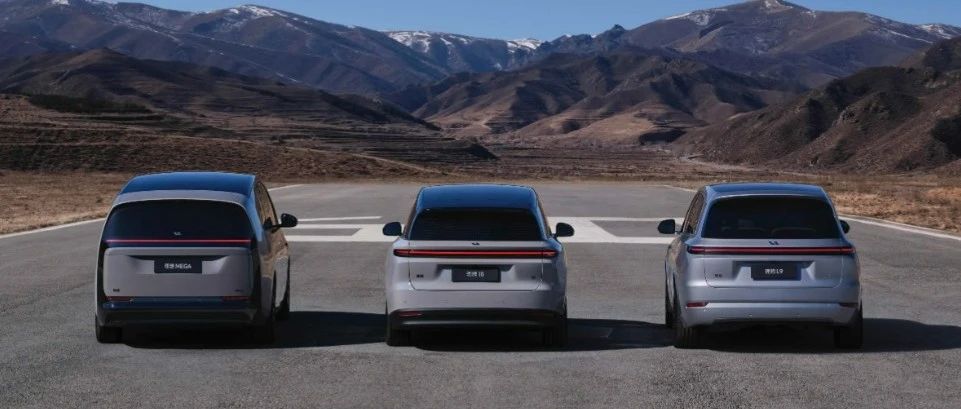
Core Viewpoint - The article discusses the different design philosophies between electric vehicles (EVs) and traditional internal combustion engine (ICE) vehicles, emphasizing that there is no absolute right or wrong in these choices, but they lead to different commercial outcomes in the short, medium, and long term [1]. Group 1: Design Philosophy - The design of Xiaomi's SU7 and YU7 has received positive feedback for its aesthetics, which closely resemble those of traditional ICE vehicles [2]. - Xiaomi prioritizes aesthetics in its design philosophy, aiming for mainstream consumers to find the vehicles visually appealing at first glance [1][2]. - The criticism of Li Auto's MEGA design led to adjustments in the appearance of its i8 and i6 models, indicating a shift towards more conventional aesthetics [1]. Group 2: Financial Performance - Xiaomi has shown strong financial performance over the past 15 months, while Li Auto's financial results have not met earlier expectations, leading to dissatisfaction regarding its design choices [2]. - Public sentiment towards a company's design and decisions often correlates with its financial performance; positive results lead to praise, while negative results lead to criticism [2]. Group 3: Competitive Landscape - Tesla's first-generation EV design has set a standard in the industry for the past decade, focusing on low drag, good handling, low energy consumption, and long range [2][3]. - Li Auto has built upon Tesla's design principles, potentially leading the industry for the next 5-10 years due to the significant user value of its design approach [3]. Group 4: Technical Aspects - Li Auto has not surpassed Tesla in low drag, handling, energy efficiency, or range, as these aspects are largely dictated by physical laws and design choices [4]. - Xiaomi's SU7 MAX is designed to match Tesla's Model 3 Performance in handling, indicating its capability to achieve similar performance levels [5]. - Li Auto's approach to charging infrastructure and design after removing the engine is seen as a competitive advantage, focusing on user experience with fast charging capabilities [5][6]. Group 5: User Value Considerations - Li Auto prioritizes internal space over front trunk space, believing that maximizing internal space will provide greater user value, especially with the future of autonomous driving [6]. - The design choices made by Li Auto reflect a belief that internal space will be more valuable than aesthetic considerations derived from traditional vehicle designs [6].

李想央视《对话》完整文字版与高信息密度省流版
理想TOP2· 2025-07-05 15:43
Core Viewpoint - The company aims to create groundbreaking products in the artificial intelligence hardware terminal field, similar to the impact of the 2007 iPhone [1][26] Group 1: Company Vision and Strategy - The company defines itself as a space robotics enterprise, focusing on creating exceptional user experiences in smart electric vehicles [7][26] - The CEO believes that the next 2-3 years will see a pivotal moment in the physical world akin to ChatGPT, emphasizing the importance of technical fundamentals behind products [2][21] - The company prioritizes safety and functionality over aesthetics in resource allocation, viewing design as a reflection of corporate values [4][18] Group 2: Team Dynamics and Management - The CEO emphasizes the need for a unique training and growth system to adapt to the younger generation's expectations, which differ from traditional management styles [3][21] - A 63-1 time allocation strategy is employed, with 60% dedicated to organizational work, 30% to product development, and 10% to learning [2][9] - The CEO encourages open discussions and debates within the team to foster a more comprehensive decision-making process [5][9] Group 3: Recruitment and Talent Management - The company prioritizes technical skills, communication abilities, and shared values when recruiting core team members, with any misalignment in values being a deal-breaker [15][21] - The CEO believes that differing perspectives among team members stem from varying viewpoints rather than differences in capability [16][21] Group 4: Innovation and Market Positioning - The company has faced challenges in financing due to its unique approach, such as choosing to develop range-extended electric vehicles despite investor pressure to follow market trends [19][20] - The CEO asserts that the company is focused on solving real-world problems using new technologies and artificial intelligence, rather than merely following market trends [21][22] Group 5: Future Aspirations - The CEO envisions launching innovative AI products that will revolutionize the industry, positioning the company as more than just a traditional automotive manufacturer [26][27]

理想超充站2855座|截至25年7月5日
理想TOP2· 2025-07-05 15:43
Core Viewpoint - The company is making progress towards its goal of establishing over 4000 supercharging stations by the end of 2025, with current construction numbers indicating a steady increase in capacity [1]. Group 1: Supercharging Station Development - The total number of supercharging stations has increased from 2852 to 2855, with a recent addition of 3 new stations [1]. - The current progress towards the 2025 target stands at 49.63%, with 179 days remaining in the year [1]. - To meet the end-of-year target, the company needs to construct an average of 6.40 new stations per day [1]. Group 2: New Station Details - New supercharging stations have been established in three locations: - Dongying, Shandong Province: Dongying Blue Ocean Yuhua Hot Spring Hotel, a city 4C station with specifications of 4C × 4 [1]. - Dongguan, Guangdong Province: Dongguan Dongcheng Wanda Plaza, a city 4C station with specifications of 4C × 6 [1]. - Jiangmen, Guangdong Province: Jiangmen Licun Jinyu Plaza, a city 4C station with specifications of 4C × 6 [1].
清华&小米团队发布VLA模型综述
理想TOP2· 2025-07-04 02:54
Core Viewpoint - The article discusses the evolution of autonomous driving technology, highlighting the transition from basic perception-control systems to advanced cognitive intelligence models, specifically focusing on the latest Visual-Language-Action (VLA) paradigm [1]. Group 1: Evolution of Autonomous Driving Technology - Autonomous driving technology is evolving from simple perception-control to advanced cognitive intelligence, categorized into three main paradigms: End-to-End AD, Visual Language Models for AD, and Visual-Language-Action Models for AD [3][4]. - The VLA model integrates visual perception, language understanding, and action execution into a unified framework, enabling vehicles to follow natural language commands directly [3][4]. Group 2: VLA Model Architecture - A typical VLA model consists of three parts: input, processing, and output, aiming to seamlessly integrate environmental perception, advanced instruction understanding, and vehicle control [4]. - Multi-modal inputs include visual and sensor data, with advancements from single front-facing cameras to multi-camera systems and various sensors like LiDAR, RADAR, IMU, and GPS for enhanced spatial awareness [5][6]. - Language inputs have evolved to include direct commands, environmental queries, task-level instructions, and conversational reasoning, supporting multi-turn dialogues and complex reasoning [6][9][10]. Group 3: Core Processing Modules - The core processing modules include a visual encoder for transforming raw images into understandable representations, a language processor using pre-trained models for natural language commands, and an action decoder for generating control outputs [11][12]. - The action decoder can implement various methods such as autoregressive tokenization, diffusion models, and hierarchical controllers for generating control signals [12][13][14]. Group 4: Development Stages of VLA Models - The development of VLA models is divided into four stages: 1. Language as an Explainer: Initially used for enhancing system interpretability without direct control involvement [19]. 2. Modular VLA: Language evolves into an active planning component, directly informing planning decisions [20][21]. 3. End-to-End VLA: Unified networks map sensor inputs directly to driving actions, improving responsiveness but facing challenges in long-term planning [22]. 4. Reasoning-Augmented VLA: Incorporates reasoning and memory, allowing for long-term predictions and dynamic human-machine interaction [23]. Group 5: Datasets and Benchmarks - High-quality, diverse datasets are crucial for advancing VLA research, covering large-scale real-world data, critical safety testing scenarios, and fine-grained reasoning data [25]. Group 6: Challenges and Future Outlook - Key challenges include robustness and reliability, real-time performance, data bottlenecks, multi-modal alignment, multi-agent social complexity, and generalization across different traffic environments [26][27][28][29][30][31][32]. - Future directions involve creating a foundational driving model, integrating neural-symbolic safety cores, fleet-level continuous learning, standardizing traffic language, and developing cross-modal social intelligence [33][34][35][36][37].

一篇值得参考的分析理想OV小米向华为学习的内容
理想TOP2· 2025-07-04 02:54
Core Viewpoint - The article emphasizes the importance of understanding one's own strengths and past successes before attempting to adopt Huawei's channel management strategies, rather than simply replicating them [1]. Group 1: Learning from Huawei - Companies should first recognize their own successful practices and understand what Huawei did right to achieve its competitive edge [1]. - Effective communication with stakeholders is crucial to identify which aspects of Huawei's approach can be adapted and how to implement them [1]. - A top-level redesign of the benefit distribution and responsibility mechanisms is necessary based on the company's actual situation [1]. Group 2: Case Studies of Companies - Company O made the mistake of hastily appointing Huawei executives, leading to cultural dilution and a chaotic environment, resulting in the longest adjustment period [2]. - Company V avoided large-scale executive appointments but failed to recognize its past successful experiences, leading to a focus on key accounts while neglecting smaller channels, although it quickly corrected its course [2]. - Company M had a solid foundation but struggled with the distribution of benefits and responsibilities, aiming to bind channel partners without offering equivalent incentives, a challenge that persists in its smartphone business but has been addressed in its automotive sector [2][3]. Group 3: Adjustment Period - Companies generally experience a 3-5 year adjustment period to align their channel structures with their inherent capabilities [3]. - Company Ideal has made all the aforementioned mistakes, indicating that there are no shortcuts; the focus should be on doing the right things first and then executing them correctly [3].

基于理想官方十周年长文下两个判断
理想TOP2· 2025-07-03 14:26
Core Viewpoint - The article emphasizes the importance of maintaining simplicity in business operations, drawing inspiration from successful companies like Apple, while cautioning against blindly following competitors like Xiaomi [1][2][8]. Group 1: Learning from Competitors - The company aims to learn from Xiaomi's successful strategies but will not adopt them indiscriminately, focusing instead on its unique identity and user needs [1][4]. - There is a tendency among some stakeholders to believe that the company should emulate Xiaomi's successful practices, such as prioritizing aesthetics and targeting younger demographics [5][6]. Group 2: User-Centric Approach - The article discusses three perspectives that influence business decisions: desire, fear, and user perspective, with a strong emphasis on prioritizing user needs to achieve consensus and address core issues [3][4]. - The founder believes that understanding and solving customer problems should take precedence over competing with rivals, as focusing too much on competitors can lead to missed opportunities [6][7]. Group 3: Company Culture and Consensus - There is a lack of high-level consensus within the company regarding the concept of simplicity, as evidenced by the absence of engagement from employees and executives on social media regarding this principle [8]. - The article suggests that the company's culture and mission may not yet fully align with the idea of maintaining simplicity, indicating a need for better internal communication and alignment [8].
理想超充站2852座|截至25年7月2日
理想TOP2· 2025-07-03 14:26
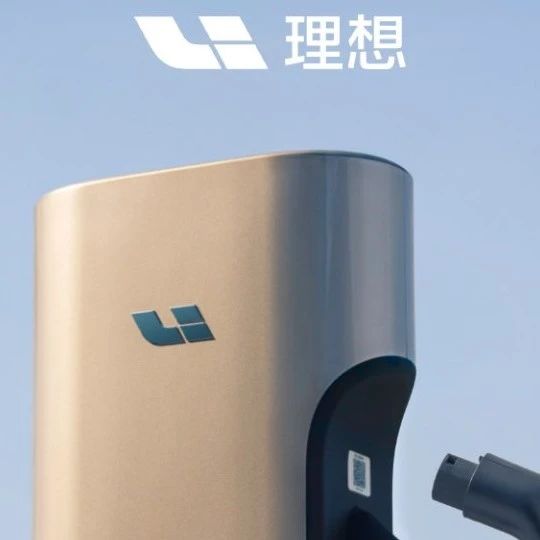
Group 1 - The core viewpoint of the article highlights the progress of the company's supercharging station construction, with a current total of 2852 stations and a target of over 4000 by the end of 2025 [1] - The completion rate for new supercharging stations this year has increased slightly from 49.45% to 49.49%, indicating steady progress towards the annual goal [1] - There are 182 days remaining in the year, and the company needs to build an average of 6.31 new stations daily to meet the year-end target [1] Group 2 - A new supercharging station has been completed in Changzhou, Jiangsu Province, specifically located at Le Yi Building in the Zhonglou District, featuring specifications of 4C × 6 [1]
除MEGA外, 理想25年6月交付成绩无疑是不佳的
理想TOP2· 2025-07-01 15:06
Core Viewpoint - The delivery performance of Li Auto's models in June 2025 is disappointing, particularly for the L series, which saw a significant decline in deliveries compared to May 2025, while the MEGA model experienced a substantial increase [2][6]. Delivery Data Summary - Estimated deliveries for June 2025 are as follows: - L6: 16,389 - L7: 8,250 - L8: 4,360 - L9: 4,968 - L789: 17,578 - MEGA: 2,312 - Compared to May 2025, the month-on-month changes are: - L6: -12.74% - L7: -17.63% - L8: -17.92% - L9: -13.65% - L789: -16.62% - MEGA: +132.6% [1][2]. Delivery Calculation Methodology - The delivery data for June 2025 was estimated based on the assumption that the average insurance figures for June 1-30 would be consistent with those from June 2-8. The estimated total insurance figures were then used to derive the delivery-to-insurance ratio, which was applied to calculate the estimated deliveries for each model [3]. Historical Context - The L series underwent a model change in March 2024, with the L789 model not surpassing the March 2024 delivery levels until September 2024. The L series only exceeded March 2024 levels again in December 2024 [4]. Yearly Comparison - In April 2024, L789 deliveries decreased by 14.3% compared to March 2024, while the L series saw a similar decline of approximately 14.8% in June 2025 compared to May 2025 [5]. Future Delivery Projections - A pessimistic estimate for L series deliveries in the second half of 2025 suggests monthly deliveries of 33,185, 36,095, 39,452, 34,792, 42,437, and 38,392, totaling 224,352 for the second half and 422,478 for the entire year [6]. Guidance and Performance Analysis - Li Auto provided a Q2 2025 delivery guidance lower limit of 123,000 units, with a June 2025 lower limit of 35,000 units. The company has a history of providing 19 delivery guidance updates, with only 4 aligning with the initial guidance on reporting day [6][7]. Reasons for Decline - Potential reasons for the decline in deliveries include: 1. Stricter commission policies implemented at the end of May and early June, which may have negatively impacted short-term sales but could be beneficial in the long term [8]. 2. Cancellation of high-interest and high-commission incentives. 3. Some potential customers are waiting for new models like YU7 and i8, particularly affecting L6 sales [8]. 4. Lack of clear division of responsibilities within the sales and product teams, leading to ineffective value communication [8]. 5. Recent changes in sales operations aimed at focusing on value delivery have not been effectively implemented [10]. Management and Sales Dynamics - Effective management at the store level is crucial for sales success, as store managers play a key role in guiding sales teams. The current sales pressure has led to a focus on short-term results rather than long-term value delivery [9][11]. Organizational Challenges - The recent organizational changes have not yet resolved the underlying issues of value communication and management clarity, which are essential for improving sales performance [12][13].