YOUNG财经 漾财经

Search documents
透视汾酒Q3财报:“高质量、稳增长”成关键词
YOUNG财经 漾财经· 2025-10-30 13:02
Core Viewpoint - The article highlights Shanxi Fenjiu's strong performance in Q3 2025, showcasing its ability to maintain growth amidst a challenging environment in the liquor industry, characterized by deep adjustments and increased competition [3][4][6]. Financial Performance - In Q3 2025, Shanxi Fenjiu achieved revenue of 8.96 billion yuan, a year-on-year increase of 4.05% [4]. - For the first three quarters of 2025, the company reported total revenue of 32.92 billion yuan, reflecting a growth of 5.00% [4]. - The net profit attributable to shareholders was 11.41 billion yuan, with a slight increase of 0.48% [4]. Strategic Strengths - Shanxi Fenjiu's growth is attributed to its robust strategic foundation, brand resilience, and operational capabilities, allowing it to solidify its position among the top three in the industry [5][6]. - The company has developed a clear product matrix, with core products generating 32.17 billion yuan in sales, up 5.54% year-on-year, which serves as a stabilizing force for its performance [7]. - The national expansion strategy has entered a harvest phase, with revenue from markets outside Shanxi reaching 21.81 billion yuan, a significant increase of 12.72% [8]. Market Positioning - The company has shifted its strategic focus from rapid growth to stable growth, emphasizing quality over speed, which is seen as a core competency in navigating industry cycles [10]. - The management has indicated that the most important marketing policy for 2025 is to prioritize stability over all else, reflecting a deep understanding of industry dynamics [10]. Future Outlook - The trend of consolidation in the liquor industry is expected to continue, with Shanxi Fenjiu poised to benefit from ongoing growth opportunities, particularly in southern markets [11]. - The company is also focusing on appealing to younger consumers and leveraging its historical and cultural strengths for international expansion [11].


京东“指责”抖音操纵平台舆论
YOUNG财经 漾财经· 2025-10-30 13:02
Group 1 - The core issue revolves around a 5 million yuan penalty notice sent by JD.com to Midea Group, which has sparked discussions about potential "choose one" practices in the market [3] - JD.com has denied the allegations of "choose one" practices, asserting that Midea has also clarified the misinformation surrounding the reports [3] - JD.com claims that the rumors have gained traction on platforms like Douyin and Toutiao, suggesting possible manipulation of public opinion and unfair competition by these platforms [3]


宗馥莉公开露面!
YOUNG财经 漾财经· 2025-10-29 12:33
Core Viewpoint - Zong Fuli has stepped down as the chairman of Wahaha Group and is now the president of Hongsheng Group, focusing on high-quality development and strategic planning for the future [3][5]. Group 1: Company Leadership Changes - Zong Fuli publicly appeared at a Hongsheng Group meeting on October 29, where she outlined work plans and discussed the company's progress and future tasks [3]. - Zong Fuli resigned from her positions at Wahaha Group on September 12, including her roles as legal representative, director, and chairman [5]. - Zhu Lidan, a key executive at Wahaha, has reportedly left her position, with the office already vacated, although Wahaha has not yet responded to this news [3][4]. Group 2: Strategic Focus and Goals - The Hongsheng Group's meeting emphasized that 2025 will be a critical year for promoting high-quality development amid a complex market environment [3]. - The company aims to achieve significant progress in product iteration, capacity enhancement, and quality control, with a focus on core business areas and technological advancements [3]. - In 2026, Hongsheng Group plans to deepen lean operations and maintain safety standards while pursuing new growth opportunities [3].

工信部点名爱奇艺、转转等企业:人工客服无法接通
YOUNG财经 漾财经· 2025-10-29 11:04
Core Viewpoint - The Ministry of Industry and Information Technology (MIIT) has identified issues with customer service accessibility for several internet companies, including iQIYI and Zhuanzhuan, highlighting the need for improvement in service capabilities [2] Group 1: Customer Service Issues - The MIIT's recent report on telecommunications service quality for Q3 2025 indicates that certain internet companies' customer service hotlines were found lacking [2] - Specific companies such as Sogou Browser and Dida Chuxing did not provide access to human customer service representatives, while iQIYI, Zhuanzhuan, and Sohu News had human customer service lines that were unreachable [2] - The MIIT has urged these companies to rectify the issues and enhance their service capabilities [2]


飞天茅台批价首次跌破1700元,机构称“白酒需求仍在磨底阶段”
YOUNG财经 漾财经· 2025-10-28 10:35
Core Viewpoint - The wholesale price of Feitian Moutai has dropped below 1700 yuan for the first time, indicating a continued decline in demand for liquor, which is still in a bottoming phase [2][3][6]. Price Trends - As of October 28, the wholesale price for 25-year Feitian Moutai has decreased to 1690 yuan per bottle, marking a historical low [2]. - The price has fallen significantly from over 2200 yuan per bottle at the beginning of the year, with a total decline of 500 yuan for the 25-year Feitian Moutai [3][4]. Retail Price Analysis - Current retail prices on various e-commerce platforms show that the 53-degree/500ml Feitian Moutai is priced around 1640 yuan per bottle [4]. - During the "Double 11" promotional period, the retail price remains stable, with online prices around 1900 yuan per bottle and offline prices around 1850 yuan per bottle [5]. Industry Insights - Multiple institutions have reported that the liquor industry is under pressure, with expectations of continued declines in sales and a need for companies to manage inventory effectively [5][6]. - The industry is currently in a phase of supply clearing, with expectations of accelerated adjustments in the third quarter [6]. - The new leadership at Moutai is expected to implement strategies to navigate the industry adjustment period, focusing on balancing traditional distributors and emerging channels [6].


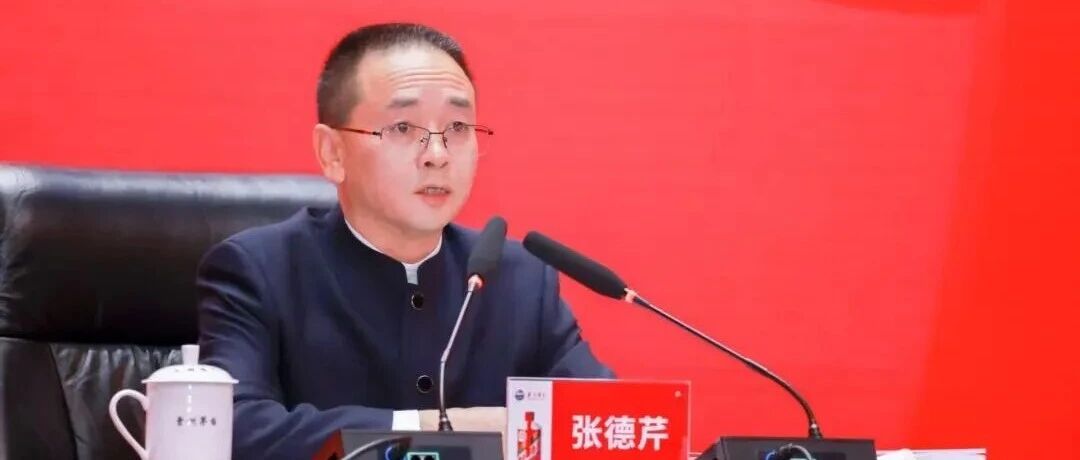
贵州茅台称张德芹在任职期间,忠实履职、务实敬业、辛勤付出,为公司高质量发展作出了积极贡献,董事会对张德芹表示衷心感谢
YOUNG财经 漾财经· 2025-10-27 12:29
Core Viewpoint - The announcement reveals that Zhang Deqin, the chairman of Kweichow Moutai Co., Ltd., has resigned due to work adjustments, effective immediately upon submission of his resignation report to the board [1] Summary by Sections - **Resignation Announcement** - Kweichow Moutai's board received a written resignation report from Chairman Zhang Deqin on October 27, 2025 [1] - Zhang Deqin has applied to resign from his positions as chairman, director, and relevant committee roles due to work adjustments [1] - **Acknowledgment of Contributions** - The company expresses gratitude for Zhang Deqin's dedicated service and contributions to the company's high-quality development during his tenure [1] - **Next Steps** - The company will convene a board meeting and a shareholders' meeting in accordance with legal regulations and the company's articles of association to elect a new chairman [1]
曝京东零售平台营销中心负责人邵京平被调岗,宋旸接任
YOUNG财经 漾财经· 2025-10-27 11:24
Core Viewpoint - The article reports on the reassignment of JD Retail Platform's Marketing Center head, Shao Jingping, to a new position, with Song Yang taking over the role, indicating a significant leadership change within the company [2][5]. Group 1 - Shao Jingping has been reassigned from his position as head of JD Retail Platform's Marketing Center, with Song Yang stepping in as his replacement [2]. - Sources indicate that Shao Jingping was still actively engaged in his role last week but has since been unable to carry out approval tasks this week [3]. - Shao Jingping previously held the title of Vice President at JD Group and was responsible for the operations and marketing of the JD Retail Platform [4]. Group 2 - Earlier this year, JD Group announced the restructuring of its retail search recommendation and advertising technology teams, which resulted in a reduction of Shao Jingping's management authority [4]. - Following the restructuring, the search recommendation team was moved under the leadership of Hu Xihe, while the advertising technology team remained under Shao Jingping's supervision [4]. - In March, JD Group officially dissolved its brand department, redistributing its responsibilities and personnel to the marketing department, with Song Yang taking over the role previously held by Su Cong [5][6].

基金经理“老鼠仓”被罚50万元,整合漩涡中海富通急需补齐合规短板
YOUNG财经 漾财经· 2025-10-27 11:15
Core Viewpoint - The article discusses the recent "mouse warehouse" incident involving a fund manager at Hai Fu Tong, highlighting compliance issues and the need for regulatory oversight in the public fund industry [1][5]. Group 1: Incident Overview - Fund manager Yang Ningjia was fined 500,000 yuan for using non-public information to facilitate trading activities for another individual, Chen Chongdong, during his tenure [1][3]. - Yang's performance as a fund manager was poor, with three funds under his management showing significant negative returns, including -19.69% and -37.79% [3]. Group 2: Regulatory Environment - The article emphasizes that in the current big data era, regulatory bodies monitor fund transactions and manager behaviors closely, making it increasingly difficult to engage in unethical practices without detection [4]. - The incident serves as a warning for Hai Fu Tong, which is undergoing significant restructuring and must address compliance shortcomings [5]. Group 3: Company Background and Restructuring - Hai Fu Tong, established in 2003, is a Sino-foreign joint venture with a registered capital of 300 million yuan, and is currently undergoing a merger with Guotai Junan Securities [5][6]. - The management structure of Hai Fu Tong is changing, with recent leadership shifts indicating a potential merger with Huashan Fund, as both companies are now under the control of Guotai Junan [6]. Group 4: Fund Management Performance - As of the second quarter of this year, Hai Fu Tong managed 243.39 billion yuan in public funds, while Huashan Fund managed over 740 billion yuan, indicating a significant disparity in asset management scale [6]. - Despite the lower management scale, Hai Fu Tong holds valuable licenses for managing enterprise annuities and social security funds, which are attractive to industry peers [6][8]. Group 5: Future Implications - The merger of Hai Fu Tong and Huashan Fund is likely to retain the "Hai Fu Tong" brand due to regulatory requirements, suggesting a strategic direction for the combined entity [7]. - However, Hai Fu Tong's performance in managing enterprise annuities has been subpar, ranking last among peers in terms of returns, which could impact its reputation post-merger [8].

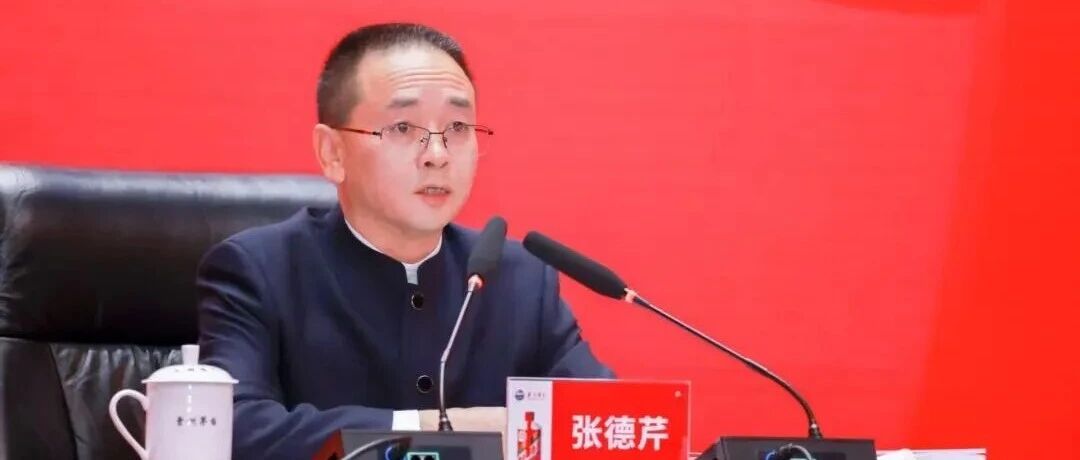
张德芹卸任茅台集团董事长,在位仅一年半
YOUNG财经 漾财经· 2025-10-27 05:38
Core Viewpoint - The recent leadership change at Kweichow Moutai Group, with Zhang Deqin stepping down as chairman after only 18 months, reflects ongoing instability in the company's management amidst a challenging environment for the liquor industry [2][6]. Group 1: Leadership Changes - Zhang Deqin served as chairman for a brief period, from April 2024 to October 2025, after joining Kweichow Moutai in 1995 [2]. - The new chairman, Chen Hua, previously served as the director of the Guizhou Provincial Energy Bureau and has a background in the energy sector [2][8]. - Kweichow Moutai has experienced significant turnover in leadership, with five chairmen in seven years since 2018, indicating potential governance issues [6]. Group 2: Company Performance - During Zhang Deqin's tenure, Kweichow Moutai achieved a total revenue of 174.14 billion yuan in 2024, marking a year-on-year increase of approximately 15.66% [3]. - The net profit for the same period was around 86.23 billion yuan, reflecting a growth of about 15.38%, successfully meeting the annual growth target of 15% [3]. - In the first half of 2025, the company reported actual revenue of 91.09 billion yuan, a year-on-year increase of 9.16%, and a net profit of 45.40 billion yuan, up 8.89%, aligning with market expectations [5]. Group 3: Industry Context - The liquor industry is currently facing difficulties, prompting Kweichow Moutai to lower its annual operating target to 9% [4]. - The company has emphasized the importance of product quality and production safety, which are critical for maintaining its high-end brand value [9]. - Chen Hua's management philosophy focuses on safety, stability, and structural optimization, which may be crucial for Kweichow Moutai's future development amid market challenges [9].
泡泡玛特股价连跌6天
YOUNG财经 漾财经· 2025-10-24 10:40
Core Viewpoint - The article discusses the recent performance of Pop Mart (09992.HK), highlighting the launch of new collectible figures and the subsequent decline in stock price, raising concerns about future revenue growth [3][5][6]. Product Launch and Sales Performance - On October 23, Pop Mart launched a new series of collectible figures to celebrate its 15th anniversary, featuring a lineup of popular characters [3]. - The hidden variant "Sweetheart Party" based on MOLLY saw a price increase from 69 yuan to 519 yuan, reflecting a premium of 6.5 times, while other regular variants had premiums ranging from 1.3 to 1.9 times [3]. - The new series did not perform as well as previous hits, such as the "WHY SO SERIOUS" series, which had a hidden variant that increased from 159 yuan to 1999 yuan, a premium of 11.6 times [3]. Market Trends and Consumer Behavior - The lower premium on the new figures is attributed to the nature of the collectible market, where buyers are often deep fans of the IP, and the use of lower-cost PVC materials makes the figures more affordable [4]. - Pop Mart's collaboration with the popular series "Wednesday" resulted in a highly sought-after pendant, with the North American version seeing a price increase from 399 yuan to 5499 yuan, a premium of 12.8 times [5]. Stock Performance and Investor Sentiment - Since September, Pop Mart's stock price has declined nearly 30%, with significant drops occurring on October 21 and 23, including a nearly 10% drop on the latter date, marking the largest decline in six months [5]. - As of October 24, the stock closed at 230.4 HKD per share, down 0.86% [6]. - Concerns have been raised by analysts regarding the potential peak in revenue growth for Pop Mart, with expectations of slowing growth momentum starting next year [5][6]. Financial Performance - For the third quarter of 2025, Pop Mart reported an overall revenue increase of 245% to 250%, with China revenue growing by 185% to 190% and overseas revenue by 365% to 370% [6]. - Online sales in China saw a significant increase of 300% to 305%, while offline sales grew by 130% to 135% [6]. - Revenue growth varied by region, with Asia-Pacific up 170% to 175%, the Americas up 1265% to 1270%, and Europe and other regions up 735% to 740% [6].