YOUNG财经 漾财经

Search documents
影石刘靖康:在勇气与疯狂之间
YOUNG财经 漾财经· 2025-12-22 10:43
Core Viewpoint - Liu Jingkang, a 90s entrepreneur, demonstrates courage by challenging global market giants and launching innovative projects like drones despite facing significant pressure [4][6]. Group 1: Company Overview - Liu Jingkang founded Insta360, which has become the global market leader in panoramic cameras, achieving a gross margin exceeding 50% from 2022 to Q1 2025, nearly double the average for similar companies [6]. - The company has shown consistent revenue growth, with quarterly revenues increasing by over 40% [6]. Group 2: Product Development and Market Strategy - Insta360's first product, Nano, launched in 2016, addressed transmission speed issues that competitors like Samsung and Ricoh had not solved [11]. - The company has expanded its product line to include action cameras, video conferencing cameras, and automatic editing software, with the ONE R model recognized in TIME magazine's "Invention of the Year" list in 2020 [11]. - The AcePro product line, launched in 2021, has grown from contributing 3% to 10.44% of the company's revenue by the end of 2023, showcasing the company's ability to identify and meet deeper user needs [14]. Group 3: Competitive Landscape - Insta360 competes against major players like GoPro and DJI in the action camera market, with a focus on innovative solutions that address specific user demands [11][14]. - Liu Jingkang emphasizes learning from both successful and unsuccessful strategies of competitors to avoid pitfalls in product development [12][13]. Group 4: Leadership and Company Culture - Liu Jingkang is known for his hands-on approach to leadership, often making significant decisions about product development, even at the cost of previous investments [13]. - The company culture encourages creativity and innovation, with Liu Jingkang actively involved in brainstorming product ideas during the early stages of the company [15].


霸王茶姬奇谭
YOUNG财经 漾财经· 2025-12-19 10:10
Core Viewpoint - The article discusses the remarkable journey of Zhang Junjie, the founder of Bawang Chaji, highlighting his rise from humble beginnings to becoming a prominent figure in the tea beverage industry, alongside his recent marriage to Gao Haichun, a notable figure in the photovoltaic sector [4][12]. Group 1: Zhang Junjie's Background - Zhang Junjie has a compelling backstory, having faced significant hardships, including becoming an orphan at a young age and living in poverty before transforming a struggling tea shop into a successful brand [5][7]. - His educational background is ambiguous, with claims of starting to learn to read at 18, yet he has held significant positions in companies, showcasing a paradoxical narrative of success despite limited formal education [8][10]. - Investors have expressed both admiration and skepticism regarding his unconventional journey, noting his ability to articulate industry insights and strategic decisions effectively [10][11]. Group 2: Bawang Chaji's Business Strategy - Bawang Chaji differentiates itself by focusing on high-quality fresh milk tea while avoiding the costly fruit tea segment, positioning itself in the mid-to-high-end market with prices ranging from 15 to 20 yuan [16]. - The company has adopted a strategy of limited new product launches, averaging only 17 new products per year compared to competitors, which have significantly higher averages [17]. - Despite operating at a loss, Bawang Chaji has aggressively expanded its store count, aiming to open over 1,000 new stores in 2022 alone, resulting in a total of 7,338 stores by the end of the third quarter of this year [17][18]. Group 3: Financial Performance and Challenges - Bawang Chaji reported a net income of 3.288 billion yuan in the third quarter, reflecting a 9.4% year-over-year decline, attributed to increased price sensitivity among consumers due to competitive market conditions [19]. - The company has recognized the need to diversify its product offerings to stimulate consumer interest and plans to enhance its product matrix and adjust its franchise model to improve revenue sharing [19][20]. - The brand's rapid expansion has led to a decline in same-store sales, with a reported 28.3% decrease in monthly average GMV in the Greater China region [18]. Group 4: Personal and Professional Connections - Zhang Junjie has cultivated a high-value network, which has facilitated Bawang Chaji's financing and growth, including connections with influential figures in various industries [13][14]. - His marriage to Gao Haichun, a prominent figure in the photovoltaic industry, symbolizes a union of new consumer and traditional energy sectors, potentially enhancing his business prospects [4][15]. Group 5: Company Culture and Leadership - Bawang Chaji promotes a culture of efficiency and standardization, with a focus on optimizing single product offerings to enhance operational effectiveness [19][20]. - The company embraces a competitive spirit, drawing inspiration from successful corporate cultures, which is reflected in its internal motivational practices [20].

国盾量子董事长吕品去世,警方通报:吕某(男,46岁)在办公室内失去意识,经120现场确认,吕某已无生命体征,已排除案件
YOUNG财经 漾财经· 2025-12-18 15:06
Group 1 - The chairman of GuoDun Quantum, Lv Pin, has passed away at the age of 46, confirmed by local police who stated that he lost consciousness in the office and was pronounced dead at the scene [2][5] - In March 2024, China Telecom, through its subsidiary Zhongdian Quantum Group, invested 1.775 billion yuan to take control of GuoDun Quantum [2] - The fourth board meeting of GuoDun Quantum is scheduled for May 30, 2025, where Lv Pin was elected as the chairman of the board [2]


康师傅换帅,“80后”CEO亮相
YOUNG财经 漾财经· 2025-12-18 12:13
资料图。本文来源 :长安街知事 康师傅换帅, "80后"CEO亮相 12月18日,康师傅控股发布公告称,原首席执行官陈应让将于2025年12月31日服务合约届满后 正式退休。董事会委任现任执行董事、康师傅饮品控股有限公司董事长魏宏丞为新任CEO,自 2026年1月1日起生效。 1996年2月,康师傅在香港联合交易所有限公司上市。 2012年3月,康师傅与百事集团达成战略合作,开始独家负责制造、灌装、包装、销售及分销百 事公司在中国地区的非酒精饮料。 ■ 图源:港交所 据公开资料,此次退休的陈应让出生于 1963年 ,毕业于台湾大学化学工程系。 他曾在宝洁公 司工作,拥有25年跨国研发管理经验,2013年2月加入康师傅,负责研发业务。2021年1月,他 出任康师傅集团CEO,并于2023年入选福布斯中国最佳CEO榜单。 接替康师傅CEO职位的魏宏丞,出生于1982年,是康师傅董事会主席及执行董事魏宏名的胞 弟,也是康师傅创始人魏应州的三儿子。 公告披露, 魏宏丞 本科毕业于伦敦帝国学院,后获得哈佛商学院工商管理硕士学位。 2015年2月, 魏宏丞获任康师傅饮品控股有限公司 董事,2019年担任康师傅饮品董事长。 ...

美团的“战略收敛”
YOUNG财经 漾财经· 2025-12-18 11:10
Core Viewpoint - Meituan is undergoing a strategic contraction, closing down non-core businesses like community group buying and B2C e-commerce, to focus on its core local services and improve efficiency in a highly competitive environment [3][10][16]. Business Strategy Changes - The closure of Meituan's community group buying service and B2C e-commerce reflects a shift in strategy post the intense competition in the food delivery sector, indicating a move from expansion to defense [10][16]. - Meituan's historical advantage in the food delivery market, built on a large-scale real-time dispatch system, is being challenged by competitors like Alibaba and JD.com, leading to a reassessment of strategic priorities [11][14][15]. Market Share and Financial Performance - Meituan's market share in food delivery dropped from 65% to 50% due to increased competition, while its adjusted net loss reached 16 billion yuan in Q3, marking the largest quarterly loss since its IPO [15][24]. - Despite maintaining over 70% market share in high-ticket orders, Meituan's profit pool has been significantly impacted, leading to a strategic focus on core business areas [15][24]. User and Merchant Engagement - Meituan is shifting its subsidy strategy from broad user acquisition to focusing on high-value customers, promoting membership benefits to enhance user retention [17][19]. - The introduction of a refined membership system aims to better manage user value and consumption preferences, moving away from indiscriminate subsidies [19][20]. AI Strategy Adjustments - Meituan's AI strategy is being recalibrated, with a focus on core business applications rather than broad exploratory initiatives, as evidenced by the impending shutdown of its AI chat application, WowAI [26][27][30]. - The company is concentrating on integrating AI into its main operations to drive efficiency and profitability, reflecting a pragmatic approach in light of recent financial pressures [30][34]. Competitive Landscape - The competitive landscape in local services is intensifying, with Douyin (TikTok) rapidly gaining market share in the local life services sector, prompting Meituan to enhance its support for merchants and strengthen its supply-side advantages [24][25][34]. - Meituan's historical battles have shaped its operational strategies, emphasizing the need for efficiency and technology-driven growth in the face of fierce competition [35][36][37].
蒙牛如何决胜沙场?
YOUNG财经 漾财经· 2025-12-17 12:30
Core Viewpoint - Mengniu Dairy is facing unprecedented challenges in a competitive landscape, as evidenced by its declining revenue and market share compared to its main competitor, Yili. The company is actively seeking strategies to navigate these difficulties and improve its performance [2][11]. Financial Performance - In the first half of 2025, Mengniu reported revenue of 41.567 billion yuan, a year-on-year decline of 6.9%, and a net profit of 2.13 billion yuan, down 16.4% [2][3]. - The revenue gap between Mengniu and Yili has widened, exceeding 20 billion yuan, with Mengniu's market capitalization at 58.8 billion HKD (approximately 53.5 billion yuan), less than one-third of Yili's 182.4 billion yuan [2][3]. Industry Context - The dairy industry in China is experiencing a structural adjustment phase, with a slight decrease in production and stagnant demand. In the first half of 2025, national dairy product output was 14.33 million tons, a year-on-year decrease of 0.3% [3][4]. - Consumer confidence remains low, contributing to a decline in liquid milk consumption, which fell by 3.2% in 2024, ending six years of growth [3][4]. Raw Milk Prices - Raw milk prices have been on a downward trend, with the average price in 2024 at 3.32 yuan/kg, down 13.54% year-on-year, and further dropping to around 3.04 yuan/kg in the first half of 2025, the lowest in five years [4][5]. - While lower raw milk prices have improved Mengniu's gross margin, they have also negatively impacted revenue from upstream businesses reliant on raw milk sales [5][6]. Competitive Landscape - Mengniu and Yili maintain a duopoly in the dairy market, but competition is intensifying. From 2020 to 2024, Yili's revenue compound annual growth rate was approximately 4.5%, compared to Mengniu's 3.9% [7][8]. - In the first half of 2025, Yili's liquid milk revenue was 36.13 billion yuan, down 2.06%, while Mengniu's liquid milk revenue was 32.19 billion yuan, down 11.2% [8][9]. Strategic Initiatives - Mengniu's management has introduced the "334 strategy" to address industry challenges, focusing on supply-demand imbalances, insufficient product diversity, and weak supply chain resilience [11][12]. - The company is investing in technology and product innovation, with recent developments in high-value products and a focus on expanding its B2B business through partnerships with major clients [11][12]. Management Changes - In 2025, Mengniu appointed a new CFO, signaling a commitment to enhancing operational efficiency and capital management [12]. - The management has acknowledged the prolonged challenges in the dairy cycle and adjusted revenue guidance from low single-digit growth to mid-high single-digit decline [12][13]. Industry Outlook - Experts suggest that the dairy price cycle's bottom has been reached, but a significant recovery may take up to a year. The timing of industry recovery will be crucial for Mengniu to regain market share [13].

细看百度财报
YOUNG财经 漾财经· 2025-12-16 11:50
Core Viewpoint - Baidu's recent financial performance reflects significant challenges, particularly in its core online marketing revenue, which has seen a continuous decline, raising questions about its future growth potential in the face of shifting user behavior and competition from other platforms [3][4][6]. Revenue Structure Adjustment - Baidu's online marketing revenue for Q3 2025 was 153 billion yuan, a substantial decline of 18% year-on-year, marking the sixth consecutive quarter of negative growth [4]. - In contrast, the overall Chinese internet advertising market grew by 6.4% year-on-year, reaching 1,875.1 billion yuan, with competitors like Tencent and Kuaishou showing strong revenue growth [5]. User Attention Shift - The decline in Baidu's advertising business is attributed to a shift in user attention towards platforms like Douyin and Xiaohongshu, which offer more engaging content and direct transaction capabilities [6][8]. - Baidu's monthly active users (MAU) grew only 1% year-on-year to 708 million, while Douyin's MAU reached 936 million, growing 14.7% [6]. AI and Business Transformation - Baidu is attempting to pivot towards AI-driven marketing solutions, with AI-native marketing services revenue increasing by 262% to 28 billion yuan, although this growth includes a shift of traditional advertising budgets rather than new market expansion [8][12]. - The company has restructured its business to focus on AI, with AI-related revenues growing over 50% year-on-year to approximately 100 billion yuan, accounting for nearly 40% of core revenue [10]. Profitability Challenges - Baidu reported a net loss of 112.32 billion yuan for Q3 2025, primarily due to a 161.90 billion yuan impairment of long-term assets, which was a strategic move to optimize its AI infrastructure [9]. - The company's sales costs rose by 12% year-on-year to 183 billion yuan, driven by increased investments in smart cloud infrastructure and content costs [9]. Autonomous Driving Business - Baidu's autonomous driving service, "Luobo Kuaipao," saw a significant increase in orders, reaching 3.1 million, with a year-on-year growth rate accelerating to 212% [12][13]. - The service has achieved full autonomous operation in all major cities in mainland China and is expanding internationally, although it has not yet reached profitability [13]. Market Sentiment and Future Outlook - Despite Baidu's short-term financial struggles, several investment firms maintain positive ratings, viewing the company as transitioning from a traditional search giant to an AI-driven technology group [14]. - Analysts highlight the potential for Baidu's AI capabilities and autonomous driving business to drive future growth, with significant valuations assigned to these segments [15][16].

高管减持与大额回购,贝壳站到新路口
YOUNG财经 漾财经· 2025-12-15 12:36
Core Viewpoint - The article discusses the recent stock sell-off by Beike's management and the company's significant share buyback efforts, indicating a pivotal moment for Beike amid industry challenges and strategic transformations [3][4][5]. Management Share Changes - Beike's co-founder and CEO Peng Yongdong plans to sell 1.4 million ADS, equivalent to 4.2 million Class A ordinary shares, valued at approximately $24.05 million (around 170 million RMB) to fulfill a previously announced donation plan of 9 million shares [4][6]. - This marks Peng's first share reduction since Beike's IPO in 2020, leading to a drop in Beike's stock prices on both Hong Kong and US markets [4][5]. Share Buyback Initiatives - Beike has accelerated its share buyback program, spending nearly $30 million in December alone, with a total buyback amount reaching $280 million in Q3 2023, a 38.3% year-on-year increase [5][18]. - Despite these buybacks, Beike's stock price remains significantly lower than its peak of nearly $80 per share at the time of its IPO [5]. Financial Performance Overview - Beike's financial performance has been under pressure, with a notable decline in net income and profitability in recent years. In 2021, net income grew by nearly 15%, but profits turned to losses [9]. - In 2022, net income decreased by 25%, with net losses widening from 500 million RMB to 1.4 billion RMB. However, in 2023, net income increased by 28%, but operating profit and net profit were adjusted downward for 2024 [9][12]. Business Segment Analysis - The core business segments, including existing and new housing, are under pressure, contributing to overall profitability challenges. The rental service segment is the only growth area, with a 45.3% increase in net income [12][16]. - The existing housing and new housing segments accounted for 55% of total revenue, but their declining performance is impacting Beike's overall profitability [13][16]. Strategic Adjustments - Beike has been diversifying its business strategy since 2021, introducing home decoration and rental services, and later adding residential development to mitigate reliance on traditional real estate brokerage [17]. - Despite these efforts, new business segments have not yet achieved significant scale or profitability, and the company is facing substantial operational pressures, including rumors of large-scale layoffs [17][18]. Management Response to Challenges - In response to performance pressures, Beike has initiated a share buyback program to restore investor confidence, with a total buyback amount of approximately $2.3 billion since the program's inception [18]. - The management's decision to sell shares for charitable purposes partially addresses previous controversies regarding executive compensation amid declining performance [19].
飞天茅台批价跌破1499元,机构称白酒行业持续寻底,拐点何时来?
YOUNG财经 漾财经· 2025-12-12 10:44
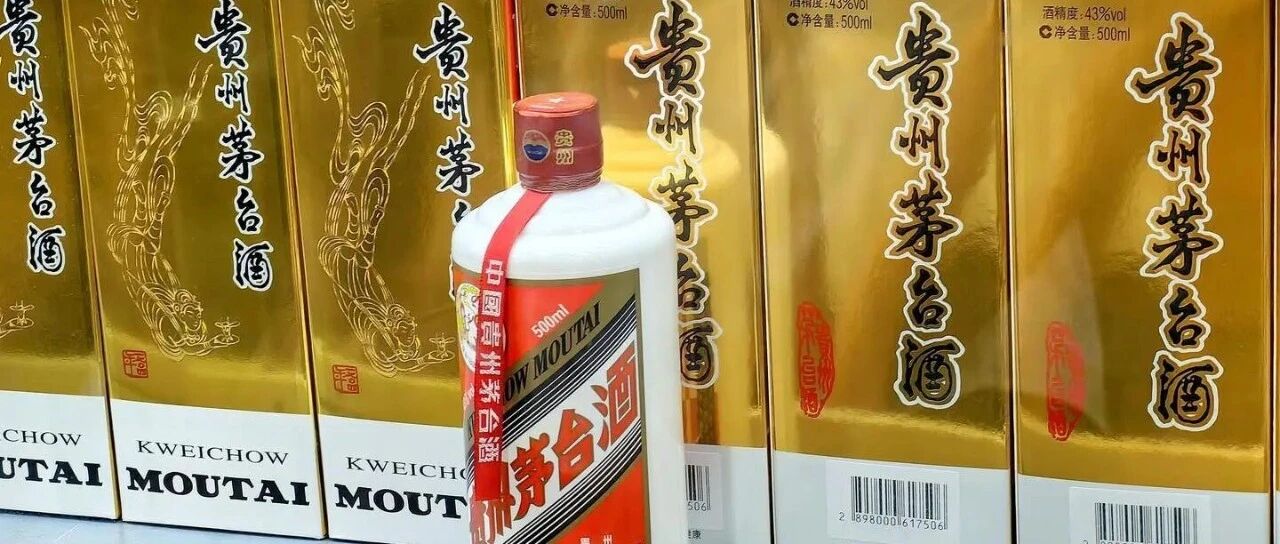
飞天茅台批价跌破1499元,机构称白酒行业持续寻 底,拐点何时来? 飞天茅台批发价跌破官方指导价1499元/瓶,再创新低。 12月12日,据第三方平台"今日酒价"披露的各大名酒批发参考价显示,25年飞天散瓶(53 度/500ml)的批发参考价较前一日下跌15元,报1485元/瓶;25年飞天原箱较前一日下跌15元, 报1495元/瓶。 资料图。本文来源 :界面新闻 | 茅台飞天 | | | 2025年12月12日 (公众号: 今日酒价) | | --- | --- | --- | --- | | 品名 | 规格 | 昨日行情 | 今日行情 | | ② 25年飞天(原) | 53度/500ml | 1510 | 1495 I | | ② 25年飞天(散) | 53度/500ml | 1500 | 1485 ↓ | | 24年飞天(原) | 53度/500ml | 1580 | 1580 | | 24年飞天(散) | 53度/500ml | 1550 | 1550 | | 23年飞天(原) | 53度/500ml | 1800 | 1800 | | 23年飞天(散) | 53度/500ml | 1700 | 170 ...

荣耀公司品牌营销总裁、首席营销官郭锐离职
YOUNG财经 漾财经· 2025-12-12 09:58
荣耀公司品牌营销总裁、首席营销官郭锐离职 12月12日,界面新闻获悉,荣耀公司EMT成员、公司高级副总裁、品牌营销总裁兼首席营销官 郭锐已确认从荣耀离职。公开资料显示,郭锐曾任华为终端中国区CMO,于2020年加入新荣耀 担任集团CMO。 ■ 资料图。本文来源 :界面新闻 ...