半导体芯闻

Search documents
华大九天眼里的AI+EDA
半导体芯闻· 2025-07-25 09:55
Core Viewpoint - The domestic EDA industry has made significant progress in recent years, driven by a strong determination to develop local capabilities in response to international pressures, despite still facing substantial gaps compared to established global players like Synopsys and Cadence [1][3][4]. Group 1: Current State of Domestic EDA - Domestic EDA companies have increased from 1,000 to approximately 7,000 personnel, achieving an 80% coverage of local EDA products [4]. - There are over 110 EDA companies in China, reflecting a strong enthusiasm for developing domestic EDA capabilities [3]. - The investment in domestic EDA has surged post-2020, with a notable increase in the number of companies and personnel involved in the sector [3][4]. Group 2: Challenges and Gaps - The gap between domestic EDA and international leaders is significant, with the latter having a head start and deeper investment in R&D and acquisitions [3]. - Domestic EDA tools still face challenges in functionality, performance, and user experience compared to established products [4]. Group 3: Strategic Initiatives by Huada Jiutian - Huada Jiutian is focusing on self-research, collaborative development, and mergers to strengthen its position in the EDA market [4]. - The company has developed a full suite of EDA tools across various domains, including analog, storage, and RF circuit design [4][5]. Group 4: AI Integration in EDA - EDA is becoming a target for AI transformation, with major international players already experimenting with AI to enhance their tools [8]. - Huada Jiutian has also invested in machine learning and aims to integrate AI into its EDA offerings, focusing on creating a unified structure and intelligent systems [8][9]. Group 5: Product Innovations - Huada Jiutian has introduced tools like Empyrean Andes® Power, which automates the design process, significantly improving efficiency and reducing manual errors [9][10]. - The new platform, Empyrean PyAether®, supports a wide range of chip design needs and offers over 12,000 Python API interfaces for automation [10][11]. Group 6: Future Outlook - The company aims to build a comprehensive service ecosystem that includes tools from other EDA companies, ensuring data security and privacy for clients [11]. - Huada Jiutian is also developing foundational IPs and plans to maintain a dual focus on EDA and IP development for future growth [13].


“预”见未来 | 第二十五届中国工博会观众登记火热上线
半导体芯闻· 2025-07-24 10:21
Group 1 - The 25th China International Industry Fair (CIIF 2025) will be held from September 23 to 27, 2025, at the National Exhibition and Convention Center in Shanghai [1][19] - CIIF 2025 will feature nine specialized exhibitions, including CNC Machine Tools and Metal Processing, Industrial Automation, Robotics, Smart Energy, New Generation Information Technology and Applications, Future Mobility, Green Low-Carbon, Technological Innovation, and New Materials Industry [2] Group 2 - Pre-registration for attendees is now open, allowing individuals to receive a free ticket worth 50 yuan [2] - The pre-registration process includes options for both individual and group visitors, with specific deadlines for registration [9][14] - Group visitors can manage member information through a management panel and must bring valid identification for entry [15][18]
特朗普,我本想拆分英伟达
半导体芯闻· 2025-07-24 10:21
如果您希望可以时常见面,欢迎标星收藏哦~ 来源:内容 编译自 theverge 。 不久前,唐纳德·特朗普总统甚至还没听说过全球市值最高的科技公司英伟达。但自从他了解到这 家人工智能芯片巨头后,他说他想把它拆分掉。 "在我还没弄清楚现实情况之前,我就说,'我们要拆散他',"特朗普今天在华盛顿特区举办的一 场活动上谈到他的新人工智能行动计划时回忆道。他讲述了一段似乎是他和一位未透露姓名的顾 问之间的对话,这位顾问告诉他,拆散英伟达"非常困难"。 我说:"为什么?"我说:"他占据了多少市场份额?" 他们说道:"先生,他已经 100% 了。" "他到底是谁?他叫什么名字?" "他的名字是黄仁勋,来自英伟达。" 点这里加关注,锁定更多原创内容 *免责声明:文章内容系作者个人观点,半导体芯闻转载仅为了传达一种不同的观点,不代表半导体芯闻对该 观点赞同或支持,如果有任何异议,欢迎联系我们。 推荐阅读 10万亿,投向半导体 芯片巨头,市值大跌 黄仁勋:HBM是个技术奇迹 Jim Keller:RISC-V一定会胜出 全球市值最高的10家芯片公司 我说:"Nvidia 到底是什么?我以前从未听说过。" 他说:"先生,您不会想 ...

高光时刻倒计时!湾芯奖报名即将截止,错过再等一年!
半导体芯闻· 2025-07-24 10:21
Group 1 - The Bay Area Semiconductor Award (湾芯奖) is a prestigious recognition event focusing on the entire semiconductor industry chain, aiming to honor outstanding contributions in technology breakthroughs, product innovation, and ecosystem building [1][49] - As of July 23, 115 industry leaders have registered for the award, highlighting the competitive nature of the event [1] - The award ceremony will take place from October 15 to 17, 2025, at the Shenzhen Convention Center, gathering top players in the semiconductor industry [47][77] Group 2 - Ningbo Jiangfeng Electronic Materials Co., Ltd. specializes in ultra-pure materials for semiconductor manufacturing, achieving significant technological breakthroughs and becoming a major supplier for global leading wafer manufacturers [4] - Suzhou Nordson Electronic Equipment Co., Ltd. is part of Nordson Corporation, which has over $2.1 billion in annual revenue and provides comprehensive testing and inspection solutions for SMT and semiconductor clients [6] - Zhihua Machinery (Shanghai) Co., Ltd. focuses on high-precision manufacturing equipment for the semiconductor and electronic components industries, utilizing advanced technologies [8] Group 3 - Guangwei Semiconductor Materials (Ningbo) Co., Ltd. produces advanced semiconductor target materials, entering the TSMC 3nm supply chain and supplying well-known wafer fabs [10] - Beijing Jingyi Automation Equipment Technology Co., Ltd. manufactures high-end equipment for the semiconductor industry, including temperature control devices and wafer handling equipment [12] - Tianjin Greenling Gas Co., Ltd. is a leading producer of high-purity electronic specialty gases, with over 20 years of experience in the industry [14] Group 4 - Canxin Semiconductor (Shanghai) Co., Ltd. offers customized chip solutions and aims to provide high-value, differentiated solutions for clients [16] - Shanghai Hongming Supply Chain Co., Ltd. is a leader in supply chain services for the semiconductor industry, with logistics centers across 17 cities [17] - Shenzhen Anke Technology Co., Ltd. specializes in semiconductor testing and programming equipment, enhancing testing efficiency for clients [24] Group 5 - Fujian Del Technology Co., Ltd. focuses on fluorine chemical materials and semiconductor wet electronic chemicals, with a registered capital of 1.039 billion yuan [29] - Zhejiang Fulede Quartz Technology Co., Ltd. produces high-purity quartz products for semiconductor applications, established in October 2020 [31] - Shenzhen Zhuoxing Semiconductor Technology Co., Ltd. specializes in high-precision semiconductor mounting equipment, leveraging over 20 years of industry experience [41]
印度半导体,战略转变
半导体芯闻· 2025-07-24 10:21
Core Viewpoint - India's semiconductor development is undergoing a transformation, moving from vision to actionable plans, with investments expected to exceed $15 billion by the second half of 2025 [1] Group 1: Government Initiatives and Support - The Indian government has implemented a $10 billion national semiconductor incentive program, transitioning from a policy document to a budget execution plan, with several high-impact projects approved and initial funding disbursed by mid-2025 [1][2] - State governments are accelerating project preparations by expediting land allocation and utility supply, establishing single-window services for semiconductor investments, and providing subsidies for cleanroom infrastructure and high-tech equipment [2] Group 2: Strategic Focus and Market Positioning - India is focusing on strategic niche markets such as analog, power semiconductors, and outsourced semiconductor assembly and testing (OSAT), aiming to become a key player in the global chip supply chain [1] - The establishment of advanced packaging and manufacturing units in India reflects its serious value proposition in the current geopolitical landscape, with multiple projects expected to be operational or in early stages by the end of 2025 [2] Group 3: Talent and Capability Development - There is a significant talent gap in critical areas such as lithography technology, device physics, and analog design, necessitating both long-term skill development and targeted recruitment of foreign talent [3] Group 4: Supply Chain Challenges and Opportunities - Over 80% of key semiconductor materials are currently imported, with customs delays and ongoing supply chain disruptions posing significant challenges [4] - The semiconductor industry in India is not only building manufacturing capacity but also enhancing capability development, with local firms expanding production of high-precision tools and automation equipment [2] Group 5: Future Outlook and Strategic Execution - The semiconductor industry in India is poised for a vibrant new chapter by the second half of 2025, with numerous opportunities for implementation, emphasizing the need for collaboration with contractors and ecosystem partners to localize operations and leverage production-related incentives [4] - The existence of incubated projects will lay the foundation for a global competitive ecosystem based on strategic intent and industrial execution, presenting a resilient opportunity for long-term participants in the Indian semiconductor value chain [4]
日本芯片设备,继续卖爆
半导体芯闻· 2025-07-24 10:21
Core Viewpoint - The Japanese semiconductor manufacturing equipment sales continue to thrive, with significant growth expected in the coming years, driven by strong demand in AI and advanced technology sectors [2][4][5]. Group 1: Sales Performance - In June 2025, Japan's semiconductor equipment sales reached 404.59 billion yen, marking a 17.6% increase year-over-year and achieving a historical high since 1986 [2]. - For the first half of 2025, total sales amounted to 2 trillion 559.18 billion yen, a 20.0% increase compared to the same period last year, setting a new record [3]. - The global market share of Japanese semiconductor equipment stands at 30%, making it the second-largest after the United States [4]. Group 2: Future Projections - The sales forecast for Japanese semiconductor equipment in the fiscal year 2025 is revised upwards to 4 trillion 863.4 billion yen, a 2.0% increase from the previous estimate, continuing a trend of record sales [4]. - Global semiconductor manufacturing equipment sales are projected to reach $125.5 billion in 2025, a 7.4% year-over-year increase, with further growth expected in 2026 [5]. - The wafer fabrication equipment (WFE) sector is expected to grow by 6.2% in 2025, reaching $110.8 billion, driven by demand in foundry and memory applications [6]. Group 3: Sector-Specific Insights - The backend equipment sector is anticipated to see a 23.2% increase in sales in 2025, reaching $9.3 billion, following a strong recovery in 2024 [7]. - NAND device sales are expected to grow by 42.5% in 2025, reaching $13.7 billion, supported by advancements in 3D NAND technology [10]. - By 2026, China, Taiwan, and South Korea are projected to remain the top destinations for semiconductor equipment spending, with China leading despite a forecasted decline from record levels in 2024 [11].
芯江湖•浙大派:一支"严门"子弟的CPU风云录
半导体芯闻· 2025-07-24 10:21
Group 1 - The article discusses the rapid evolution of the RISC-V architecture and its significance in the semiconductor industry, highlighting that changes in the next five years will be faster than the past decade [3][34]. - Key figures in the RISC-V ecosystem, such as Dr. Jim Keller and Professor Yan Xiaolang, are mentioned for their contributions and vision in advancing RISC-V technology [5][18]. - The article emphasizes the importance of collaboration between academia and industry, particularly through initiatives like "产教融合" (industry-education integration) [19]. Group 2 - The rise of companies like Zhongtianwei (中天微) and PingTouGe (平头哥) is highlighted, showcasing their innovative approaches and strategic partnerships, particularly with Alibaba [32][34]. - Zhongtianwei's development of the C-Core series of embedded CPUs is noted for its wide application across various sectors, including IoT and automotive electronics [20]. - PingTouGe's acquisition by Alibaba is presented as a pivotal moment for enhancing China's chip development capabilities, with a focus on achieving "自主可控" (independent control) in chip technology [34]. Group 3 - The article introduces new players in the RISC-V landscape, such as Zhihe Computing (知合计算) and Xinkai Technology (芯来科技), emphasizing their unique contributions and innovations in AI and automotive applications [40][49]. - Zhihe Computing aims to develop high-performance AI computing CPUs based on RISC-V architecture, targeting efficient integration of AI into business operations [43]. - Xinkai Technology is recognized for its focus on RISC-V CPU IP development and has achieved significant milestones, including being the first to obtain ASIL-D certification for automotive applications [50][53]. Group 4 - The entrepreneurial journey of Chen Zhijian and his company Jindie Shikong (进迭时空) is highlighted, showcasing the rapid production of RISC-V AI CPU chips and strategic investments to enhance their market position [55][57]. - The article concludes with a reflection on the ongoing evolution of the RISC-V ecosystem and the continuous emergence of new talent and companies, reinforcing the idea that the journey in the semiconductor industry is far from over [58].
2nm代工厂:我不与台积电竞争
半导体芯闻· 2025-07-24 10:21
Core Viewpoint - Rapidus, a joint venture in Japan, aims to mass-produce 2nm chips by 2027, showcasing its prototype just three months after the trial production line was activated [1][2]. Group 1: Company Overview - Rapidus has engaged in discussions with 30-40 potential clients, indicating strong interest in its technology [2]. - The company emphasizes that it will not compete directly with TSMC, focusing instead on providing an alternative supplier option for clients [2]. Group 2: Production Capacity and Market Position - Current production capacity is approximately 7,000 12-inch wafers per month, with plans to increase to 25,000-30,000 wafers upon mass production [2]. - TSMC's main factory is projected to exceed 100,000 wafers, highlighting the significant scale difference between the two companies [2]. Group 3: Industry Context - Rapidus's president noted that TSMC's new facility in Arizona may face challenges in achieving production and yield targets, which could impact its ability to meet demand [2].
一个在华为坐了6年“冷板凳”的专家
半导体芯闻· 2025-07-24 10:21
Core Viewpoint - The article discusses the development and commercialization of Sub1G Massive MIMO technology, highlighting the challenges faced and the innovative solutions discovered throughout the research process [2][3][17]. Group 1: Project Development - The Sub1G Massive MIMO project began with significant excitement but faced challenges due to the large size of antennas required for the low frequency [3][4]. - Initial research revealed that conventional designs could not meet the performance and deployment requirements, necessitating the search for new technologies [4][5]. - Two key technologies, Q technology and C technology, were identified as potential solutions to enhance antenna performance in tight spaces [5][8]. Group 2: Research Challenges - The project encountered setbacks when initial tests of Q technology showed a significant drop in performance when scaled to a network [6][7]. - A breakthrough occurred when traditional antenna designs were adapted, leading to improved performance metrics [7][15]. - Continuous collaboration with platform experts and iterative testing were crucial in overcoming deployment challenges and optimizing performance [15][17]. Group 3: Commercialization Efforts - The Sub1G 2.0 project faced difficulties in gaining approval due to a lack of immediate market opportunities, resulting in extensive proposal revisions and presentations [11][12]. - The launch of Sub1G 3.0 was expedited due to a novel U solution that effectively expanded the antenna's capabilities without increasing size [13][14]. - By the end of 2023, the market demand for Sub1G capacity intensified, leading to the successful establishment of a commercial technology project [17][19]. Group 4: Future Outlook - The company anticipates ongoing exploration in the Sub1G domain to meet evolving market demands for smaller, more efficient, and cost-effective solutions [19]. - The commitment to research and development is underscored by the belief that significant market-ready products will emerge from persistent efforts [19].
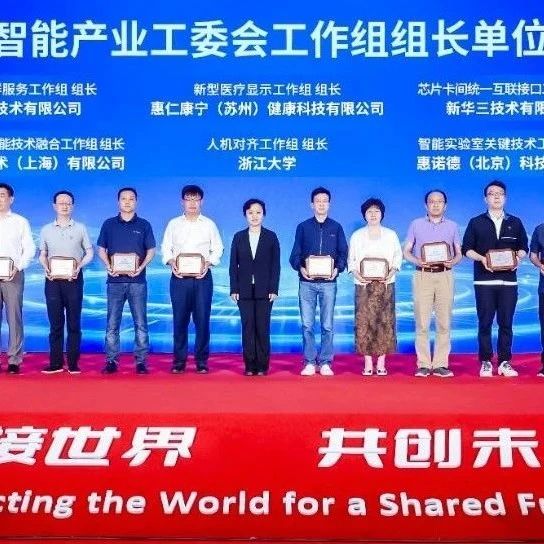
知合计算获授人工智能产业工委会工作组组长单位
半导体芯闻· 2025-07-23 09:59
Core Viewpoint - The establishment of the RISC-V Artificial Intelligence Technology Integration Working Group aims to enhance the integration of RISC-V architecture in the AI sector, focusing on standardization, community development, and industrial growth [2][3]. Group 1: Working Group Overview - The Artificial Intelligence Industry Working Committee, guided by the Ministry of Industry and Information Technology, has been formed to create a platform for collaboration among AI industry players and research institutions [2]. - The RISC-V Artificial Intelligence Technology Integration Working Group is tasked with promoting the development of community standards and industrial applications for RISC-V in the AI field [2][3]. Group 2: Future Plans and Innovations - The working group plans to establish an open collaboration platform to foster a developer community, accelerating software and hardware innovation in AI applications [3]. - RISC-V's integration with AI is identified as a key technological trend for high-performance computing, with the launch of the "Archimedes" product series by Zhihe Computing to facilitate this integration [3]. Group 3: Company Profile - Zhihe Computing focuses on developing high-performance, scalable "integrated push" CPU chips based on RISC-V architecture, aiming to meet practical application needs and create innovative computing power for various scenarios, including general artificial intelligence [4].