半导体芯闻

Search documents
Chiplet生态系统正在慢慢兴起
半导体芯闻· 2025-07-23 09:59
Core Viewpoint - The article discusses the transition from custom chip environments to standardized chiplet designs, emphasizing the need for a robust ecosystem to support this shift [2][4]. Group 1: Chiplet Design and Ecosystem - The importance of application-specific chiplets is highlighted, suggesting that proper system segmentation can enhance efficiency and specialization [4]. - The concept of a "chip ecosystem" is introduced, indicating that it encompasses more than just purchasing chips; it involves a comprehensive infrastructure [5][6]. - The article notes significant advancements in EDA capabilities and standards, which have improved the integration and testing of chiplet systems [5][6]. Group 2: Challenges and Solutions - Key challenges in chiplet design include thermal performance, electromagnetic interference, and stress management, which require new models for integration [8][9]. - The lack of standardized packaging sizes and interfaces is identified as a barrier to effective chiplet integration [9][10]. - The article emphasizes the need for improved interconnect analysis to enhance predictability and reduce computational costs in chiplet design [14]. Group 3: Market Dynamics and Future Outlook - Companies are increasingly seeking cost efficiency, customization, and configurability in chiplet designs, driving the demand for multi-chip and chiplet systems [6][7]. - The article mentions that traditional semiconductor companies are now facing competition from automotive OEMs and emerging tech firms in the chiplet space [13]. - The vision for a chiplet ecosystem includes collaboration across hardware, software, protocols, and EDA processes to accelerate development [13].

这个国家,大力发展半导体
半导体芯闻· 2025-07-23 09:59
Core Viewpoint - The Swiss semiconductor industry is planning to establish a national chip production and research center to prevent falling behind other high-investment countries in the semiconductor sector [1][2]. Group 1: Project Overview - The proposed Chip FabLab will be located in the Zurich Innovation Park and aims to develop and produce chips for high-end niche applications such as robotics, autonomous vehicles, satellite communications, and quantum computing [1]. - The project is still in the planning phase, while other countries are investing billions to boost their semiconductor industries, such as Italy investing €2 billion (CHF 1.87 billion) for a production base and the U.S. company Texas Instruments investing $60 billion (CHF 48 billion) to increase production capacity [3]. Group 2: Financial Aspects - Initial investment for the Chip FabLab is estimated at CHF 100 million (approximately $125 million) for custom chip design and production, while full-scale chip manufacturing services would require CHF 300 million [5]. - The facility is expected to include a 4,000 square meter cleanroom to protect production lines from contamination and is projected to be operational within five years [5]. Group 3: Support and Collaboration - The project has garnered support from various institutions, including the Swiss Electronics Engineering Association (Swissmem), ETH Zurich, and EMPA, as well as interest from Swiss chip experts [9]. - Collaboration between private enterprises and public academia is emphasized, with the aim of maintaining Switzerland's competitiveness in the global semiconductor industry [9]. Group 4: Potential Impact - The establishment of the Chip FabLab is seen as a valuable bridge between research and industrial applications, facilitating technology transfer and prototype development [12]. - The project coordinator aims to announce detailed plans for the facility by the end of the year [12].
力积电亏损加剧,提出五大聚焦重点
半导体芯闻· 2025-07-23 09:59
Core Viewpoint - The company Lichee Semiconductor reported a significant increase in net losses for Q2 2025, primarily due to the appreciation of the New Taiwan Dollar and foreign exchange losses, with a net loss of NT$33.3 billion and a loss per share of NT$0.8, compared to NT$0.26 in Q1 [1] Group 1 - In Q2, the company shipped approximately 400,000 wafers, a 9% increase from Q1, but the average selling price (ASP) declined by 2% to 3% due to a 5% appreciation of the New Taiwan Dollar, resulting in a revenue growth of only 1.5% in NT dollar terms [1] - The foreign exchange factors significantly impacted profitability, with a foreign exchange loss of NT$15.9 billion in Q2, leading to a net loss increase from NT$11 billion in Q1 to NT$33.3 billion in Q2 [1] Group 2 - The company plans to focus on five operational priorities, including a low visibility outlook for Q3 in the Greater China region, with weak demand for driver ICs and image sensors, while demand for power management ICs (PMICs) related to AI applications remains strong in Europe and the US [1] - Demand for DRAM foundry services has rebounded, driven by major manufacturers exiting the 8G DDR4 market, prompting customers to stock up, with wafer demand fully loaded and ASPs increasing monthly since last month [2] - The SLC Flash product line is seeing a recovery in demand as end customers reduce inventory, with 24nm SLC Flash now in mass production, and the company expects future shipping momentum as major manufacturers gradually exit the SLC market [2] Group 3 - The company is accelerating its 3D AI Foundry and Interposer layout, with small-scale shipments of Interposer starting in Q2, primarily focusing on CoWoS-S, and plans to expand capacity for Interposer production, which is expected to contribute to gross margins over the next two years [2] - The company is also progressing with DRAM four-layer WoW stacking in conjunction with advanced logic process chips, and is developing eight-layer WoW stacking technology with customers, which, along with Interposer, is expected to become a major profit source for the 3D AI Foundry [2] - The development of an 8-inch GaN application for AI servers on a 100V technology platform is nearing completion, with the first batch of customer samples being sent, and trial production expected to start in Q4 this year, following increased inquiries from US and Japanese customers regarding GaN foundry services [2]

AI芯片推动下,SK海力士将创盈利纪录
半导体芯闻· 2025-07-23 09:59
Core Viewpoint - SK Hynix is expected to achieve record earnings in Q2 2023, driven by a surge in demand for high-bandwidth memory (HBM) chips used in AI applications [2] Group 1: SK Hynix Performance - Analysts predict SK Hynix's revenue for April to June will reach 20.6 trillion KRW (approximately 14.9 billion USD), a year-on-year increase of 25.5% [2] - Operating profit is expected to grow by 65%, reaching 9 trillion KRW, also a record high [2] - If confirmed, this performance will surpass the previous record set in Q4 2023, which was 19.8 trillion KRW in revenue and 8.1 trillion KRW in operating profit [2] - SK Hynix is solidifying its leadership in the rapidly growing HBM sector, which is a key component for high-performance AI chips [2] - Counterpoint Research estimates that SK Hynix's memory chip sales will reach 15.5 billion USD this quarter, matching that of larger competitor Samsung Electronics [2] Group 2: Samsung Electronics Performance - Samsung Electronics released a weaker-than-expected earnings guidance, forecasting a 56% decline in operating profit to 4.6 trillion KRW, below market expectations of 6.1 trillion KRW [3] - The decline is attributed to increased U.S. export controls on advanced AI chips, leading to a slowdown in HBM chip supply and rising inventory levels [3] - As a precaution, Samsung increased its inventory loss reserves this quarter to address potential devaluation of unsold chips, further impacting profitability [3] Group 3: LG Electronics Performance - LG Electronics also issued disappointing Q2 earnings guidance, expecting a 46.6% year-on-year decline in operating profit to 639.1 billion KRW [5] - The ongoing weakness in the television sector has offset moderate growth in other consumer electronics and enterprise businesses [5]
热设计成核心竞争力,鲁欧制造已提前布局
半导体芯闻· 2025-07-23 09:59
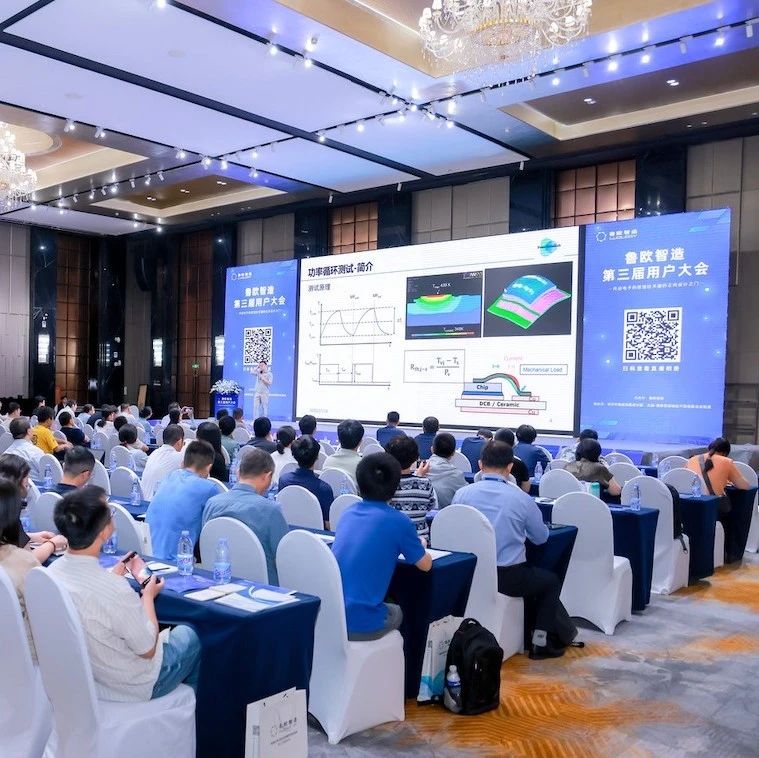
Core Viewpoint - The article highlights the growing importance of thermal design capabilities in ensuring the reliability of electronic systems, particularly in the context of increasing demand for high-reliability components in the semiconductor, new energy equipment, and industrial electronics sectors. The company Luou Intelligent Manufacturing is emerging as a key player in thermal design automation technology [1][3]. Group 1: Company Overview - Luou Intelligent Manufacturing (Shandong) Digital Technology Co., Ltd. was established in August 2020, focusing on common technology innovation in electronic thermal management. The company aims to build a complete Thermal Design Automation (TDA) tool ecosystem covering the entire thermal design process from measurement to data accumulation [5]. - The company is headquartered in Jinan, Shandong, with a research and market center in Beijing. Its core team possesses strong capabilities in multi-physical modeling, thermal testing, system simulation, and engineering applications across various technical dimensions [5]. Group 2: Product Offerings - Luou has developed two core product systems: - The FASIM multi-physical simulation platform integrates multiple simulation modules (thermal, fluid, electromagnetic, structural, optical) and is designed as a one-stop simulation tool for engineers, emphasizing accuracy and ease of use [8]. - The third-generation "Chixiao" series transient thermal resistance testers and power cycling aging equipment, which are characterized by high precision, rapid response, compact structure, and strong compatibility, have successfully broken the foreign monopoly in this field [8]. Group 3: Industry Collaboration - Luou has established long-term partnerships with key clients such as Huawei, CRRC, China Electronics Technology Group, and others, and has collaborated with institutions like Beihang University and Harbin Institute of Technology to enhance industry-academia cooperation [9][10]. Group 4: Conference Highlights - The third user conference featured discussions on key topics such as reliability, simulation platforms, packaging optimization, and online testing, showcasing the evolving role of electronic thermal management as a strategic element in high-value industries like semiconductors and new energy [11][13]. - Experts from various institutions shared insights on the application prospects of reliability theories, advancements in simulation capabilities, and the integration of testing with commercial decision-making [11][12]. Group 5: Future Vision - Luou's vision is to promote the transformation of thermal design into a systematic and platform-based approach, providing competitive thermal management technology for both the Chinese and global electronic industries. The concept of "thermal digital twin" represents a shift in thinking, making thermal management controllable and design-driven [13].
一颗GPU,叫板英伟达
半导体芯闻· 2025-07-23 09:59
Core Viewpoint - The article discusses the emergence of Bolt Graphics, a startup aiming to redefine the GPU landscape with its new GPU called Zeus, specifically targeting path tracing technology to challenge established giants like NVIDIA, AMD, and Intel [1][6]. Group 1: Path Tracing as a Breakthrough - Path tracing represents a significant advancement in game graphics, providing a more realistic rendering of light interactions compared to traditional real-time ray tracing [2]. - Traditional methods sacrifice physical accuracy for performance, while path tracing offers "no-compromise quality" despite its high computational cost [2]. - The historical development of path tracing dates back to Jim Kajiya's 1986 paper, which laid the foundation for modern rendering theories [3]. Group 2: Bolt Graphics and Zeus GPU - Bolt Graphics was founded by engineers from major companies like NVIDIA and AMD, recognizing the untapped potential of path tracing technology [6]. - The Zeus GPU comes in three versions: single-chip (Zeus 1c), dual-chip (Zeus 2c), and quad-chip (Zeus 4c), with varying power and performance specifications [6][7]. - Zeus 1c has a TDP of approximately 120W and can process around 7.7 billion rays per second, while Zeus 4c targets data center applications with a TDP of 500W and up to 2TB of DDR5 memory [6][7][10]. Group 3: Advantages of Zeus - The memory architecture of Zeus utilizes LPDDR5X for bandwidth and DDR5 for capacity, allowing for a total memory of up to 2.25TB, which is beneficial for path tracing and HPC datasets [10]. - Bolt claims that Zeus can outperform NVIDIA's RTX 5090 by a factor of 10 in terms of efficiency for 4K path tracing scenes [10][11]. - Zeus supports IEEE-754 FP64 standard, making it suitable for high-performance computing (HPC) applications, which is a competitive advantage over NVIDIA's focus on AI [11][12]. Group 4: Ecosystem Development - Bolt is building an open, customizable ecosystem based on RISC-V architecture, which allows for community acceptance and flexibility in design [14][15]. - The company is developing a proprietary path tracing engine called Glow Stick, which aims for compatibility with mainstream rendering tools [15][16]. - Bolt plans to integrate its technology with various industry software and is working on drivers for DirectX and Vulkan, although challenges remain in the Windows ecosystem [16][17]. Group 5: Future Prospects and Challenges - Bolt aims to deliver its first development kits by Q3 2025 and enter mass production by the end of 2026, facing typical startup pressures [17][18]. - The company intends to target professionals in film and design before expanding into the gaming market, requiring successful case studies to build credibility [18][19]. - The potential for Zeus to revolutionize graphics rendering and simulation integration is significant, but the path from concept to production is fraught with challenges [19].



湾芯展2025组团观众召集令:5人即成团!直达“芯”未来!
半导体芯闻· 2025-07-23 09:59
Core Viewpoint - The Bay Area Semiconductor Industry Ecosystem Expo (Bay Chip Expo) will take place from October 15-17, 2025, in Shenzhen, featuring over 600 leading semiconductor companies and expecting more than 60,000 professional attendees [1]. Group 1: Event Overview - The exhibition area will cover 60,000 square meters, showcasing the latest technologies and significant product launches [1]. - The event will host over 20 summit forums, providing a platform for deep connections and efficient transactions across the global semiconductor supply chain [1]. Group 2: Group Registration Plan - A group registration plan is introduced, allowing groups of five or more to participate, with additional benefits for groups of ten or more [2][3]. - Group leaders will receive rewards such as JD shopping cards and other surprises [3]. Group 3: Benefits of Group Participation - Group participation enhances networking opportunities across the semiconductor industry, from design EDA to wafer manufacturing and packaging [8]. - Participants can enjoy seven exclusive benefits by forming a group [5][14]. Group 4: Registration Process - The registration process involves becoming a group leader, inviting members through various methods, and ensuring all members complete the registration [9][10][11][12]. - The deadline for group registration is August 31, 2025, with limited seats available on a first-come, first-served basis [15].

巨霖科技孙家鑫的经营之道
半导体芯闻· 2025-07-22 10:23
Core Viewpoint - The article emphasizes the need for innovation in the EDA industry to address the increasing complexity of chips and the challenges in system integration, particularly in the context of the current US-China competitive relationship [1][3]. Group 1: Company Overview - Julin Technology, founded in 2019, focuses on providing EDA simulation and verification solutions from chip design to packaging and system integration [3][4]. - The company's core product, the SIDesigner signal integrity simulation platform, has been successfully commercialized with Huawei in 2024, addressing critical pain points in high-precision SI transient simulation and enabling future ultra-high-speed SerDes and DDR5 design [3][4]. Group 2: Industry Challenges and Solutions - The EDA industry faces three key hurdles: creating products that customers are willing to pay for, achieving annual sales of over 10 million for a single product at a single client, and ultimately reaching 30 million in annual sales for a single product [4][5]. - Julin Technology aims to solve two major challenges related to electricity in the EDA industry: circuit issues and electromagnetic problems, which are considered the driving forces of the industry [6]. Group 3: Product Offerings - The company has developed three core products based on its TRUE-SPICE simulator: - SIDesigner, a comprehensive system-level SI/PI simulation platform - HobbSim, a batch signal integrity time-domain simulation platform - PowerExpert, a mixed-signal power electronic system design and simulation tool [7][8]. Group 4: Strategic Approach - The company prioritizes securing head clients to build trust and credibility before expanding to mid-tier and smaller clients, reflecting confidence in its technology and team [9]. - Julin Technology's team, consisting of over 70 members, emphasizes a commitment to technical excellence and rapid problem-solving for clients [9]. Group 5: Future Goals - The company plans to launch the alpha version of its EMArtist product by the end of this year, with a full release expected in the first half of next year, aiming to address all circuit and electromagnetic simulation issues related to 3DIC by 2028 [10].

美国初创公司,目标直指EUV核心技术
半导体芯闻· 2025-07-22 10:23
Core Viewpoint - xLight, a Silicon Valley startup, has successfully raised $40 million to develop a new type of laser that could revolutionize the global chip industry [2][4]. Group 1: Company Overview - xLight aims to create a prototype laser technology based on the same principles used in large particle accelerators at U.S. national laboratories, which will be central to extreme ultraviolet (EUV) lithography machines [2]. - The CEO of xLight, Nicholas Kelez, emphasized that this technology is the most expensive tool in wafer fabrication and significantly impacts both wafer costs and production capacity [3]. Group 2: Market Context and Competition - The development of EUV lithography machines has taken decades, with ASML being the sole supplier globally. The U.S. government has been actively preventing the export of EUV machines to China, highlighting the strategic importance of this technology [4]. - Pat Gelsinger, former CEO of Intel and current executive chairman of xLight's board, criticized the decision to allow Cymer, a key player in EUV laser technology, to become a European-controlled company, indicating a need for the U.S. to maintain its competitive edge in this field [4]. Group 3: Funding and Investment - The recent funding round was led by Playground Global, with participation from Boardman Bay Capital Management, Morpheus Ventures, Marvel Capital, and IAG Capital Partners [4].
英伟达H20库存清完不再产,B30登场
半导体芯闻· 2025-07-22 10:23
Core Viewpoint - Nvidia plans to launch a new AI chip, B30, specifically for the Chinese market in Q4 of this year, which will have a performance reduction of 10% to 20% compared to the previous H20 model and a price reduction of 30% to 40% [2] Group 1 - The B30 chip is a downgraded version of the H20, which was banned in April, aimed at addressing Nvidia's significant market share decline in China due to the ban [2] - Market analysts estimate that the initial stock of B30 chips could reach up to 1.2 million units [2] - Despite the recent lifting of restrictions on the H20 chip by the US government, Nvidia has canceled customer orders and withdrawn its capacity reservations from TSMC, which has since allocated that capacity to other clients [2] Group 2 - Nvidia's CEO Jensen Huang indicated that the company may face challenges in recovering some of the canceled inventory, suggesting that the current demand may not align perfectly with available stock [3] - There is an estimated inventory of around 1 million H20 chips in the Taiwanese semiconductor supply chain, with approximately 700,000 of those being finished chips [2] - Nvidia is likely to sell only the existing inventory of H20 chips and will not increase production capacity for H20 to promote B30 sales [2]